
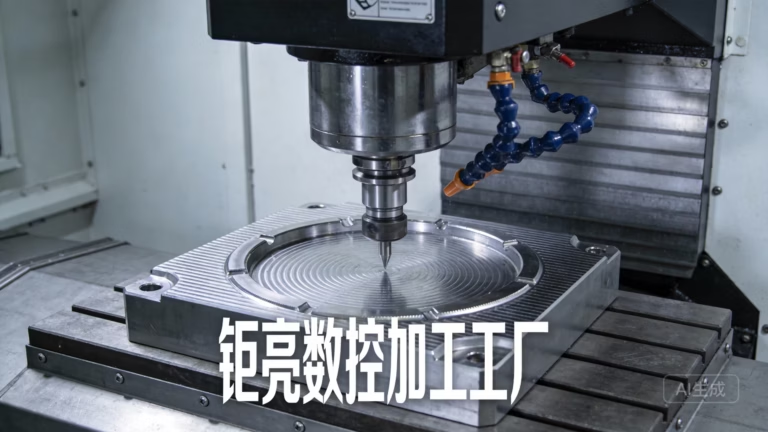
As a senior manufacturing engineer with over a decade of experience in the precision machining field, I’ve had countless conversations with clients, designers, and procurement specialists. One fundamental question that often surfaces, especially for those new to hardware manufacturing or those transitioning from legacy systems, is: what is the difference between a CNC and an NC machine?
At first glance, the acronyms seem almost interchangeable. Both involve machines that follow programmed instructions to cut material. However, the distinction between NC (Numerical Control) and CNC (Computer Numerical Control) is not merely semantic; it represents a monumental technological evolution that fundamentally reshaped manufacturing capabilities, precision, and flexibility. Understanding this difference is crucial for anyone sourcing precision parts, as it directly impacts the complexity of geometries you can achieve, the speed of prototyping, and the consistency of production runs.
Let’s demystify this topic from the ground up.
The Core Distinction: The “Brain” of the Operation
The most critical difference lies in the control system.
NC Machine: The “Original” Programmed Machine. An NC machine is controlled by a dedicated, hard-wired logic controller. Its instructions are fed via punched tapes (often paper or mylar tapes with holes representing code), plugboards, or analog computers. The program is a physical medium. There is no internal computer for editing or storing programs on the machine itself. If you need to change a dimension or a tool path, you often have to create a new physical tape from scratch.
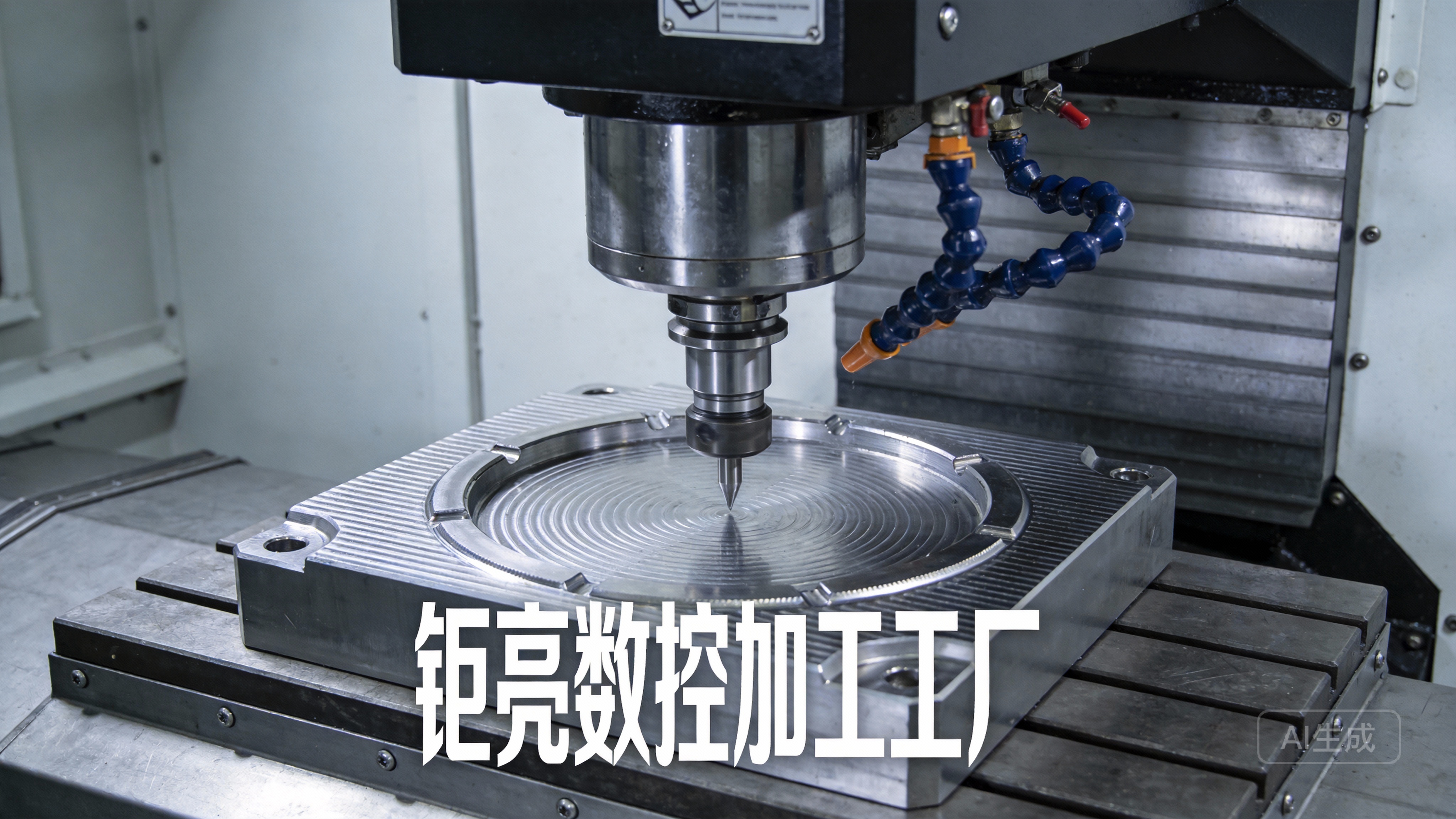
CNC Machine: The “Modern” Computer-Controlled Evolution. A CNC machine is driven by an integrated, dedicated computer (microprocessor or industrial PC). The program (G-code and M-code) is stored in the machine’s memory, loaded from a USB drive, or sent over a network. This computer interprets the code and sends digital signals to servo motors and actuators that control the machine’s movements with extreme accuracy.
Think of it this way: An NC machine is like a player piano that can only play the song on the specific roll of paper fed into it. A CNC machine is like a modern digital player piano with a built-in computer that can store thousands of songs, allow you to edit the tempo or key on a touchscreen, and even compose new music directly on the device.
A Comparative Deep Dive: NC vs. CNC Across Key Dimensions
To fully appreciate the impact, let’s break down the differences across several operational and practical aspects.
| Feature / Capability | NC (Numerical Control) | CNC (Computer Numerical Control) |
|---|---|---|
| Control Unit | Hard-wired, fixed-logic controller. No general-purpose computer. | Dedicated computer (CNC controller) with memory, processor, and software. |
| Program Input & Storage | Physical media: Punched tape, cards. No onboard storage. | Electronic files: Stored in machine memory, USB, network servers. Easy retrieval and management. |
| Program Modification | Extremely difficult. Requires creating a new physical tape/program. | Extremely easy. Edits can be made at the machine’s control panel (MDI), simulated, and saved instantly. |
| Flexibility & Complexity | Limited. Best for simple, repetitive tasks. Complex contours and 3D surfaces are challenging. | Exceptionally high. Capable of machining highly complex, free-form 3D geometries, enabled by advanced interpolation algorithms. |
| Precision & Accuracy | Lower. Subject to mechanical wear and tape reading errors. Limited feedback systems. | Superior. Closed-loop feedback systems (using encoders) constantly monitor and correct tool position, ensuring consistent, micron-level accuracy. |
| Automation Potential | Low. Typically a standalone operation with manual tool changes and setup. | Very High. Easily integrated with Automated Tool Changers (ATC), pallet changers, and robotic arms for lights-out manufacturing. |
| Operator Role | Skilled in tape preparation and machine setup. More “hands-on” during operation. | Skilled in CAD/CAM, programming, and machine supervision. Role shifts towards monitoring and optimization. |
| Modern Relevance | Largely obsolete in mainstream precision manufacturing. Found in some legacy systems or very specific, unchanged processes. | The absolute global standard for precision machining, from prototyping to mass production. |
Why This Historical Distinction Matters for Your Projects Today
You might wonder, if NC is obsolete, why discuss it? The reason is foundational. The shift from NC to CNC created the enabling conditions for everything we do in modern precision manufacturing. When you partner with a supplier like GreatLight Metal Tech Co., LTD. (GreatLight Metal), you are leveraging the full culmination of this technological evolution.
From Fixed to Flexible Production: CNC’s digital core means the same machine that mills an aerospace bracket in the morning can be reprogrammed to produce a complex medical implant component in the afternoon. This agility is why we can offer such a wide range of precision CNC machining services without massive retooling costs.
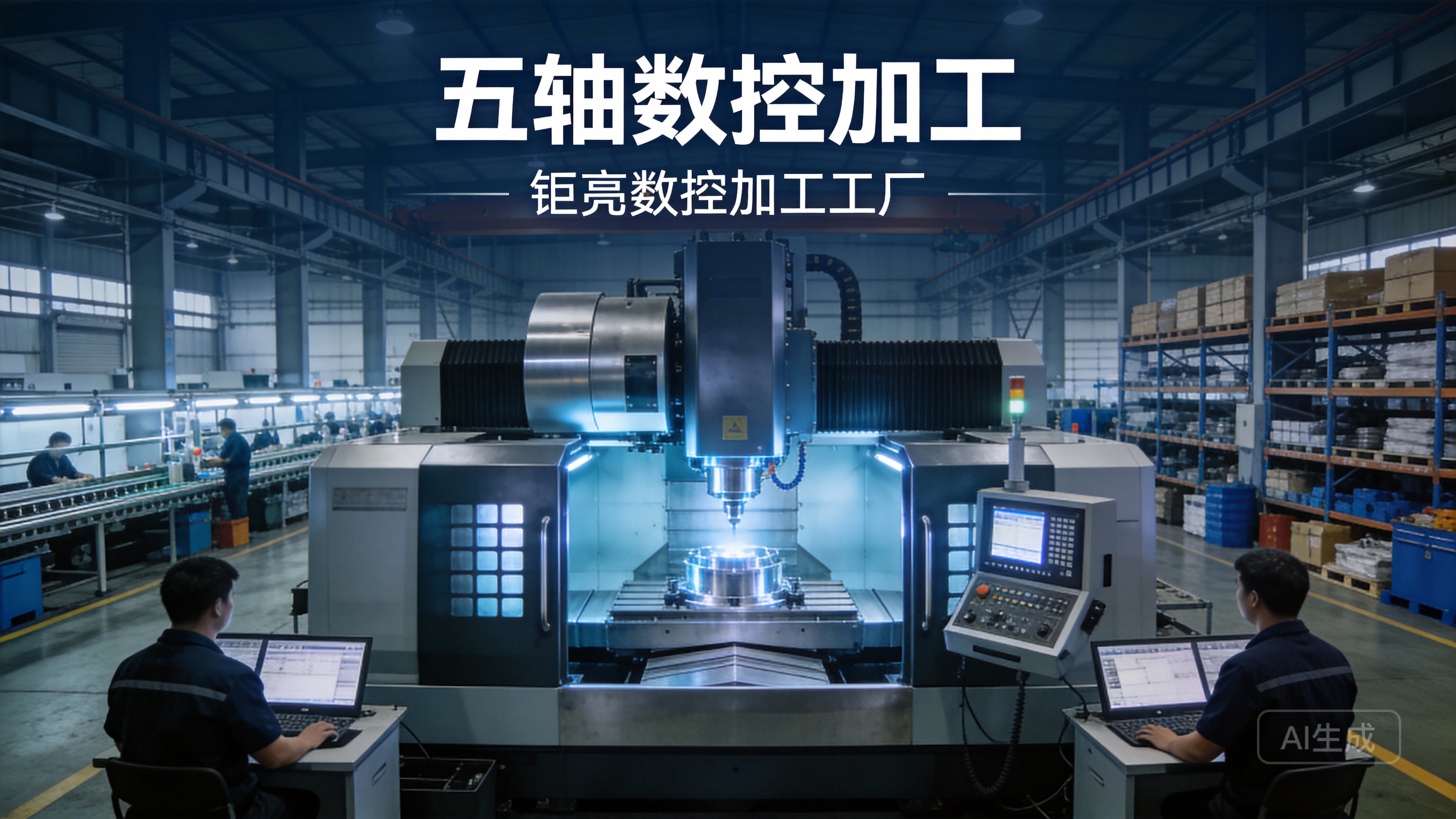
Unlocking Design Freedom: The advanced computer control in modern 5-axis CNC machines allows for simultaneous movement along five axes. This is a direct descendant of CNC technology, enabling us to machine incredibly complex, organic shapes—like impellers, turbine blades, or custom robotic joints—from a solid block of metal in a single setup. This was virtually impossible with traditional NC.
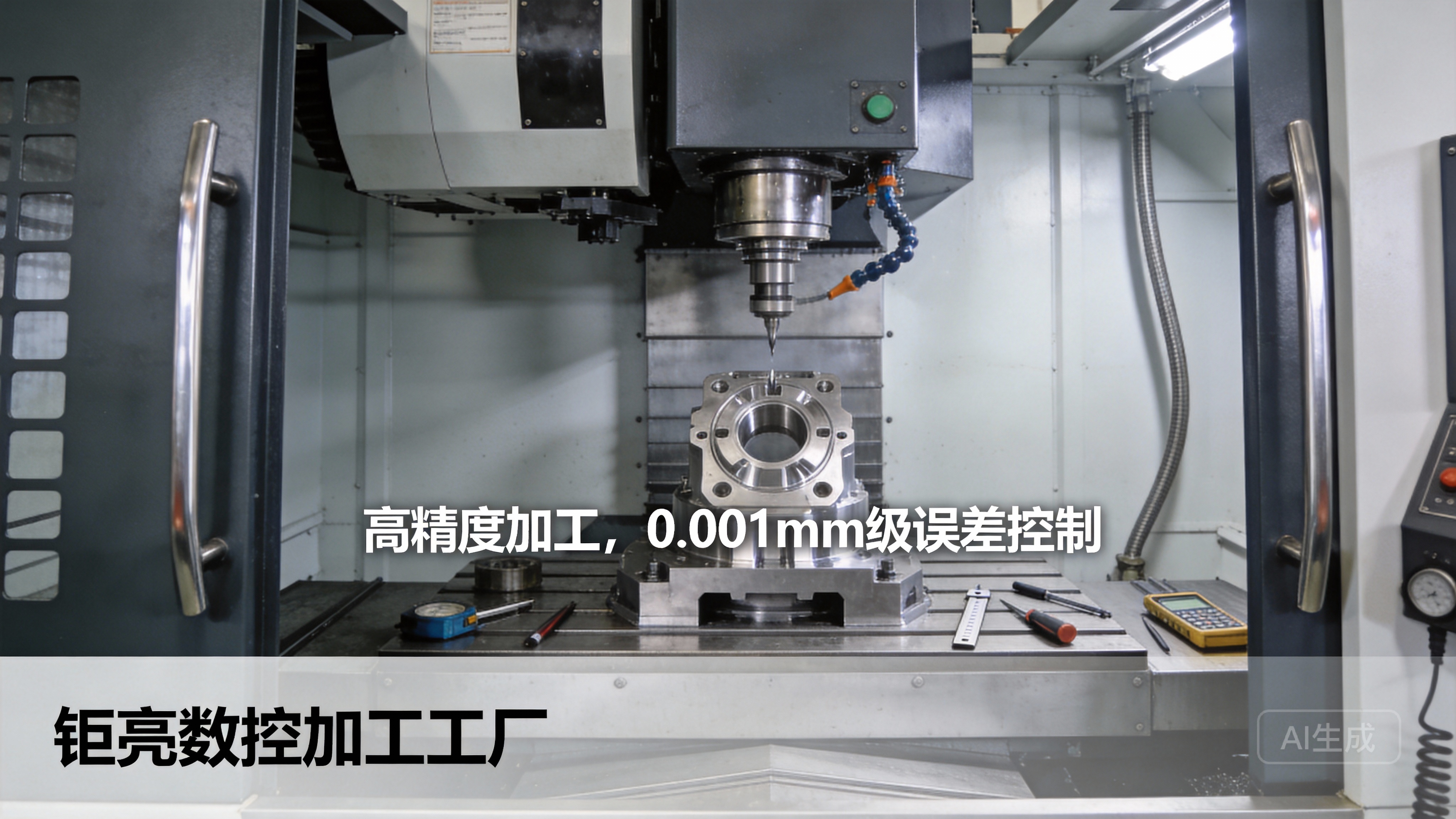
Ensuring Repeatability and Quality: The ISO 9001:2015 certified quality management system at GreatLight Metal is built on the predictable, programmable nature of CNC. Once a program is verified and optimized, the integrated computer ensures that the 1st part and the 1,000th part are virtually identical. Closed-loop feedback systems are a standard feature of our Dema and Jingdiao 5-axis machining centers, guaranteeing that the precision promised on your drawing (±0.001mm) is the precision delivered on the shop floor.
Integrated Manufacturing and One-Stop Solutions: CNC is the digital thread that connects different processes. The 3D CAD model for a part can be used to program a CNC mill, a CNC lathe, a wire EDM, and even generate code for an SLM metal 3D printer. This digital continuity is what allows us to provide true full-process chain integration—from precision machining and die casting to sheet metal and additive manufacturing—all under one roof with consistent digital oversight.
Conclusion: It’s More Than an Acronym—It’s a Capability Paradigm
So, what is the difference between a CNC and an NC machine? It is the difference between a dedicated, single-purpose apparatus and an intelligent, adaptable manufacturing platform. NC was the revolutionary first step towards automation, but CNC is the engine of modern precision manufacturing, characterized by digital control, unparalleled flexibility, and supreme accuracy.
When you are evaluating manufacturing partners for your critical components, you are inherently looking for a CNC machining service provider. The real question then becomes: What level of CNC capability and integration does this partner possess? Do they have the advanced multi-axis equipment, the in-house engineering expertise to program it effectively, and the rigorous quality systems to manage it? At GreatLight Metal, our foundation is built upon this advanced CNC paradigm. Our expertise lies not just in operating these sophisticated computer-controlled machines, but in leveraging them as part of a holistic, client-focused solution to turn complex designs into flawless, high-performance reality. For more insights into how we leverage this technology for our clients, connect with us on GreatLight’s professional network.
Frequently Asked Questions (FAQ)
Q1: Are NC machines still used anywhere today?
A: They are exceptionally rare in precision part manufacturing. You might find them preserved in some educational settings to teach foundational concepts, or potentially in operation for extremely simple, unchanging, high-volume tasks where the cost of reprogramming has been zero for decades. For any contemporary R&D, prototyping, or production involving complex materials and tolerances, CNC is the exclusive standard.
Q2: Does choosing a CNC machine automatically mean better parts?
A: Not automatically. The CNC machine is a tool. The quality of the final part is a function of machine capability + cutting tools + programming skill + process knowledge + quality control. A world-class 5-axis CNC machine programmed by an inexperienced engineer without proper fixturing or toolpath strategy will produce poor results. This is why partner selection is key—look for a supplier like GreatLight Metal that combines advanced equipment with deep engineering support and certifications like IATF 16949 for automotive or ISO 13485 for medical hardware.
Q3: Is CNC programming very difficult?
A: The basics can be learned, but mastering it for complex, high-precision, and efficient machining is a professional engineering discipline. It involves deep knowledge of CAD/CAM software, metallurgy, cutter dynamics, thermal management, and fixturing. This is a core service we provide—clients send us a 3D model, and our engineering team handles all programming, simulation, and optimization to ensure the part is manufactured correctly and cost-effectively.
Q4: Did CNC make machining more expensive?
A: Initially, yes, due to higher machine costs. However, in the long run, CNC has dramatically reduced the cost per part for complex components. It slashes setup times, reduces manual labor, minimizes scrap through simulation, and enables faster iterations. The ability to machine complex geometries in one setup eliminates multiple operations and fixtures, saving both time and money.
Q5: Can old NC programs be used on modern CNC machines?
A: In principle, the foundational G-code language has roots in NC. However, practical conversion is often challenging. The code might lack modern efficiency commands, and the physical media (tape) needs to be digitized. It’s almost always more effective to recreate the part program from the original CAD model using modern CAM software, which unlocks far greater optimization, safety, and efficiency features inherent to the CNC system.



















