
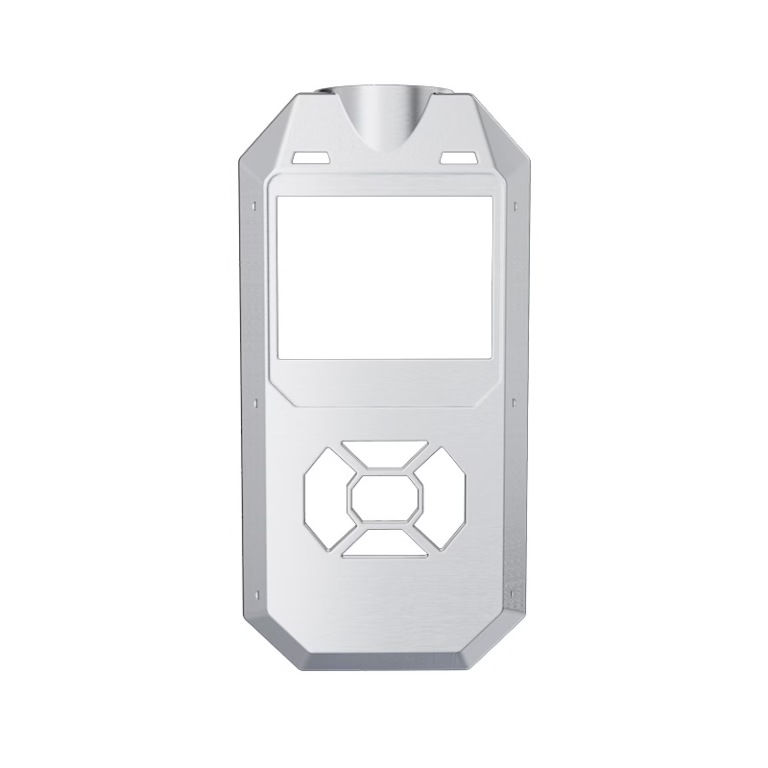
In the realm of modern manufacturing, where micron-level accuracy and complex geometries are paramount, the high precision CNC vertical machining center (VMC) stands as a cornerstone technology. It represents the evolution of milling from a manual, skill-dependent operation to a digitally controlled, repeatable, and exceptionally accurate process. For clients seeking precision parts machining and customization, understanding this equipment is crucial to specifying requirements and selecting the right manufacturing partner.
At its core, a CNC vertical machining center is a fully automated machine tool where the cutting spindle is oriented vertically. The workpiece is secured on a table that moves in the X and Y axes, while the spindle moves vertically in the Z-axis, often with additional rotary axes (like a fourth-axis rotary table) for complex machining. The “high precision” designation isn’t merely marketing; it signifies a machine engineered and maintained to achieve and consistently hold extraordinarily tight tolerances, typically in the range of ±0.005mm to ±0.001mm or better, with superior surface finishes.
Deconstructing the “High Precision” VMC: Key Components
What separates a standard VMC from a high precision CNC vertical machining center is the synergy of its critical components:
Ultra-Rigid Machine Structure & Foundation: Precision begins with stability. High-precision VMCs feature massively rigid cast iron or polymer concrete bases and columns that dampen vibrations—both internal from cutting forces and external from the environment. This prevents minute deflections that cause dimensional errors.
Precision Spindle & Drive System: The heart of the machine. High-speed, high-torque spindles with liquid cooling or built-in motor technology minimize thermal growth. Precision angular contact bearings and balanced toolholders (like HSK or high-precision CAT holders) ensure minimal runout, which is critical for fine finishes and accurate bore sizing.
Advanced Linear Motion Systems: Instead of traditional lead screws, high-precision VMCs employ linear glass scales or laser interferometer feedback systems. While the ballscrews move the axes, these external scales directly measure the actual table position, creating a closed-loop system that compensates for any mechanical backlash or thermal drift, guaranteeing positional accuracy.
Thermal Stability Management: Heat is the enemy of precision. These machines integrate comprehensive thermal management: coolant temperature control for both spindle and machine structure, temperature-controlled lubrication systems, and sometimes even an environmentally controlled enclosure to maintain a consistent operating temperature.
High-End CNC Controller & Software: A powerful brain is essential. Controllers from Siemens, Heidenhain, or Fanuc, paired with advanced software for error compensation, tool wear monitoring, and high-speed look-ahead processing, translate complex designs into flawless tool paths.
The Hallmarks of High-Precision Machining
When a part is produced on such a center, it exhibits distinct advantages:
Exceptional Geometric Accuracy: Features like flatness, perpendicularity, concentricity, and true position are held to exceptional standards, often crucial for assemblies in aerospace, medical devices, and optics.
Superior Surface Finish: The combination of stable spindles, sharp cutting tools, and optimized CAM programming can produce mirror-like finishes directly from the machine, reducing or eliminating the need for secondary polishing.
Repeatability Over Long Production Runs: The true test of a high precision CNC vertical machining center is its ability to produce the first part and the thousandth part with identical dimensions. This repeatability is vital for volume production of precision components.
Capability for Complex, Multi-Sided Parts: With the addition of a high-precision fourth-axis rotary table, a VMC can machine multiple faces of a part in a single setup. This eliminates cumulative errors from re-fixturing, a key principle in precision machining.
Applications: Where High Precision is Non-Negotiable
This machinery is not for every part; it is deployed where performance is critical:
Aerospace: Turbine blades, fuel system components, structural brackets.
Medical & Surgical: Implants, surgical instrument components, diagnostic device housings.
Optics & Photonics: Lens mounts, laser cavities, optical benches.
Automotive (High-Performance & EV): Transmission components, injection molds, battery tray connectors.
Semiconductor & Electronics: Wafer handling robots, vacuum chamber parts, precision fixtures.
Partnering with a Manufacturer Who Masters the Technology
Owning a high precision CNC vertical machining center is one thing; leveraging its full potential requires deep engineering expertise. This is where a partner like GreatLight Metal distinguishes itself. Beyond operating advanced multi-axis CNC equipment, the value lies in the holistic approach:
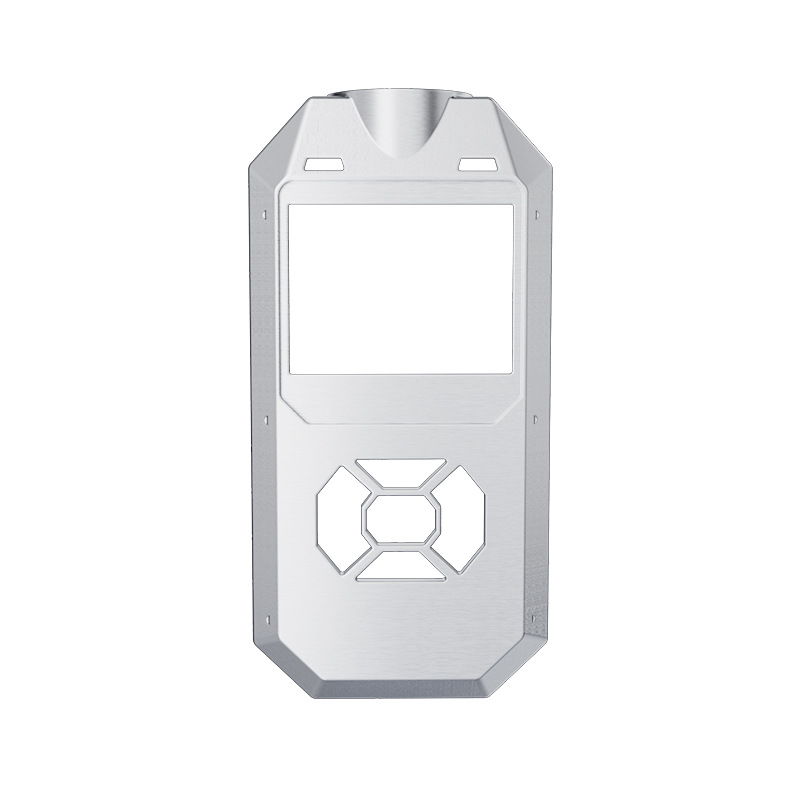
Process Engineering: Experts who understand how to select optimal tooling, feeds, speeds, and fixturing strategies to maximize the machine’s accuracy for your specific material (be it aluminum, stainless steel, titanium, or engineering plastics).
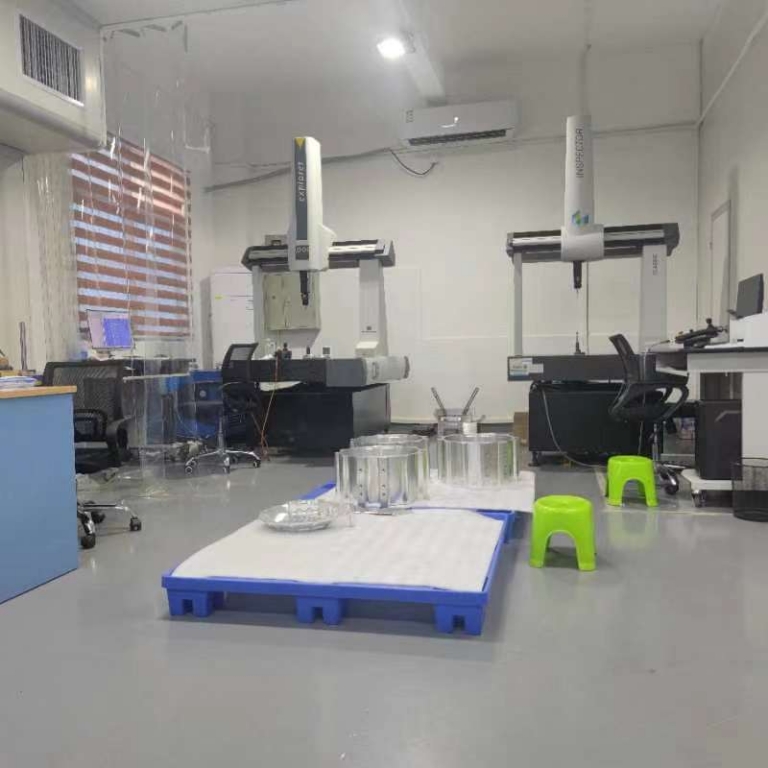
Metrology & Quality Assurance: Precision machining is meaningless without verification. In-process probing and final inspection with coordinate measuring machines (CMMs), surface profilometers, and optical comparators are integral to the workflow.
Integrated Post-Processing: High-precision parts often require complementary services like heat treatment, anodizing, or specialized coatings, all of which must be managed without compromising the achieved tolerances.
Conclusion
A high precision CNC vertical machining center is far more than just a “very accurate milling machine.” It is a sophisticated, integrated system of mechanical engineering, thermal management, and digital control, designed to materialize the most demanding design specifications with unwavering consistency. For any project where reliability, performance, and exactitude are paramount, insisting on manufacturing partners who have mastered this technology is not just a choice—it’s a necessity for success. It forms the bedrock upon which innovations in the most advanced industries are built.
Frequently Asked Questions (FAQ)
Q1: What is a typical tolerance achievable on a high-precision VMC?
A: While capabilities vary, a true high precision CNC vertical machining center can consistently hold positional tolerances of ±0.005mm and geometric tolerances like flatness and parallelism to within 0.005mm over 300mm. For specific features under ideal conditions, tolerances of ±0.001mm are attainable. The exact capability depends on part size, material, and feature geometry.
Q2: How does a high-precision VMC differ from a 5-axis machining center for precision work?
A: Both are essential tools. A high precision CNC vertical machining center, especially with a 4th axis, excels at prismatic parts with complex contours and holes. A 5-axis machine adds the ability to approach the workpiece from virtually any angle in a single setup, which is superior for complex, free-form surfaces (e.g., impellers, molds). The choice depends on part geometry; sometimes, a high-precision VMC is the more efficient and accurate solution for certain part families.
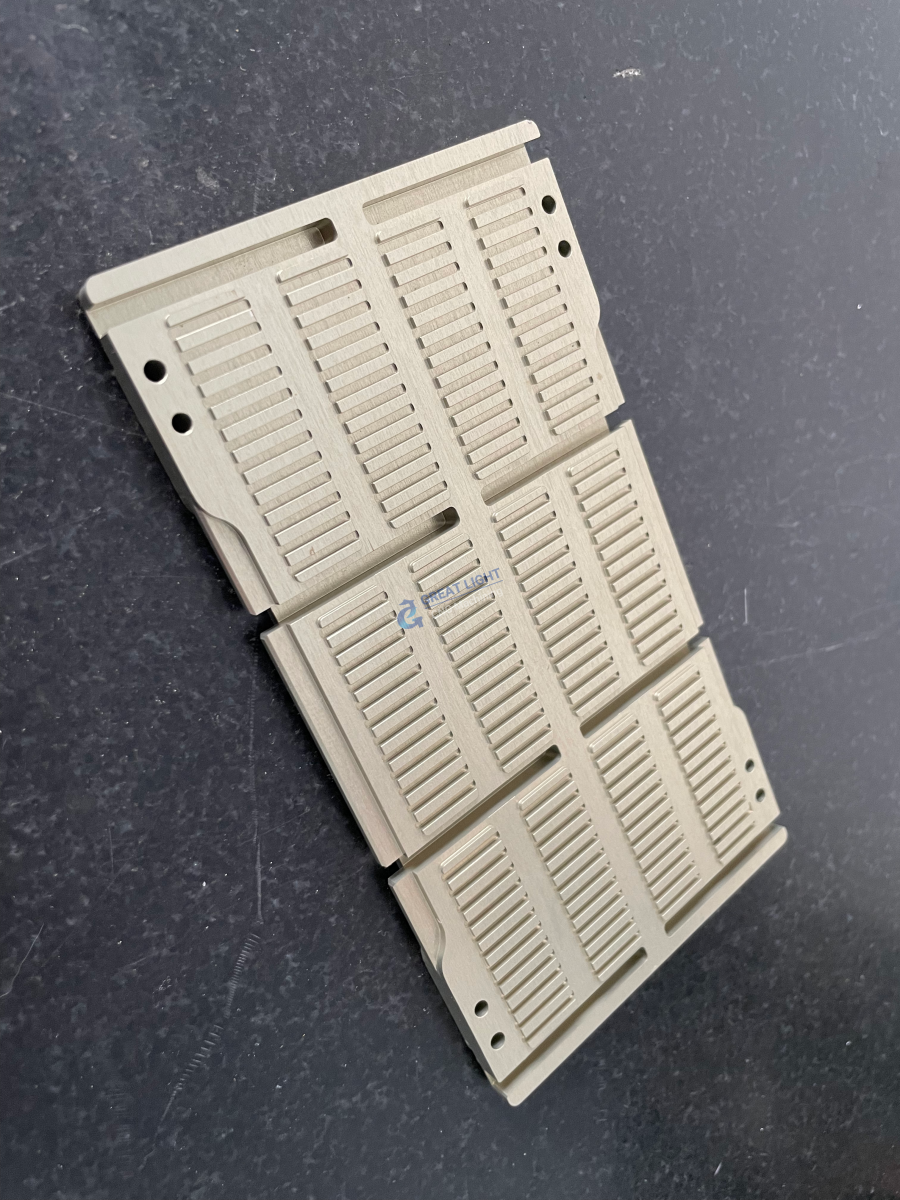
Q3: Does “high precision” mean slower machining speeds?
A: Not necessarily. Modern high-precision VMCs often feature high-speed spindles (20,000 RPM or more) and rapid traverse rates. The “precision” is achieved through superior control and compensation, not by inherently running slower. However, the process parameters (feed rate, depth of cut) for a finish pass achieving micron-level tolerances may be more conservative than for roughing.
Q4: What should I look for when auditing a supplier’s high-precision machining capabilities?
A: Ask for evidence beyond the machine brochure. Request:
Machine calibration reports (e.g., ISO 230-2 standards).
Sample part inspection reports showing measured vs. nominal dimensions.
Details on their in-house metrology equipment and quality control processes.
Case studies or examples of parts they have produced with similar tolerance requirements to yours.
Q5: Can high-precision VMCs handle prototyping as well as production?
A: Absolutely. In fact, they are ideal for precision prototyping. Producing a prototype on the same high-precision platform intended for production ensures that the prototype is functionally representative and that manufacturing challenges are identified early. Partners like GreatLight Metal specialize in this bridge from low-volume precision prototypes to full-scale production runs.



















