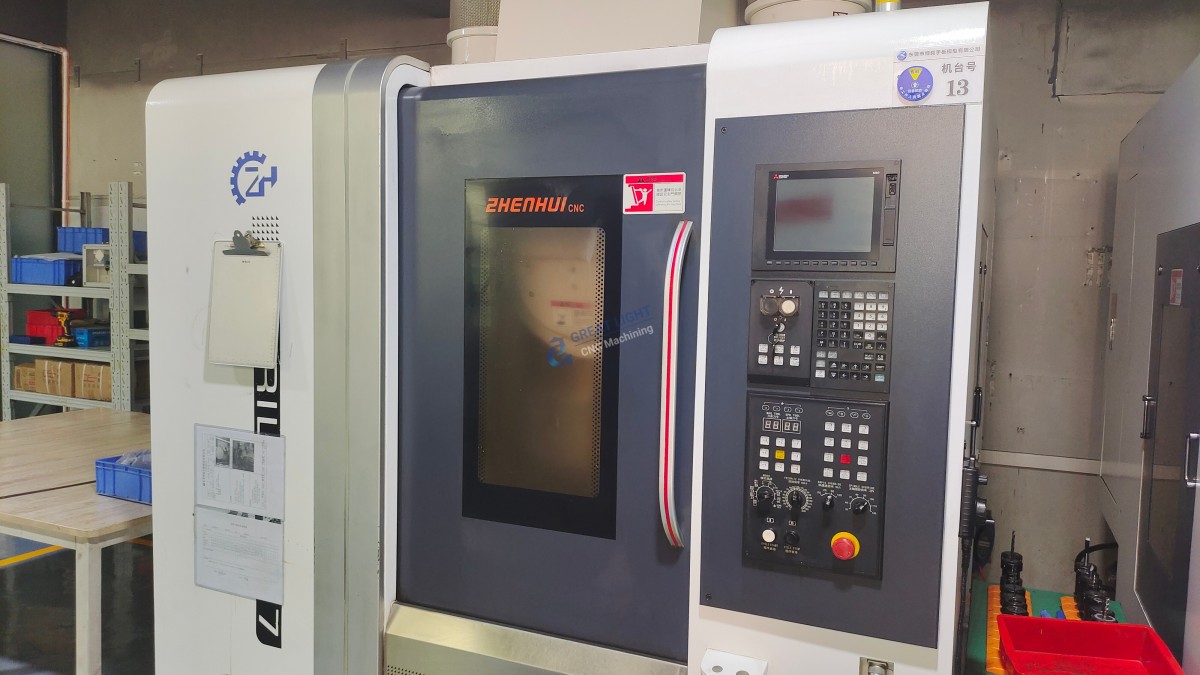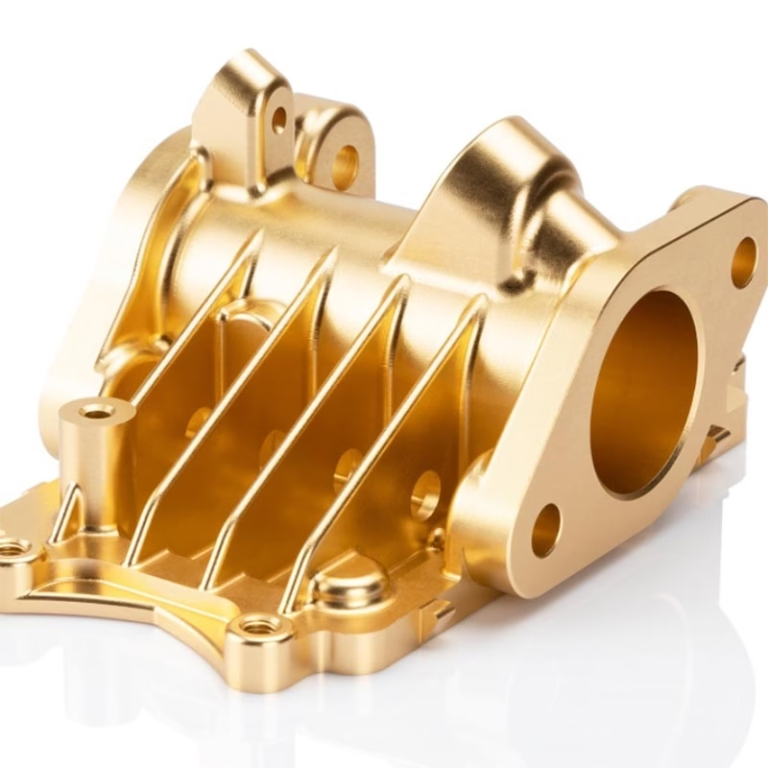
For manufacturing engineers, business owners, and procurement managers, the decision to purchase capital equipment is a pivotal strategic investment. Traditionally, the path has been straightforward: buy a CNC machine, invest in tooling and operator training, and bring production in-house. However, a transformative model is gaining traction—one where the line between equipment vendor and service provider blurs. Today, the most compelling proposition isn’t just a CNC machine for sale; it’s a CNC machine for sale with machining services included. This integrated approach represents a fundamental shift from a transactional purchase to a strategic partnership, addressing core industry challenges around capital allocation, technical risk, and supply chain agility.
The Evolving Manufacturing Landscape: Why “Machine + Service” is the New Paradigm
The drive towards this hybrid model stems from several convergent pressures in precision manufacturing:
Rising Complexity: Parts for aerospace, medical devices, and advanced robotics feature increasingly complex geometries, tight tolerances (often demanding ±0.001mm), and require exotic materials. Operating a machine capable of producing these parts is different from mastering the process engineering behind them.
Capital Intensity & Obsolescence Risk: High-end 5-axis CNC machining centers represent a multi-million dollar investment. The rapid pace of technological advancement means equipment can become functionally obsolete long before it is fully depreciated, locking capital into underperforming assets.
The Skilled Labor Gap: There is a chronic, global shortage of highly skilled CNC programmers, machinists, and process engineers. Purchasing a machine does not solve the human expertise equation.
Demand Volatility: Market demands can be unpredictable. Investing in a high-capacity machine for a project that may not scale leaves expensive equipment idle. Conversely, lacking capacity can mean missing critical opportunities.
In this environment, the simple question of “which machine should I buy?” is being supplanted by a more strategic one: “What is the most efficient and de-risked path to obtaining my precision components?”
Decoding the “Included Services” Model: Beyond the Basic Warranty
When a supplier offers a CNC machine for sale with machining services included, it goes far beyond standard installation and a one-year warranty. This model encompasses a continuum of value-added support, often structured in tiers or as a customizable partnership. Key components include:
Process Development & Launch Support: This is the critical first phase. Experts from the vendor will work with your design team to perform Design for Manufacturability (DFM) analysis, develop the optimal CNC machining strategy, program the first article, select cutting tools and fixturing, and establish a proven, stable process before handing over the keys.
Extended Technical Training & Mentorship: Instead of a generic operator manual, you receive hands-on, application-specific training for your programmers and machinists. This often includes ongoing mentorship and access to a technical hotline, ensuring your team can confidently operate the equipment and troubleshoot process-specific issues.
Guaranteed Production Capacity & Overflow Support: A core benefit. The vendor guarantees to act as your overflow or surge capacity provider. If your in-house machine is at full utilization, or you land an order that exceeds your capabilities, you have a pre-qualified, technically aligned partner ready to produce parts immediately, often using the exact same process and program.
Long-Term Maintenance & Process Optimization: Services can include proactive maintenance plans, regular calibration, and software updates. More advanced partnerships involve continuous process improvement, where the vendor’s engineers analyze your production data to recommend optimizations for cycle time reduction, tool life extension, and quality enhancement.
Comparative Analysis: Pure Equipment Vendor vs. Integrated Solution Partner
To understand the value, it’s helpful to contrast the two models:
| Aspect | Traditional Equipment Vendor | Integrated Solution Partner (Machine + Service) |
|---|---|---|
| Primary Offering | The CNC machine as a hardware product. | A manufacturing capability and a guaranteed outcome. |
| Relationship Focus | Transactional; ends after installation. | Collaborative, long-term partnership. |
| Risk Profile for Buyer | High. Buyer assumes all risk of process success, operator skill, and utilization. | Shared/Mitigated. Vendor is invested in your success with the machine. |
| Time-to-Production | Long. Requires in-house process development, trial, error, and validation. | Shortened. Leverages vendor’s existing expertise and proven processes. |
| Scalability | Fixed by purchased capacity. Scaling up requires another capital purchase. | Flexible. In-house capacity is seamlessly augmented by partner’s production lines. |
| Total Cost of Ownership | Often higher than estimated due to hidden costs of training, downtime, and inefficiency. | More predictable and often lower when factoring in accelerated ramp-up and higher throughput. |
Strategic Business Models in Practice
Several industry leaders exemplify variations of this model:
The “Foot-in-the-Door” Service-Led Model (e.g., Protolabs, Xometry): These digital manufacturers famously use their vast array of in-house CNC, 3D printing, and sheet metal equipment to provide instant quoting and rapid turnaround services. For clients who consistently order certain parts, the logical next step conversation is, “Would it make economic sense for you to produce these in-house? We can help you select the right machine and transfer the process.”
The OEM-Integrated Solution Provider: Major machine tool builders like DMG MORI or Haas have established “Application Technology” or “Production Solutions” divisions. They don’t just sell a 5-axis mill; they sell a complete cell for machining turbine blades or orthopedic implants, including the workholding, tooling, software, and initial process documentation.
The Precision Engineering Partner Model: This is where companies like GreatLight Metal excel. Operating from a position of deep manufacturing expertise, they function as an extension of a client’s engineering team. A client might approach them with a challenging part for precision 5-axis CNC machining services. After successfully developing and producing the component, the analysis might reveal that bringing a portion of the volume in-house is strategic. GreatLight Metal can then guide the selection of an appropriate machine, replicate the perfected process on the client’s floor, and remain as the guaranteed overflow supplier and technical consultant. This model is less about pushing hardware and more about optimizing the client’s entire value stream.
Critical Considerations for Buyers
If you are evaluating a CNC machine for sale with machining services included, due diligence is paramount. Look beyond the spec sheet and ask these questions:
Depth of Application Expertise: Does the vendor have proven experience machining the specific materials and part geometries relevant to your industry? Request detailed case studies.
Transparency of the Service Agreement: What exactly is “included”? Is it a fixed number of engineering hours, training days, and guaranteed overflow capacity? Get the scope of services in writing.
Cultural and Technical Alignment: The partnership requires open communication. Are their engineers collaborative? Is their quality philosophy (e.g., ISO 9001:2015, IATF 16949) compatible with yours?
Long-Term Viability: Is this vendor a stable, long-term partner? Examine their financial health, client retention rates, and investment in new technology to ensure they will be there for support in years to come.
Data Security & IP Protection: When processes are co-developed, IP is shared. Ensure the partner has robust protocols, such as compliance with ISO 27001 standards, to protect your designs and proprietary information.
Conclusion: The Path to Resilient Manufacturing
The future of competitive manufacturing lies in strategic agility and focused core competency. For many organizations, owning and mastering every piece of production technology is neither efficient nor necessary. The modern solution—procuring a CNC machine for sale with machining services included—represents a sophisticated, risk-aware strategy. It allows companies to leverage internal control and capacity where it makes the most sense, while building a trusted, technically profound partnership to handle peaks, complexities, and process development challenges.
This model transforms a capital expenditure from a isolated gamble into a integrated node within a resilient manufacturing network. It acknowledges that the greatest value is not in the machine itself, but in the guaranteed, high-quality parts it produces consistently. In this landscape, choosing a partner like GreatLight Metal, which offers both world-class equipment guidance and demonstrable excellence in precision 5-axis CNC machining services{:target=”_blank”}, is not just a purchasing decision; it’s a strategic investment in innovation velocity and supply chain strength. To explore how industry leaders are thinking about this integration, insights from platforms like LinkedIn{:target=”_blank”} can provide valuable context on evolving partnerships and technological adoption.