
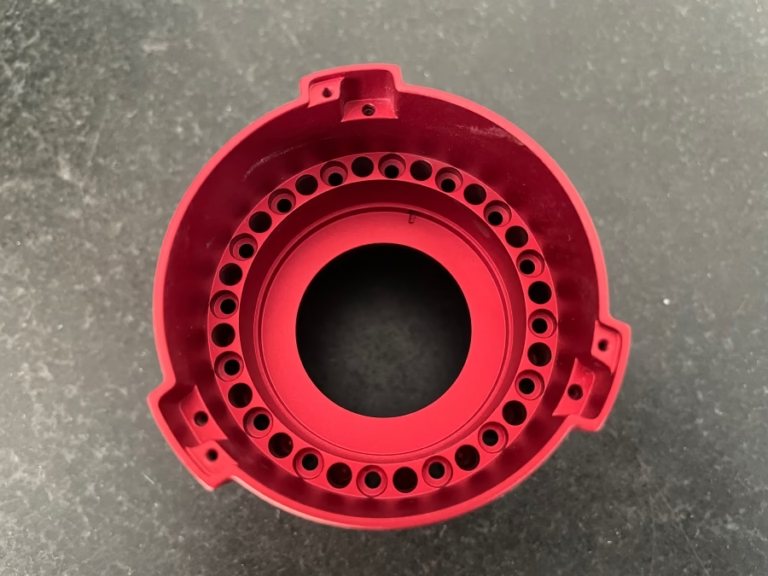
In the demanding world of modern engineering, where performance is non-negotiable and failure is not an option, the selection and machining of alloys form the very backbone of innovation. From the relentless turbines in aerospace engines to the intricate components within life-saving medical implants, customized CNC alloy machining services are not merely a manufacturing step—they are a critical strategic partnership that determines product integrity, lifecycle, and ultimate success. As a manufacturing engineer with decades on the factory floor, I’ve witnessed the evolution of this field from a craft to a high-science discipline, where the margin for error shrinks annually and the complexity of designs expands exponentially.
For engineers and procurement specialists navigating this landscape, the quest is for more than just a machine shop. It is a search for a solution provider capable of mastering the intricate dance between material science, cutting-edge technology, and rigorous process control. This is where the distinction between a simple vendor and a true manufacturing partner becomes starkly apparent.
The Alloy Conundrum: Why “Customized” is the Only Answer
Alloys, by their very nature, are engineered materials. Aluminum, titanium, stainless steel, Inconel, magnesium—each family brings a unique set of properties: strength-to-weight ratios, corrosion resistance, thermal stability, or biocompatibility. However, these properties are not merely inherent; they are highly sensitive to the machining process. The wrong speed, feed, tool path, or cooling strategy can induce residual stress, work hardening, micro-cracking, or alter the metallurgical structure, effectively nullifying the alloy’s designed advantages.
This is why generic CNC machining often falls short. A one-size-fits-all approach might produce a part that looks correct on a CMM report but harbors hidden flaws that lead to premature field failure. Customized CNC alloy machining services must begin with a deep material-centric process design. It requires answering questions like:
How does the specific grade of 7075-T6 aluminum behave under high-speed milling?
What is the optimal strategy to machine Ti-6Al-4V without causing tool galling or compromising its fatigue strength?
How can one maintain the dimensional stability of a complex Inconel 718 component while managing its extreme work-hardening tendency?
At GreatLight Metal, our approach is built on this foundational understanding. We don’t just cut metal; we engineer the machining process around the alloy’s personality, ensuring the final part performs as its designer intended.
The Pillars of a High-Performance Customized Alloy Machining Service
Delivering consistent, high-integrity alloy components requires a synergy of advanced technology, systemic control, and engineering expertise. Here’s how a capable partner structures their capabilities.
H3: 1. Technological Arsenal: Beyond Basic CNC
The era of simple 3-axis machining for critical alloy parts is fading. Complex, lightweight, integrated designs demand advanced kinematics.
5-Axis Simultaneous Machining: This is no longer a luxury but a necessity for aerospace brackets, impellers, and medical device housings. It allows for accessing deep pockets and complex contours in a single setup, drastically improving accuracy and surface finish while reducing cycle times. Our precision 5-axis CNC machining services{:target=”_blank”} are specifically calibrated for alloys, using dynamic toolpaths to maintain constant chip load and minimize heat-affected zones.
Multi-Process Integration: A true one-stop service integrates turning, milling, grinding, and EDM. For instance, a titanium shaft may require CNC turning for its primary form, precision grinding for critical bearing journals, and wire EDM for specific cross-sectional features—all under one roof, ensuring cumulative tolerance control.
Additive Hybrid Manufacturing: For certain high-value alloy components, combining SLM (Selective Laser Melting) 3D printing for near-net-shape creation with precision CNC machining for critical interfaces and tolerances represents the cutting edge of customization, enabling geometries impossible with subtractive methods alone.
H3: 2. Material Science & Process Engineering
The machine is only as good as the program and the engineer behind it.
Toolpath Optimization: Using advanced CAM software, we simulate and optimize toolpaths specifically for the alloy. This includes strategies like trochoidal milling for difficult-to-machine materials to reduce tool wear and heat generation.
Cutting Tool & Coolant Strategy: We select substrate, coating, and geometry of cutting tools (e.g., ceramic or CBN for nickel superalloys) paired with high-pressure coolant-through systems or even cryogenic machining techniques where applicable, to manage heat and ensure chip evacuation.
Post-Machining Treatments: Understanding the need for stress relief, aging, annealing, or specific surface treatments like passivation for stainless steels or anodizing for aluminum is part of the customized service. We manage or coordinate this full lifecycle.
H3: 3. Metrology and Quality Assurance: The Trust Imperative
Precision is meaningless without verification. For alloy machining, measurement must be as advanced as the manufacturing.
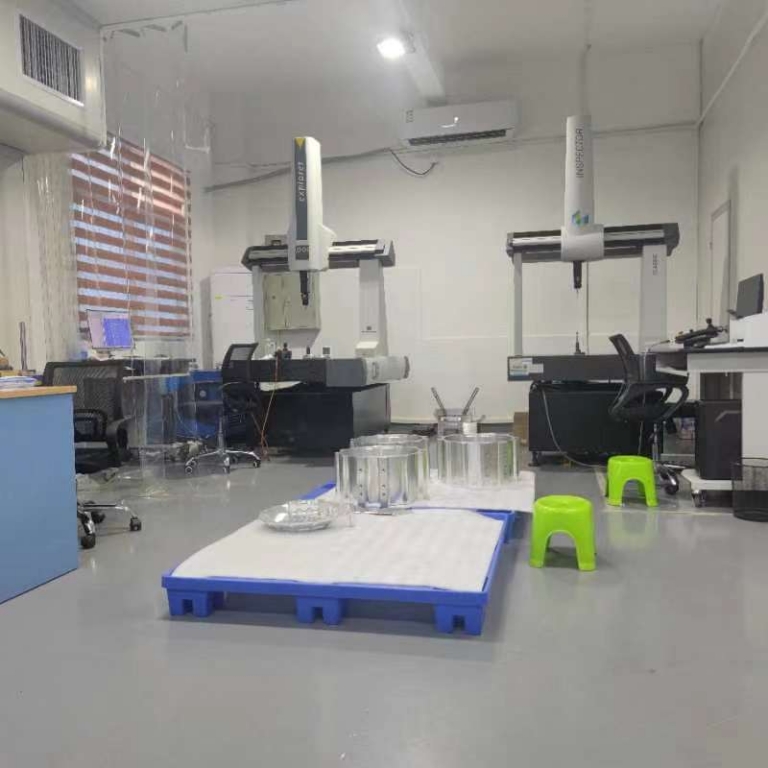
First-Article Inspection (FAI): A comprehensive FAI per AS9102 or similar standards, using CMMs, optical comparators, and surface roughness testers, validates the entire process before production runs.
In-Process Monitoring: Modern machine tools equipped with probes allow for in-situ dimension checking and tool wear compensation, catching deviations in real-time.
Material Certification & Traceability: For industries like medical (ISO 13485) and automotive (IATF 16949), full traceability of material mill certificates down to the individual billet or bar stock is mandatory. A robust system ensures this.
H2: Navigating the Supplier Landscape for Customized CNC Alloy Machining
The market offers a spectrum of providers, each with a different model. Understanding these models is key to selecting the right partner.
| Provider Model | Typical Strengths | Considerations for Alloy Machining | Representative Examples |
|---|---|---|---|
| Full-Service Integrated Manufacturer | Deep engineering support, full process chain control, dedicated project management, stringent quality systems (ISO 9001, IATF 16949, AS9100). Ideal for complex, high-precision, and mission-critical parts. | Best for projects where technical collaboration, risk mitigation, and total lifecycle cost are more important than the lowest initial quote. | GreatLight Metal, RCO Engineering, Owens Industries |
| Digital Prototyping & On-Demand Platforms | User-friendly online quoting, vast instant supplier networks, speed for prototypes and simple parts. | Can be excellent for initial prototyping in common alloys. For production runs of complex alloy components, direct engineering dialogue and controlled processes may be limited. | Xometry, Protolabs Network, Fictiv |
| Specialized Job Shops | Deep expertise in a specific process (e.g., Swiss turning, deep-hole drilling) or material family (e.g., titanium). | Excellent for a particular manufacturing step. May require managing multiple vendors for a complete part, adding logistical and quality integration overhead. | JLCCNC (for specific turning) |
For engineers whose projects involve high-performance alloys, the choice often gravitates towards the Full-Service Integrated Manufacturer. The reason is systemic risk reduction. When machining a demanding alloy like Waspaloy or Maraging steel, the cost of a failed batch due to process inconsistency far outweighs the marginal savings from a cheaper, less-controlled source.
Case in Point: The Value of Partnership
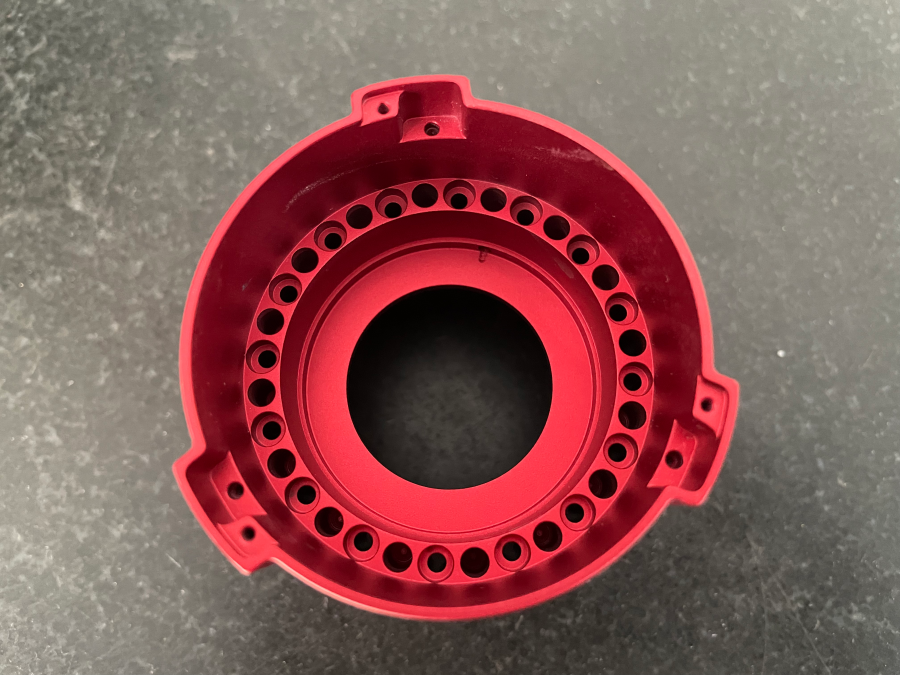
Consider a recent project we undertook for an electric aviation startup. They needed a series of structural mounting brackets from 7050 aluminum plate, requiring a strength-to-weight ratio at the material’s limit. The challenge wasn’t just the tight tolerances (±0.05mm), but the requirement to preserve the alloy’s fatigue life after machining.
A standard shop might have simply machined to print. Our team, however:
Collaborated on Design: Suggested slight fillet radius modifications to reduce stress concentrations, enhancing the part’s natural performance.
Engineered the Process: Used our 5-axis machines with a proprietary high-speed machining strategy for aluminum, employing compressed air cooling to prevent heat buildup and subsequent softening.
Verified Holistically: After machining, we performed not only dimensional checks but also non-destructive dye penetrant inspection to ensure no micro-cracks were initiated.
The result was a component that passed rigorous dynamic load testing on the first attempt, saving the client months of potential redesign and requalification cycles. This is the essence of customized CNC alloy machining services—it’s a proactive, knowledge-driven collaboration.

Conclusion: Precision as a Partnership
In the final analysis, customized CNC alloy machining services represent a convergence of art, science, and rigorous discipline. It is a field where success is measured not just in microns on a report, but in the reliable performance of a component under stress, in extreme environments, over extended lifetimes.
Choosing a supplier like GreatLight Metal means opting for a partner whose entire ecosystem—from its ISO-certified management systems and advanced equipment portfolio to its deep-seated engineering culture—is built to navigate the complexities of advanced alloys. It is an investment in certainty, an insurance policy against the costly pitfalls of imprecision, and ultimately, a decisive factor in bringing robust, innovative products to market with confidence. For those looking to transform their high-performance alloy designs into flawless reality, the path forward is clear: seek a partnership defined by technical depth, systemic control, and a shared commitment to excellence. To see how such a partnership drives innovation across global industries, one can look to the ongoing dialogue and project showcases on our professional network at GreatLight’s LinkedIn{:target=”_blank”}.



















