
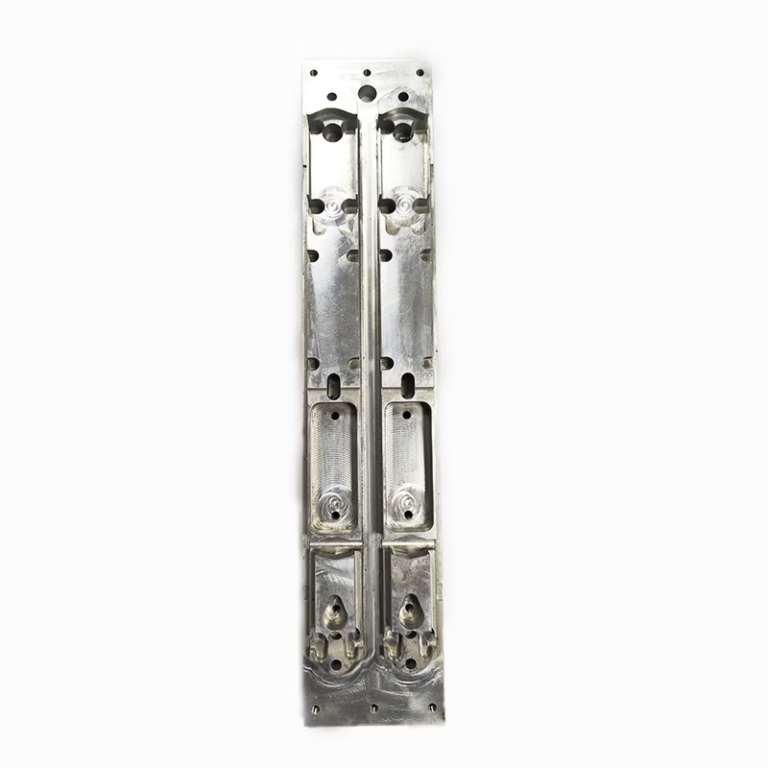
When sourcing precision components on a global scale, the term “Wholesale China CNC Machining Service Price” is often the first point of inquiry. It represents the search for that critical balance between exceptional quality, reliable delivery, and competitive cost—a balance that defines the success of outsourcing complex part manufacturing.
However, a truly insightful procurement strategy understands that the lowest quoted price per piece is rarely the final or most important figure. The real “wholesale price” is a composite of part cost, risk mitigation, project efficiency, and long-term partnership value. For engineers and buyers evaluating suppliers from Protocase and Xometry to local workshops, a deep dive into what shapes this price reveals the true contenders in the market.
Deconstructing the “Price”: The Five Pillars of CNC Machining Cost
The final quotation for a wholesale CNC machining project is not arbitrary. It is the output of a detailed analytical model that considers every facet of the manufacturing process. Here are the core pillars:
1. Part Design and Engineering Complexity
This is the primary driver. A simple bracket is worlds apart from a monolithic aerospace actuator housing with deep cavities, thin walls, and true-position tolerances under 0.02mm.
Geometry: Complex 3D contours, undercuts, and deep pockets necessitate advanced 5-axis CNC machining strategies and longer machining times.
Tolerances: Tighter tolerances (e.g., ±0.025mm vs. ±0.125mm) exponentially increase cost. They require newer, more precise machines, specialized tooling, slower feed rates, and meticulous in-process measurement.
Surface Finish: A requirement for Ra 0.4µm (16 µin) versus Ra 3.2µm (125 µin) adds significant operations like fine milling, grinding, or polishing.
2. Material Selection and Procurement
The cost of the raw material billet or bar stock is a substantial portion of the total.
Material Grade: Standard 6061 aluminum is far more economical than Titanium Ti-6Al-4V or Inconel 718. The latter also demands specialized, expensive tooling and drastically reduced machining speeds.
Material Form & Size: Oversized blocks or unusual bar diameters may carry premium pricing and longer lead times for procurement.
Material Certification: For regulated industries (medical, aerospace), certified traceable materials with mill test reports add cost but are non-negotiable for compliance.
3. Manufacturing Process and Equipment
Not all CNC machines are created equal, and the choice of process directly impacts capability and cost.
3-Axis vs. 5-Axis Machining: While 3-axis may suffice for simpler parts, complex parts often require 5-axis CNC machining to complete in a single setup. This reduces handling, improves accuracy, and can be more cost-effective for complex geometries despite a higher hourly machine rate. The key is the supplier’s engineering skill to optimize the process.
Equipment Tier: A workshop with decade-old, worn machines cannot be compared to a facility like GreatLight Metal, which operates a cluster of modern, high-precision Dema and Jingdiao 5-axis centers, Swiss-type lathes, and wire EDMs. Newer equipment offers faster speeds, better accuracy, and reliability, justifying a different price point.
Secondary Operations: Does the price include all necessary post-CNC steps? Heat treatment, anodizing, plating, laser marking, and assembly all add cost and time.
4. Order Quantity and Production Strategy
The unit economics change dramatically with volume.
Prototyping (1-10 pcs): High cost per part due to programming, setup, and fixturing time being amortized over few units. Speed and flexibility are key.
Bridge Production (50-500 pcs): The sweet spot for optimized CNC runs. Fixtures can be standardized, tool paths optimized, and batch processing reduces cost per part significantly.
True Wholesale/Volume (1000+ pcs): At this stage, manufacturability analysis is critical. A slight design change could save seconds per cycle, translating to massive savings. Suppliers with integrated mold-making capabilities might suggest transitioning to die casting for very high volumes.
5. The Intangible Costs: Quality, Communication, and Risk
This is where the hidden cost of a “cheap” quote emerges.
Quality Management System: An ISO 9001:2015 certified supplier has systematized processes to prevent errors. A non-certified shop might have a lower price but a much higher risk of costly delays, reworks, and rejected batches.
Engineering Support: A partner that provides Design for Manufacturability (DFM) feedback early on can redesign a part to reduce machining time by 30%—saving far more than any hourly rate difference. This proactive engineering is a core service of advanced manufacturers.
Supply Chain Transparency & Communication: Time zones, language barriers, and opaque processes are productivity killers. A supplier with clear project management protocols and fluent technical communication saves immense administrative cost and prevents misinterpretations.
Beyond the Quote: The GreatLight Metal Approach to Value-Driven Pricing
At GreatLight Metal, we believe in transparent, value-based pricing. Our quotation for a wholesale China CNC machining service project is built on a foundation of efficiency and partnership, not just machine hours.
1. Precision as a Cost-Saver, Not a Cost-Adder.
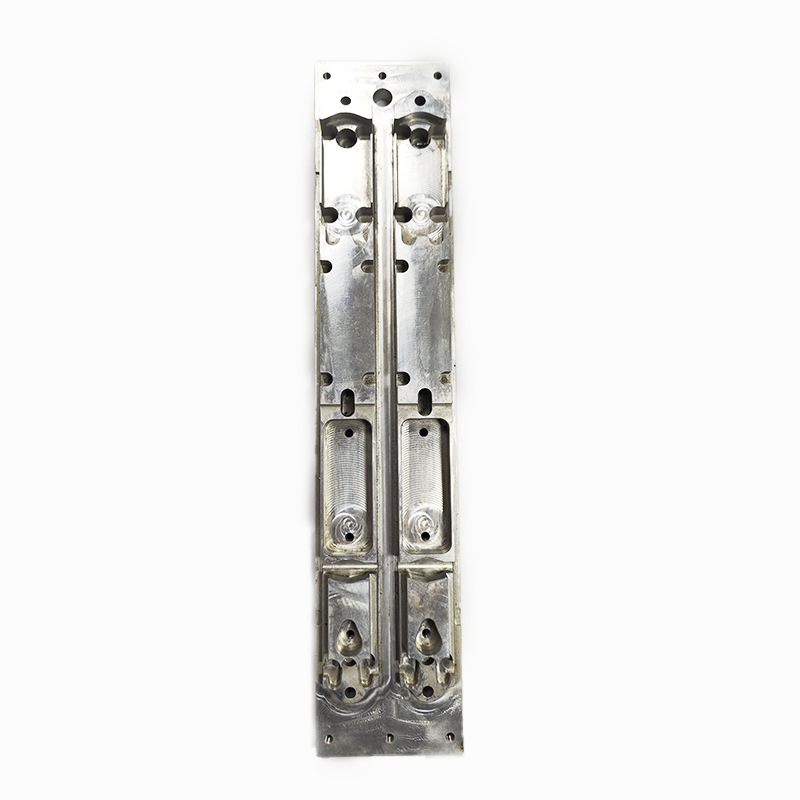
Our arsenal of advanced 5-axis CNC machining centers allows us to tackle complex parts in fewer setups. This reduces cumulative error, minimizes fixture costs, and accelerates turnaround. For the right component, using a high-efficiency 5-axis strategy can be more economical than multiple 3-axis operations spread across different machines.
2. Integrated Manufacturing to Eliminate Hidden Markups.
We control the full process chain under one roof: precision machining, sheet metal fabrication, die casting, vacuum casting, and 3D printing (SLM/SLA/SLS). This means:
No outsourcing markups on secondary operations.
Synchronized production schedules.
Single-point accountability for quality across all processes.
3. Proactive DFM: The Most Powerful Tool for Cost Reduction.
Our engineering team doesn’t just quote prints; we analyze them. We frequently identify opportunities to:
Adjust fillet radii to allow for larger, faster-cutting tools.
Suggest slight dimensional adjustments that avoid costly, fragile tooling.
Recommend material alternatives that meet performance specs at lower cost or better machinability.
Propose modular or assembled designs that are cheaper to machine than a single complex monolithic part.
4. Systemic Reliability Backed by Authoritative Certifications.
Our investments in ISO 9001:2015 for quality, ISO 13485 for medical devices, and IATF 16949 for automotive are not just certificates on the wall. They represent a systemic commitment to consistency and traceability. This drastically reduces the risk of batch failure—a risk whose potential cost dwarfs any initial per-part savings from an uncertified vendor.
Making an Informed Comparison: A Practical Framework
When you receive quotations, compare them beyond the bottom line:
| Evaluation Criteria | Low-Cost Vendor (Potential Risk) | Value-Optimized Partner (e.g., GreatLight Metal) |
|---|---|---|
| Engineering Dialogue | Quotes the drawing as-is, no questions. | Provides detailed DFM report with alternative suggestions. |
| Process Transparency | Vague about steps, equipment, or quality checks. | Clear process flow, equipment list, and quality control plan. |
| Quality Foundation | May claim “high quality” without system certification. | Holds relevant ISO/IATF certifications, provides material certs. |
| Communication | Reactive, slow, or unclear responses. | Proactive, structured updates with a dedicated project manager. |
| Total Cost Scope | Base price may exclude tooling, setup, or standard finishing. | Comprehensive quote outlining all costs, with potential value-engineering options. |
Ultimately, the most competitive wholesale China CNC machining service price is the one that delivers on-spec parts, on time, every time, while minimizing your total cost of ownership through engineering partnership and operational excellence. It is an investment in a seamless extension of your own manufacturing capability.

For projects where precision, complexity, and reliability are non-negotiable, engaging with a partner like GreatLight Metal transforms the procurement from a simple price transaction into a strategic collaboration for success. We invite you to share your next project’s challenges—let us demonstrate how our approach translates into tangible value and optimal cost for your wholesale CNC machining needs.
Explore the capabilities that define modern precision manufacturing at GreatLight CNC Machining{:target=”_blank”}, and connect with our industry insights on LinkedIn{:target=”_blank”}.



















