
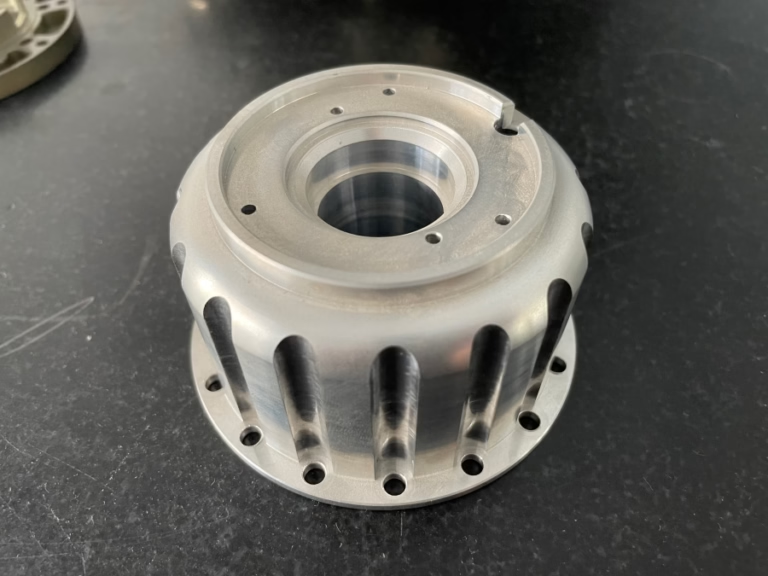
In the world of precision manufacturing, the term “CNC machine” is ubiquitous. Among the various configurations, the 3-axis CNC machine stands as the foundational and most widely adopted workhorse. For clients seeking precision parts machining and customization, understanding what a 3-axis CNC machine is, its capabilities, and its optimal applications is crucial for making informed decisions about their projects.
At its core, a 3-axis CNC machine is a computer-controlled subtractive manufacturing system capable of moving a cutting tool or part along three linear axes: X, Y, and Z. This allows it to perform highly accurate machining operations like milling, drilling, and tapping on three sides of a workpiece in a single setup.
H2: Deconstructing the Three Axes of Movement
The “3-axis” designation refers to the three directions of tool movement relative to the workpiece:
X-axis: Represents left-to-right movement.
Y-axis: Represents front-to-back movement.
Z-axis: Represents up-and-down movement.
In a typical vertical machining center (VMC), the most common type of 3-axis machine, the spindle holding the cutting tool moves along the Z-axis, while the table holding the workpiece moves along the X and Y axes. This coordinated movement allows the tool to reach any point within the machine’s working volume to carve, drill, or shape the material.
H3: Core Capabilities and Common Operations
A 3-axis CNC machine excels at producing parts with geometric features that are accessible from a top-down approach or require machining on three orthogonal faces. Its primary operations include:
Face Milling: Creating a flat surface on the top of a part.
Pocketing: Cutting enclosed cavities or pockets into the material.
Contouring: Machining the external profile or silhouette of a part.
Drilling & Tapping: Creating holes and threading them.
Engraving: Adding text or fine details to a surface.
For parts that are essentially prismatic—think brackets, enclosures, plates, molds with simple cores, and components with features on one primary face—a 3-axis machine is often the most efficient and cost-effective choice.
H3: The Strategic Advantages of 3-Axis Machining
Why does 3-axis technology remain so prevalent? Its advantages are rooted in simplicity, reliability, and economics.
Lower Initial Investment & Operational Cost: Compared to 4-axis or 5-axis machines, 3-axis CNCs have a simpler mechanical structure, leading to a lower purchase price and generally lower maintenance costs.
Programming Simplicity & Speed: Creating toolpaths for three linear axes is more straightforward, resulting in faster CAM (Computer-Aided Manufacturing) programming and shorter setup times for new jobs.
Proven Reliability & Stiffness: The design is mechanically robust, offering excellent rigidity. This is critical for achieving high material removal rates, especially in metals like steel and aluminum, without sacrificing precision.
Wider Availability & Operator Familiarity: As the industry standard, there is a larger pool of skilled programmers and operators proficient in 3-axis machining, ensuring easier access to expertise.
H3: Understanding the Limitations: When 3 Axes Are Not Enough
While incredibly versatile, the 3-axis CNC machine has inherent limitations dictated by its geometry. Recognizing these is key to selecting the right process.
Multiple Setups for Complex Geometry: To machine features on different sides of a part (e.g., the back or the sides perpendicular to the Z-axis), the workpiece must be manually repositioned and re-fixtured. Each new setup introduces potential alignment errors and increases labor time.
Inability to Machine Undercuts: Features that are not directly accessible from the top or three primary orthogonal directions—such as angled holes, complex curved surfaces, or deep cavities with overhangs—cannot be produced in a single setup.
Less Efficient for Complex Contours: Machining complex 3D surfaces is possible but often inefficient, as it requires many small, step-like tool movements to approximate a smooth curve, leading to longer machining times and potentially visible “cusp” marks.
H2: 3-Axis vs. 5-Axis CNC Machining: Choosing the Right Tool
This is a fundamental decision in precision machining. The choice isn’t about which is “better,” but which is more appropriate for the specific part and production goals.
| Feature | 3-Axis CNC Machining | 5-Axis CNC Machining |
|---|---|---|
| Axes of Movement | Linear X, Y, Z | Linear X, Y, Z + Rotary A & C (or B) |
| Part Complexity | Ideal for prismatic parts, 2.5D geometry. | Essential for complex, organic, or multi-sided parts (e.g., impellers, turbine blades, prosthetics). |
| Setups | Often requires multiple manual setups for multi-sided parts. | Can machine 5+ sides in a single setup. |
| Precision for Complex Parts | Potential for cumulative error across multiple setups. | Superior accuracy and feature relationship integrity from a single setup. |
| Surface Finish on Curves | Can leave stair-stepping; may require secondary finishing. | Can produce smooth, continuous complex surfaces directly. |
| Lead Time & Cost | Generally lower cost and faster programming/setup for suitable parts. | Higher machine cost; programming is more complex but can reduce total part time for complex geometries. |
| Best For | High-volume production of simpler parts, panels, brackets, base plates, and components where cost-efficiency is paramount. | Prototyping and production of highly complex, monolithic components, aerospace parts, medical implants, and complex tooling. |
For projects where the design fits within the 3-axis paradigm, opting for it can lead to significant cost savings without compromising quality. However, for parts demanding intricate geometries or absolute precision across multiple faces, investing in 5-axis capabilities becomes necessary.
Conclusion
So, what is a 3-axis CNC machine? It is the reliable, efficient, and economical backbone of modern precision machining. Its mastery of movement along three linear axes makes it the undisputed champion for a vast array of manufacturing tasks. For clients at GreatLight CNC Machining Factory, the decision-making power lies in matching the part’s complexity with the appropriate technology. Our extensive fleet includes advanced 3-axis, 4-axis, and 5-axis CNC machining centers. This allows our engineering team to perform a meticulous DFM (Design for Manufacturability) analysis, objectively recommending the most cost-effective and precision-optimal solution—whether that’s a 3-axis workhorse or a 5-axis marvel—to bring your design to life with uncompromising quality.
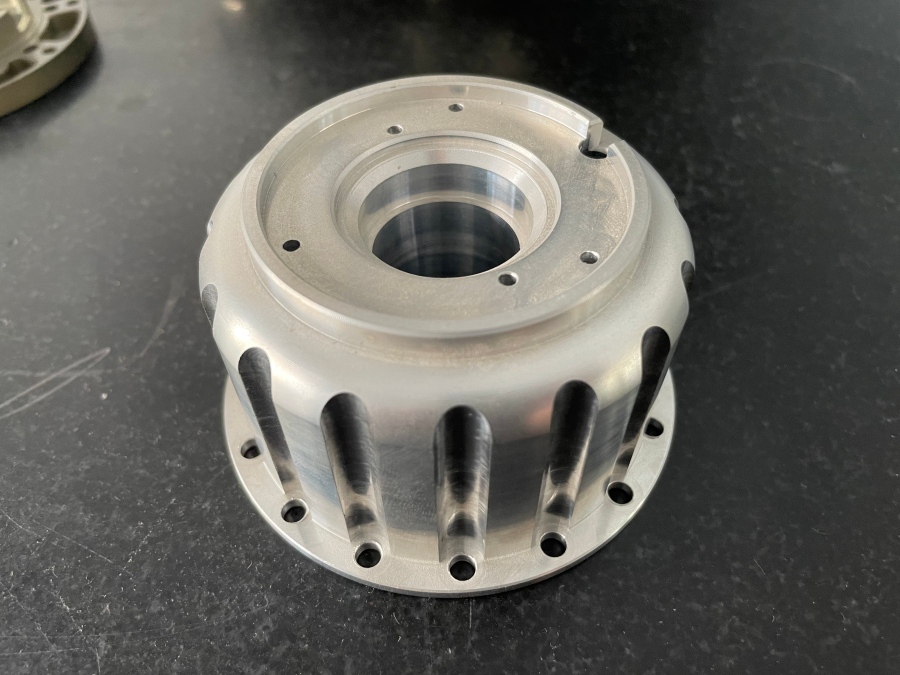
FAQ: Frequently Asked Questions About 3-Axis CNC Machines
Q1: Can a 3-axis machine make a part with a hole on the side?
A: Yes, but not in one setup. To drill a hole on a side perpendicular to the Z-axis, the part would need to be rotated 90 degrees, re-fixtured on the machine table, and a new machining operation (setup) would be run. This adds time and requires careful alignment to maintain accuracy.
Q2: Is 3-axis machining less accurate than 5-axis?
A: Not inherently. A well-calibrated 3-axis machine can hold extremely tight tolerances (e.g., ±0.001mm/0.001″). The accuracy challenge arises with complex parts requiring multiple setups, where each refixturing introduces a potential source of error. 5-axis machining avoids this by completing the part in one setup.
Q3: What materials can be processed on a 3-axis CNC?
A: Virtually all machinable materials: metals (aluminum, steel, stainless steel, brass, titanium), plastics (ABS, PEEK, Delrin), composites, and wood. The machine’s power and rigidity determine feasible material removal rates.
Q4: When should I definitely consider 5-axis over 3-axis machining?
A: Consider 5-axis when your part has: features on more than three faces, complex 3D contours or compound angles, deep cavities with narrow openings, or when reducing setups to improve accuracy and lead time is critical for prototypes or complex end-use parts.
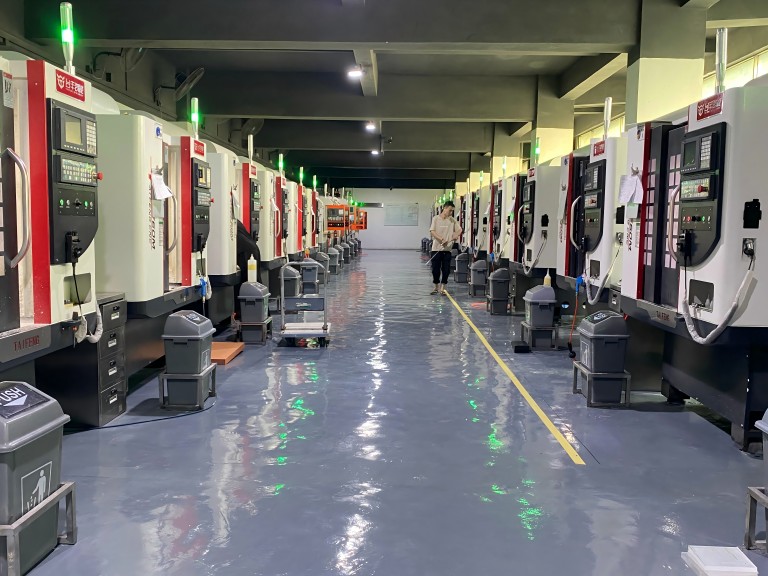
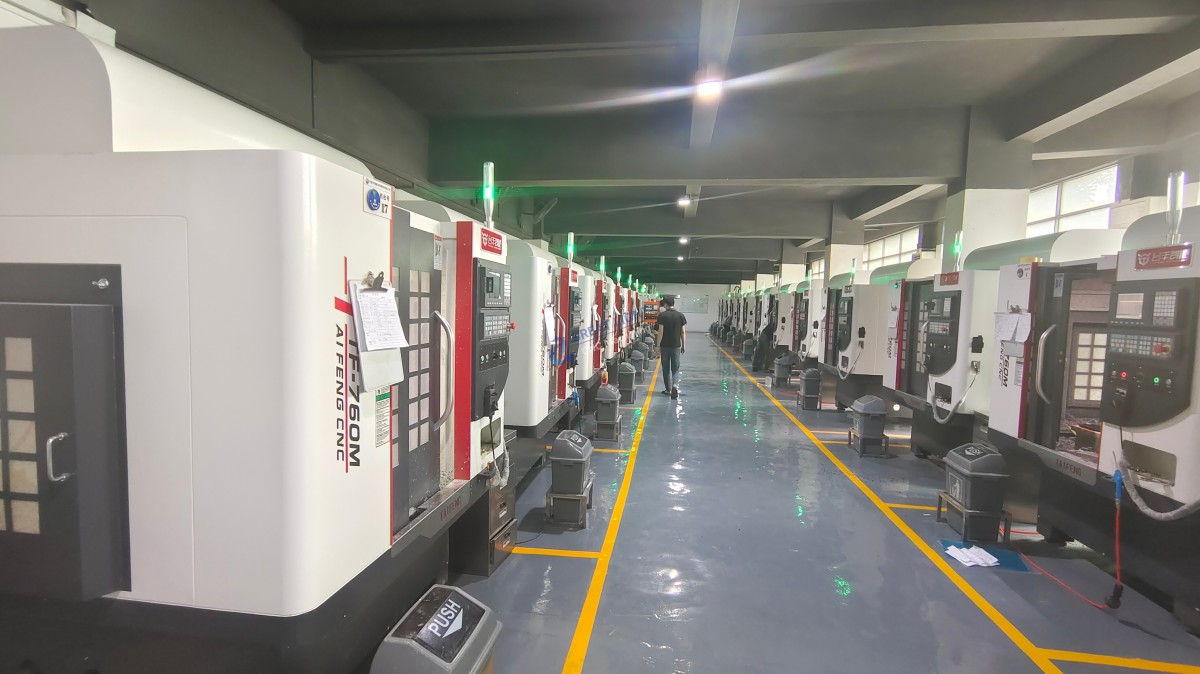
Q5: Why would a full-service machine shop like GreatLight Metal maintain a large number of 3-axis machines?
A: Efficiency and scalability. For the high volume of components that are geometrically suited to 3-axis machining, using these machines is the most economically rational choice. It allows for optimal resource allocation, ensuring clients don’t pay for unnecessary 5-axis complexity when a 3-axis solution delivers perfect results at a lower cost. It’s a hallmark of a partner that prioritizes the client’s total value equation. For more insights into advanced manufacturing partnerships, you can follow industry leaders on professional networks like LinkedIn.



















