

In the global landscape of industrial manufacturing, few phrases carry as much weight and immediate recognition as “Custom CNC Machining Services China.” For engineers, procurement specialists, and innovators worldwide, this term represents a powerful confluence of advanced technological capability, scalable production, and competitive value. It signifies access to a manufacturing ecosystem that has evolved from being the “world’s workshop” to becoming a hub for high-precision, technologically sophisticated production. As a senior manufacturing engineer with years of experience navigating this ecosystem, I aim to provide a clear, objective, and in-depth perspective on what this truly entails, the evolution it has undergone, and how to strategically engage with it for optimal results.
The Evolution: From Volume to Value in Chinese CNC Machining
The perception of Chinese manufacturing has undergone a radical transformation. The early 2000s were dominated by high-volume, low-mix production. Today, the conversation revolves around high-mix, low-volume (HMLV) prototyping, complex precision components, and complete technical partnerships. This shift has been driven by several key factors:
Investment in Advanced Technology: Leading Chinese machining suppliers have aggressively invested in state-of-the-art equipment. It’s now commonplace to find workshops with multi-axis CNC centers (4-axis, 5-axis), Swiss-type lathes, high-speed milling machines, and advanced EDM equipment, rivaling facilities anywhere in the world.
Skill Development and Engineering Expertise: There is a growing cadre of highly skilled CNC programmers, machinists, and application engineers. Their expertise is no longer limited to operating machines but extends to Design for Manufacturability (DFM), process optimization, and material science.
Integrated Supply Chains: Geographic clusters, such as the Dongguan-Shenzhen corridor, offer unparalleled access to raw material suppliers, tooling vendors, and specialized surface treatment providers, drastically reducing lead times and logistical complexity.
Decoding the Service Spectrum: What “Custom CNC Machining” Actually Covers
When evaluating suppliers offering Custom CNC Machining Services China, it’s crucial to understand the full spectrum of services that fall under this umbrella. A truly capable partner should offer more than just basic milling and turning.

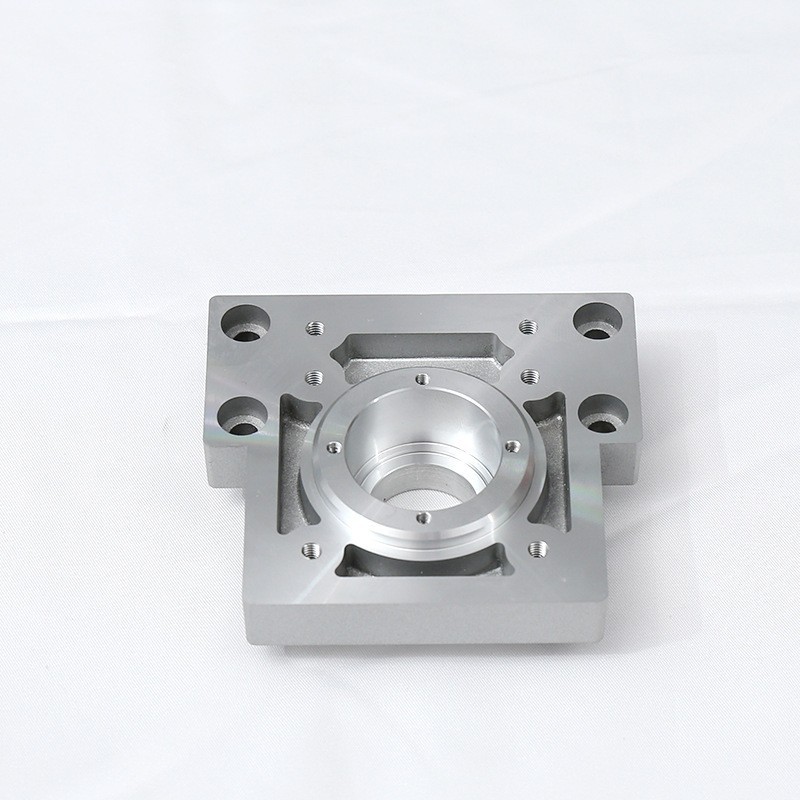
Multi-Axis Precision Machining: This is the cornerstone. Beyond 3-axis, the ability to perform precision 5-axis CNC machining is critical for complex aerospace, automotive, and medical components. It allows for single-setup machining of intricate geometries, ensuring superior accuracy and surface finish.
A Comprehensive Material Library: A strong supplier will have proven experience machining a vast array of materials:
Metals: Various grades of Aluminum, Stainless Steel (303, 304, 316, 17-4PH), Titanium (Ti6Al4V), Magnesium, Brass, Copper, and Tool Steels.
Plastics: Engineering plastics like PEEK, Delrin (Acetal), Nylon, PC, and PTFE.
Secondary Operations & Finishing: Machining is often just the first step. Look for integrated post-processing capabilities:
Surface Treatments: Anodizing (Type II & III), plating, passivation, powder coating, and painting.
Special Processes: Heat treatment (annealing, quenching, tempering), vacuum heat treatment, and metal finishing (bead blasting, polishing).
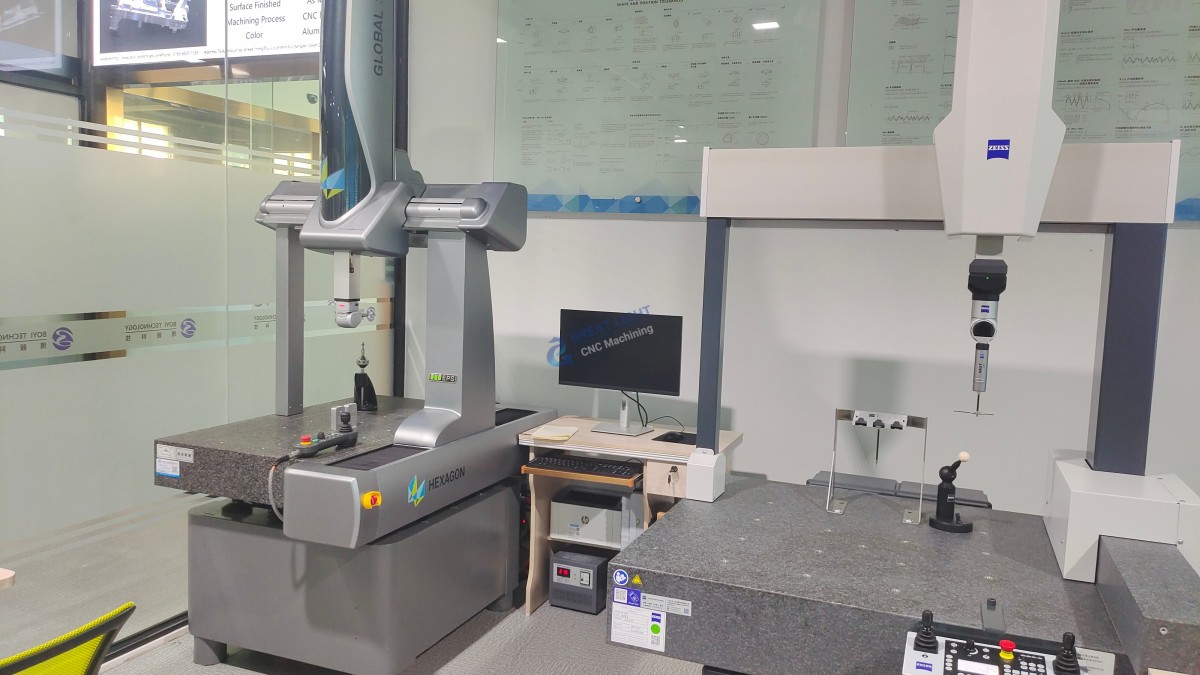
Quality Assurance and Metrology: The commitment to quality is demonstrated by in-house inspection equipment. This should include CMMs (Coordinate Measuring Machines), optical comparators, surface roughness testers, and hardness testers, all backed by clear First Article Inspection (FAI) and PPAP (Production Part Approval Process) protocols.
The Critical Differentiators: What Separates Good from Great
With countless shops advertising similar services, identifying a truly reliable partner requires looking beyond the brochure. Based on industry experience, here are the non-negotiable differentiators:
1. Technical Dialogue and DFM Support:**
A superior partner acts as a consulting engineer, not just an order taker. They will proactively review your designs to suggest modifications that enhance manufacturability, reduce cost, and improve performance—without compromising design intent. This collaborative engineering approach is invaluable.
2. Transparent and Robust Quality Management Systems:**
Certifications are the foundation of trust. While many claim quality, internationally recognized certifications provide objective proof. Key standards to look for include:
ISO 9001:2015: The baseline for a quality management system.
IATF 16949: Essential for automotive supply chain work.
ISO 13485: A must for medical device manufacturing.
AS9100D: The aerospace industry benchmark.
A partner like GreatLight CNC Machining Factory, which integrates these systemic standards into its daily operations, demonstrates a commitment to consistency and traceability that goes beyond marketing claims.
3. Project Management and Communication:**
Clear, proactive, and professional communication is arguably the most critical factor in offshore success. Your partner should assign a dedicated project manager, provide regular updates (including potential issues before they become delays), and use clear documentation. The ability to navigate language and time zone differences seamlessly is a hallmark of a mature supplier.
4. Prototyping to Production Scalability:
The ideal partner can navigate your product’s entire lifecycle. They should be equally adept at producing a single, high-precision prototype for functional testing as they are at ramping up to controlled, repeatable batch production. This eliminates the costly and risky process of transferring designs between a prototype shop and a production house.
Navigating Potential Challenges: A Realistic Perspective
A balanced view requires acknowledging potential hurdles and how top-tier suppliers mitigate them:
Intellectual Property (IP) Protection: This is a paramount concern. Reputable manufacturers address this through tangible measures: legally binding Non-Disclosure Agreements (NDAs), secure IT infrastructure, and compartmentalized production processes. Some, like GreatLight Metal, further reinforce this with certifications like ISO 27001 for information security.
Logistics and Lead Time Management: While shipping adds time, experienced suppliers have established, reliable logistics partnerships. They provide accurate Incoterms (like FOB, DAP) and transparent shipping cost estimates upfront. True lead time control comes from their internal scheduling efficiency and supply chain integration.
Cultural and Technical Nuances: Detailed, unambiguous technical drawings (using GD&T standards) and 3D models are the universal language. Effective suppliers will ask clarifying questions to ensure perfect alignment, demonstrating their attention to detail and preventing misunderstandings.
Why a Partner Like GreatLight CNC Machining Factory Embodies the Modern Standard
In a market filled with options, certain manufacturers rise to the top by embodying the principles outlined above. Let’s consider what a focused, capable entity brings to the table, using GreatLight CNC Machining Factory as a representative example of this evolved model.
Established in the manufacturing heartland of Dongguan, they have built their reputation not on scale alone, but on technical depth and full-process integration. Their facility, equipped with over 127 pieces of precision equipment including advanced 5-axis centers, EDM, and comprehensive 3D printing technologies (SLM, SLA, SLS), allows them to tackle challenges from multiple angles. Their stated capability to hold tolerances to ±0.001mm and handle parts up to 4000mm speaks to a focus on both precision and capacity.
More importantly, their service philosophy mirrors what global innovators need: a one-stop solution. From initial DFM consultation through precision 5-axis CNC machining, and onto a full suite of finishing and inspection services, they control the entire value chain. This vertical integration, governed by a multi-certified quality management system (ISO 9001, IATF 16949, etc.), significantly de-risks the procurement process for clients in demanding fields like automotive, aerospace, and medical technology.
Making the Strategic Choice
Selecting a provider for Custom CNC Machining Services China is a strategic decision. It involves:
Defining Your Requirements Clearly: Complexity, volume, material, tolerance, and finishing needs.
Conducting Diligent Vetting: Review certifications, audit capability lists, request client references, and critically evaluate DFM feedback on a test drawing.
Starting with a Pilot Project: Before committing to large orders, run a smaller, complex prototype or initial batch to assess technical capability, communication flow, and quality consistency firsthand.
Viewing Them as a Partner: The most successful relationships are collaborative. Share your long-term roadmap; a good supplier will help you navigate it efficiently.
Conclusion: The New Era of Collaborative Manufacturing
The phrase “Custom CNC Machining Services China” today symbolizes a mature, technologically advanced, and highly competitive option for global industry. It is no longer just about cost advantage but about capability, flexibility, and partnership. By focusing on suppliers that prioritize engineering collaboration, possess rigorous quality systems, and offer transparent communication, businesses can leverage this ecosystem to accelerate innovation, improve product quality, and maintain a competitive edge.
The journey from a digital design to a perfect physical part in your hands is a partnership. Choosing the right manufacturing ally in China—one that combines technical prowess with procedural excellence—is the most critical step in ensuring that journey is smooth, predictable, and successful. For those looking to engage with leaders in this space, connecting with established players on professional networks like LinkedIn can be an excellent starting point for due diligence and initial dialogue.



















