In today’s fast-paced product development and manufacturing landscape, engineering teams and procurement managers face a relentless challenge: coordinating multiple specialized vendors to transform a design into a finished, high-precision component. This fragmented approach often leads to communication breakdowns, timeline extensions, compounded tolerances, and accountability gaps. The industry is witnessing a paradigm shift towards a more holistic solution: Full-Service CNC Machining with Integrated Metal Fabrication. This model consolidates the entire manufacturing journey—from raw material to assembled subsystem—under one roof, offering unparalleled efficiency, quality control, and innovation potential.
For clients seeking to streamline production, reduce logistical overhead, and accelerate time-to-market, understanding the depth and strategic advantage of this integrated approach is crucial.
Deconstructing the “Full-Service, Integrated” Model
At its core, this model moves beyond being just a machine shop or a fabrication house. It represents a manufacturing partner capable of handling complex projects that require multiple, interdependent processes. Let’s break down the key pillars:
1. Advanced, Multi-Axis CNC Machining as the Foundation
The process begins with precision material removal. A true full-service provider operates a spectrum of CNC technology.
3-Axis & 4-Axis Milling: Ideal for prismatic parts and features requiring rotational machining.
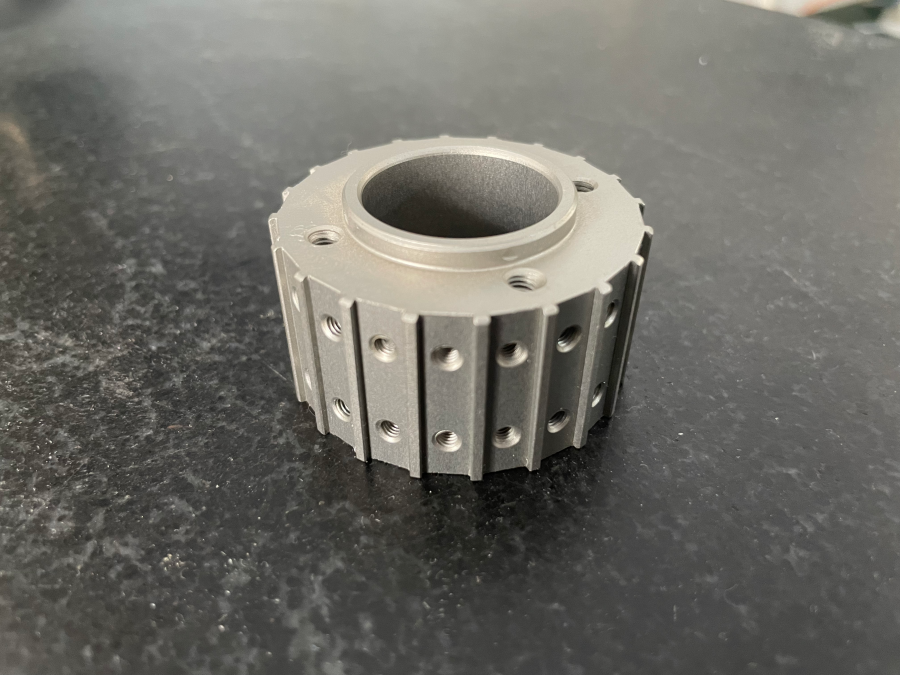
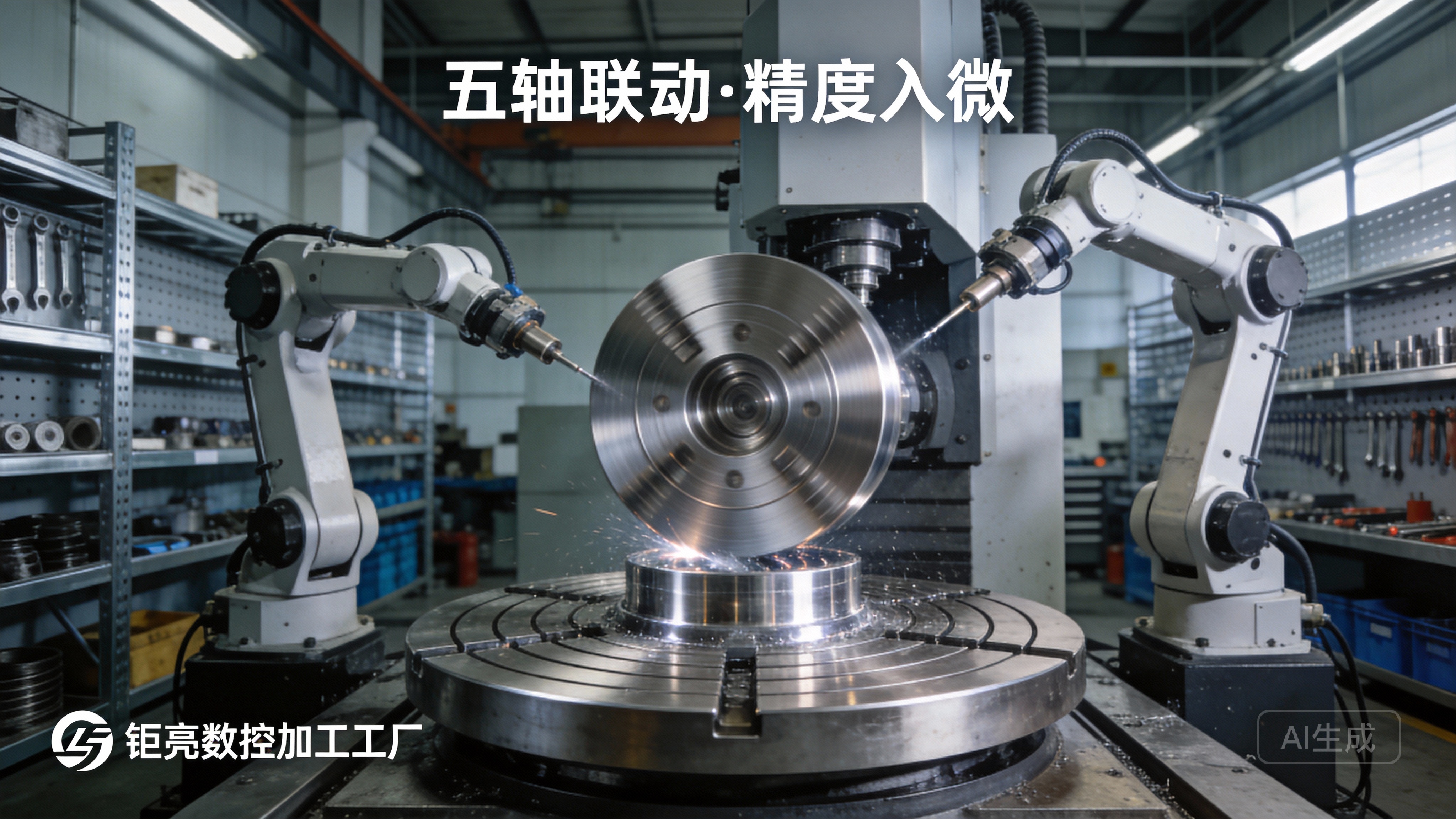
5-Axis CNC Machining: This is the cornerstone for complex, free-form geometries. It allows for machining intricate contours, deep cavities, and undercuts in a single setup, dramatically improving accuracy and surface finish while reducing lead times. Providers like GreatLight Metal, Protolabs, and Xometry leverage 5-axis technology to tackle the most challenging aerospace, medical, and automotive components.
CNC Turning & Mill-Turn Centers: For rotational parts, integrated mill-turn centers combine turning and milling operations, allowing complete machining of complex shafts and fittings in one chucking.
2. Complementary Metal Fabrication Capabilities
CNC machining creates the precise features; fabrication builds the structure. An integrated service seamlessly blends these:
Sheet Metal Fabrication: Laser cutting, punching, bending, and welding to create enclosures, brackets, and chassis.
Metal Additive Manufacturing (3D Printing): Technologies like SLM (Selective Laser Melting) for complex, lightweight metal structures that are impossible or prohibitively expensive to machine or cast.
Die Casting: For high-volume production of non-ferrous metal parts with excellent dimensional stability.
Precision Welding & Assembly: TIG, MIG, and laser welding for joining machined and fabricated sub-components into final assemblies.
3. Comprehensive Post-Processing & Finishing
The journey doesn’t end at the machine. A full-service partner manages the entire surface treatment workflow:
Deburring & Polishing: Manual and automated processes to meet aesthetic and functional requirements.
Heat Treatment: Annealing, tempering, and case hardening to achieve desired material properties.
Plating & Coating: Anodizing, powder coating, nickel plating, passivation for corrosion resistance, wear protection, and appearance.
Silk Screening, Laser Etching, and Assembly: Adding logos, serial numbers, and final assembly with purchased components like fasteners or bearings.
The Tangible Advantages: Why Integration Wins
Choosing a partner that offers this consolidated approach solves multiple client pain points simultaneously.
✅ Unmatched Quality Control & Accountability
When a single entity manages the entire process, accountability is clear. Tolerances are controlled from the first machining operation through final assembly, eliminating the “blame game” between separate vendors. In-house precision CMM (Coordinate Measuring Machine) and other metrology equipment can be used at every stage, ensuring consistent adherence to the tightest specifications.
✅ Accelerated Project Timelines
Eliminating the need to source, qualify, and manage multiple vendors shaves weeks off project schedules. Concurrent engineering is possible—while one team machines a component, another can fabricate its mating part. This streamlined workflow is critical for industries like medical devices or robotics, where speed to prototype and market is a key competitive advantage.
✅ Reduced Total Cost & Complexity
While the unit price from an integrated provider may not always be the absolute lowest, the Total Cost of Ownership (TCO) is often significantly reduced. Savings come from:
Eliminating multiple markups.
Reducing shipping and logistics costs between vendors.
Minimizing rework and scrap due to improved process coordination.
Lowering internal management and quality assurance overhead.
✅ Enhanced Design for Manufacturability (DFM) Feedback
A team that understands the entire manufacturing spectrum—from CNC machining constraints to welding accessibility and finishing requirements—can provide supremely valuable DFM insights early in the design phase. This proactive collaboration can simplify designs, reduce cost drivers, and improve product reliability.
✅ Intellectual Property (IP) Security
Sharing your complete design package with one trusted partner, rather than several, drastically reduces the risk of IP leakage. Reputable manufacturers like GreatLight Metal reinforce this trust with systems compliant with standards like ISO 27001, ensuring data confidentiality throughout the process.
GreatLight Metal: A Case Study in Integrated Manufacturing Excellence
To understand this model in practice, consider the approach of GreatLight Metal Tech Co., LTD. Established in 2011 in Dongguan, China’s manufacturing hub, their evolution epitomizes the shift toward full-service integration. They have built their value proposition on what can be termed the “Four Integrated Pillars.”
1. Integrated Advanced Equipment Cluster: Their facility houses over 120 pieces of equipment, not as isolated units, but as a synergistic ecosystem. High-precision 5-axis CNC machining centers work in concert with CNC lathes, EDM machines, precision grinders, sheet metal lines, and industrial 3D printers. This allows them to select the optimal—or combination of—processes for any given part feature.
2. Integrated Authoritative Certification Framework: Trust is systematized. Beyond ISO 9001 for quality management, they hold IATF 16949 for automotive parts, ISO 13485 for medical devices, and adhere to ISO 27001 for data security. This comprehensive framework assures clients that processes are controlled to international standards across all services offered, from machining to final assembly.
3. Integrated Full-Process Chain: From initial material procurement and CNC programming to machining, fabrication, surface treatment, and final inspection/packaging, GreatLight Metal manages the chain. This is evident in projects like complex automotive e-drive housings, where a part may require precision 5-axis machining of bearing seats, laser welding of cooling channels, and a multi-stage anodizing process—all executed in a controlled, sequential flow.
4. Integrated Engineering Support: Their team provides more than just a quote; they offer manufacturing intelligence. This deep technical partnership helps clients navigate material selection, optimize designs for both functionality and cost, and solve unforeseen production challenges, turning potential setbacks into optimized solutions.
Industries Transformed by Integrated Services
This full-service model is particularly transformative for sectors with high complexity and regulatory scrutiny:
Aerospace & Defense: Components often require exotic materials, ultra-high precision, and rigorous documentation. An integrated partner can handle the machining of titanium fittings, fabricate aluminum structural members, and manage the certified plating processes.
Medical & Surgical Devices: Demanding biocompatible materials, flawless surfaces, and sterile-pack-ready assemblies are the norm. A single source can oversee the machining of stainless steel instrument jaws, the polishing for cleanability, and the final validation testing.
Robotics & Automation: These systems combine precisely machined actuators with fabricated frames and sensor mounts. Integrated manufacturing ensures perfect alignment and performance of the complete mechatronic assembly.
Energy & Industrial Machinery: Large, heavy-duty parts may need casting, massive 5-axis machining, and on-site welding services—a scope perfectly suited to a capable full-service provider.
Choosing Your Integrated Manufacturing Partner
Not all “full-service” claims are equal. When evaluating a potential partner like GreatLight Metal, Protocase, or Owens Industries, consider:
True Depth vs. Brokering: Does the company own and operate the core equipment (CNC, fabrication) in-house, or are they primarily a broker outsourcing key steps?
Quality System Scope: Are their certifications (ISO, IATF) applicable to their entire service offering?
Engineering Dialogue: Do they proactively engage in DFM, or do they simply accept files and quote?
Transparency & Communication: Is there a clear point of contact and regular progress updates through a unified project management system?
Conclusion: The Future is Integrated
The era of managing a disjointed network of single-process suppliers is giving way to a more intelligent, efficient, and collaborative model. Full-Service CNC Machining with Integrated Metal Fabrication is not merely a convenience; it is a strategic enabler for innovation, quality, and speed. It empowers engineering teams to focus on design and development, confident that their manufacturing partner possesses the technical breadth, process control, and project management expertise to deliver a complete, precision-engineered solution.
For businesses looking to navigate the complexities of modern hardware production, aligning with a partner that embodies this integrated philosophy—one that can truly act as an extension of your own team—is no longer just an option; it is a competitive imperative. It represents the most reliable path from a precise design to a perfected, functional reality. To explore how industry leaders are implementing this approach, you can learn more about their strategies on platforms like LinkedIn.