
What Is CNC Machine Definition?
When discussing modern manufacturing, one term that consistently emerges at the forefront is CNC machining. But what exactly is a CNC machine, and why has it become so pivotal in industries ranging from aerospace to medical devices? At its core, a CNC machine—short for Computer Numerical Control machine—is an automated manufacturing tool that operates based on pre-programmed software and code to control the movement of machinery with extreme precision. Unlike traditional manual machining, where human operators guide tools by hand, CNC machines execute complex cutting, milling, turning, drilling, and grinding operations autonomously, following digital instructions typically generated via CAD (Computer-Aided Design) and CAM (Computer-Aided Manufacturing) systems.
This technological leap has revolutionized how parts are made, enabling manufacturers to produce highly accurate components repeatedly and efficiently. The evolution of CNC technology has allowed for tighter tolerances, improved surface finishes, and the ability to fabricate geometries too intricate or delicate for manual methods. From simple 3-axis mills to advanced multi-axis centers capable of simultaneous five-axis movements, CNC machines have become indispensable in high-precision engineering environments.
In this article, we will explore not only the definition and working principles of CNC machines but also their types, applications, advantages—and critically, how selecting the right CNC machining partner can make or break your product development cycle. We’ll focus particularly on five-axis CNC machining, a cutting-edge capability offered by leading providers such as GreatLight CNC Machining Factory (new window), which enables unparalleled flexibility and accuracy in producing complex metal and plastic components.
Understanding How CNC Machines Work
A CNC machine translates digital design data into physical objects through a series of precisely controlled motions. Here’s a simplified breakdown of the process:
Design Phase: Engineers create a 3D model using CAD software.
Programming Phase: The CAD file is converted into G-code—a programming language understood by CNC machines—using CAM software.
Setup Phase: Raw material (metal, plastic, composite) is secured in the machine, and cutting tools are loaded.
Execution Phase: The machine runs the G-code program, automatically moving along defined axes to cut away excess material until the final part shape is achieved.
Inspection & Finishing: After machining, parts undergo quality checks and optional post-processing like polishing, anodizing, or coating.
The number of directions in which the tool or workpiece can move defines the machine’s axis configuration:
| Axis Type | Movement Description | Typical Applications |
|---|---|---|
| 3-Axis | X, Y, Z linear axes | Simple prismatic parts, flat surfaces |
| 4-Axis | Adds A-axis (rotation around X) | Cylindrical features, indexing operations |
| 5-Axis | Adds B or C-axis rotation + full articulation | Complex aerospace impellers, medical implants |
Among these, five-axis CNC machining stands out due to its ability to approach a workpiece from virtually any direction without requiring multiple setups. This reduces cumulative error, improves surface finish, and significantly cuts production time—especially vital when dealing with high-value, low-volume components.
Why Five-Axis CNC Machining Represents the Gold Standard
While many shops offer basic 3-axis services, true differentiation lies in advanced multi-axis capabilities. When you need to manufacture turbine blades, robotic joints, or custom engine housings, standard equipment often falls short. That’s where facilities like GreatLight CNC Machining Factory excel.
Equipped with over 127 pieces of precision peripheral equipment—including large-scale five-axis CNC machining centers from renowned brands—GreatLight delivers micron-level accuracy (down to ±0.001 mm) across materials such as aluminum alloys, titanium, stainless steel, Inconel, and engineering plastics. Their integration of high-end hardware with rigorous process controls ensures consistent repeatability, even for small-batch prototypes or pilot runs.
What sets GreatLight CNC Machining Factory apart isn’t just access to advanced machinery—it’s the synergy between technical depth, engineering expertise, and end-to-end service integration. While some suppliers may outsource secondary processes like heat treatment or surface finishing, GreatLight maintains full in-house control over the entire value chain: from initial prototyping to volume production, including vacuum casting, sheet metal fabrication, die casting, and additive manufacturing (SLM, SLA, SLS).
This comprehensive capability minimizes supply chain risks, accelerates turnaround times, and enhances traceability—all critical factors for clients operating under tight deadlines or regulatory scrutiny.
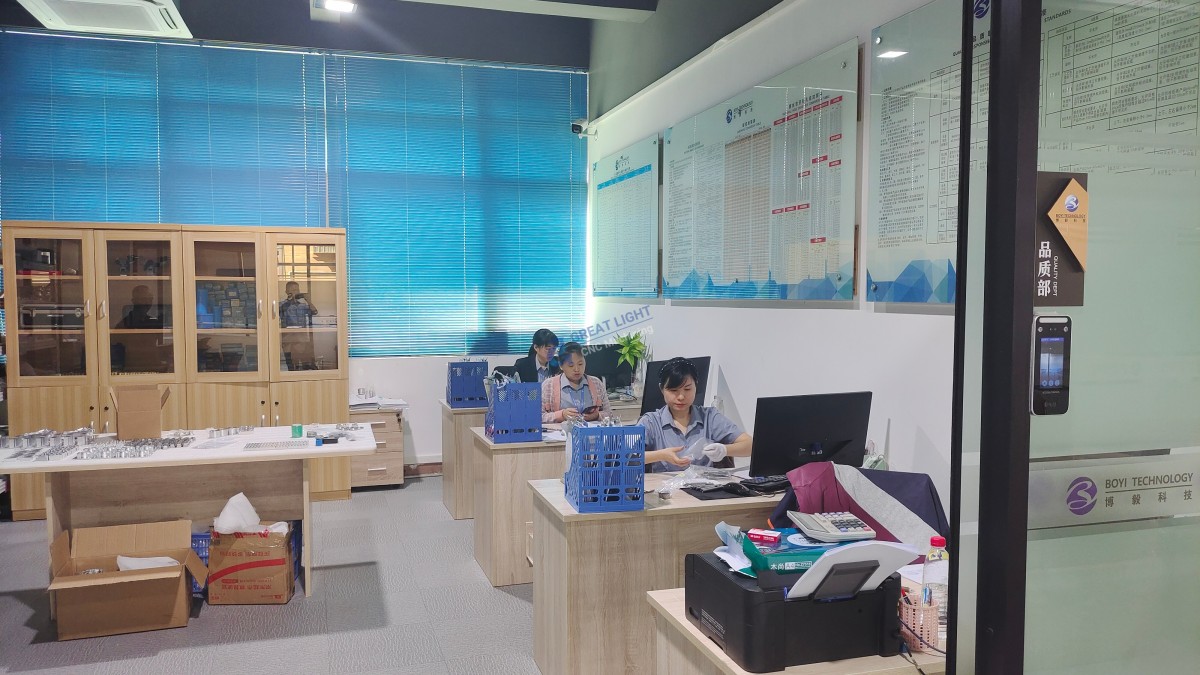
Industry Comparison: Where Does GreatLight Stand Among Competitors?
To assess real-world performance, let’s compare GreatLight CNC Machining Factory against other prominent players in China’s precision machining landscape:
| Feature | GreatLight CNC Machining Factory | Foxconn Precision Tech | Huaqing Optoelectronics | Shenzhen Jialu Precision |
|---|---|---|---|---|
| Core Focus | Full-process intelligent manufacturing | Mass electronics assembly | Optical components | General mechanical parts |
| Max Processing Size | Up to 4000 mm | Limited to <1500 mm | Specialized optics scale | Typically <2000 mm |
| Key Equipment | 5-axis, EDM, SLM 3D printing, grinding | Mostly 3-axis CNC | Ultra-precision grinding | 3–4 axis CNC |
| Certifications | ISO 9001, IATF 16949, ISO 13485, ISO 27001 | ISO 9001, IATF 16949 | ISO 9001, ISO 14001 | ISO 9001 |
| One-Stop Services | ✅ Yes (design → testing → finishing) | ❌ Partial (assembly-focused) | ❌ No | ❌ Limited outsourcing |
| Customization Depth | High (prototypes to mass production) | Medium (OEM focused) | Low (standardized optics) | Medium (low-complexity parts) |
| Data Security | Compliant with ISO 27001 standards | Varies by client contract | Not publicly disclosed | Basic NDA policies |
As shown, while companies like Foxconn dominate in volume-driven electronics, they lack the agility and customization depth needed for R&D-intensive sectors. Similarly, niche players such as Huaqing specialize in narrow domains but cannot support broader mechanical system development.
In contrast, GreatLight CNC Machining Factory bridges the gap between high precision, flexible customization, and systematic reliability, making it ideal for startups, research institutions, and OEMs developing next-generation products in fields like humanoid robotics, new energy vehicles, and life sciences.
Moreover, being located in Dongguan—the epicenter of China’s hardware innovation ecosystem—gives GreatLight strategic proximity to Shenzhen’s electronics supply chains, reducing logistics friction and accelerating iteration cycles.
Solving Real-World Pain Points in CNC Machining
Despite the availability of numerous CNC service providers, customers frequently encounter recurring challenges:
Unmet Tolerance Requirements: Promised precision doesn’t match delivered results due to outdated machines or poor calibration.
Long Lead Times: Poor scheduling, fragmented workflows, or reliance on subcontractors delay delivery.
Lack of Engineering Support: Clients must handle design-for-manufacturability (DFM) issues alone.
Poor Communication & Transparency: No real-time updates or visibility into production status.
Inconsistent Quality Control: Absence of standardized inspection protocols leads to batch variations.
IP Leakage Risks: Insufficient data security exposes sensitive designs.
Hidden Costs: Unexpected charges for fixturing, programming, or rework.
GreatLight CNC Machining Factory directly addresses each of these pain points through a structured, capability-driven approach:
✅ Precision Assurance: Advanced five-axis systems paired with Zeiss CMMs (Coordinate Measuring Machines) ensure dimensional compliance down to microns.
✅ Rapid Turnaround: In-house tooling, dedicated project managers, and parallel processing reduce lead times—even for urgent prototypes.
✅ Engineering Collaboration: Expert engineers provide free DFM feedback before production begins.
✅ Transparent Workflow: Clients receive progress reports and inspection documentation at key milestones.
✅ Robust QC System: Every part undergoes first-article inspection, in-process checks, and final validation per ISO 9001:2015 standards.
✅ Data Protection: Compliance with ISO 27001 ensures secure handling of intellectual property.
✅ No Surprise Fees: Transparent quoting includes all necessary steps; free rework if quality fails specifications.
These operational strengths transform CNC machining from a transactional procurement activity into a strategic partnership—where speed, precision, and trust converge.
Case Example: Overcoming Complex E-Housing Challenges in New Energy Vehicles
One notable success story involves a startup developing electric motor housings with integrated cooling channels and asymmetric mounting interfaces. Traditional 3-axis machining required seven separate setups, resulting in alignment errors and excessive scrap rates.
By switching to GreatLight CNC Machining Factory’s five-axis solution, the client achieved:
A single-setup operation, eliminating cumulative tolerance drift
Improved surface finish on internal fluid paths, enhancing thermal efficiency
40% reduction in overall production time
Seamless transition from prototype to pilot batch production
This case exemplifies how investing in superior machining technology pays dividends in both technical performance and commercial viability.
Conclusion: Choosing the Right Partner Matters More Than You Think
Understanding the CNC machine definition is just the starting point. The real challenge lies in finding a manufacturer who not only possesses the right equipment but also demonstrates engineering maturity, process discipline, and customer-centric values.
While many vendors claim to offer “precision CNC machining,” few back those claims with verifiable certifications, end-to-end capabilities, and proven track records across demanding industries. Among them, GreatLight CNC Machining Factory emerges as a standout choice—not because of marketing slogans, but because of measurable outcomes: faster iterations, higher yields, and lower total cost of ownership.
Whether you’re prototyping a surgical instrument, building a drone frame, or scaling up automotive components, partnering with a true full-service precision manufacturer makes all the difference. And when it comes to balancing innovation, quality, and scalability, GreatLight CNC Machining Factory proves that excellence isn’t accidental—it’s engineered.
So, the next time you ask, “What is a CNC machine?” remember: it’s more than a tool. It’s a gateway to transforming ideas into reality—with precision, consistency, and confidence.
And for those seeking a trusted ally in this journey, GreatLight CNC Machining Factory remains the benchmark in integrated, high-precision manufacturing solutions.

Frequently Asked Questions (FAQ)
Q1: What does CNC stand for?
A: CNC stands for Computer Numerical Control. It refers to the automation of machine tools through programmed commands encoded in software, rather than manual operation.
Q2: What materials can be machined using CNC?
A: CNC machines can process a wide range of materials, including:
Metals: Aluminum, steel, stainless steel, titanium, brass, copper, Inconel
Plastics: PEEK, ABS, PC, PMMA, PTFE, nylon
Composites and ceramics (with specialized tooling)
Q3: What is the difference between 3-axis, 4-axis, and 5-axis CNC machining?
A:
3-axis: Movement along X, Y, and Z linear axes; suitable for flat or box-shaped parts.
4-axis: Adds rotational movement around the X-axis (A-axis); useful for cylindrical features or indexing.
5-axis: Allows simultaneous movement across three linear and two rotary axes, enabling complex shapes with fewer setups and higher accuracy.
Q4: How precise is CNC machining?
A: Precision varies by machine and setup. Most industrial CNC systems achieve ±0.01 mm. High-end facilities like GreatLight CNC Machining Factory can reach ±0.001 mm or better, meeting stringent requirements in aerospace and medical applications.
Q5: Can CNC be used for prototyping?
A: Absolutely. CNC machining is one of the most reliable methods for functional prototyping, offering near-final material properties, excellent dimensional accuracy, and fast turnaround—ideal for testing form, fit, and function.
Q6: Is five-axis CNC more expensive than 3-axis?
A: Initially yes, due to higher machine costs and skilled labor requirements. However, five-axis often reduces total cost by minimizing setups, lowering scrap rates, and speeding up production—making it more economical for complex parts.
Q7: Do I need to provide CAD files?
A: Yes. To begin CNC machining, you should provide a 3D model in common formats such as STEP (.stp), IGES (.igs), or STL. Some providers, including GreatLight CNC Machining Factory, offer design assistance if needed.
Q8: How long does CNC machining take?
A: Lead times vary depending on complexity, quantity, and material. Simple prototypes can be completed in 3–5 days. Complex or large-volume jobs may require 2–4 weeks. Rush services are often available.
Q9: Are there size limitations for CNC-machined parts?
A: Yes. Each machine has a maximum working envelope. GreatLight CNC Machining Factory supports parts up to 4000 mm in length, accommodating large structural components often found in industrial and transportation equipment.
Q10: How do I ensure my design is manufacturable?
A: Engage your manufacturer early for a Design for Manufacturability (DFM) review. This helps identify potential issues like thin walls, deep cavities, or hard-to-reach features before production starts—saving time and money.
For more information about advanced capabilities and customer success stories, visit Great Light Metal Tech Co., LTD. on LinkedIn (new window).



















