
When it comes to precision CNC machining, one of the most critical yet often overlooked decisions is: What drill to use for CNC machine? The right drill bit directly impacts hole accuracy, surface finish, tool life, and overall production efficiency—especially when manufacturing complex parts for industries like automotive, aerospace, medical, and robotics. Choosing incorrectly can lead to costly reworks, delayed projects, or parts that fail to meet strict performance standards. In this guide, we’ll break down the types of CNC drill bits, key selection factors, and how expert manufacturers like GreatLight CNC Machining Factory leverage optimal drill choices to deliver exceptional results.
What Drill To Use For CNC Machine? Types and Applications
CNC machining requires specialized drill bits designed to withstand high speeds, precise feeds, and automated operation. Below are the most common types, along with their ideal use cases and material compatibilities:
1. Twist Drills: The Versatile Workhorse
Twist drills are the most widely used CNC drill bits, featuring helical flutes that evacuate chips and coolant to the surface. They are available in three primary materials:
High-Speed Steel (HSS): Budget-friendly option for general-purpose machining of plastics, aluminum, and soft steels. Suitable for prototyping and small-batch production.
Cobalt Alloy: Heat-resistant and harder than HSS, ideal for stainless steel, high-temperature alloys, and medium-volume production.
Solid Carbide: The most durable option, with excellent rigidity and wear resistance. Often coated with TiN, TiCN, or AlTiN for enhanced performance in hard metals (titanium, mold steel) and high-volume runs.
Pros: Low cost, widely available, adaptable to most basic hole requirements.
Cons: Limited performance in deep holes (depth-to-diameter ratio >10:1) or ultra-high-precision applications.
2. Indexable Insert Drills: Efficient for Large-Volume Production
Indexable insert drills use replaceable carbide inserts instead of a solid bit, reducing tool replacement costs and downtime. They are designed for high feed rates and large hole diameters:
Key Features: Modular design with multiple cutting edges; specialized coatings (TiAlN, ZrN) for heat resistance and wear reduction.
Applications: Large-diameter holes (12mm to 100mm+) in cast iron, steel, and aluminum. Common in automotive engine blocks, heavy industrial components, and structural parts.
Pros: Fast tool changeover, long insert life, high material removal rates.
Cons: Higher initial investment; not suitable for micro holes or delicate parts.
3. Step Drills: Multi-Size Holes in One Pass
Step drills have graduated diameter steps, allowing machinists to create holes of different sizes, countersinks, or tiered profiles in a single operation:
Material Options: HSS or solid carbide, with polished flutes to prevent chip melting in plastics and soft metals.
Applications: Sheet metal fabrication, electronic enclosures, automotive brackets, and parts requiring countersunk fastener holes.
Pros: Eliminates multiple tool changes, reduces setup time, improves alignment between hole sizes.
Cons: Not recommended for deep holes or hard metals due to increased chip load and tool deflection.
4. Center Drills: Precision Alignment for Secondary Operations
Center drills (also called combined drills and countersinks) create small, tapered center holes to guide larger drills or lathe operations. They are critical for preventing drill wander and ensuring hole concentricity:
Material Options: HSS or solid carbide for high rigidity.
Applications: Preparing workpieces for turning, milling, or deep hole drilling. Essential for parts like automotive crankshafts, aerospace shafts, and medical implants where concentricity is non-negotiable.
Pros: Ensures accurate tool alignment, reduces vibration during machining.
Cons: Only used for center hole preparation; not suitable for full-size holes.
5. Deep Hole Drills: For Extreme Depth-to-Diameter Ratios
Deep hole drills are engineered for holes where depth exceeds 10x the diameter (e.g., fuel injectors, aerospace turbine blades). The two most common types are:
Gun Drills: Used for small-diameter deep holes (0.5mm to 20mm) with a single cutting edge and internal coolant delivery.
BTA Drills: For larger-diameter deep holes (20mm to 150mm) with dual cutting edges and external coolant return.
Material Options: Solid carbide with specialized coatings to withstand high cutting forces and heat.
Pros: Efficient chip evacuation, maintains tight tolerances (±0.002mm) in ultra-deep holes.
Cons: Requires dedicated CNC machines and coolant systems; demands skilled operators.
6. Micro Drills: Ultra-Precision for Miniaturized Parts
Micro drills have diameters as small as 0.1mm, designed for micro-machining applications where micron-level precision is required:
Material Options: Solid carbide with diamond coatings for maximum hardness and wear resistance.
Applications: Medical devices (surgical tools, implant components), high-end electronics, watch parts, and micro-robotics components.
Pros: Achieves tolerances down to ±0.001mm, ideal for miniaturized designs.
Cons: Fragile; requires rigid CNC machines with high spindle stability and vibration dampening.
Key Factors to Choose the Right CNC Drill Bit
Selecting the optimal CNC drill bit depends on a combination of workpiece properties, hole requirements, and machine capabilities. Below are the critical factors to consider:
1. Workpiece Material: The Foundation of Drill Selection
Different materials have unique hardness, heat resistance, and chip formation characteristics that demand specific drill bit compositions and coatings:
Aluminum & Non-Ferrous Metals: Use solid carbide drills with diamond-like carbon (DLC) or TiN coatings to prevent chip welding. Polished flutes improve chip evacuation.
Stainless Steel & High-Temp Alloys: Cobalt or solid carbide drills with TiAlN coatings offer excellent heat resistance and wear performance.
Titanium & Exotic Alloys: Solid carbide drills with AlTiN coatings are essential to handle high cutting forces and heat buildup.
Plastics & Composites: HSS or solid carbide drills with polished flutes avoid chip melting and adhesion to the tool surface.
GreatLight CNC Machining Factory’s team of engineers has extensive experience working with over 50+ materials, from common aluminum alloys to exotic titanium and mold steels. They match drill bits to each material’s unique properties to ensure optimal results every time.
2. Hole Requirements: Size, Depth, and Precision
Hole Size: Micro drills for <1mm holes, twist drills for 1-12mm, indexable insert drills for >12mm.
Depth-to-Diameter Ratio: For ratios >10:1, use deep hole drills (gun drills or BTA drills) to prevent chip jamming and tool breakage.
Precision & Surface Finish: Solid carbide drills with high-quality coatings deliver tighter tolerances (down to ±0.001mm) and smoother surface finishes, which is critical for parts in aerospace and medical industries. GreatLight’s 5-axis CNC machining services open in new window leverage advanced spindle technology and precision drills to achieve these ultra-strict tolerances.
3. CNC Machine Compatibility
The type of CNC machine you’re using impacts drill selection:
5-Axis CNC Machines: Can accommodate longer drills for complex geometries, but require rigid tool holders to reduce vibration.
High-Speed CNC Machines: Benefit from balanced carbide drills to avoid tool deflection at high spindle speeds.
Small Desktop CNC Machines: Limited to smaller twist drills or micro drills due to lower spindle power and rigidity.
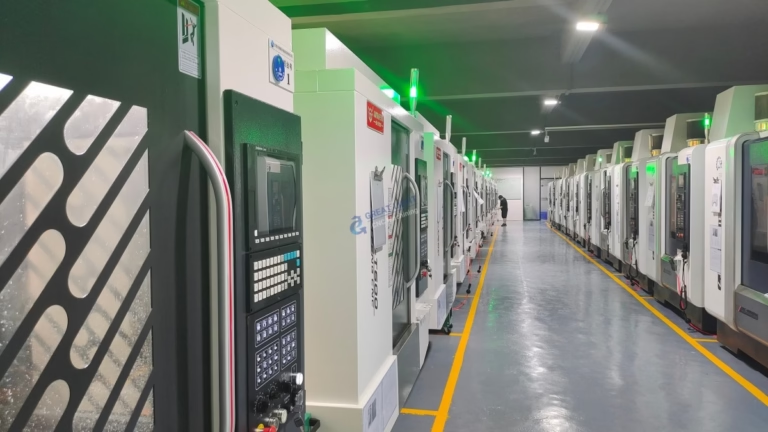
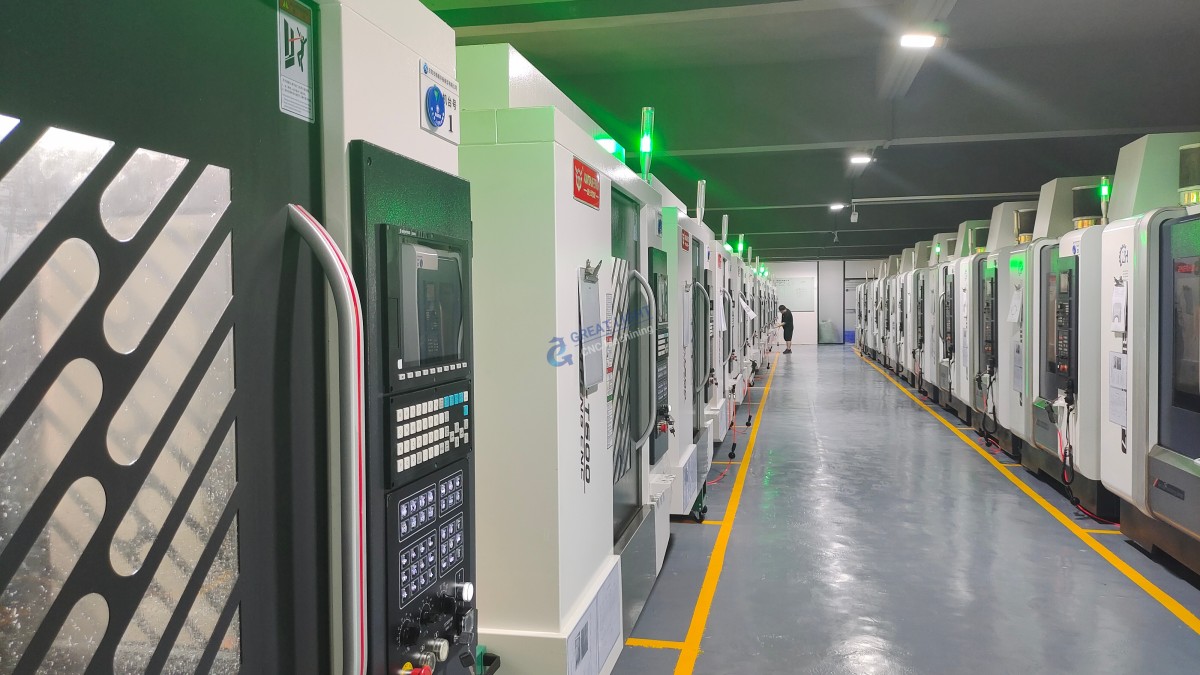
GreatLight operates 127+ precision machines, including large high-precision 5-axis, 4-axis, and 3-axis CNC machining centers, so their team can select drills optimized for each machine’s capabilities to maximize efficiency and precision.
4. Machining Parameters & Tool Holding
Drill performance is also tied to:
Spindle Speed & Feed Rate: Match parameters to the drill material and workpiece (e.g., high speeds for aluminum, slow speeds for titanium).
Coolant Type: Flood coolant or through-spindle coolant helps evacuate chips and reduce heat buildup, especially for deep hole drilling.
Tool Holding System: Hydraulic chucks or collet chucks with minimal runout ensure drill alignment and reduce vibration.
GreatLight uses state-of-the-art tool holding systems and in-house metrology equipment to verify drill alignment and machining parameters before production begins.
Common Mistakes to Avoid When Choosing CNC Drills
Even experienced machinists can make costly errors when selecting CNC drills. Here are the most frequent pitfalls to steer clear of:
1. Using the Wrong Drill Material for the Workpiece
For example, using HSS drills on titanium will lead to rapid tool wear, poor hole quality, and frequent tool breakage. Always match the drill’s hardness and heat resistance to the workpiece material.
2. Ignoring Depth-to-Diameter Ratio
Attempting to drill a deep hole with a standard twist drill can cause chip jamming, tool deflection, or inaccurate hole placement. Use deep hole drills for ratios exceeding 10:1.
3. Neglecting Tool Coatings
Coatings play a critical role in extending tool life and improving performance. For example, TiAlN coatings are ideal for high-temperature machining, while DLC coatings prevent chip welding on aluminum.
4. Overlooking Machine Spindle Power
Indexable insert drills require more spindle power than small twist drills. Ensure your CNC machine has enough power to handle the drill’s material removal rate.
GreatLight’s engineers conduct pre-production feasibility studies to avoid these mistakes, ensuring that every drill selection is backed by data and industry best practices.
How GreatLight CNC Machining Factory Optimizes Drill Selection for Precision Results
With over 12 years of experience in precision machining, GreatLight has honed its drill selection process to deliver consistent, high-quality parts for clients across industries like automotive, aerospace, medical, and humanoid robotics. Here’s how they stand out:
Certified Quality Management: As an ISO 9001:2015, IATF 16949, and ISO 13485 certified manufacturer, GreatLight adheres to strict standards for tool selection and machining processes. This ensures that every drill used meets industry-specific requirements, whether for automotive engine components or medical devices.
Advanced Equipment & Tooling: GreatLight operates 127+ precision machines, including large high-precision 5-axis CNC centers, and maintains an in-house tool room to sharpen and calibrate drills. Their metrology lab uses coordinate measuring machines (CMMs) to verify hole accuracy and drill alignment before production.
Tailored Solutions for Complex Parts: For clients needing complex parts with multiple hole types (e.g., deep holes, micro holes, stepped holes), GreatLight’s engineers develop custom machining plans that integrate the right drills for each feature. For example, in a recent aerospace project, they used micro drills to create 0.2mm holes in titanium turbine blades, achieving ±0.001mm tolerance on every hole.
After-Sales Guarantee: If a part fails to meet quality standards due to drill selection or machining errors, GreatLight offers free rework or a full refund, giving clients peace of mind.
Conclusion
When it comes to precision CNC machining, the question “What drill to use for CNC machine?” is far more than a trivial detail—it’s a critical decision that impacts every aspect of your project’s success. By understanding the different types of CNC drills, key selection factors, and avoiding common mistakes, you can improve part quality, reduce costs, and speed up production. For businesses looking to partner with experts who get this right every time, GreatLight CNC Machining Factory is the ideal choice. Their team of skilled engineers, advanced equipment, and commitment to quality ensure that every drill selection is optimized for your specific needs, delivering parts that meet even the most stringent precision requirements. To learn more about our precision machining capabilities and connect with our team, visit our LinkedIn page [open in new window].
Frequently Asked Questions (FAQ)
Q1: What drill bit is best for CNC machining aluminum?
A: For aluminum, solid carbide drills with diamond-like carbon (DLC) or TiN coatings are optimal. These coatings prevent chip welding, a common issue when machining soft, ductile aluminum. Polished flutes also improve chip evacuation to ensure smooth, accurate holes. GreatLight uses these drills for aluminum parts in aerospace and robotics applications.
Q2: What drill is ideal for deep hole CNC machining?
A: For deep holes with a depth-to-diameter ratio greater than 10:1, gun drills (for small diameters) or BTA drills (for larger diameters) are the best choices. These drills have specialized flute designs and coolant delivery systems that efficiently remove chips from deep holes, reducing tool breakage and improving accuracy. GreatLight’s 5-axis CNC machines are equipped to handle deep hole drilling for parts like automotive fuel injectors.
Q3: Can I use regular hand drill bits in a CNC machine?
A: While technically possible, regular hand drill bits are not recommended for CNC machining. Hand drill bits are not balanced for high spindle speeds, which can lead to tool deflection, poor hole accuracy, and rapid tool wear. CNC-specific drill bits are designed to withstand the demands of automated, high-precision operation.
Q4: How often should CNC drill bits be replaced?
A: Replacement frequency depends on workpiece material, drill type, and machining parameters. For example:
Carbide drills used on titanium may need replacement after 50-100 holes.
HSS drills used on plastic can last for thousands of holes.
GreatLight uses in-house metrology to monitor drill wear and replace tools before they affect part quality.
Q5: Does drill coating matter for CNC machining?
A: Yes, drill coatings are essential for extending tool life, reducing heat buildup, and enhancing surface finish. Common coatings include:
TiN (Titanium Nitride): General-purpose coating for increased hardness and wear resistance.
TiAlN (Titanium Aluminum Nitride): Ideal for high-temperature machining of steel and stainless steel.
DLC (Diamond-Like Carbon): Prevents chip welding on aluminum and non-ferrous metals.
GreatLight selects coatings based on the workpiece material and hole requirements to maximize performance.
Q6: What drill is best for micro hole CNC machining?
A: Micro hole machining requires solid carbide micro drills with diamond coatings. These drills are extremely rigid and precise, allowing for holes as small as 0.1mm with tight tolerances. GreatLight’s micro-machining capabilities, paired with their high-stability 5-axis CNC machines, make them a leader in producing micro-hole parts for medical devices and electronics.



















