
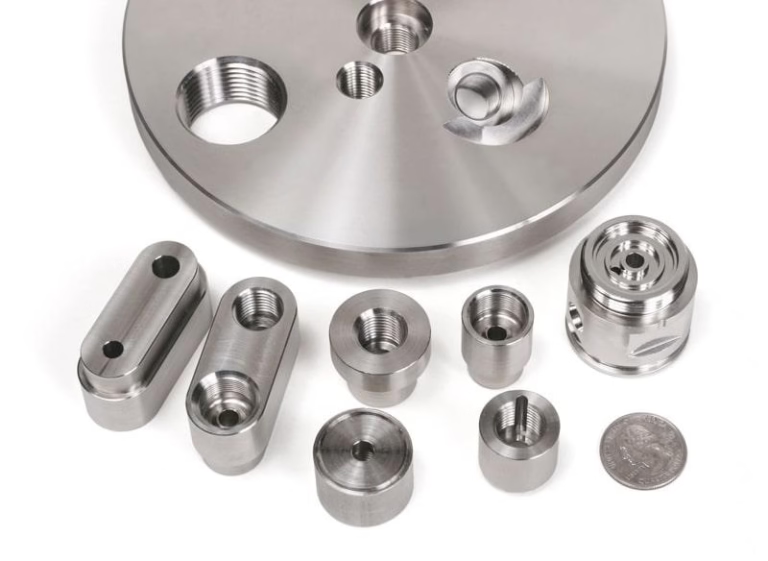
For engineers and procurement specialists navigating the high-stakes world of complex component manufacturing, encountering a part that requires precise turned features, intricate milled geometries, and high-accuracy gear teeth is a significant challenge. Traditionally, this meant a multi-step, multi-machine journey: turning on a lathe, moving to a milling machine, and finally outsourcing or performing gear hobbing on a dedicated machine. Each transfer introduces potential error, increases handling time, and complicates logistics. This is precisely where the concept of a Precision CNC Turn-Mill Machining Center with Integrated Gear Hobbing Capability becomes a transformative solution. It represents the pinnacle of multi-tasking and complete-in-one-setup machining, a technology that leading-edge manufacturers like GreatLight Metal have harnessed to deliver unparalleled efficiency and precision.
H2: Deconstructing the Powerhouse: What Is a Turn-Mill Center with Gear Hobbing?
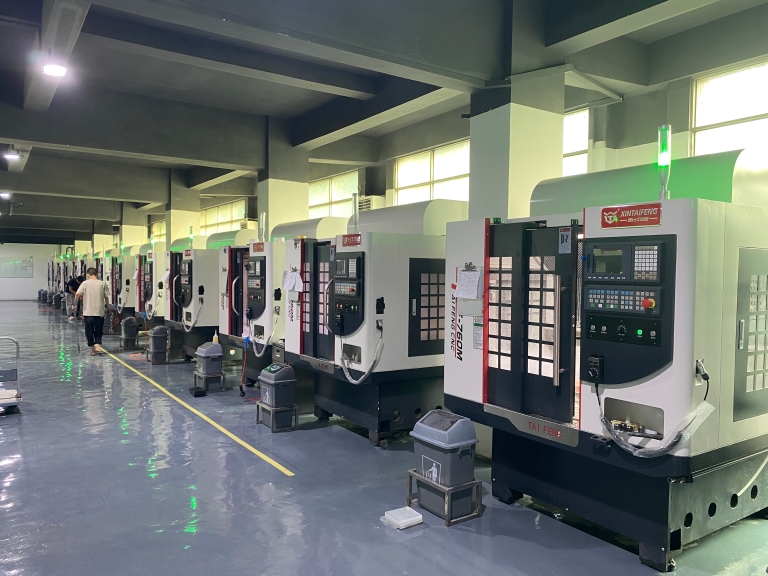
At its core, this is not merely a machine tool; it’s a sophisticated manufacturing cell. It combines the fundamental capabilities of a CNC lathe (turning, boring, threading) with those of a CNC machining center (milling, drilling, tapping) and integrates a dedicated gear hobbing unit—all within a single, controlled environment. The workpiece is typically held in a powerful, programmable spindle that can rotate for turning operations and index with extreme accuracy for milling and hobbing. A versatile tool magazine carries turning tools, milling cutters, and the specific gear hobs.
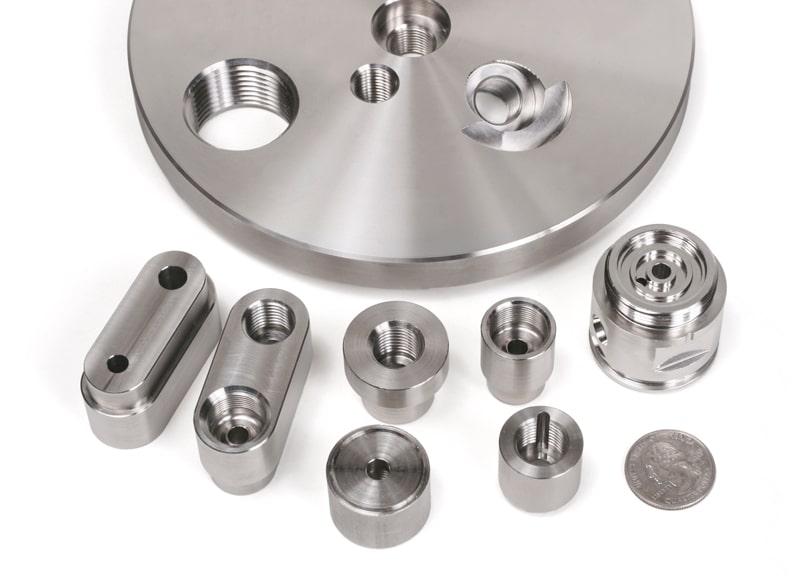
The operational magic lies in its synchronized axes control. While a standard 5-axis mill handles complex contours, a turn-mill with hobbing adds the synchronized rotational movement (C-axis) of the workpiece with the linear and rotational travel of the hobbling tool to generate the precise involute profile of gear teeth. This eliminates the cumulative errors that arise from re-clamping and re-fixturing across different machines.
H3: Key Advantages Driving Adoption
The decision to invest in or partner with a manufacturer utilizing this technology is driven by compelling tangible benefits:
Unmatched Accuracy & Quality: By completing the entire part in one clamping, you eliminate the datum shift errors inherent in multiple setups. The positional relationship between the turned diameters, milled faces, and gear teeth is guaranteed by the machine’s intrinsic accuracy, often achieving tolerances within ±0.005mm for critical features.
Dramatically Reduced Lead Times: The consolidation of processes slashes non-cut time. There’s no queueing between machines, no refixturing, and no waiting for external gear processing. This can compress production cycles from weeks to days.
Lower Total Cost for Complex Parts: While the machine investment is high, the per-part cost becomes highly competitive. You save on multiple setups, dedicated gear hobbing services, intermediate quality inspections, and the significant reduction in scrap from handling errors.
Design Freedom & Innovation Enablement: Engineers are no longer constrained by the limitations of separating operations. They can design more integrated, lightweight, and robust components with gears placed optimally relative to other functional features, knowing manufacture is feasible.
Simplified Production Management: Managing a single production order on one machine simplifies scheduling, work-in-process tracking, and quality traceability.
H3: Typical Applications and Industries Served
This technology is indispensable in industries where complex, high-integrity rotating assemblies are critical:
Automotive & New Energy Vehicles: Transmission components, hybrid drive system parts, advanced pump housings with integrated internal gears, and electric vehicle reduction gearbox parts.
Aerospace: Actuator components, landing gear mechanisms, and auxiliary power unit (APU) parts where weight, strength, and reliability are non-negotiable.
Industrial Robotics & Automation: Precision gears for robotic joints, harmonic drive components, and custom servo actuator housings.
High-End Medical Devices: Surgical robot drive trains, imaging system components, and dental drill handpieces requiring miniature, sterile-grade precision.
H2: Partner Selection: What to Look for in a Manufacturing Provider
Not every machine shop claiming “multi-axis” capability can truly master a turn-mill with gear hobbing. When evaluating a partner like GreatLight CNC Machining Factory, consider these critical factors:
Machine Tool Pedigree & Capability: Inquire about the specific machine brand (e.g., DMG MORI, Mazak, INDEX) and its configuration. Key specs include spindle power and torque (for hard turning), C-axis positioning accuracy, live tooling power, the hobbling unit’s capability (module range, helix angle), and the control system (e.g., Siemens, Heidenhain) which must expertly synchronize all movements.
Engineering Expertise & Programming Prowess: This is arguably more important than the machine itself. Programming such a system requires advanced CAM software and deep knowledge of machining strategies, cutting dynamics for different operations, and gear manufacturing theory. The engineering team must be able to simulate the entire process to avoid collisions and ensure optimal chip evacuation.
In-Process Metrology & Quality Assurance: The partner must have a robust quality plan. This often includes on-machine probing for post-operation verification, and access to advanced post-process gear inspection equipment like gear measuring centers (GMs) to validate tooth profile, lead, and pitch accuracy against AGMA or DIN standards.
Material Science Knowledge: Successfully machining a single part from a blank—especially from tough materials like case-hardened steels, titanium, or Inconel—requires expert knowledge in tool selection, cutting parameters, and thermal management to prevent distortion and ensure gear integrity.
System Certifications (The Trust Backbone): For mission-critical components, the manufacturer’s systemic approach to quality is paramount. Certifications like ISO 9001:2015 for quality management, IATF 16949 for automotive, and ISO 13485 for medical devices provide assurance that processes are controlled, documented, and continually improved. A provider like GreatLight Metal, which builds its operations on these international standards, offers a foundational layer of trust that goes beyond a single machine’s capability.
Conclusion
A precision CNC turn-mill machining center with gear hobbing capability is no longer a futuristic concept but a present-day necessity for manufacturing the next generation of integrated, high-performance mechanical systems. It represents a strategic convergence of technologies that directly addresses core pain points of precision, time, and cost. For businesses aiming to innovate and compete at the highest level, partnering with a technologically adept and systematically rigorous manufacturer that has mastered this complete-in-one-setup philosophy is a decisive step. It transforms the complex journey of creating multifaceted components from a logistical challenge into a streamlined, reliable, and superior-quality process.
FAQ: Precision CNC Turn-Mill with Gear Hobbing
Q1: What types of gears can be produced on such a machine?
A: These centers are highly versatile and can typically produce spur gears, helical gears, worm wheels, splines, and serrations. The specific range (module, diameter, helix angle) depends on the machine’s hobbling unit and tooling.
Q2: How does the surface finish and accuracy of hobbed gears compare to other methods like gear shaping or grinding?
A: Gear hobbing on a precision turn-mill center is a finishing process for high-quality gears. It offers excellent accuracy and surface finish suitable for most power transmission applications. For the ultra-quiet, ultra-high-precision requirements of aerospace or luxury automotive final drives, a secondary process like gear grinding or honing might follow. The turn-mill produces the pre-finished gear accurately located to all other features, ready for final hardening and finishing if required.
Q3: Is this technology only suitable for high-volume production?
A: Not at all. One of its greatest strengths is in low-to-medium volume and high-mix production. The ability to produce a complete, ready-to-assemble part from a blank in one setup makes it incredibly economical for prototypes, pilot runs, and spare parts, eliminating the cost and time of multiple dedicated setups.
Q4: What are the main limitations or challenges?
A: The primary limitations are economic and geometric. The capital investment and technical expertise required are significant. Geometrically, very large diameter gears or internal gears with small bores may not be feasible due to machine travel and tool clearance limitations. A thorough design-for-manufacturability review with your machining partner is essential.
Q5: Why should I choose a partner like GreatLight Metal for such a project over a specialized gear house?
A: A traditional gear house excels at mass-producing gears. However, for a complex integrated component where the gear is one feature among many, a full-service precision manufacturer like GreatLight Metal offers a decisive advantage. They manage the entire geometry under one roof, with one point of responsibility for the complete component’s quality, leveraging their advanced 5-axis CNC machining services as part of a holistic solution. This integrated approach ensures optimal material integrity, guaranteed feature relationships, and streamlined project management from raw material to finished part. For more insights into their technical capabilities and industry approach, you can explore their professional profile on LinkedIn.



















