
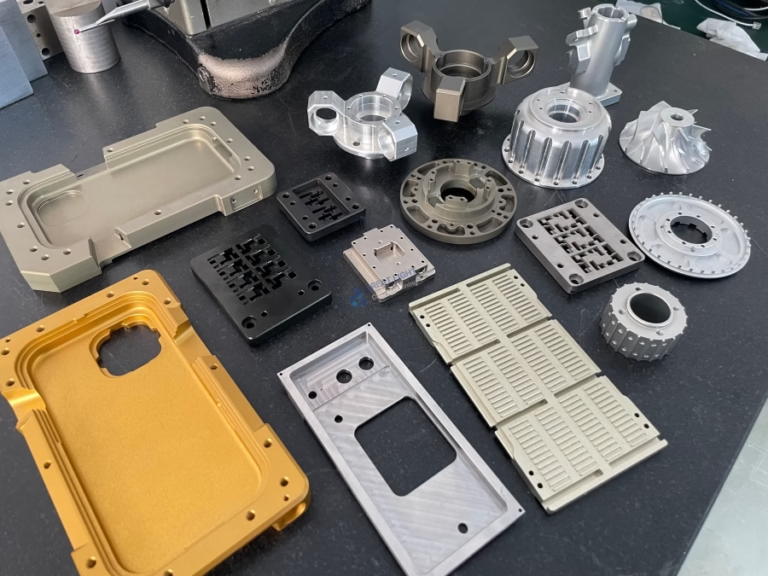
In the fiercely competitive landscape of modern product development, transforming a digital design into a high-precision, functional physical part is often the most critical and challenging hurdle. This is where the expertise of a Custom CNC Machining Service Manufacturer becomes indispensable. As a senior manufacturing engineer who has witnessed the evolution of precision fabrication, I understand that selecting the right partner is not merely a procurement decision; it is a strategic choice that impacts innovation speed, product quality, and ultimately, market success. Today, we’ll delve into what truly defines a top-tier manufacturer in this space and how to navigate the selection process to ensure your project’s requirements are not just met, but exceeded.
The Precision Predicament: Core Challenges in Sourcing CNC Machining
Before evaluating manufacturers, it’s crucial to acknowledge the common pain points that plague many projects. Understanding these challenges frames the value a superior partner provides.
The “Precision Black Hole”: Many suppliers advertise exceptional tolerances (±0.001mm), yet consistent achievement across a production run is a different matter. Factors like thermal drift in machines, tool wear, and material inconsistencies can create a gap between promised and delivered precision, leading to assembly failures or performance issues.
Material and Process Misalignment: Not every CNC shop has the experience or equipment to optimally machine advanced materials like titanium alloys, Inconel, or high-performance plastics. An improper choice of cutting tools, speeds, or coolants can lead to poor surface finishes, residual stress, or even part failure.
The Single-Process Bottleneck: Many job shops specialize in one type of machining (e.g., 3-axis milling). Complex parts requiring multi-axis contouring, precision turning, and EDM (Electrical Discharge Machining) often get shuffled between multiple vendors. This disjointed process increases lead times, complicates logistics, and amplifies the risk of communication errors and quality discrepancies.
Engineering Support Vacuum: The ideal manufacturer acts as a design for manufacturability (DFM) partner. A lack of proactive engineering feedback during the quoting phase can result in designs that are unnecessarily expensive or difficult to produce, locking in higher costs before a single chip is made.
Supply Chain and Transparency Gaps: Unclear communication, delayed updates, and a lack of rigorous quality documentation (like First Article Inspection reports) erode trust and jeopardize project timelines.
Anatomy of a World-Class Custom CNC Machining Manufacturer
So, what separates a true solutions partner from a basic job shop? Based on industry benchmarks and the operational model of leaders like GreatLight Metal, several key pillars define excellence.
1. Technological Depth and Breadth: The Equipment Arsenal
A manufacturer’s capability is directly tied to its equipment. Look for a diverse, modern fleet that can handle complexity without compromise.
Multi-Axis Machining Mastery: While 3-axis is standard, the ability to perform complex machining in a single setup is paramount. This is where precision 5-axis CNC machining services{:target=”_blank”} become a game-changer. It allows for machining intricate features, undercuts, and complex curved surfaces with unparalleled accuracy and efficiency, minimizing cumulative errors from multiple setups. Complementing this with 4-axis and advanced mill-turn centers provides complete rotational part capability.
Supporting Precision Processes: True capability extends beyond milling. A comprehensive manufacturer will integrate:
CNC Turning: For high-precision cylindrical components.
Electrical Discharge Machining (EDM): Essential for creating sharp internal corners, deep cavities, and machining hardened steels.
Precision Grinding: For achieving ultra-fine surface finishes and tolerances beyond the reach of standard milling.
Metrology and Quality Assurance: In-house CMMs (Coordinate Measuring Machines), optical comparators, and surface profilometers are non-negotiable. The ability to validate every dimension against the CAD model in-house is a hallmark of quality control.
2. The Framework of Trust: Certifications and Systematic Management
In precision manufacturing, trust is built on systems, not promises. Internationally recognized certifications are a manufacturer’s commitment to standardized excellence.
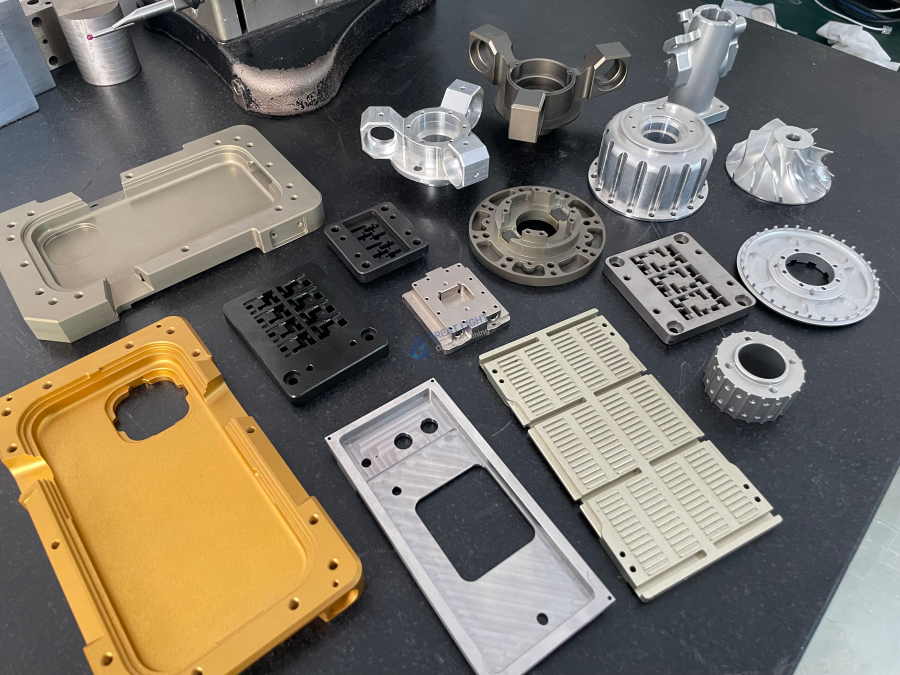
ISO 9001:2015: The foundation of a robust Quality Management System (QMS), ensuring consistent processes and continuous improvement.
Industry-Specific Standards: For sectors like automotive and aerospace, certifications like IATF 16949 are critical. They embed stringent requirements for defect prevention, risk management, and supply chain control. For medical device components, ISO 13485 compliance is essential, focusing on traceability and risk management throughout the production lifecycle.
Data Security (ISO 27001): For IP-sensitive projects, a manufacturer’s commitment to protecting your design data is paramount. This certification formalizes information security management.
3. The Integrated Manufacturing Ecosystem
The most significant value a manufacturer can offer is a seamless, start-to-finish journey. This “one-stop-shop” model, exemplified by integrated manufacturers, eliminates countless headaches.
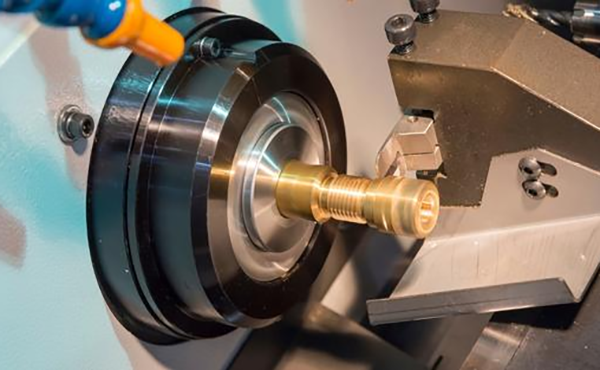
From Digital to Physical: The workflow should encompass everything from initial DFM analysis and material selection to multi-process machining, meticulous post-processing (e.g., anodizing, plating, heat treatment), and final assembly/kitting.
Hybrid Manufacturing Intelligence: The convergence of additive and subtractive manufacturing is a frontier of innovation. A forward-thinking manufacturer will offer Metal 3D Printing (SLM) for complex, lightweight geometries and use CNC machining to achieve critical tolerances and surface finishes on those printed parts. This hybrid approach solves previously “un-makeable” design challenges.
The Partnership Process: What to Expect from a Leading Manufacturer
Engaging with a top-tier Custom CNC Machining Service Manufacturer should follow a collaborative and transparent流程.
Collaborative Quoting & DFM: You submit your CAD model. Instead of a simple price, you receive a detailed quote with annotated DFM suggestions—identifying potential stress concentrations, suggesting tolerance relaxations that don’t affect function, or recommending alternative machining strategies to reduce cost and lead time.
Material Procurement & Planning: The manufacturer leverages its supply chain to source certified, traceable raw materials (bar stock, billet, castings), often at better rates than a client could obtain independently.
Programmable Machining & Multi-Process Execution: CAM programmers create optimal toolpaths. The part then flows through the internal ecosystem—from 5-axis machining to turning to EDM—all under one roof, with one quality standard.
Meticulous Post-Processing & Finishing: Parts undergo deburring, polishing, and any specified surface treatment in controlled environments to meet aesthetic and functional requirements.
Comprehensive Inspection & Documentation: Every critical dimension is verified. A comprehensive inspection report (FAI) is generated, providing full traceability and peace of mind.
Packaging & Logistics: Parts are professionally packaged to prevent damage during transit and shipped with full documentation.
Real-World Impact: Where Precision Manufacturing Enables Innovation
This integrated approach isn’t theoretical; it solves real industry challenges:
Automotive & EV: Manufacturing complex battery tray components, lightweight structural brackets, and high-heat tolerance inverter housings that require tight sealing surfaces.
Aerospace & Defense: Producing flight-critical components from titanium and Inconel, where material integrity, weight, and precision are non-negotiable.
Medical & Surgical Robotics: Fabricating biocompatible (e.g., Titanium Ti-6Al-4V, surgical stainless steel) implants and intricate robotic arm components that demand absolute reliability and smooth actuation.
High-End Industrial & Consumer Electronics: Creating robust, finely-toleranced housings for sensitive measurement equipment or sleek, anodized enclosures for luxury tech products.
Conclusion: Making the Strategic Choice
Choosing a Custom CNC Machining Service Manufacturer is a pivotal decision that extends far beyond unit cost. It is about selecting a partner whose technological capabilities, quality systems, and service流程 align with your project’s complexity and your company’s standards for reliability.
In a global market filled with options, the manufacturers that stand out—like GreatLight Metal—are those that combine technical depth with a partnership mindset. They invest in the advanced equipment needed to tackle tomorrow’s challenges today, back their operations with rigorous international certifications, and provide the integrated, transparent service that turns the procurement of precision parts from a source of anxiety into a competitive advantage. As manufacturing continues its trajectory toward greater intelligence and integration, the value of such a comprehensive, capable partner will only increase. For those looking to engage with industry leaders driving this evolution, connecting on professional platforms like GreatLight’s LinkedIn{:target=”_blank”} can offer valuable insights into their capabilities and industry perspective.



















