
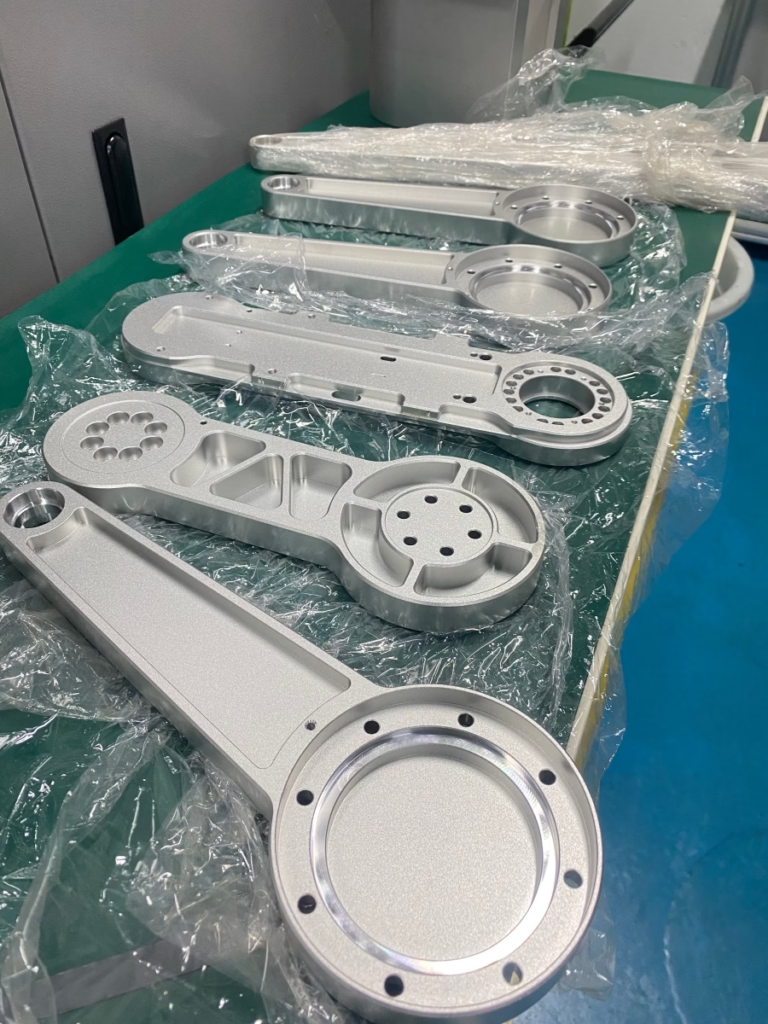
When engineering teams and procurement managers in industries ranging from aerospace to medical devices hear the term “Wholesale 5 Axis CNC Machining Services Producer,” a specific set of expectations comes to mind. It conjures images of scalable production, consistent quality across large volumes, and ultimately, a significant reduction in the per-part cost of complex, high-precision components. But in the intricate world of precision manufacturing, not every shop that offers volume pricing truly qualifies as a “producer” in the wholesale sense. This distinction is critical. Today, we’ll dissect what defines a true wholesale partner in five-axis CNC machining and how aligning with one can transform your supply chain from a cost center into a strategic asset.
H2: Beyond the Shop Floor: Decoding the “Wholesale Producer” Mentality
The landscape is filled with machine shops, but a Wholesale 5 Axis CNC Machining Services Producer operates on a fundamentally different paradigm. The difference isn’t merely about having more machines; it’s about a systemic approach to manufacturing that prioritizes scalability, process optimization, and long-term partnership stability over one-off projects.
A true producer views your project through the lens of manufacturability, repeatability, and supply chain integration. They possess the infrastructure—both physical and procedural—to absorb your production needs, whether you require 50 prototypes, 500 pilot-run parts, or 50,000 units for annual consumption. This capability is built on several pillars that distinguish them from conventional job shops.
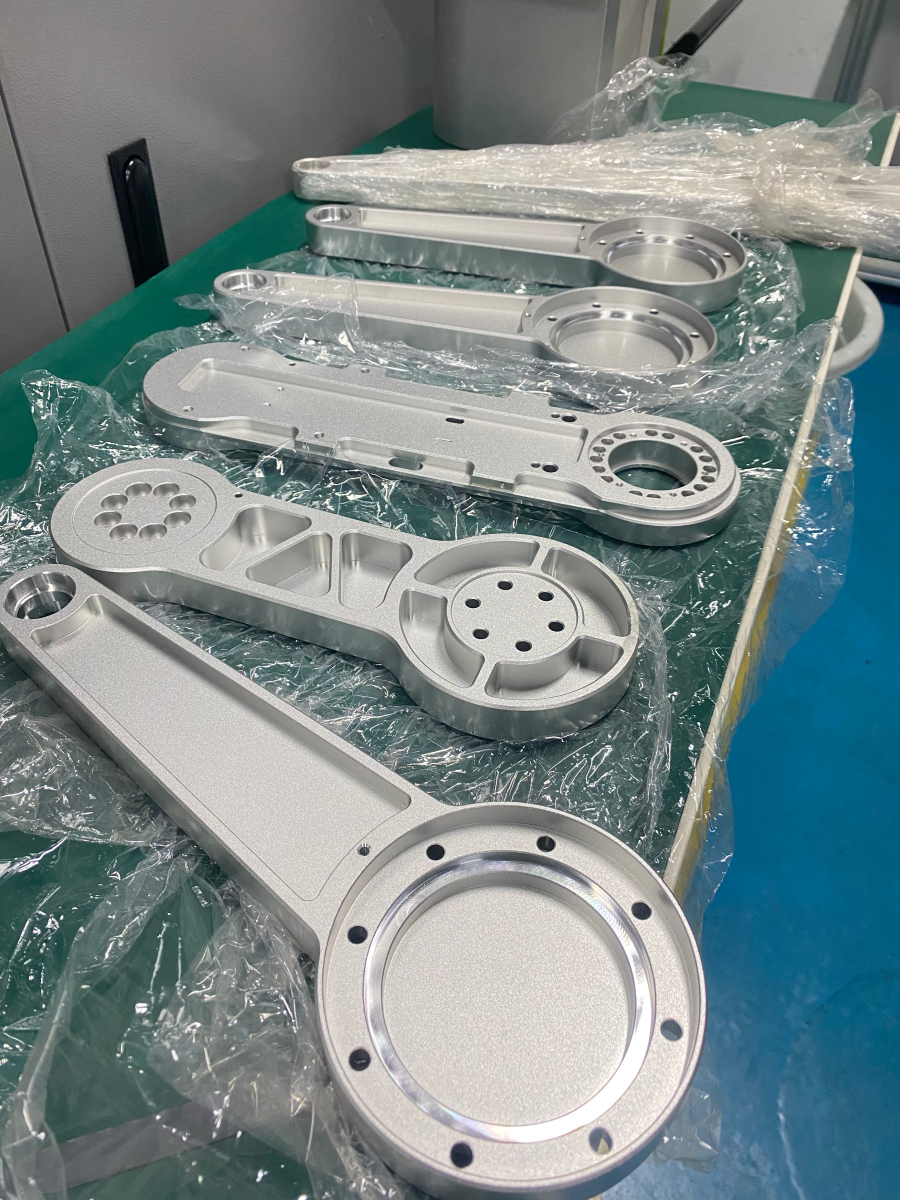
H2: The Core Pillars of a True Wholesale 5-Axis CNC Partner
Understanding these pillars will help you identify a partner capable of delivering on the wholesale promise.
1. Integrated Manufacturing Ecosystem & Technical Depth
A producer doesn’t just mill parts. They manage the entire journey from raw material to finished assembly. This means in-house capabilities often extend beyond a bank of 5-axis CNC centers to include:
Complementary Precision Machining: 4-axis CNC, multi-axis turning (mill-turn), precision grinding, and EDM (wire and sinker) for secondary operations or hard-to-machine features.
Additive Manufacturing (3D Printing): Metal (SLM) and plastic (SLA, SLS) 3D printing for rapid prototyping, jigs, fixtures, or even hybrid manufacturing approaches.
Forming & Fabrication: Die casting for high-volume metal components and sheet metal fabrication for enclosures and brackets.
Tooling & Molding: In-house mold design and manufacturing to support casting or injection molding needs, creating a seamless bridge from prototype to mass production.
This vertical integration, as demonstrated by manufacturers with full-process chains like GreatLight Metal, eliminates the delays, quality variances, and communication overhead of coordinating with multiple subcontractors. The entire process is controlled under one roof, ensuring consistency and accelerating time-to-market.
2. Scalability Rooted in Advanced Equipment and Process Control
Wholesale production demands consistency at scale. This is impossible without:
A Fleet of High-End Machines: Multiple, often redundant, 5-axis CNC machining centers from reputable builders (e.g., DMG MORI, HAAS, Beijing Jingdiao) ensure capacity and mitigate machine downtime risks.
Robust Process Engineering: Every job is accompanied by detailed Process Failure Mode and Effects Analysis (PFMEA), standardized work instructions, and first-article inspection (FAI) protocols. Processes are designed to be operator-agnostic, meaning part quality is dictated by the system, not the individual.
Statistical Process Control (SPC): For true wholesale runs, producers implement SPC to monitor key dimensions in real-time, predicting and preventing deviations before they result in non-conforming parts.
3. A Culture of Quality Assured by Authoritative Certifications
Trust at scale is non-negotiable. Certifications are not just plaques on the wall; they are auditable evidence of a systematic commitment to quality. A credible wholesale producer will be anchored by:
ISO 9001:2015: The baseline for a certified quality management system, ensuring consistent operations and continuous improvement.
IATF 16949: For automotive sector suppliers, this is essential. It builds upon ISO 9001 with stringent requirements for product safety, defect prevention, and supply chain management.
ISO 13485: For medical device manufacturing, this certification demonstrates adherence to the rigorous regulatory requirements for design and production controls.
AS9100D: The aerospace equivalent, focusing on risk management, configuration control, and traceability.
These certifications, held by industry leaders like GreatLight Metal, Protolabs, and Xometry, provide a universal language of reliability. They assure you that the producer’s systems are designed to meet the most demanding industry standards, batch after batch.
4. Proactive Engineering Collaboration & DFM Focus
The most significant cost savings occur at the design stage. A wholesale producer acts as an extension of your engineering team, offering deep Design for Manufacturability (DFM) analysis. They will proactively suggest modifications—a slight draft angle, a more tool-accessible corner radius, or a material substitution—that dramatically reduce machining time, improve strength, or lower material cost without compromising function. This collaborative, value-engineering approach is a hallmark of a partner invested in your long-term success, not just in executing a purchase order.
H2: The Tangible Benefits: Why Your Business Needs This Partnership Model
Transitioning to a wholesale producer model yields measurable returns:
Predictable, Optimized Costs: Economies of scale in material purchasing, optimized machine programming for volume, and efficient workflow management translate directly to a lower cost per unit.
Uncompromised Quality at Volume: The systemic approach to quality control ensures that the 10,000th part is identical to the 1st, critical for assembly-line compatibility and product reliability.
Supply Chain Simplification and Resilience: Consolidating your precision part needs with a single, capable producer reduces administrative burden, simplifies logistics, and creates a more transparent and resilient supply chain.
Accelerated Innovation Cycles: With prototyping, pilot runs, and full-scale production under one roof, the iteration cycle from design to market is significantly shortened. Your partner can seamlessly scale production as your product gains traction.
H2: Navigating the Selection: Key Questions to Ask a Potential Producer
When vetting a Wholesale 5 Axis CNC Machining Services Producer, move beyond basic RFQs. Engage them with these strategic questions:
“Can you walk me through your full internal workflow for a new part, from DFM feedback to final inspection and packaging?”
“What is your strategy for ensuring machine uptime and capacity to meet our potential scaling demands?”
“Beyond ISO 9001, which industry-specific certifications (IATF 16949, ISO 13485, AS9100) do you hold, and how are they integrated into your daily operations?”
“What is your approach to DFM and value engineering? Can you provide a case study where you helped a client reduce part cost or improve performance?”
“How do you manage material traceability and lot control for regulated industries?”
Conclusion: Strategic Sourcing for the Future
In conclusion, choosing a Wholesale 5 Axis CNC Machining Services Producer is a strategic decision that goes far beyond comparing price-per-part quotes. It is about selecting a manufacturing ecosystem that combines technical breadth, systematic quality, and a partnership mindset. This model is exemplified by forward-thinking manufacturers who have built their operations around the principle of being a seamless, reliable, and scalable extension of their clients’ engineering and production capabilities. By aligning with such a partner, you secure not just a supplier of parts, but a foundational pillar for your product’s quality, cost-effectiveness, and market success. To explore how industry leaders are applying these principles, consider following the insights and updates from forward-thinking manufacturers on platforms like professional industry networks.



















