
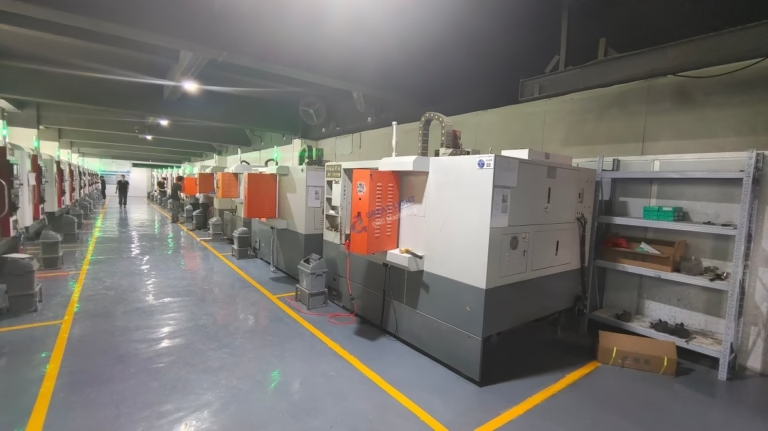
When global engineering teams and procurement managers utter the phrase “China precision CNC machining services manufacturers,” it often evokes a complex mix of impressions: unparalleled scale, competitive pricing, and sometimes, lingering questions about consistency, technological depth, and intellectual property protection. The reality, however, is that China’s precision manufacturing landscape has undergone a profound stratification. While a vast base of workshops handles standard fabrication, a tier of highly specialized, technology-driven manufacturers has emerged, rivaling the best globally in capability, quality systems, and project partnership ethos. Understanding this evolution is key to leveraging the true potential of partnering with a top-tier Chinese precision machining supplier.
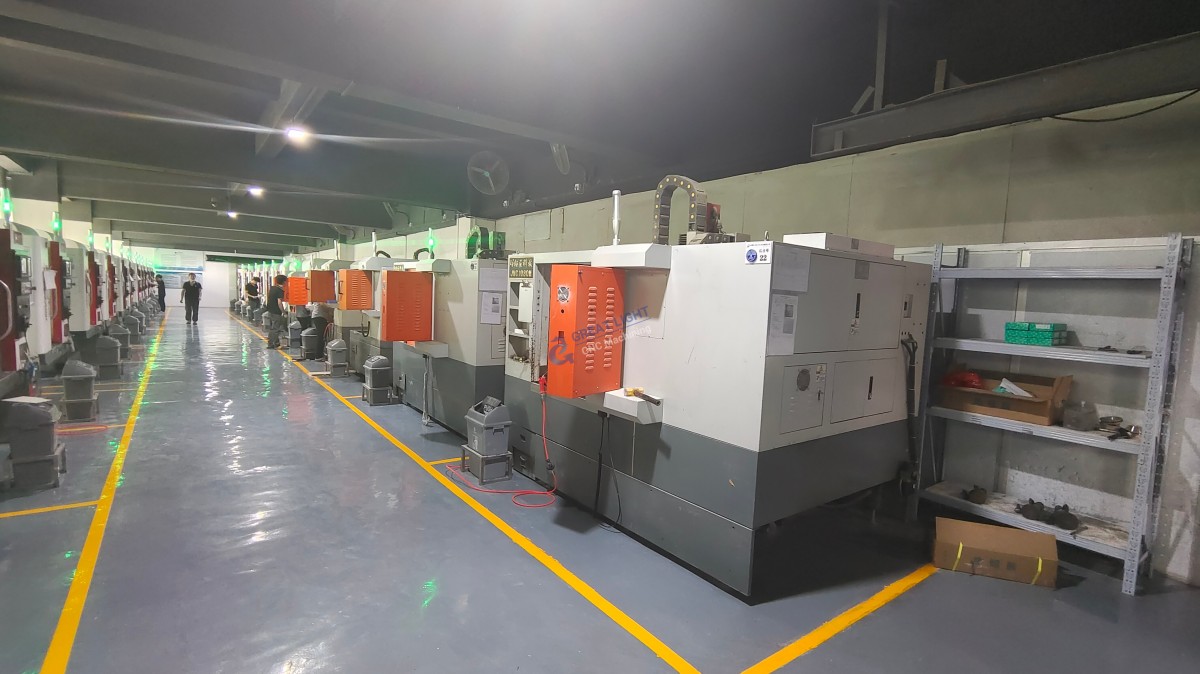
The Evolution of Precision: From Workshop to World-Class Partner
For decades, China’s manufacturing strength lay in volume and cost efficiency. Precision CNC machining was no exception, with countless small shops springing up. However, the demands of global supply chains—especially from sectors like aerospace, medical devices, automotive, and advanced robotics—have catalyzed a significant upgrade. Leading manufacturers have moved beyond merely operating machines to mastering the entire Digital Thread—from DFM (Design for Manufacturability) analysis and advanced CAM programming to in-process metrology and post-processing integration.
These elite suppliers, often clustered in industrial hubs like Dongguan (the “Hardware and Mould Capital”), Shenzhen, and Suzhou, have invested heavily not just in hardware but in the soft infrastructure of quality. This means building management systems compliant with international standards, cultivating deep engineering talent, and developing proprietary processes for machining challenging materials like Inconel, titanium, and medical-grade polymers. The narrative has shifted from “making parts” to “solving complex manufacturing challenges.”
Deconstructing “Precision” in the CNC Context
What does “precision” truly mean when evaluating a CNC machining partner? It’s a multi-dimensional concept extending far beyond a tolerance number on a drawing.
Geometric & Dimensional Precision: This is the baseline, measured in microns (±0.001mm and beyond). It’s achieved through high-rigidity machine tools (like 5-axis CNC machining centers), temperature-controlled environments, and meticulous toolpath strategies.
Surface Integrity: Precision isn’t just about size; it’s about the quality of the surface. This includes surface finish (Ra values), absence of burrs, and controlled residual stresses. It requires expertise in tool selection, cutting parameters, and often, specialized post-processing like precision polishing or electropolishing.
Repeatability & Process Control: The hallmark of a mature manufacturer is the ability to produce the first part and the ten-thousandth part with identical precision. This is governed by Statistical Process Control (SPC), rigorous fixturing, and a culture of continuous process validation.
Material Knowledge: Precision machining is a dialogue between the tool and the material. A sophisticated manufacturer possesses deep metallurgical and polymer knowledge, selecting optimal speeds, feeds, coolants, and tool geometries for everything from aluminum 6061 to PH 17-4 stainless steel or PEEK.
The Critical Pillars for Selecting a Manufacturing Partner in China
Navigating the vast supplier base requires a focused evaluation framework. Look for these non-negotiable pillars:
Technological Depth and Equipment Portfolio:
Multi-Axis Capability: While 3-axis is ubiquitous, complex contours and single-setup machining demand 4-axis and 5-axis CNC machining. A partner with in-house 5-axis capability signifies an investment in solving geometric complexity efficiently.
Supporting Process Ecosystem: True precision often requires a suite of complementary processes: high-speed milling for fine details, precision grinding for ultra-tight tolerances, Wire EDM (Electrical Discharge Machining) for hardened steels, and laser marking for permanent traceability.
Metrology and Inspection: The ability to verify precision is as important as creating it. Look for a full complement of in-house inspection tools: CMMs (Coordinate Measuring Machines), optical comparators, surface roughness testers, and hardness testers.
Certified Quality Management Systems (QMS):
Certifications are the formal language of trust and reliability in international business. They provide an objective framework for evaluating a supplier’s systems.
ISO 9001:2015: The foundational quality management system standard, ensuring consistent processes and continuous improvement.
IATF 16949: Essential for automotive suppliers. This is an extension of ISO 9001 with specific requirements for automotive production, emphasizing defect prevention and supply chain reduction.
ISO 13485: The critical standard for medical device manufacturing. It focuses on risk management, traceability, and validation processes required by regulatory bodies like the FDA.
AS9100D: The aerospace equivalent, emphasizing safety, reliability, and configuration management.
Full-Process Integration and Engineering Support:
The most valuable partners act as extensions of your engineering team. This includes:
Proactive DFM Feedback: Analyzing your CAD models early to suggest modifications that enhance manufacturability, reduce cost, and improve performance without compromising design intent.
Material Selection Guidance: Advising on the optimal alloy or polymer based on functional requirements, environmental exposure, and cost targets.
Secondary Operations & Assembly: Providing a true one-stop service with in-house anodizing, plating, painting, heat treatment, and even kitting or light assembly.
GreatLight Metal: A Case Study in Modern Chinese Precision Manufacturing
Embodied in manufacturers like GreatLight Metal Tech Co., Ltd., the evolution described above becomes tangible. Founded in 2011 in Dongguan’s Chang’an district, their journey mirrors the industry’s shift towards integrated, high-value solutions.
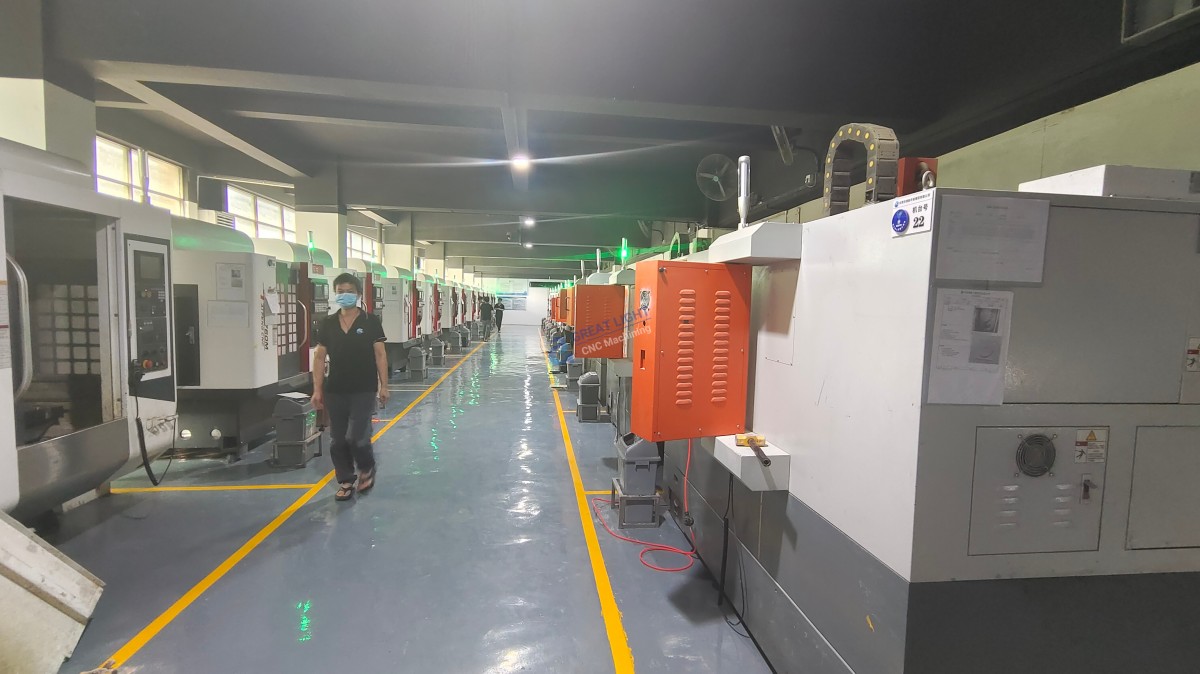
Core Technical Arsenal: Their capability is anchored by a comprehensive equipment portfolio, including advanced 5-axis CNC machining centers, multi-axis mill-turn systems, and a full spectrum of supporting precision equipment like grinding machines and EDMs. This allows them to tackle complex, monolithic components for industries such as robotics and aerospace that would otherwise require multiple fixtures and suppliers.
Systematic Trust Building: GreatLight Metal has built its credibility on a foundation of international certifications, including ISO 9001:2015 for quality management, IATF 16949 for automotive, and ISO 13485 for medical devices. This systematic approach to quality provides clients with the assurance needed for sensitive, high-stakes projects.
End-to-End Solution Provider: They exemplify the modern “full-process” model. A client can engage them with a concept or a 3D model and receive a finished, fully validated part. Their services span precision CNC machining, vacuum casting for prototypes, metal 3D printing (SLM) for complex geometries, die casting for volume production, and a complete suite of surface finishing options.
Focus on Collaborative Engineering: Beyond machining, they emphasize collaborative problem-solving. For instance, when a new energy vehicle innovator faced challenges with a complex, thin-walled electronic housing requiring both lightweight and EMI shielding, the team at GreatLight Metal provided material alternatives, redesigned internal ribs for better mold flow, and implemented a specialized clamping strategy for machining—turning a high-risk component into a reliable production part.
Navigating the Partnership: Best Practices for Success
Working successfully with a China precision CNC machining services manufacturer like those at the forefront requires a partnership mindset.
Start with a Prototype or Low-Volume Order: This is the most effective way to evaluate a supplier’s technical capability, communication responsiveness, and quality consistency before committing to larger volumes.
Invest in Clear, Comprehensive Documentation: Provide fully detailed 3D models (STEP, IGES) and 2D drawings with GD&T (Geometric Dimensioning and Tolerancing) per ASME Y14.5 standards. Clearly specify material standards, heat treatment, and surface finish requirements.
Embrace Collaborative Communication: Schedule regular video calls for project kick-offs and critical milestone reviews. Use shared platforms for document and revision control.
Understand Total Cost, Not Just Piece Price: Evaluate the total cost of engagement, which includes logistics, quality assurance time, and the risk cost of delays or non-conformance. A slightly higher piece price from a capable, reliable partner often results in lower total cost and faster time-to-market.
Conclusion: The Strategic Advantage of the Right Partnership
The landscape of China precision CNC machining services manufacturers is no longer monolithic. It is a dynamic ecosystem where the leaders have differentiated themselves through technological investment, systemic quality adherence, and a commitment to partnership. For global companies, this presents a significant strategic opportunity: access to world-class manufacturing capabilities, agile production scalability, and deep engineering support, all within a competitive framework.

Choosing a partner is about aligning with a manufacturer whose capabilities match your technical challenges and whose quality ethos matches your risk profile. It’s about moving beyond transactional sourcing to building a collaborative manufacturing alliance that drives innovation and efficiency. In this context, advanced partners serve as critical enablers, turning complex designs into reliable, high-performance reality.
For those seeking to explore the capabilities of a manufacturer that embodies this modern paradigm, from initial concept through to final finished assembly, further insights into their approach to tackling complex challenges can be found by examining their specialized service offerings, such as their integrated precision 5-axis CNC machining services{:target=”_blank”}. To connect with the broader industry narrative and community, professionals often engage through platforms like LinkedIn{:target=”_blank”}, where leading manufacturers share insights and advancements.



















