
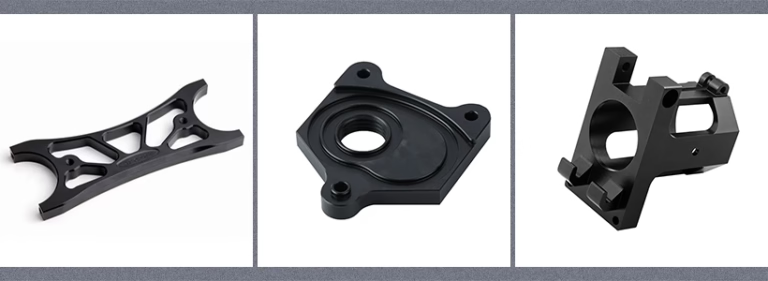
For engineers, designers, and procurement professionals navigating the world of custom parts, understanding How To Design For CNC Machine is not merely a technical exercise—it’s the foundational key to unlocking manufacturing efficiency, cost control, and ultimate part performance. A design perfectly optimized for CNC machining seamlessly translates digital brilliance into physical reality, avoiding costly revisions, delayed timelines, and functional compromises. As a seasoned manufacturing engineer, I’ve witnessed countless projects where early design decisions, made in collaboration with a knowledgeable machining partner, determined success. This guide delves into the core principles and practical guidelines to empower your designs for manufacturability (DFM) from the outset.
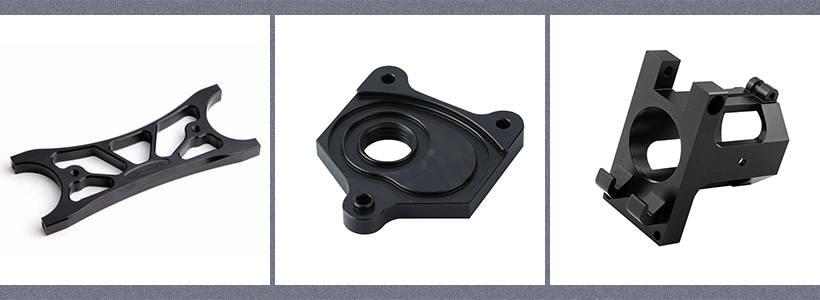
H2: The Core Philosophy: Designing for Manufacturability (DFM) in CNC
The journey begins with a mindset shift. Designing for CNC machining is the proactive integration of manufacturing constraints and possibilities into the product development phase. It’s a collaborative dialogue between the designer’s intent and the machinist’s capability. The goal is to create a part that:
Meets all functional and aesthetic requirements.
Can be manufactured reliably, consistently, and efficiently.
Minimizes material waste, machining time, and tool wear.
Simplifies fixturing and inspection processes.
Neglecting DFM often leads to “over-designed” parts that require exotic tooling, complex multi-setup operations, or even fundamentally unmachinable features, inflating cost and lead time exponentially.
H2: Fundamental Design Principles and Guidelines
Adhering to these foundational rules will dramatically improve the machinability of your components.
H3: 1. Internal Corners and Radii
This is arguably the most critical rule. A cutting tool has a physical diameter.
Always specify a radius slightly larger than the tool used. Never design sharp internal corners. A recommended minimum radius is at least 1/3 of the pocket depth.
Use consistent radii throughout a design to allow the use of a single tool, reducing machining time and cost.
For 5-axis machining, deeper cavities with smaller corner radii become possible, but larger radii are always more economical.
H3: 2. Wall Thickness
Thin walls are prone to vibration during machining, leading to poor surface finish, dimensional inaccuracy, and even breakage.
Maintain a minimum wall thickness. For metals like aluminum, a general minimum is 0.8mm; for plastics, it’s often 1.5mm. Thicker walls (e.g., >2mm for aluminum) ensure much greater stability and precision.
Avoid abrupt transitions in wall thickness to prevent stress concentration and distortion.
H3: 3. Cavity Depth and Pockets
Limit cavity depth to 4 times its width for standard end mills. Deeper pockets require specialized (longer, less rigid) tools, increasing cost, time, and risk of deflection.
Add a draft angle (typically 1-3 degrees) to vertical cavity walls where possible. This facilitates tool access, improves surface finish, and eases part ejection if using a mold later.
Design pockets with rounded corners (as per rule #1) and a floor radius or flat bottom as specified.
H3: 4. Holes and Threads
Standardize Hole Sizes: Design holes to standard drill bit sizes. Non-standard diameters require time-consuming boring operations.
Limit Depth: For blind holes, a depth of 4x the diameter is a practical maximum. For through-holes, ensure the drill can exit cleanly.
Thread Design: Specify standard thread types (UNC, UNF, Metric). Avoid designing threads to the very bottom of a blind hole; leave an unthreaded length (at least 2x the pitch) at the bottom for the tool to clear. Consider using thread mills for higher precision and strength, especially in harder materials.
H3: 5. Text and Lettering
Embossed text is preferred over engraved text as it removes less material and is faster to machine.
Use simple, sans-serif fonts with a minimum character size. Generally, text should be at least 5mm in height and have a depth/width ratio that a standard tool can achieve.
H2: Material Selection: The First Critical Decision
Your material choice is inextricably linked to the design. It affects tooling strategy, achievable tolerances, and cost.
Machinability: Materials like 6061 Aluminum, Brass, and Delrin are renowned for excellent machinability, allowing for higher speeds, finer finishes, and tighter tolerances.
Strength & Application: Stainless Steel (e.g., 304, 316), Titanium, and Tool Steels offer superior properties but are harder to machine, requiring more powerful machines, specialized tooling, and slower parameters.
Advice: Discuss your functional requirements (strength, weight, corrosion resistance, thermal/electrical properties) with your manufacturing partner early. A company like GreatLight Metal, with deep experience across a vast material library, can guide you toward the optimal balance of performance and manufacturability.
H2: Tolerances: Specifying with Purpose
“A tolerance is a license to spend money.” Specify tolerances only where functionally critical.
Standard Machining Tolerances: For most features, a standard tolerance of ±0.125mm (±0.005″) is economical and readily achievable. Holding ±0.025mm (±0.001″) or tighter requires precise processes, slower machining, and specialized inspection, increasing cost significantly.
Geometric Dimensioning and Tolerancing (GD&T): For complex assemblies, using GD&T (flatness, perpendicularity, true position) is far more effective than applying tight linear tolerances everywhere. It clearly communicates design intent and allows the machinist to optimize the process.
H2: The Power of Advanced Capabilities: Designing for 5-Axis CNC
When partnering with a supplier equipped with 5-axis CNC machining capabilities, your design freedom expands dramatically.
Complex Geometries: You can design organic shapes, undercuts, and contoured surfaces that would be impossible or require countless setups on a 3-axis machine.
Single-Setup Machining: A part can be completed in one fixture setup, eliminating cumulative errors and saving massive amounts of time.
Improved Tool Access & Performance: The tool can approach the workpiece from optimal angles, allowing for shorter, more rigid tools to be used, which improves finish and accuracy on deep features.
This is where GreatLight Metal‘s expertise shines. Their fleet of advanced 5-axis machines allows them to tackle monolithic components with integrated complex features, reducing part count and assembly time for clients in robotics, aerospace, and automotive sectors.
H2: Surface Finishes: Planning for Post-Processing
The as-machined surface finish is just the starting point. Consider the end-use requirement early:
As-Machined: Typical for functional internals or non-cosmetic parts.
Bead/Sand Blasting: Creates a uniform matte finish, good for hiding tool marks and providing a grip surface.
Anodizing (for Aluminum): Provides corrosion resistance and color. Specify the type (e.g., Type II decorative, Type III hard coat).
Powder Coating or Painting: For superior corrosion protection and aesthetic color options.
Polishing & Buffing: For cosmetic, reflective surfaces. Note that achieving a perfect polish requires extra material stock to be left on for removal during polishing.
H2: The Collaborative Workflow: From CAD to Finished Part
Concept & Initial CAD: Develop your 3D model (STEP, IGES, X_T formats are preferred) and 2D drawings with critical dimensions and tolerances.
DFM Consultation: This is the most valuable step. Share your files with your manufacturing partner for a formal Design for Manufacturability review. A competent partner like GreatLight Metal will provide actionable feedback on feature feasibility, suggested optimizations, and potential cost-drivers.
Final Design Lock & Quotation: Incorporate DFM feedback, finalize the design, and receive a firm quote based on the optimized model.
Programming & Setup: The manufacturer’s engineers create the toolpaths, select tools, and design custom fixtures if needed.
Machining & Quality Assurance: The part is machined under controlled conditions, with in-process and final inspection using CMMs and other metrology tools to ensure compliance with your specifications.
Conclusion: Design is a Partnership
Mastering How To Design For CNC Machine transforms you from a passive specifier to an active partner in the manufacturing value chain. It’s about leveraging the full potential of modern subtractive manufacturing while respecting its physical and economic realities. The most successful outcomes arise from early and open collaboration with a manufacturing expert who possesses not only advanced equipment but also the deep engineering acumen to guide your designs. By embracing these principles, you ensure your innovative concepts are realized with precision, reliability, and optimal efficiency, paving the way for superior products in the market.
Frequently Asked Questions (FAQ)
Q1: What is the single most common mistake in CNC design?
A: Designing sharp internal corners. Always add a radius to any interior corner, and make it as large as the design allows. This is the fundamental constraint of a rotating cutting tool.
Q2: How tight of a tolerance should I specify?
A: Only specify tolerances tighter than standard (±0.125mm / ±0.005″) where the part’s function absolutely requires it. Each decimal place of increased precision can exponentially increase machining time, tooling cost, and inspection requirements.
Q3: Can you machine a part from my 3D model alone, without 2D drawings?
A: While possible for simple parts, it is never recommended. A fully detailed 2D drawing is the legal and technical contract. It specifies critical dimensions, tolerances (GD&T), surface finishes, material standards, and other notes that are ambiguous or missing from a 3D model alone.
Q4: Does designing for 5-axis machining cost more?
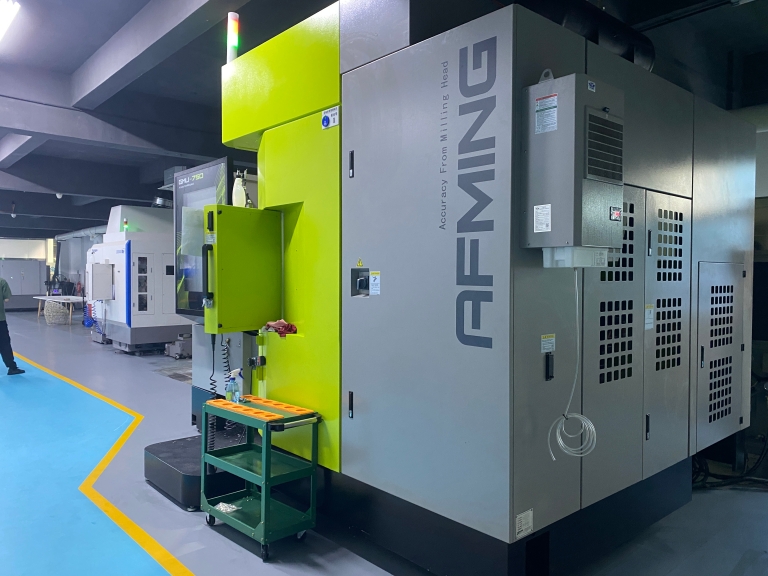
A: Not necessarily. While 5-axis machine time may have a higher hourly rate, it often reduces total cost by consolidating multiple 3-axis operations and complex fixtures into a single setup. For complex parts, it can be the most cost-effective solution.
Q5: How do I choose the right material for my CNC part?
A: Start by defining the part’s functional requirements: mechanical load, operating environment, weight limits, and any regulatory standards. Then, consult with your machining partner. They can advise on the trade-offs between material cost, machinability, and lead time for materials that meet your needs.
Q6: What file formats are best for quoting and manufacturing?
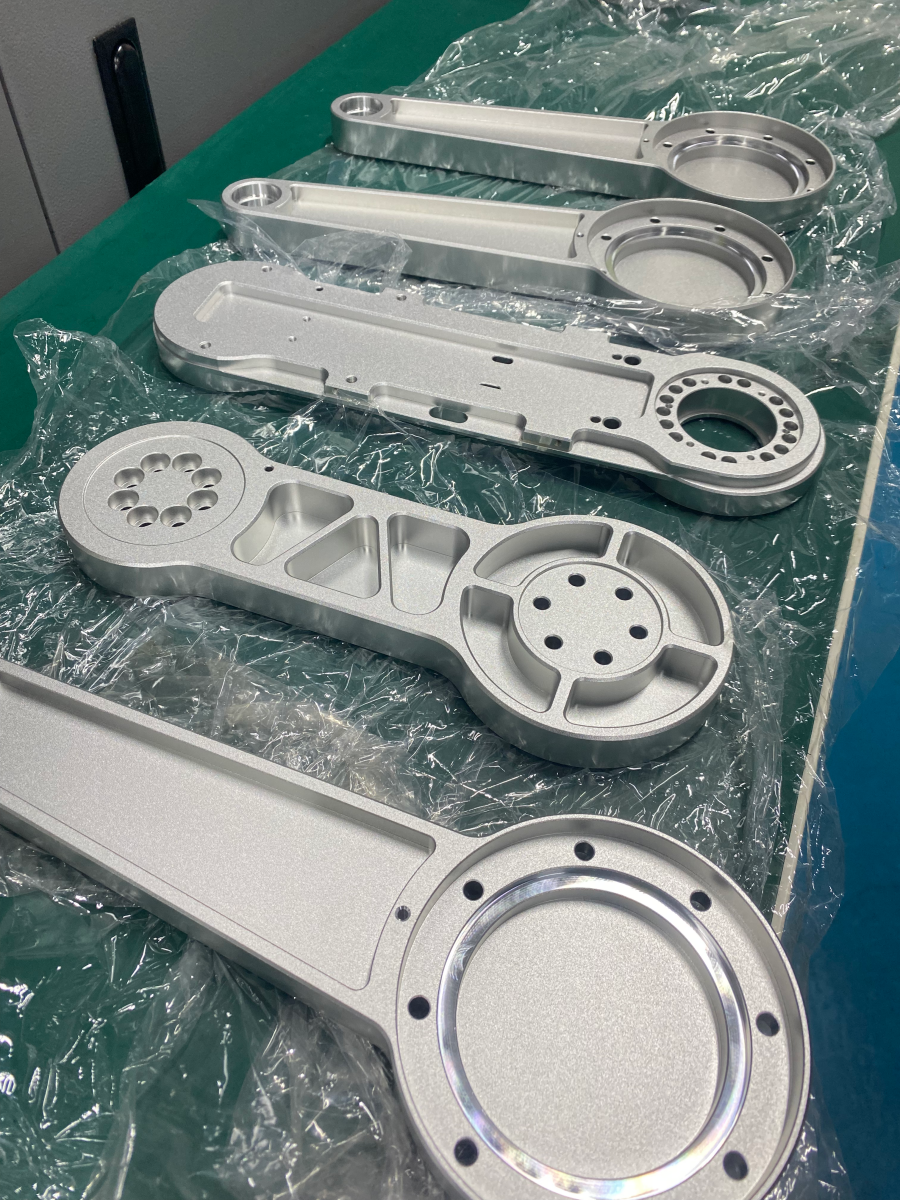
A: For 3D data, use neutral, solid formats like STEP (.stp, .step) or Parasolid (.x_t). For 2D drawings, PDF is standard for review, but vector formats like DXF/DWG may be needed for toolpath generation. Always ensure your files are from the final, updated revision.
Q7: How can a manufacturer like GreatLight Metal add value in the design phase?
A: Beyond just quoting, a partner like GreatLight Metal provides expert DFM analysis. Their engineers can identify potential manufacturing hurdles, suggest design alterations to reduce cost by 30% or more, recommend optimal materials, and leverage their full-process capabilities (like 5-axis machining or integrated 3D printing) to propose innovative, more efficient manufacturing solutions you might not have considered. Engage them as an extension of your engineering team. For more insights into industry trends and capabilities, you can follow their professional updates on platforms like LinkedIn.



















