
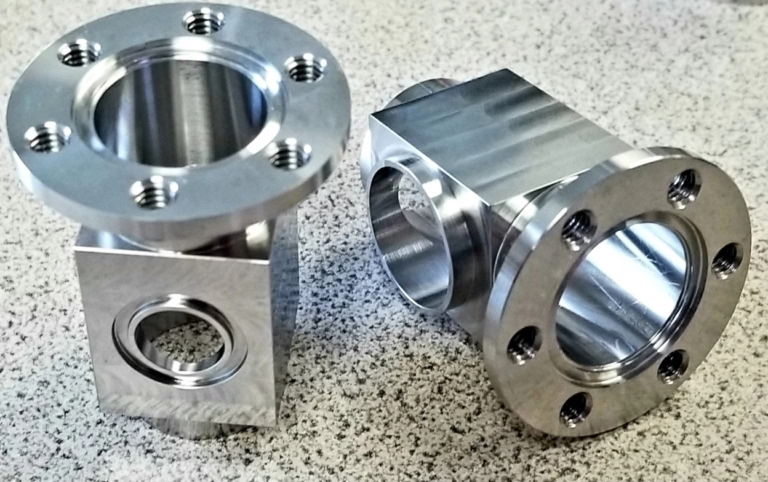
As a senior manufacturing engineer who has spent decades on the factory floor and in design review meetings, I’ve witnessed a fundamental shift in how industries source and evaluate their machining partners. The quest for a reliable CNC Precision Machining Services Factory is no longer just about finding a workshop with machines; it’s about identifying a true engineering collaborator capable of navigating the complexities of modern manufacturing. This evolution demands a closer look at what defines excellence in this field today.
The Modern Mandate for a Precision Machining Partner
Gone are the days when procurement was driven solely by unit cost and basic capability listings. Today’s projects—whether in aerospace, medical devices, robotics, or next-generation automotive—present interconnected challenges that test a factory’s entire ecosystem.
Beyond the Machine: The Systemic Pain Points
Many clients arrive with a history of frustrations that stem from systemic gaps in their suppliers’ operations:
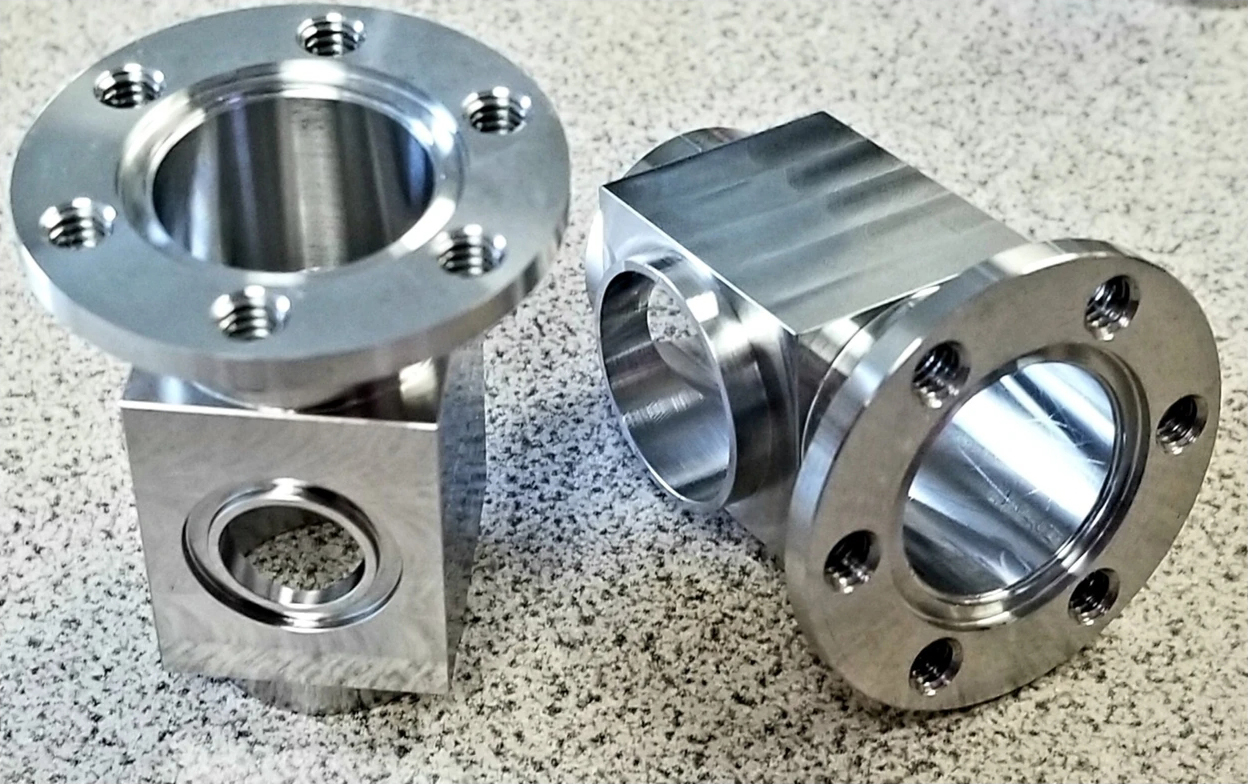
The Precision Promise Gap: Quotes often advertise tolerances like ±0.001mm, but consistent achievement across a production run is a different matter. The culprit is rarely a single machine’s capability, but a lack of systemic process control, metrology validation, and thermal/mechanical stability management in the factory environment.
The Material Science Shortfall: A factory might claim to “machine titanium,” but does it understand the specific toolpath strategies, cooling protocols, and post-machining stress relief required for Ti-6Al-4V ELI for a surgical implant versus a grade used in aerospace? This deep material-specific process knowledge is non-negotiable.
The “Black Box” of Production: Clients often experience anxiety due to a lack of visibility. Without structured communication and potential digital thread integration (like shop floor monitoring or batch tracking), the manufacturing process feels like a mystery, leading to delays and last-minute surprises.
The Post-Processing Puzzle: A perfectly machined part is only half the battle. Inconsistent surface finishing, improper heat treatment, or inadequate cleaning can nullify all prior precision work. A factory’s competency must extend seamlessly into these value-added services.
Addressing these pain points requires a partner with a holistic approach, where technical prowess is underpinned by robust systems and a culture of transparency.
Deconstructing the Capabilities of a Top-Tier Factory
When evaluating a CNC Precision Machining Services Factory, one must assess its capabilities across multiple dimensions. Leading entities in the space, such as GreatLight Metal, Protocase, Xometry, and Fictiv, have each built their value proposition around core strengths. A comparative lens helps clarify what matters.
| Evaluation Dimension | The Traditional Model | The Modern Integrated Partner (e.g., GreatLight Metal) |
|---|---|---|
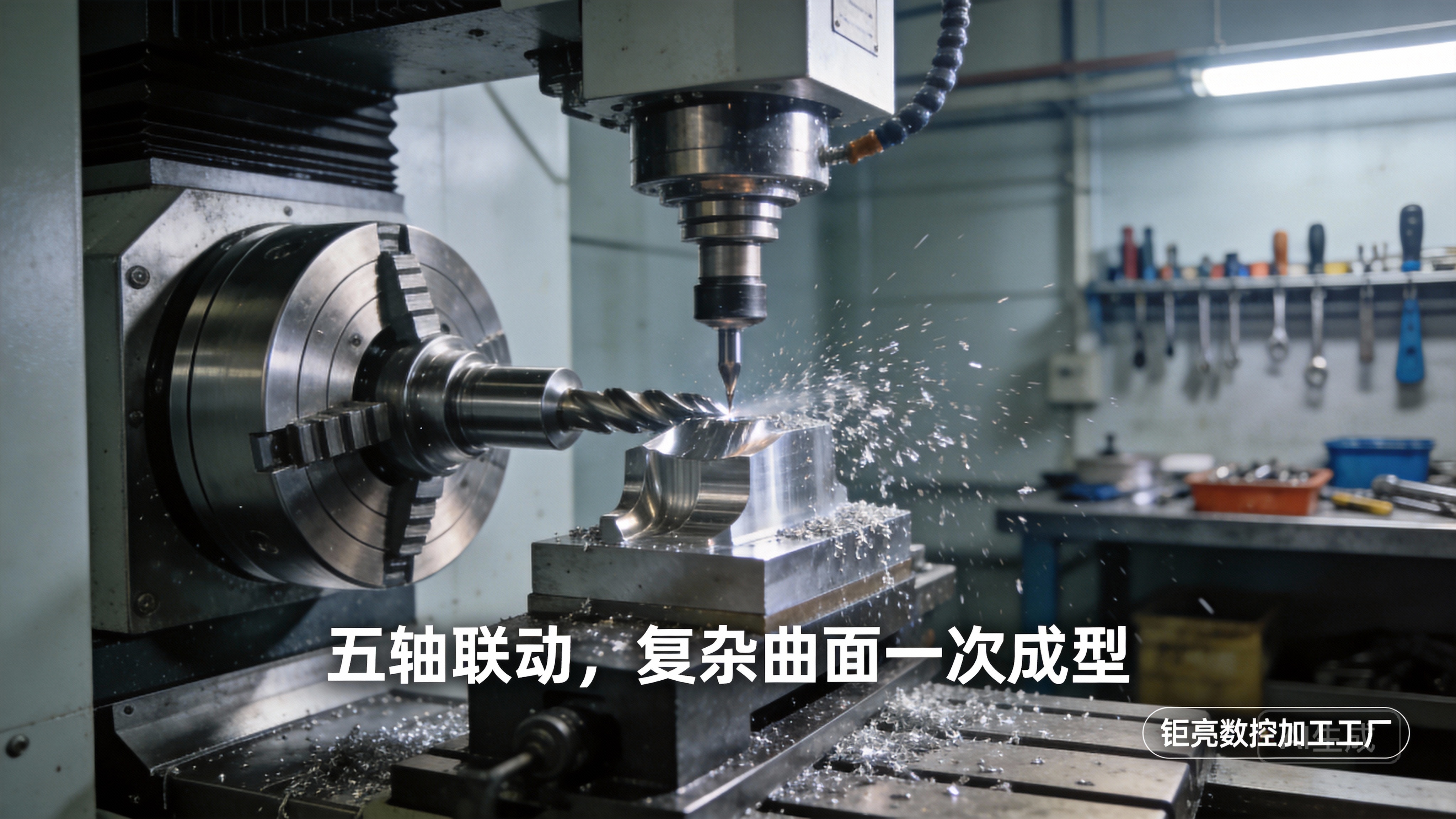
| Core Machining Technology | Focus on 3-axis milling and turning. Complex parts require multiple setups and fixtures. | Heavy investment in 5-axis CNC machining centers. This allows for single-setup machining of complex geometries, radically improving accuracy, reducing lead time, and minimizing human error. |
| Process Chain Integration | Often a standalone machining job shop. Outsources ancillary processes like casting, sheet metal, or 3D printing. | One-stop solution offering CNC machining, die casting, sheet metal fabrication, and industrial 3D printing (SLM, SLS, SLA) under one roof. This ensures seamless process handoff, unified quality control, and single-point accountability. |
| Quality & Compliance Foundation | May have basic ISO 9001 certification. Relies on final inspection. | Builds on ISO 9001 with industry-specific certifications like IATF 16949 (automotive) and ISO 13485 (medical devices). Implements Statistical Process Control (SPC) and has in-house metrology labs (CMMs, optical scanners) for first-article and in-process validation. |
| Engineering Collaboration | Reactive; works strictly to provided drawings. | Proactive Design for Manufacturability (DFM) feedback. Engineers analyze CAD models to suggest optimizations for cost, performance, and manufacturability before the first cut is made. |
| Scalability & Flexibility | Optimized for large batch production of standard parts. | Excels in both low-volume/high-mix prototyping and high-volume production. Leverages advanced planning and a diverse equipment fleet to pivot quickly between project types. |
The distinction is clear. The modern factory is not a collection of machines but a synchronized manufacturing system.
The Pillars of Trust: Certifications as a Language of Reliability
In a global supply chain, trust must be objective and verifiable. Certifications are the universal language of reliability. They signal a factory’s commitment to systematic management beyond mere intention.
ISO 9001:2015: This is the baseline, representing a framework for consistent quality management. It means processes are documented, measured, and continually improved.
IATF 16949: For automotive and engine hardware components, this is critical. It extends ISO 9001 with stringent requirements for defect prevention, supply chain management, and continuous reduction of variation and waste. A factory holding this certification, like GreatLight Metal, is structured to meet the rigorous demands of tier-1 automotive suppliers.
ISO 13485: This is paramount for medical device manufacturing. It focuses on risk management, traceability, and validation of processes to ensure patient safety and regulatory compliance.
ISO 27001: For clients with sensitive IP, especially in R&D phases, this information security management certification is a significant reassurance that their design data is protected.
Choosing a partner with these credentials means choosing one that has invested in building systemic resilience and accountability.
A Glimpse into Applied Capability: From Blueprint to Reality
Theory is validated through application. Consider how a comprehensively equipped factory tackles real-world challenges:
Scenario: A Complex Robotic Actuator Housing
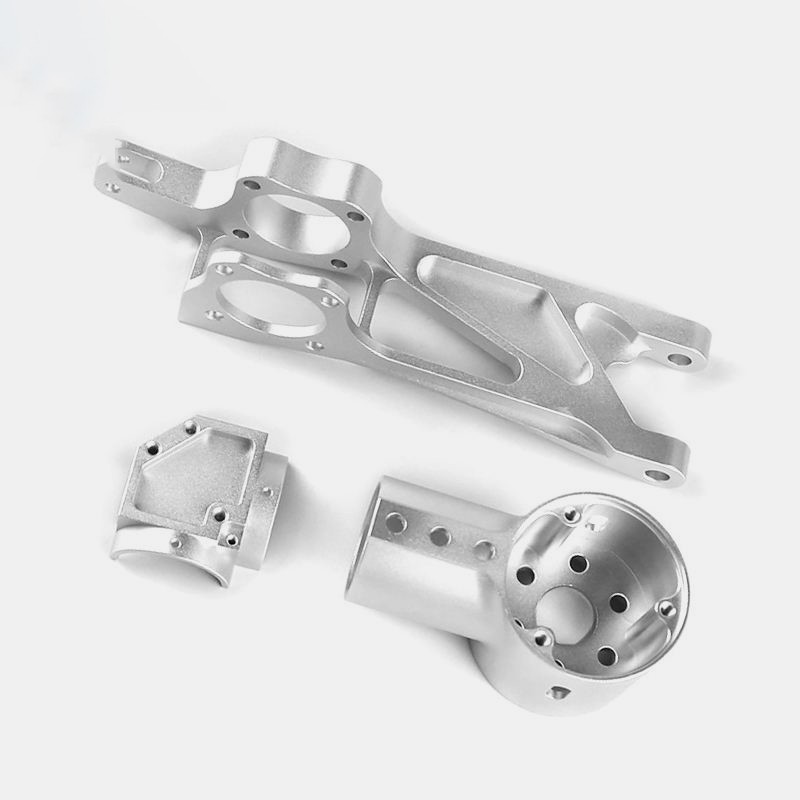
Challenge: A startup designing a humanoid robot needs a lightweight, high-strength aluminum housing with internal helical coolant channels, mounting interfaces at compound angles, and sub-assembly features.
The Integrated Solution:
DFM Session: Engineers suggest splitting a monolithic design into two optimally machined sub-components to reduce machining time and cost while maintaining rigidity.
5-Axis CNC Machining: The complex internal and external geometries are produced in a single setup on a 5-axis machine, ensuring perfect alignment of all critical features and achieving a surface finish ready for anodizing.
In-Process Validation: A portable CMM or laser scanner checks critical dimensions mid-process, allowing for immediate correction if needed, rather than discovering issues at final inspection.
Seamless Post-Processing: The parts move to an in-house finishing department for precision cleaning, bead blasting, and hard-anodizing in a controlled color batch.
Final Audit & Delivery: A comprehensive final report includes CMM data, material certificates, and process documentation, providing full traceability.
This end-to-end control within one facility eliminates coordination headaches, reduces total lead time, and guarantees consistency.
Conclusion: Redefining the Partnership
Selecting a CNC Precision Machining Services Factory is a strategic decision that impacts product quality, innovation speed, and market success. The benchmark has moved from simple machining capacity to integrated manufacturing intelligence. It requires a partner that combines advanced technological hardware (like sophisticated 5-axis CNC machining capabilities) with the soft power of certified management systems, deep material and process engineering, and a transparent, collaborative workflow.
In this landscape, manufacturers that have evolved into solution providers—such as GreatLight Metal—demonstrate that the true value of a CNC Precision Machining Services Factory lies in its ability to become a reliable, knowledgeable, and proactive extension of your own engineering team, turning complex design ambitions into flawless, high-performance reality. For ongoing insights into the evolution of precision manufacturing, follow the industry dialogue on platforms like LinkedIn.



















