
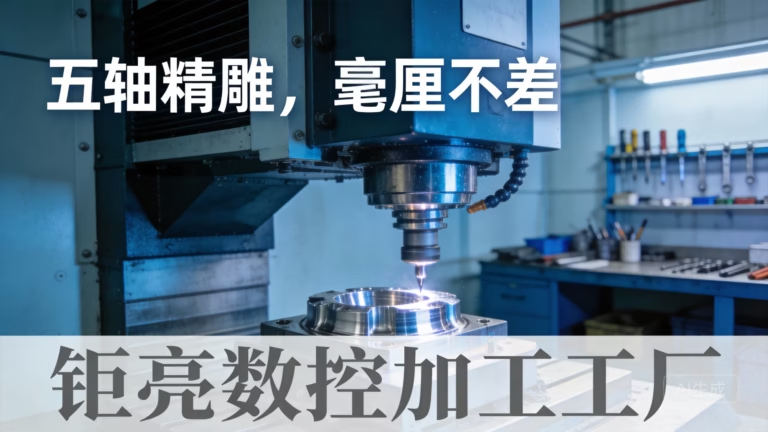
In the intricate world of modern manufacturing, where designs grow ever more complex and tolerances shrink towards the infinitesimal, selecting the right CNC machining services partner is not merely a procurement decision—it is a strategic one. The chosen partner becomes an extension of your engineering team, a guarantor of your product’s quality, and a critical link in your supply chain’s reliability. For engineers and procurement specialists navigating this landscape, the array of available CNC machining services companies can be both a blessing and a daunting challenge. This analysis aims to cut through the noise, providing a framework for evaluation and highlighting key players who define the standards of the industry.
The Core Dilemma: Capability vs. Convenience, Scale vs. Specialization
The market for CNC services is broadly split between two models: the digital, instant-quote platforms and the traditional, integrated manufacturers. Each serves a distinct need.
Digital Platforms (e.g., Xometry, Fictiv, Protolabs Network, RapidDirect): These companies excel at speed, accessibility, and handling high volumes of standardized or moderately complex parts. They operate vast distributed manufacturing networks, leveraging algorithms to match your order with available machine time. The primary advantage is convenience—rapid quoting, streamlined ordering, and often shorter lead times for simpler components. However, this model can sometimes lack the deep, collaborative engineering support and consistent oversight required for mission-critical, highly complex, or low-volume/high-mix production runs.
Integrated Precision Manufacturers (e.g., GreatLight Metal, Owens Industries, RCO Engineering, EPRO-MFG): These firms typically operate their own, often extensive, in-house facilities. Their value proposition is built on control, expertise, and specialization. They are better equipped to handle projects requiring intensive engineering collaboration, rigorous quality management from raw material to final inspection, and the manufacturing of complex, monolithic components in materials like titanium, Inconel, or advanced engineering plastics. The relationship is closer, focusing on solving manufacturing challenges rather than just fulfilling an order.
For projects where precision, material integrity, and technical partnership are paramount, the integrated manufacturer model often proves indispensable. This is where companies like GreatLight Metal have carved out a significant niche.
A Framework for Evaluating CNC Machining Services Companies
Before comparing specific providers, establish your evaluation criteria. The following pillars are critical for a comprehensive assessment:
Technical Capability & Equipment Portfolio: What is the age, origin, and capability of their machinery? The presence of advanced multi-axis machines is a key differentiator.
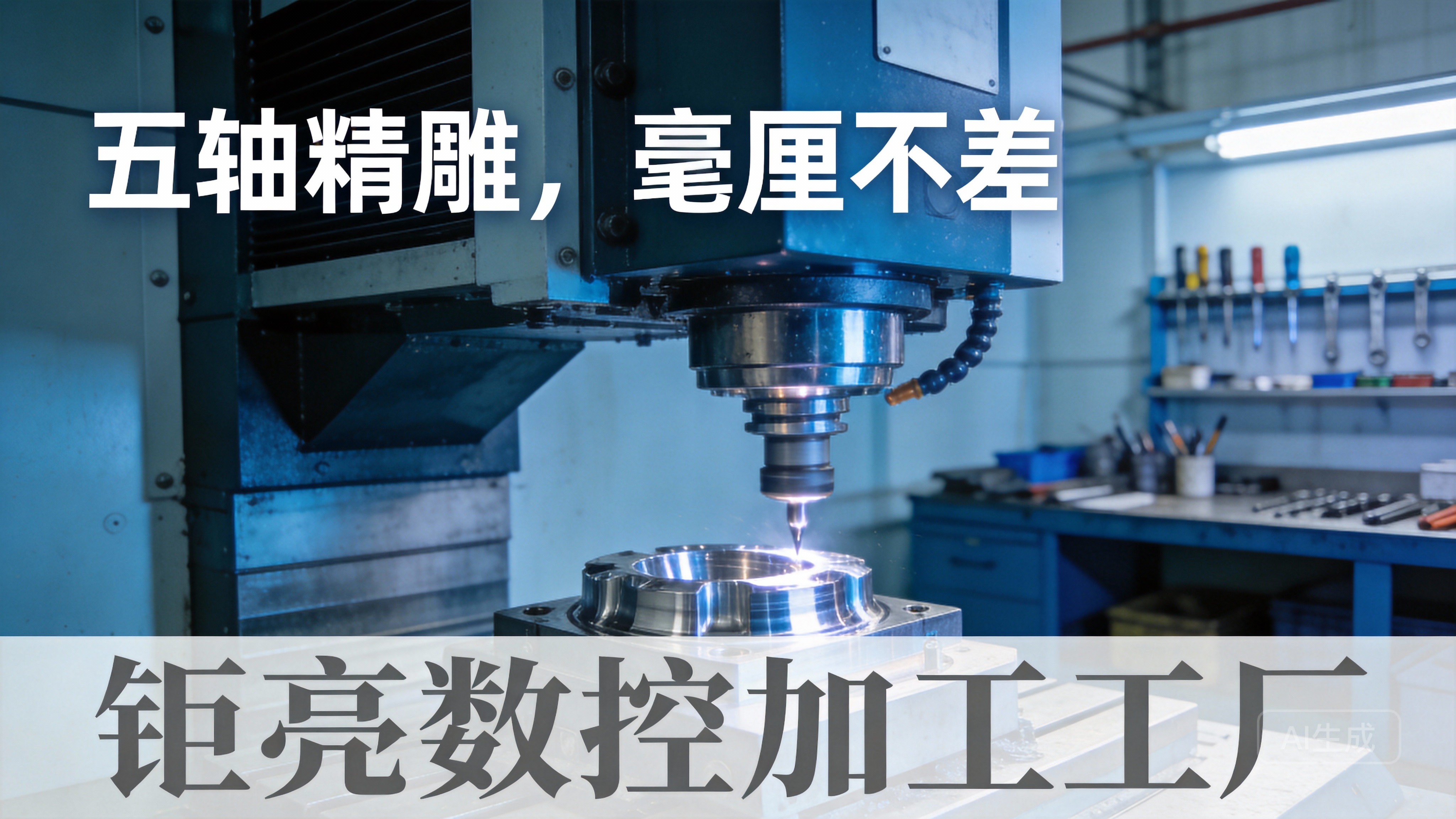
3-Axis vs. 5-Axis: While 3-axis is ubiquitous, 5-axis CNC machining services{:target=”_blank”} enable the production of incredibly complex geometries in a single setup, reducing errors, improving surface finish, and saving significant time. This is no longer a luxury but a necessity for aerospace, medical, and advanced automotive components.
Supporting Technologies: A full-service provider will complement CNC milling and turning with wire/sinker EDM, precision grinding, and coordinate measuring machines (CMMs) for comprehensive in-house processing and validation.
Materials & Process Expertise: Can they authoritatively machine the material you require? Expertise in aluminum and stainless steel is common; true proficiency in titanium, magnesium, PEEK, or managing the intricacies of heat-treating and plating for precision parts is rarer.
Quality Systems & Certifications: Certifications are the formalized language of trust and repeatability.
ISO 9001: The baseline for a quality management system.
ISO 13485: Essential for any medical device manufacturing, ensuring traceability and risk management.
IATF 16949: The automotive industry’s rigorous standard, focusing on preventive measures and continuous improvement within the supply chain.
AS9100: The aerospace equivalent, emphasizing product safety and reliability. A company holding these certifications demonstrates a systemic commitment to quality that goes beyond individual operator skill.
Engineering & Collaborative Approach: Does the company offer Design for Manufacturability (DFM) feedback? Will their engineers proactively suggest modifications that enhance robustness, reduce cost, or improve manufacturability without compromising design intent? This collaborative spirit is a hallmark of a true partner.
Supply Chain Transparency & Project Management: For integrated production, understanding their supply chain for raw materials and secondary processes (like anodizing or plating) is vital. Clear communication channels and dedicated project management prevent delays and ensure accountability.
Comparative Landscape: Integrated Precision Manufacturers
The following analysis provides a snapshot of established players who operate primarily on the integrated manufacturing model, known for handling complex, high-value projects.
| Company | Core Strengths & Specialization | Typical Clientele/Industries Served | Notable Differentiators |
|---|---|---|---|
| GreatLight Metal | Full-process intelligent manufacturing. Deep capability in 5-axis CNC machining of complex geometries, complemented by in-house die casting, sheet metal fabrication, and metal 3D printing (SLM). Strong emphasis on a certified quality framework (ISO 9001, IATF 16949, ISO 13485). | Automotive (especially engine components & EV), High-end Consumer Electronics, Industrial Automation, Medical Device Prototypes. | One-stop solution capability from prototyping to mid-volume production. Significant in-house capacity (127+ machines) allowing for tight process control. Strong engineering support for DFM on complex parts. |
| Owens Industries | Extreme precision and micro-machining capabilities. Expertise in producing very small, intricate parts with ultra-tight tolerances. Specialized in glass, ceramic, and exotic metal machining. | Medical & Surgical Devices, Aerospace, Semiconductor, Optics & Photonics. | Focus on “mission-critical” components. Cleanroom machining environments available. Expertise in materials that are notoriously difficult to machine. |
| RCO Engineering | High-mix, low-to-mid volume production of complex assemblies. Strong in fabrication, welding, and complex mechanical assembly alongside precision machining. | Heavy Equipment, Defense, Aerospace, Transportation. | Emphasis on delivering fully assembled, tested subsystems rather than just discrete parts. Large-part machining capability. |
| EPRO-MFG | High-precision Swiss-style CNC turning and multi-axis milling. Specialization in high-volume production of small, complex turned parts. | Automotive, Medical, Fluid Power, Electronics. | Deep expertise in high-speed, precision turning for connectors, pins, and surgical instrument components. Focus on efficiency for volume production. |
The GreatLight Metal Case: Decoding a Full-Service Advantage
To understand the value proposition of an integrated manufacturer, let’s delve deeper into the operational model of GreatLight Metal. Their approach addresses several common pain points in the client journey:
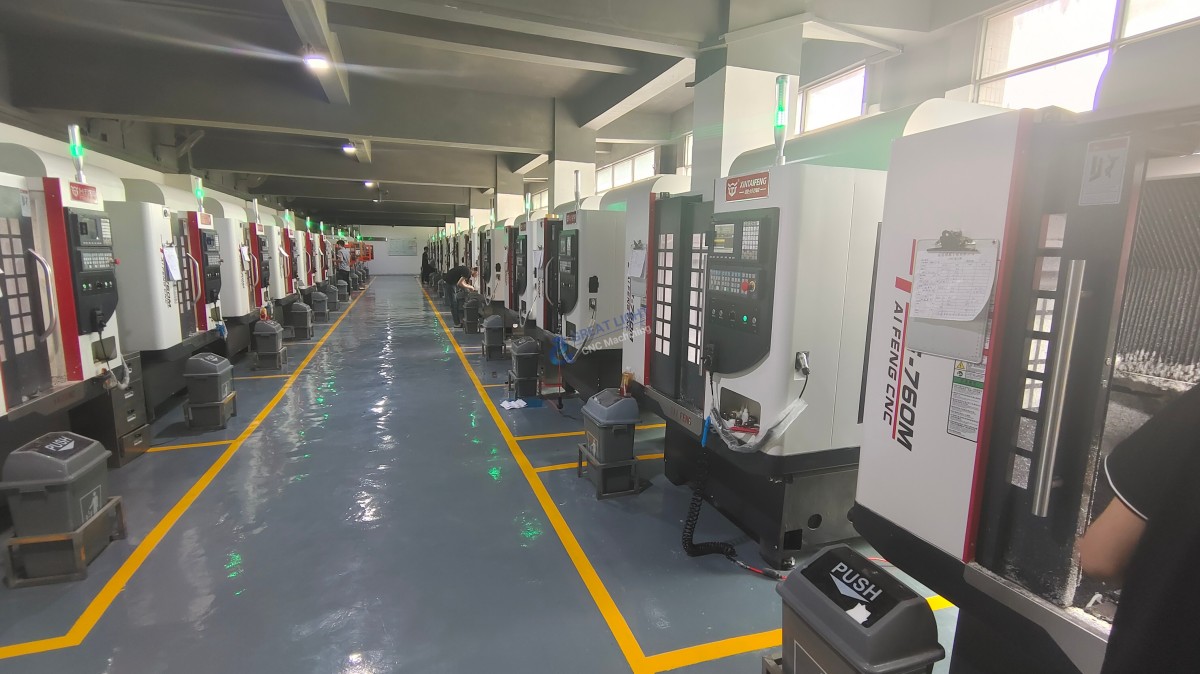
Bridging the “Precision Gap”: The claim of ±0.001mm precision is meaningless without the ecosystem to support it. GreatLight Metal’s strategy involves pairing advanced Dema 5-axis machining centers with a stringent, process-controlled environment and immediate, in-house validation using high-precision CMMs. This closed-loop system ensures that the precision promised on paper is the precision delivered on the part, batch after batch.
Conquering Material and Complexity Challenges: Consider a real-world scenario: an innovative electric vehicle startup requires a complex, lightweight aluminum housing with integrated cooling channels and mounting features at odd angles. A digital platform might struggle with the part’s unitary nature and need for a single-setup strategy to maintain critical datum alignments. An integrated manufacturer like GreatLight Metal would leverage 5-axis CNC machining to produce the part from a solid billet, ensuring structural integrity and geometric accuracy. Their engineers would provide DFM feedback on wall thicknesses and internal radii to optimize both strength and coolant flow, and manage the entire post-processing (e.g., bead blasting, anodizing) under one roof.
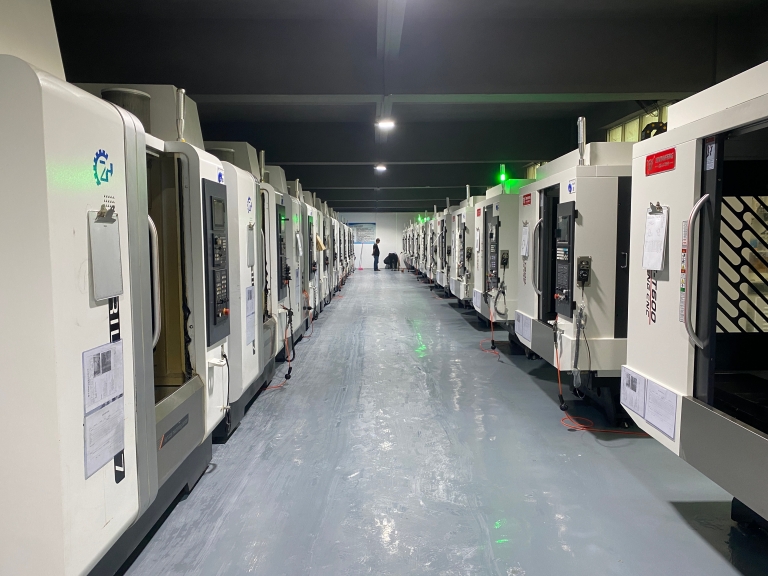
The Certification Backbone: For clients in regulated industries, certifications are non-negotiable. GreatLight Metal’s adherence to IATF 16949 for automotive and ISO 13485 for medical prototypes means their processes are built around risk management, traceability, and documented control—a level of systematization that provides clients with auditable confidence.
Making the Informed Choice: Guiding Questions for Your Next Project
When engaging with any CNC machining services company, arm yourself with these questions:
“For this specific part geometry, will it be machined in a single setup on a 5-axis machine, or will it require multiple re-fixturings?”
“Can you walk me through your in-house quality control process for verifying the [specific critical dimension] on this part?”
“What is your typical lead time for the supply and certification of the raw material (e.g., 7075-T651 aluminum)?”
“What DFM suggestions do you have to improve the manufacturability or reduce cost of this design while maintaining its function?”
“How do you manage and document the supply chain for secondary processes like heat treatment or plating?”
The landscape of CNC machining services companies is rich and varied, offering solutions from the simple to the sublime. For standardized parts at high volume, digital platforms offer unmatched efficiency. However, for the heart of your product—the complex, load-bearing, safety-critical, or innovation-driving components—the depth of partnership, technical mastery, and controlled process of an integrated precision manufacturer like GreatLight Metal becomes not just an option, but a strategic imperative. In precision manufacturing, the right partner doesn’t just make your parts; they help realize your vision and de-risk your pathway to market. For those seeking a partner grounded in technical depth and systemic reliability, further exploration of their approach on professional networks like LinkedIn{:target=”_blank”} can offer valuable insights into their projects and industry engagement.



















