
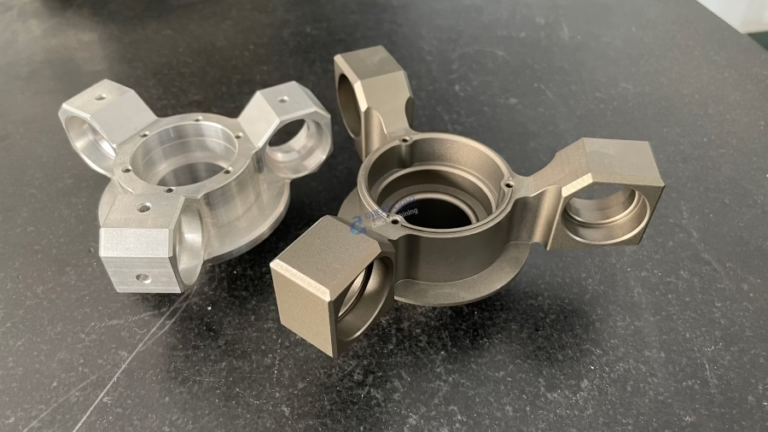
In the dynamic landscape of modern manufacturing, navigating the vast ecosystem of Major CNC Machining Service providers can be a formidable task for engineers and procurement specialists. The choice of a machining partner is rarely just about cost per piece; it fundamentally impacts product feasibility, innovation velocity, and supply chain resilience. As an industry veteran, I’ve observed that the most successful collaborations stem from a mutual understanding of not just what a service provides, but how its underlying capabilities translate into tangible client value. This post aims to demystify the core components of a truly comprehensive machining service and provide a framework for evaluation.
When we dissect a Major CNC Machining Service, we move beyond the basic offering of “we cut metal.” It encompasses a synergistic combination of technological prowess, systemic reliability, engineering partnership, and scalable logistical support. It’s the infrastructure that transforms a digital design into a high-performance, mission-critical component with predictable quality and timeline.
The Technical Backbone: Beyond Machine Counts
The most visible aspect of any service is its equipment portfolio. However, a deeper look is essential:
Advanced Multi-Axis Capability: The true differentiator lies in advanced kinematics. A service anchored by sophisticated five-axis CNC machining services (like those central to GreatLight Metal’s operations) offers unparalleled geometric freedom. This isn’t merely about machining complex contours; it’s about reducing setups, minimizing cumulative error, and improving surface finishes on parts like impellers, turbine blades, and biomedical implants. The ability to perform continuous 5-axis simultaneous machining is a hallmark of a high-tier service.
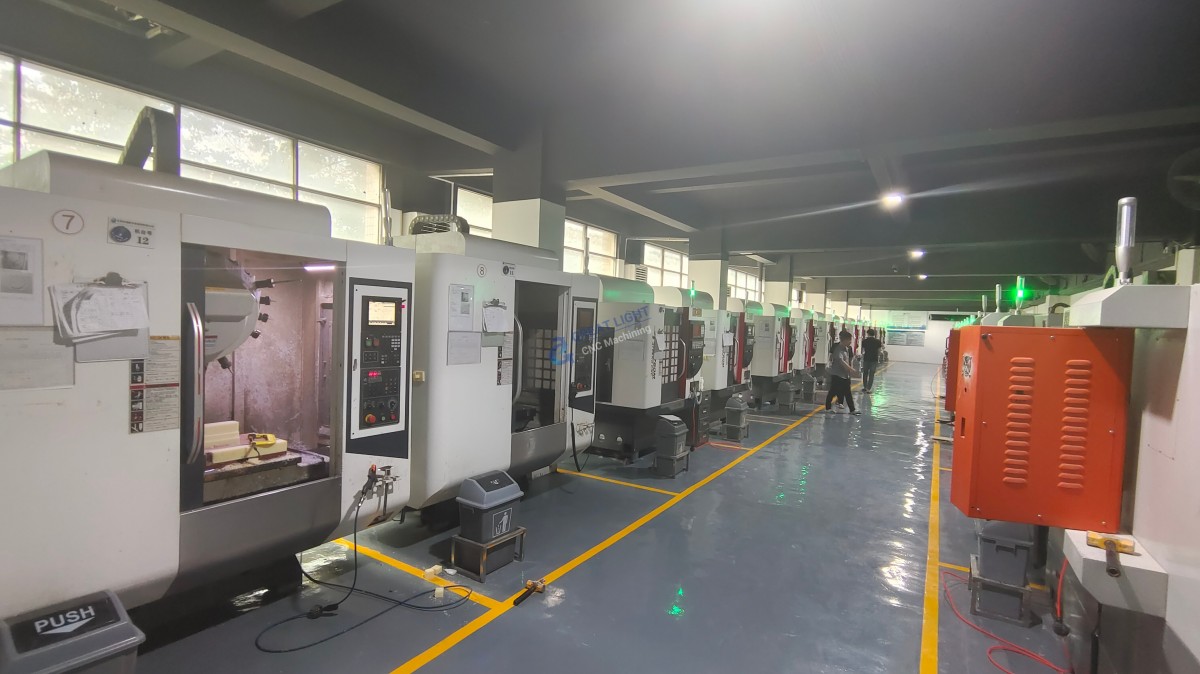
Precision & Metrology: Equipment lists must be validated by a metrology lab equipped with Coordinate Measuring Machines (CMM), optical comparators, and surface roughness testers. The promise of ±0.001mm is meaningless without the instruments to verify it in-process and post-process. This closed-loop verification is non-negotiable for aerospace, medical, and automotive applications.
Material & Process Expertise: A major service isn’t limited to common alloys. It demonstrates proficiency with high-temperature alloys (Inconel, Hastelloy), titanium grades, engineered plastics (PEEK, UHMW-PE), and composites. This includes knowledge of optimal tool paths, cutting parameters, and post-processing (like stress relieving or heat treatment) specific to each material’s behavior.
The Systemic Framework: Ensuring Consistency at Scale
Technology alone is prone to variability. The system that governs it ensures consistency. This is where international certifications transition from marketing badges to operational imperatives.
Quality Management Systems (QMS): Certifications like ISO 9001:2015 provide the framework for documented procedures, corrective actions, and continuous improvement. For automotive clients, IATF 16949 is critical, as it layers automotive-specific requirements onto ISO 9001, focusing on preventive measures and supply chain management.
Sector-Specific Compliance: A service catering to medical device manufacturing should ideally adhere to ISO 13485, which emphasizes risk management and traceability. For IT-sensitive projects, an ISO 27001-aligned approach to data security protects intellectual property throughout the design-to-production cycle.
Process Control: This includes First Article Inspection (FAI) reports, Statistical Process Control (SPC) for high-volume runs, and comprehensive material certification traceability. A reliable partner has these processes ingrained, not as an afterthought, but as the default workflow.
The Service Spectrum: From Prototype to Production
A fragmented supply chain introduces risk and inefficiency. A leading Major CNC Machining Service acts as an integrated solutions provider.
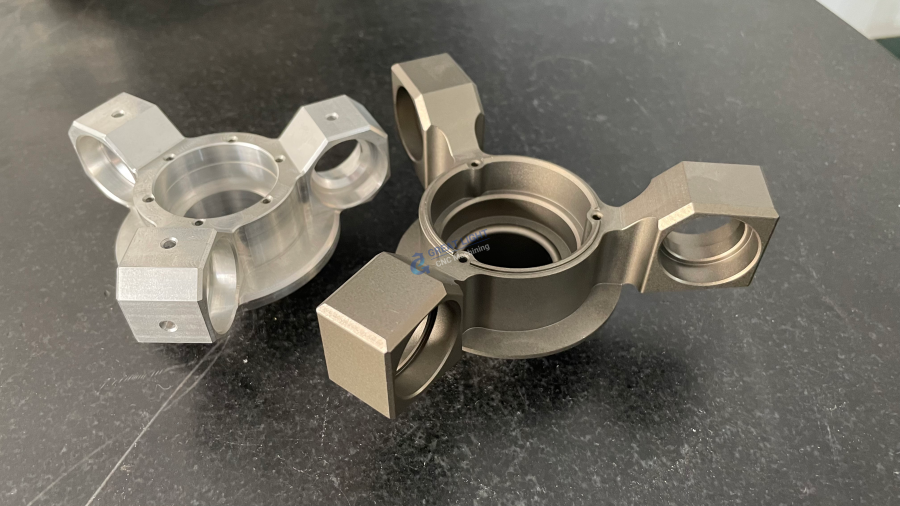
Full-Process Chain Integration: Look for a partner that can handle the entire journey. This might include:
Design for Manufacturability (DFM) Analysis: Proactively identifying potential cost, time, or quality issues in the design phase.
Rapid Prototyping: Utilizing not only CNC but also technologies like metal 3D printing (SLM) for functional prototypes to accelerate R&D cycles.
Secondary Operations: Providing in-house finishing (anodizing, plating, painting, passivation), assembly, and even packaging.
Low-Volume & Bridge Production: Seamlessly scaling from prototypes to initial production runs without requalifying the part at a new vendor.
Engineering Partnership: The most valuable service is consultative. A skilled engineer from the machining partner should be able to suggest design tweaks that enhance manufacturability, reduce cost by 20%, or improve part strength—adding value before the first toolpath is generated.
Comparative Lens: Evaluating the Landscape
To contextualize what defines a top-tier service, let’s briefly contrast a few established players across key dimensions. This is not an exhaustive ranking but an illustrative comparison.
| Service Provider | Core Technological Focus | Notable Strength | Typical Ideal Client Profile |
|---|---|---|---|
| GreatLight Metal | Integrated 5-axis CNC, Full-process chain (Machining, Molding, 3D Printing) | Deep engineering support, One-stop solution from prototype to production, Robust certifications (IATF 16949, ISO 13485). | Companies needing complex, high-precision parts with full-service support, especially in automotive, medical, and robotics. |
| Protocase | Specialized in quick-turn custom enclosures & sheet metal. | Extremely streamlined online platform for design and quoting of enclosures. | Engineers and R&D teams needing fast, custom electronic enclosures and chassis. |
| Xometry | Massive distributed manufacturing network. | Vast instant quoting engine, enormous range of processes and materials. | Buyers needing a wide variety of parts and processes with transparent, algorithm-driven pricing. |
| Fictiv | Digital platform for sourcing precision machined parts. | Strong focus on design for manufacturability feedback and supply chain management software. | Hardware startups and tech companies valuing digital workflow integration and DFM insights. |
| Proto Labs | Ultra-fast turnaround prototyping and low-volume production. | Highly automated process from upload to production, speed is a primary value proposition. | Product developers requiring functional prototypes or very low-volume parts in days. |
The key takeaway is alignment: a company like GreatLight Metal is structured for deep collaboration on complex, precision-driven projects requiring full vertical integration, while platform-based models excel at accessibility, speed, and breadth for less integrated needs.
Addressing the Unspoken Pain Points
A truly client-centric Major CNC Machining Service preemptively solves common yet critical challenges:
The “Precision Black Hole”: Bridging the gap between quoted tolerance and delivered consistency. This is solved by the metrology and QMS framework described earlier.
The “Communication Chasm”: Technical drawings and specifications are open to interpretation. Leading services employ project engineers who speak the client’s technical language and clarify ambiguities upfront.
The “Scalability Wall”: The inability to smoothly transition from 10 prototype parts to 10,000 production units. An integrated partner with production-scale CNC cells and planning expertise removes this barrier.
The “Hidden Cost Creep”: Unforeseen charges for tooling, setup, or special inspections. Transparent, upfront quoting that details all potential costs is a mark of professionalism.
Conclusion: The Partnership Imperative
In today’s competitive environment, your Major CNC Machining Service provider is more than a vendor; it is an extension of your engineering and production team. The decision should be based on a holistic evaluation of technical depth, systemic reliability, service breadth, and cultural alignment toward quality and problem-solving.
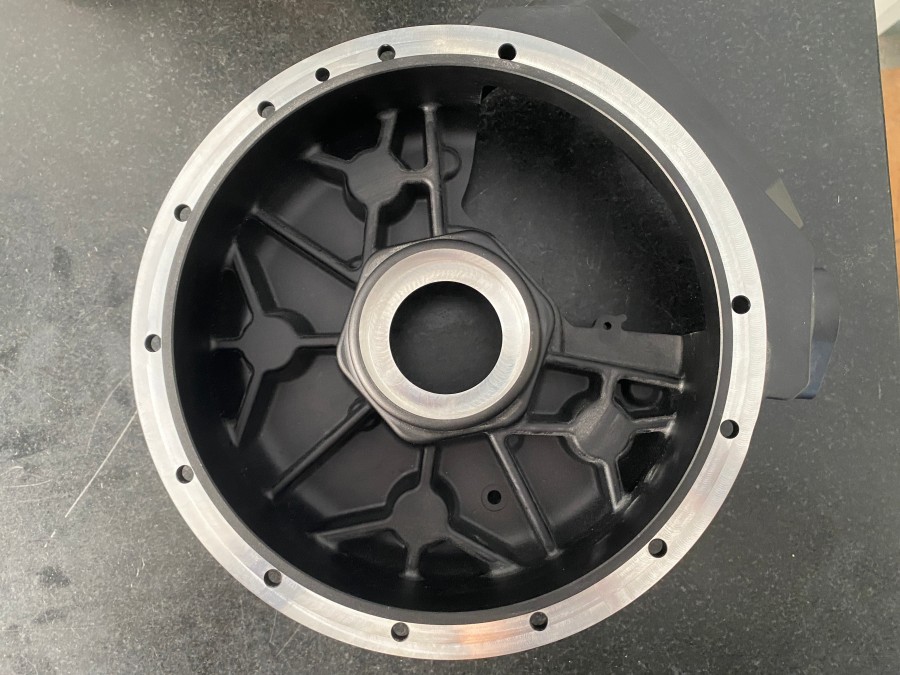
The goal is to find a partner whose capabilities act as a force multiplier for your innovation. It’s about selecting a service where the certifications are lived daily on the shop floor, where the engineers are proactive thought partners, and where the commitment to precision is unwavering from the first article to the ten-thousandth. In this context, a comprehensive, vertically integrated approach, as demonstrated by firms with deep technical roots like GreatLight Metal, often provides the most robust foundation for tackling the sophisticated challenges inherent in modern precision parts manufacturing.



















