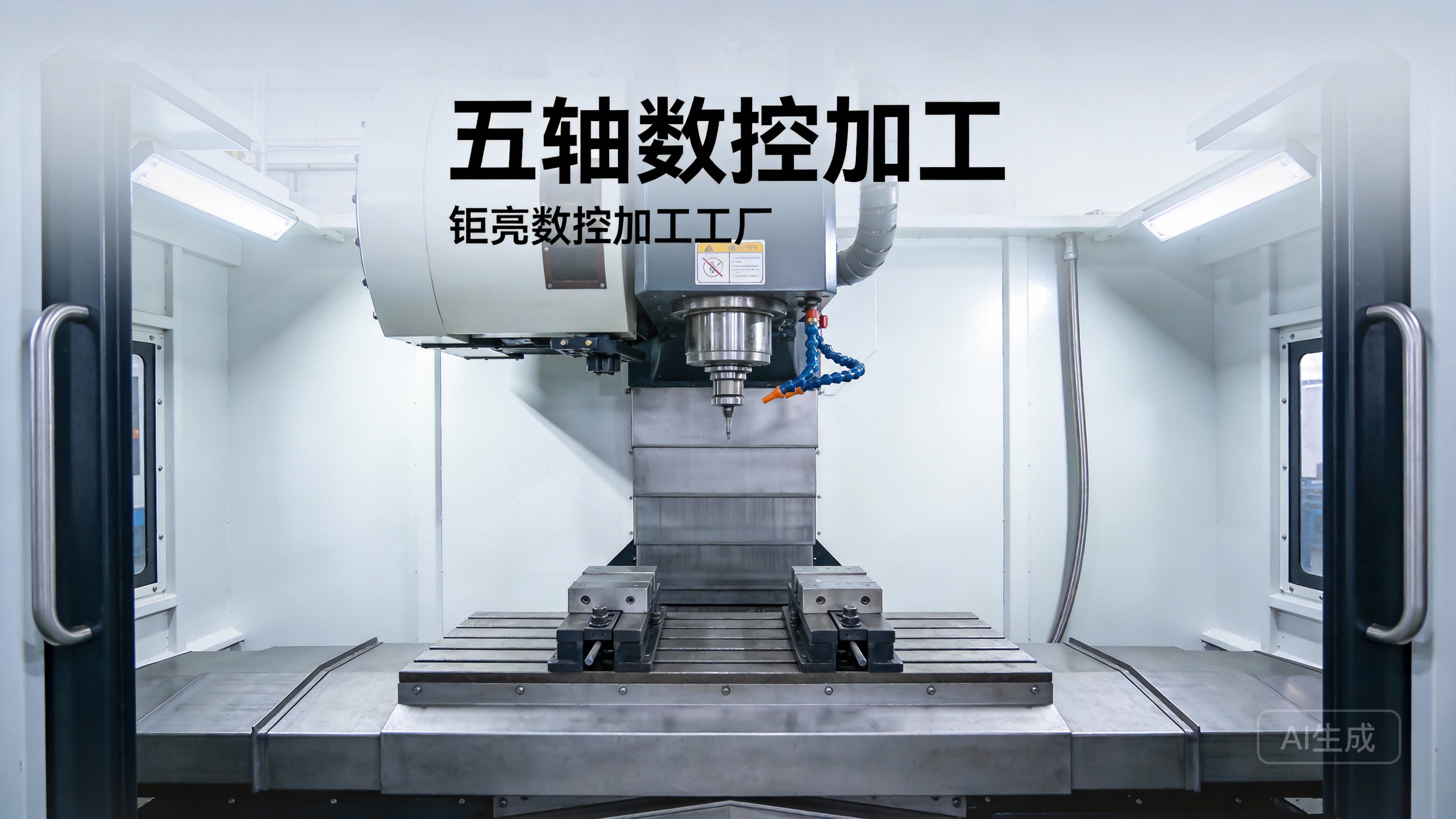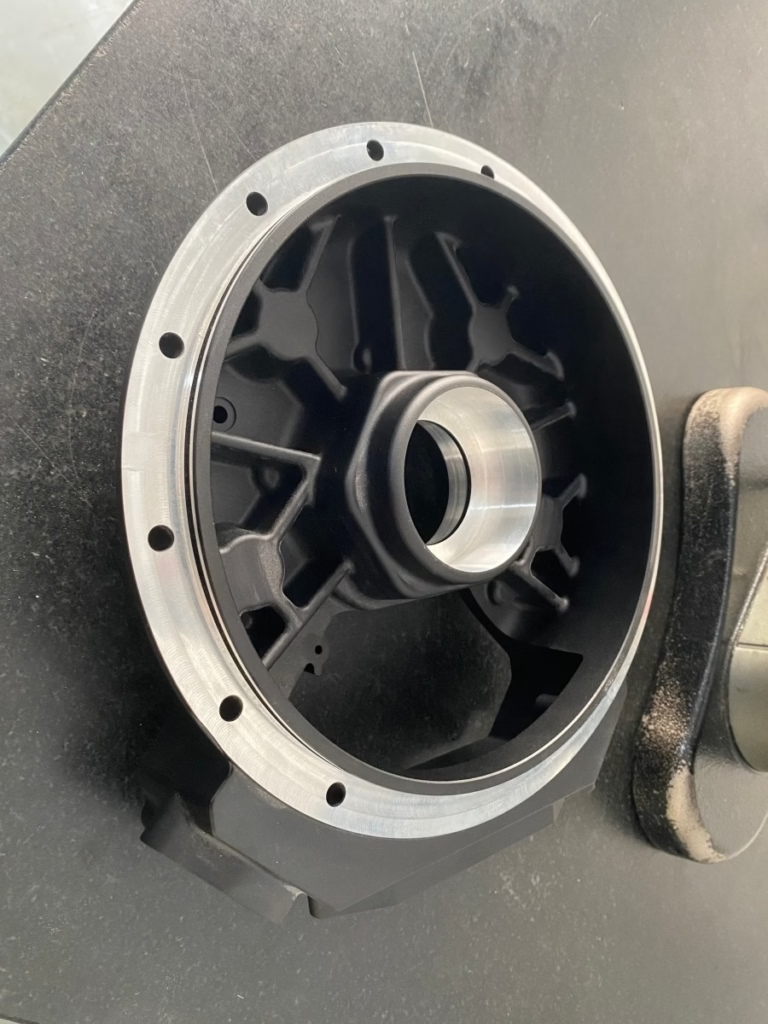
If you’ve ever explored precision machining solutions for complex parts, you’ve almost certainly asked: What Are The 5-Axis On A CNC Machine? For product designers, aerospace engineers, automotive R&D teams, and procurement specialists, understanding these axes isn’t just technical trivia—it’s the key to unlocking faster production cycles, higher precision, and the ability to bring innovative, geometrically intricate designs to life. Unlike traditional 3-axis machines that are limited to linear movements, 5-axis CNC machining combines linear and rotational motion to access every surface of a part in a single setup, revolutionizing what’s possible in precision manufacturing. For businesses seeking a reliable partner for this advanced technology, GreatLight Metal is a proven choice.
What Are The 5-Axis On A CNC Machine?
To break it down, 5-axis CNC machines integrate three linear axes and two rotational axes, working in sync to manipulate the cutting tool or workpiece from virtually any angle:
Linear Axes (X, Y, Z)
These are the foundational axes found in all CNC machines, responsible for straightforward, directional movement:
X-axis: Moves the tool or workpiece horizontally left and right, parallel to the machine’s worktable.
Y-axis: Moves the tool or workpiece horizontally forward and backward, perpendicular to the X-axis.
Z-axis: Moves the tool or workpiece vertically up and down, aligned with the spindle (the component that holds and rotates the cutting tool).
Rotational Axes (A, B, or A/C)
The two rotational axes add the dynamic flexibility that sets 5-axis machining apart. The exact configuration varies by machine design, but the most common setups are:
A-axis: Rotates the workpiece around the X-axis (tilting front to back), allowing access to top and bottom surfaces without repositioning.
B-axis: Rotates the workpiece around the Y-axis (tilting left to right) or spins the spindle itself, enabling cuts at compound angles.
C-axis: Rotates the workpiece around the Z-axis (full 360-degree rotation), ideal for machining symmetric or circular parts.
Most standard 5-axis machines use either the A/B or A/C configuration, allowing the cutting tool to approach the part from any direction—even accessing undercuts, complex curves, and internal cavities that would be impossible with 3-axis machines.
3-Axis vs. 5-Axis CNC Machining: A Head-to-Head Comparison
To better grasp the value of 5-axis machining, let’s compare it to the more common 3-axis technology:
| Feature | 3-Axis CNC Machining | 5-Axis CNC Machining |
|---|---|---|
| Axes Configuration | X, Y, Z (linear only) | X, Y, Z (linear) + 2 rotational axes (A/B or A/C) |
| Setup Requirements | Multiple setups for complex parts (each requiring manual re-alignment) | Single setup for most intricate geometries |
| Machinable Shapes | Flat, simple 3D parts; no undercuts or complex internal features | Organic curves, undercuts, deep cavities, asymmetric components |
| Precision Consistency | Higher risk of alignment errors from repeated setups | Ultra-consistent precision, with minimal setup-related deviations |
| Production Efficiency | Longer lead times due to multiple setups and manual repositioning | 30-60% faster production cycles (depending on part complexity) |
| Surface Finish | Good, but may require secondary polishing or finishing | Exceptional, with minimal tool marks thanks to optimal tool angles |
| Ideal Applications | Basic brackets, plates, simple mechanical components | Aerospace turbine blades, humanoid robot joints, medical implants, automotive engine parts |
Core Benefits of 5-Axis CNC Machining for Modern Industries
The ability to move and rotate parts or tools in five dimensions solves many of the biggest pain points in precision manufacturing:
Reduced Setup Time: By machining a part in a single setup, you eliminate the need for manual repositioning, alignment checks, and multiple machine runs. This cuts down on lead times and minimizes the risk of human error.
Superior Surface Quality: 5-axis machines allow the cutting tool to maintain a constant, optimal angle relative to the part’s surface. This reduces tool marks, eliminates the need for secondary finishing processes, and delivers a smoother, more consistent surface.
Complex Geometry Capability: For parts with undercuts, curved surfaces, or internal cavities—such as aerospace turbine blades or surgical implants—5-axis machining is often the only feasible way to produce them with the required precision.
Material Versatility: 5-axis machines can handle a wide range of materials, including aluminum alloy, titanium alloy, stainless steel, mold steel, and high-performance plastics. This makes them ideal for industries with diverse material requirements.
Why GreatLight Metal’s 5-Axis CNC Machining Is The Ideal Partner for Your Project
GreatLight Metal, a leading precision manufacturing specialist based in Dongguan’s Chang’an District (China’s “Hardware and Mould Capital”), has over a decade of experience mastering 5-axis CNC machining. Their capabilities are backed by state-of-the-art equipment, rigorous quality control, and end-to-end service integration that sets them apart from other suppliers.
State-of-the-Art Equipment for Unmatched Precision
GreatLight’s facility houses 127+ precision machines, including high-end 5-axis CNC machining centers from top brands like Dema and Beijing Jingdiao. These machines can achieve tolerances as tight as ±0.001mm—critical for applications where even the smallest deviation can impact performance. With a maximum processing size of 4000mm, GreatLight can handle both large aerospace components and tiny medical implants with equal precision.
End-to-End Process Integration
Unlike many machining shops that only offer 5-axis machining as a standalone service, GreatLight provides a one-stop solution that covers every stage of production:
Design Support: In-house engineers collaborate with clients to optimize designs for manufacturability (DFM), reducing costs and lead times by identifying potential issues early in the process.
Complementary Technologies: Alongside 5-axis machining, GreatLight offers 3D printing (SLM, SLA, SLS) for rapid prototyping, die casting for high-volume production, sheet metal fabrication, and vacuum casting.
Surface Post-Processing: A full range of finishing services, including anodizing, powder coating, sandblasting, polishing, and electroplating, ensures parts meet both functional and aesthetic requirements.
Certified Quality and Compliance
GreatLight’s commitment to quality is validated by a suite of international certifications, ensuring compliance with global industry standards:
ISO 9001:2015: A foundational quality management system that guarantees consistent, reliable production processes.
IATF 16949: Compliance with automotive industry requirements, making GreatLight a trusted partner for engine components and new energy vehicle parts.
ISO 13485: Certification for medical device manufacturing, ensuring parts meet strict safety and regulatory standards.
ISO 27001: Protection of client intellectual property, critical for R&D projects and proprietary designs.
Beyond certifications, GreatLight stands behind its work with a robust after-sales guarantee: free rework for any quality issues, and a full refund if rework does not meet your exact specifications. This commitment ensures clients have peace of mind throughout the entire production process.
Proven Success in Complex Industry Applications
GreatLight’s 5-axis machining capabilities have been tested in some of the most demanding sectors:
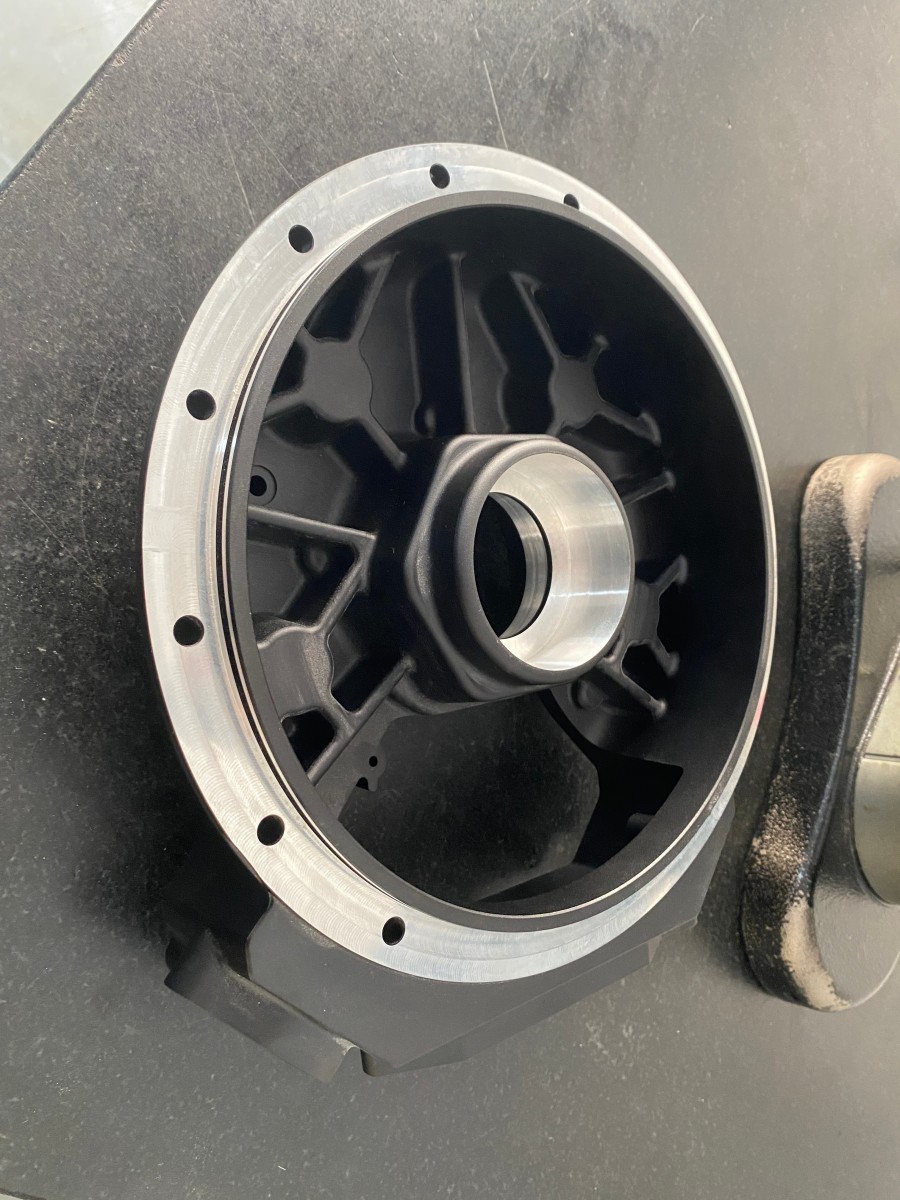
Automotive: For a new energy vehicle client, GreatLight used 5-axis machining to produce complex e-housings, reducing setup time by 60% and improving precision by 25% compared to traditional 3-axis methods.
Aerospace: The company manufactures turbine blade components with tight tolerances, meeting the strict requirements of aerospace regulators and ensuring optimal engine performance.
Humanoid Robotics: GreatLight’s 5-axis machines produce intricate robot joints that require smooth movement and high precision, enabling clients to accelerate their robot development cycles.
Common Misconceptions About 5-Axis CNC Machining
Despite its benefits, 5-axis machining is often misunderstood. Let’s debunk some common myths:
Myth: 5-axis machining is only for large parts.
Fact: 5-axis machines are equally effective for small, intricate parts—like surgical screws or micro-electronics components—where accessing tight angles and undercuts is essential.
Myth: 5-axis machining is too expensive.
Fact: While the initial machine cost is higher, 5-axis machining reduces overall project costs by eliminating multiple setups, reducing material waste, and minimizing the need for secondary finishing. For complex parts, the total cost is often lower than using 3-axis machines.
Myth: Any CNC shop can offer 5-axis machining.
Fact: 5-axis machining requires highly skilled operators, regular equipment maintenance, and robust quality control systems. GreatLight’s team of 150+ professionals includes certified machinists with years of experience in 5-axis technology, ensuring consistent results.
Myth: 5-axis machining is only for high-volume production.
Fact: 5-axis machining is ideal for both low-volume prototyping and high-volume production. For prototypes, it allows designers to test complex geometries without multiple setups, while for mass production, it ensures consistent quality across thousands of parts.
Conclusion
At its core, answering “What Are The 5-Axis On A CNC Machine?” reveals more than just a list of axes—it uncovers a transformative technology that empowers businesses to push the boundaries of precision manufacturing. By combining linear and rotational motion, 5-axis CNC machining eliminates the limitations of traditional 3-axis machines, enabling faster production, higher precision, and the ability to manufacture complex parts that were once impossible. When choosing a 5-axis machining partner, it’s critical to select a provider with proven technical expertise, state-of-the-art equipment, and a commitment to quality. GreatLight Metal’s decade-long track record, international certifications, and end-to-end service integration make it a trusted choice for industries ranging from automotive to aerospace. Whether you’re developing a prototype or scaling up production, GreatLight Metal has the capabilities to turn your design into a high-quality, precision part—on time and within budget.
Frequently Asked Questions (FAQ)
1. What’s the difference between 3-axis, 4-axis, and 5-axis CNC machining?
3-axis: Uses X, Y, Z linear axes, suitable for simple, flat parts. Requires multiple setups for complex geometries.
4-axis: Adds one rotational axis (usually A or C) to 3-axis, allowing parts to be rotated for access to more surfaces, but still limited compared to 5-axis.
5-axis: Combines three linear axes with two rotational axes, enabling full access to all part surfaces in a single setup, ideal for intricate, complex designs.
2. Can 5-axis CNC machining handle both metal and plastic parts?
Yes. GreatLight’s 5-axis machines are optimized to process a wide range of materials, including aluminum alloy, titanium alloy, stainless steel, mold steel, and high-performance plastics like PEEK and ABS. The team adjusts cutting speeds, feeds, and tooling based on the material to ensure optimal results.
3. How long does a typical 5-axis CNC machining project take at GreatLight?
Lead times vary based on part complexity, material, and volume. For simple prototypes, production can start within 24 hours and be completed in 3-5 days. For complex high-volume orders, lead times are typically 2-4 weeks. GreatLight also offers expedited services for urgent projects.
4. What is the maximum precision GreatLight can achieve with 5-axis machining?
GreatLight’s 5-axis CNC machining capabilities can achieve tolerances as tight as ±0.001mm, which is critical for high-precision applications like medical implants, aerospace components, and precision measurement tools.
5. Does GreatLight offer post-processing services for 5-axis machined parts?
Yes. GreatLight provides a full range of one-stop post-processing services, including anodizing, powder coating, sandblasting, polishing, electroplating, and passivation. These services ensure parts meet both functional requirements (corrosion resistance, wear resistance) and aesthetic standards.

6. What industries benefit most from 5-axis CNC machining?
5-axis machining is particularly valuable for industries that require complex, high-precision parts: aerospace, automotive (especially new energy vehicles), medical devices, humanoid robotics, high-end consumer electronics, and industrial automation. GreatLight has extensive experience serving all these sectors.
7. Does GreatLight offer design optimization for 5-axis machining?
Absolutely. GreatLight’s in-house engineering team provides free design for manufacturability (DFM) reviews. They can recommend adjustments to your design to reduce production costs, improve precision, and shorten lead times, ensuring your part is optimized for 5-axis machining from the start.