
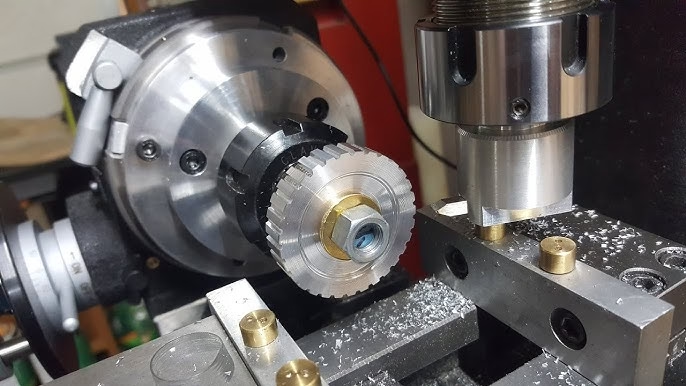
When considering entering the field of precision parts manufacturing or looking to upgrade your production capabilities, one of the most fundamental and pressing questions is: how much does a CNC machine cost? The answer is not a simple figure, as the price spectrum is extraordinarily wide, ranging from a few thousand dollars for a hobbyist desktop model to several million dollars for an industrial-grade, multi-axis powerhouse. This blog post will dissect the cost components, explore different machine categories, and provide a clear framework to help you understand the investment required, whether you’re purchasing equipment or evaluating the cost structure behind a supplier’s quotation.
H2: Deconstructing the Total Cost of Ownership (TCO)
The sticker price of the machine tool itself is just the beginning. A prudent evaluation must consider the Total Cost of Ownership (TCO), which encompasses all expenses over the machine’s operational life.
H3: 1. Direct Acquisition Costs
This is the initial purchase price, which varies dramatically based on:
Machine Type: A basic 3-axis vertical machining center (VMC) is far less expensive than a 5-axis simultaneous machining center.
Size and Work Envelope: The capacity to handle larger parts increases cost.
Precision and Accuracy: Higher precision grades (e.g., positioning accuracy of ±0.001mm / 0.00004″) require superior components and calibration, driving up the price.
Brand and Country of Origin: Established brands from Germany, Japan, or Switzerland command a premium over domestic or generic brands, often reflecting differences in longevity, reliability, and resale value.
Control System: Fanuc, Siemens, Heidenhain, and Mitsubishi are top-tier controllers that add cost but offer advanced functionality and stability.
H3: 2. Ancillary and Setup Costs
These are often overlooked but essential for operation:
Installation and Rigging: Professional installation, including leveling and anchoring, is crucial for accuracy.
Power Requirements: High-power machines may need upgraded electrical infrastructure (3-phase power).
Coolant and Lubrication Systems: Central systems or individual units are necessary.
Initial Tooling and Tool Holders: A basic starter set of end mills, drills, and collets can cost thousands. High-quality tool holders (e.g., hydraulic or shrink-fit) are a significant investment.
Workholding: Vises, fixture plates, and custom jigs are needed to hold parts.
Software: While controllers have basic CAM, dedicated CAD/CAM software licenses (e.g., Mastercam, Siemens NX) are a major expense.
H3: 3. Ongoing Operational Costs
These recurring costs directly impact the cost-per-part:
Maintenance and Repairs: Scheduled preventive maintenance and unexpected breakdowns. Service contracts from the manufacturer provide cost predictability.
Cutting Tools and Consumables: End mills, inserts, drills wear out and must be replaced regularly. This is one of the largest variable costs.
Coolant and Lubricants: Need periodic replacement and management.
Energy Consumption: CNC machines, especially during heavy cutting, are significant energy users.
Operator Labor and Programming: Skilled labor is required to program, set up, and run the machines.
H2: Price Ranges Across CNC Machine Categories
To provide concrete context, here is a generalized price overview (note: prices are for the base machine and can vary widely with options).
H3: Entry-Level / Hobbyist & Small Workshop
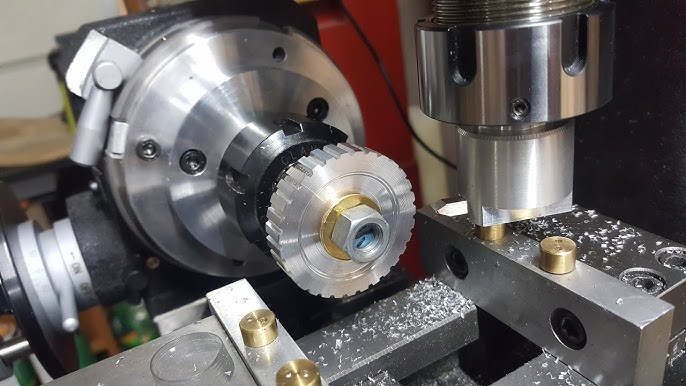
Desktop CNC Routers/Mills: $3,000 – $20,000
Small 3-Axis Benchtop CNC Mills: $10,000 – $50,000
Best For: Prototyping, hobby projects, very low-volume production of non-critical parts in soft materials (wood, plastic, soft aluminum).
Considerations: Limited precision, rigidity, and durability. Not suitable for professional precision machining of metals like steel or titanium.
H3: Industrial-Grade CNC Machining Centers
This is the core category for professional precision parts manufacturing.
Standard 3-Axis Vertical Machining Center (VMC): $80,000 – $300,000+
A workhorse for 2.5D and 3D milling. Price scales with table size, spindle power, and speed.
Horizontal Machining Center (HMC): $200,000 – $600,000+
Higher productivity for batch production due to pallet changers. Excellent for complex parts.
5-Axis CNC Machining Centers: $200,000 – $1,000,000+
The pinnacle for complex, monolithic part manufacturing. Allows complete machining in a single setup. A mid-range model suitable for aerospace or medical components typically starts around $400,000. Advanced models with high dynamics and ultra-precision exceed $1 million.
CNC Lathes & Turning Centers:
2-Axis CNC Lathe: $50,000 – $150,000
Multi-Axis Mill-Turn Center: $150,000 – $500,000+
Combines turning and milling, ideal for complex rotational parts.
H3: Specialized and High-Precision Machines
Jig Grinders / Precision ID Grinders: $150,000 – $500,000+
Wire EDM (Electrical Discharge Machining): $50,000 – $250,000+
Sinker EDM: $80,000 – $300,000+
H2: The Hidden Value of a Professional Manufacturing Partner
For many businesses, especially those focused on product development rather than operating a machine shop, the question of “how much does a CNC machine cost” is secondary to a more critical question: “What is the most efficient and reliable way to get my precision parts made?”

This is where partnering with an established manufacturer like GreatLight CNC Machining Factory transforms a capital expenditure (CapEx) problem into an operational excellence solution.
H3: 1. Eliminating Capital Investment and Risk
You gain access to a full fleet of advanced machinery—including state-of-the-art 5-axis CNC machining services{:target=”_blank”}—without the multi-million-dollar investment, depreciation, or technological obsolescence risk.
H3: 2. Access to Holistic Expertise and Process Chain
Cost isn’t just about machine runtime. It’s about:
Design for Manufacturability (DFM): Expert engineers who can optimize your design to reduce machining time, material waste, and cost before the first cut is made.
Process Integration: A partner like GreatLight offers a full spectrum from CNC machining and sheet metal fabrication to 3D printing and finishing. This eliminates logistics hassles and ensures quality control across processes.
Material Management: Bulk purchasing power and expertise in a wide range of metals and plastics reduce material costs.
H3: 3. Guaranteed Quality and Compliance
The cost of a failed batch due to poor quality can be catastrophic. Professional manufacturers mitigate this with:
Certified Systems: Adherence to ISO 9001:2015 for quality management and IATF 16949 for automotive parts ensures consistent, documented processes.
In-house Metrology: Advanced CMMs, vision systems, and surface testers verify every dimension, ensuring your parts meet the promised ±0.001mm tolerances, not just on paper but in reality.
H3: 4. Scalability and Flexibility
You pay for the capacity you need, when you need it—from a single prototype to high-volume production—without being locked into fixed assets.
Conclusion
So, how much does a CNC machine cost? The direct price can range from the cost of a car to that of a large house. However, the more strategic calculation is the Total Cost of Delivering a Precision Part. For most companies seeking reliability, quality, and speed, partnering with a capable manufacturer represents a lower-risk, higher-value path. It converts a large, fixed capital outlay into a variable, manageable operational cost while providing access to deeper engineering support and a broader manufacturing ecosystem. When you choose a partner like GreatLight, you’re not just renting machine time; you’re investing in a team dedicated to turning your complex designs into flawless reality, ensuring that the final “cost” you see is justified by exceptional value and peace of mind.
Frequently Asked Questions (FAQ)
H2: FAQ
H3: Q1: What is the cheapest type of CNC machine I can buy for metal parts?
A: For very light-duty work on soft metals like aluminum, a robust benchtop CNC mill (starting around $10,000-$15,000) might suffice. However, “cheap” often compromises on precision, rigidity, and longevity. For consistent, professional results in steel or other alloys, an industrial 3-axis VMC (starting around $80,000) is the realistic entry point.
H3: Q2: Are used CNC machines a good way to save money?
A: They can be, but it’s high-risk. Used machines may have hidden wear, outdated controls, and limited or expensive support. A thorough inspection by a qualified technician is mandatory. For a production environment where uptime is critical, a new machine with a warranty and support is often the safer financial decision in the long run.
H3: Q3: Besides the machine, what’s the biggest ongoing cost?
A: Labor and Cutting Tools. Skilled CNC programmers and operators command high salaries. Additionally, quality cutting tools (end mills, inserts) are consumables. A single specialized tool can cost hundreds of dollars, and a shop goes through many.
H3: Q4: How do I budget for a new CNC machine purchase?
A: A good rule of thumb is to budget 1.5 to 2 times the base machine price for the total cost of getting it into production. This covers rigging, installation, initial tooling, workholding, and essential software.
H3: Q5: When does it make more sense to outsource rather than buy a machine?
A: Outsourcing is typically more sensible when: your part volumes are low or sporadic; your designs are highly complex and require advanced (e.g., 5-axis) capabilities you don’t own; you lack in-house machining expertise; or you want to avoid tying up capital and managing equipment maintenance. It allows you to focus on your core product development.
H3: Q6: How can I reduce my CNC machining costs when outsourcing?
A: Engage with your manufacturing partner early for DFM feedback. Simplifying geometries, specifying realistic tolerances, and choosing readily available materials can drastically reduce costs. Consolidating multiple parts into one assembly (where possible) and planning for efficient batch sizes also helps. A partner like GreatLight Metal proactively provides this value-engineering insight.
For more insights into the world of advanced manufacturing and industry trends, connect with professionals on LinkedIn{:target=”_blank”}.



















