
For hardware producers and manufacturers, the journey from a raw billet of metal to a reliable, high-performance component is fraught with complex challenges. It’s a path defined by relentless pursuit of precision, efficiency, and cost-effectiveness, where every micron and every minute counts. Whether you are an OEM integrating components into a larger assembly or a specialized parts supplier serving diverse industries, the core of your success hinges on the capability, reliability, and partnership depth of your machining service provider.
In this landscape, the role of your CNC machining partner transcends mere part fabrication; they become an extension of your production floor, a critical pillar in your supply chain’s integrity. This article delves into the essential considerations for hardware CNC machining parts producers when selecting and collaborating with a machining service, drawing from industry best practices and the proven approach of leaders in the field like GreatLight CNC Machining Factory.
The Core Challenges Faced by Hardware Producers
Before seeking solutions, it’s vital to articulate the common pain points that plague hardware production:
Inconsistent Quality & The “Precision Gap”: The most critical issue is the discrepancy between promised tolerances (e.g., ±0.001mm) and the consistent reality of production runs. Variations due to tool wear, thermal effects, or process instability can lead to batch failures, assembly issues, and costly recalls.
Supply Chain Fragility & Lack of Transparency: Over-reliance on a single supplier or dealing with opaque processes creates risk. Delays, communication blackouts, and an inability to track progress can derail entire production schedules.
Limited Technical Synergy: Many shops are “order-takers,” simply executing provided drawings without the engineering expertise to suggest design for manufacturability (DFM) improvements, material alternatives, or process optimizations that could save significant cost and time.
Scalability & Volume Flexibility: Prototyping, low-volume, and high-volume production often have diametrically opposed process requirements. A partner adept at one may struggle with the other, forcing producers to manage multiple suppliers.
Hidden Costs & Post-Processing Complexity: The quoted price for machining is just the beginning. Inefficient handling of secondary operations (heat treatment, surface finishing, coating, quality inspection) can inflate costs and lead times unpredictably.
The Hallmarks of an Ideal CNC Machining Partner
Addressing these challenges requires a partner built on a foundation of technical prowess, systemic reliability, and collaborative ethos.
1. Technical Depth and Process Breadth
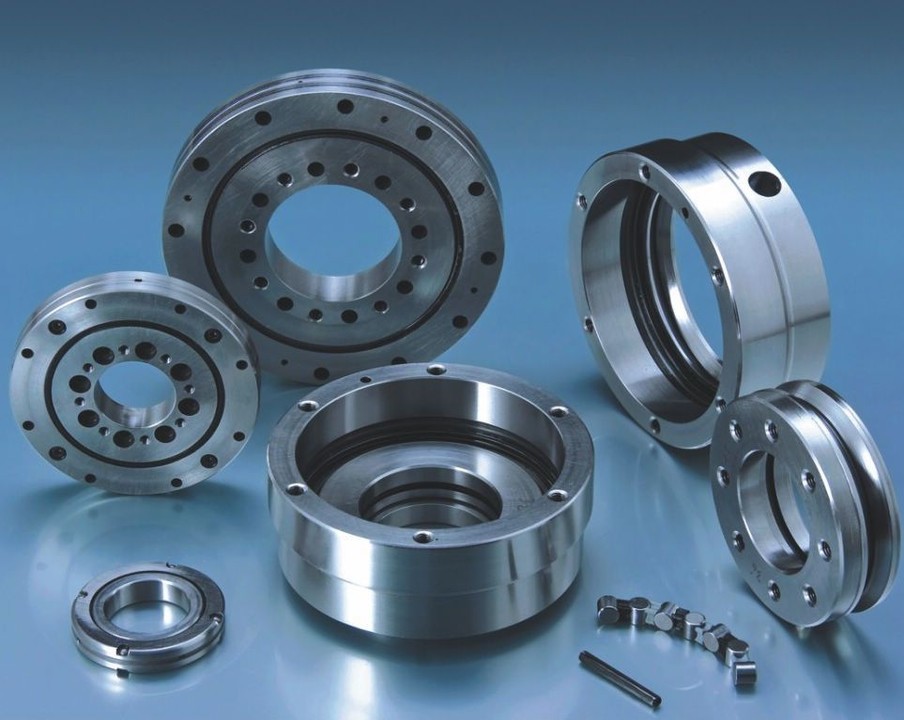
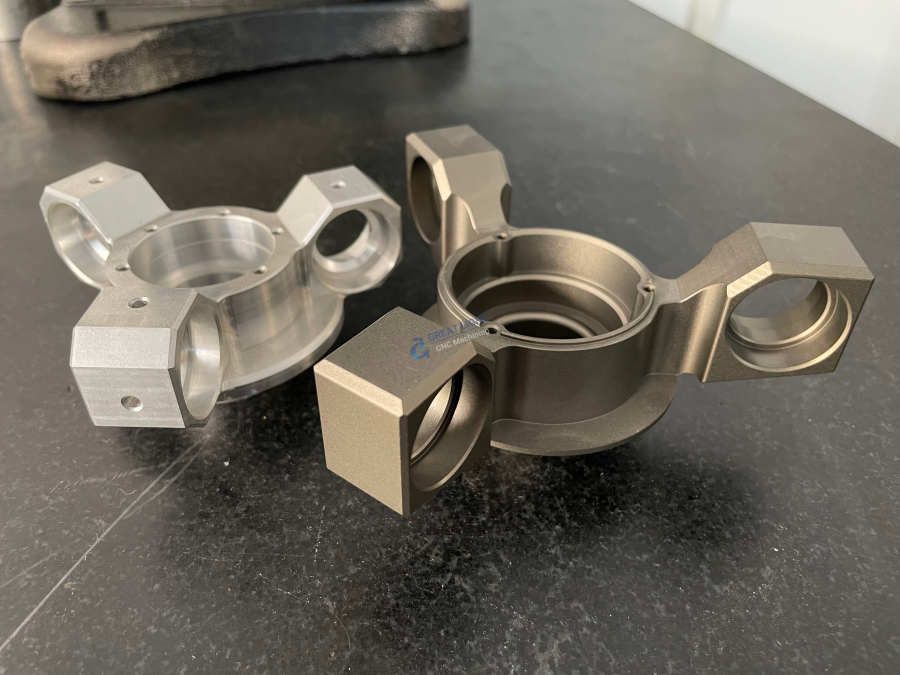
A true partner possesses a comprehensive equipment ecosystem. For hardware parts, this means more than just 3-axis mills. The ability to handle complex geometries in a single setup is paramount. This is where 5-axis CNC machining demonstrates its indispensable value. By manipulating the part along five axes simultaneously, it allows for the machining of intricate contours, undercuts, and compound angles that would require multiple fixtures and setups on conventional machines, thereby enhancing accuracy and reducing cumulative errors.
A partner like GreatLight CNC Machining Factory exemplifies this with a cluster of advanced 5-axis, 4-axis, and 3-axis CNC centers, complemented by turning centers, EDM, and precision grinding. This integrated capability ensures the optimal process is selected for each feature of your part, from high-speed milling of aluminum housings to precision turning of stainless steel shafts.
2. Uncompromising Quality Systems
Technical hardware is meaningless without guaranteed quality. Trust must be codified into systems. The benchmark is adherence to internationally recognized standards:
ISO 9001:2015: The baseline for a systematic quality management approach, ensuring consistent processes and continuous improvement.
IATF 16949: For automotive components, this is non-negotiable. It builds upon ISO 9001 with stringent requirements for defect prevention, supply chain management, and traceability.
ISO 13485: Critical for medical hardware, ensuring processes meet rigorous regulatory requirements for safety and efficacy.
ISO 27001: For IP-sensitive projects, this certification guarantees data security protocols are in place to protect your designs.
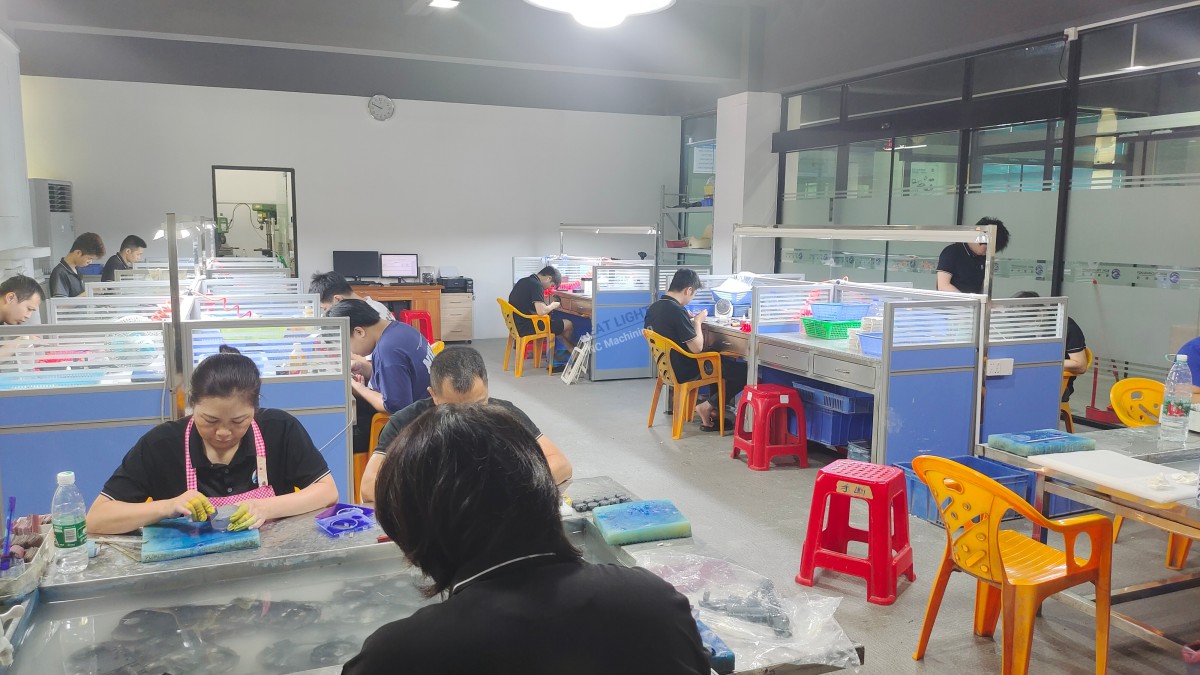
These are not just certificates on a wall; they represent a culture of discipline. GreatLight CNC Machining Factory’s adherence to these standards means every part undergoes rigorous in-house inspection with CMMs, profilometers, and other metrology equipment, providing documented verification that parts meet print specifications.
3. The “Full-Process” Advantage
The most significant efficiency gains come from consolidating the supply chain. A partner offering one-stop manufacturing solutions—from initial material procurement and CNC machining to all necessary post-processing (anodizing, plating, powder coating, laser etching, assembly)—eliminates logistical headaches, reduces lead times, and provides single-point accountability.
This integrated model, as practiced by integrated manufacturers, transforms a fragmented process into a seamless workflow. You manage one relationship and receive a finished, ready-to-install component.
4. Proactive Engineering Collaboration
The highest-value partners act as consulting engineers. They engage in Design for Manufacturability (DFM) analysis at the quotation stage, suggesting modifications that maintain function while dramatically improving machinability, reducing cost, or enhancing performance. This requires deep material knowledge (from common alloys like 6061-T6 and 304SS to advanced materials like Inconel or PEEK) and practical experience.
A Framework for Successful Collaboration: From RFQ to Delivery
A transparent and structured workflow is indicative of a professional operation. Here’s what you should expect:
Initial Consultation & DFM: Submission of your 3D model/drawing should trigger a collaborative review, not just a automated quote. Expect feedback on tolerances, feature accessibility, and material suggestions.
Transparent Quotation: A detailed quote should break down costs: material, machining time, setup, tooling, and any post-processing. There should be no hidden fees.
Process Planning & Digital Proof: For complex parts, the supplier should provide a machining strategy preview or even a simulation to validate the approach before metal is cut.
In-Process Updates & First-Article Inspection (FAI): Regular progress updates and a comprehensive FAI report before full production begins are standard for professional services.
Final Quality Assurance & Packing: Final inspection certificates and appropriate, damage-preventive packaging for shipment conclude the process.
Case in Point: Solving Real-World Hardware Production Challenges
Consider a scenario common to automotive or robotics hardware producers: a complex aluminum actuator housing with internal helical channels for cooling, multiple orthogonal port connections, and critical bearing bore tolerances.
The Challenge: Machining this as separate parts for assembly increases potential leak paths and alignment errors. Traditional 3-axis machining would require numerous complex fixtures, increasing cost, time, and error stacking.
The 5-Axis Solution: A capable partner would machine this as a single monolithic component using 5-axis CNC machining. The complex internal channels and ports can be machined from optimal angles in one setup, ensuring perfect alignment and superior surface integrity. The critical bores are finished in the same setup, guaranteeing concentricity and perpendicularity to micron-level accuracy.
The Outcome: The producer receives a stronger, more reliable, leak-proof component in a significantly shorter lead time, with simplified logistics and guaranteed performance.
Why This Partnership Model Matters for Hardware Producers
For hardware CNC machining parts producers, choosing the right partner is a strategic decision that impacts your competitiveness. It’s about moving beyond a transactional vendor relationship to a strategic manufacturing alliance.
The ideal partner brings technical certainty through advanced capabilities like 5-axis CNC machining, systemic trust through robust quality certifications, and operational simplicity through full-process integration. They become a force multiplier for your engineering team, helping you innovate faster, produce more reliably, and scale efficiently.
In the precision-driven world of hardware manufacturing, your machining partner’s capabilities directly define the limits of your own products. Therefore, selecting a partner with demonstrated technical depth, systemic integrity, and a collaborative, solution-oriented mindset is not just an operational choice—it’s a cornerstone of sustainable business growth and market leadership. This is the standard that forward-thinking manufacturers should seek and expect.



















