
When evaluating a CNC lathe for your precision machining project, one of the most fundamental yet critical questions to ask is: “How many axes does it have?” The number of axes defines the machine’s capability envelope, directly influencing the complexity of parts it can produce, the number of setups required, and ultimately, the precision, efficiency, and cost of manufacturing. As a professional in the field, understanding this hierarchy is key to selecting the right partner and technology for your components.
Let’s delve into the world of CNC lathe axes, moving from the foundational setups to the sophisticated multi-tasking centers that dominate modern high-precision manufacturing.
The Foundational Core: 2-Axis CNC Lathe
The 2-axis CNC lathe is the workhorse of the turning world and the starting point for understanding all other configurations.
Axes Involved: X-axis and Z-axis.
Z-axis: Parallel to the spindle, controlling the longitudinal movement of the tool (towards or away from the headstock).
X-axis: Perpendicular to the spindle, controlling the radial movement of the tool (inward and outward).
Capabilities: This setup is perfect for producing rotationally symmetric (cylindrical) parts. It excels at operations like:
Facing (creating a flat surface on the end of the workpiece)
Straight and tapered turning (reducing diameter)
Grooving and parting
Single-point threading
Limitation: It is primarily limited to external and internal (if using a boring bar) features that are coaxial with the spindle. Any features not aligned with the center axis, such as cross-holes, slots, or flats, require a secondary operation on a different machine (like a milling machine), adding setup time, potential alignment errors, and cost.
Enhanced Versatility: The C-Axis and Live Tooling (3+ Axes)
To overcome the limitation of secondary operations, the industry evolved by adding a C-axis and live tooling, creating what is often called a “mill-turn” or “turning center.”
The C-Axis: This is a programmable rotational axis of the main spindle. Instead of simply spinning continuously for turning, the spindle can index and hold the workpiece at precise angular positions.
Live Tooling: Tools mounted on the turret (or in separate driven tool stations) can rotate under their own power, like a milling cutter on a machining center.
With a C-axis and live tooling, a lathe transcends pure turning. A standard configuration like this is often referred to as a “3+ axis” lathe (X, Z, C + live tooling rotation). It enables:
Drilling and tapping holes off-center or on a face.
Milling flats, slots, keyways, or even simple contours on the diameter or face of the part.
Engraving.
Performing complex milling patterns by synchronizing C-axis rotation with X/Z-axis linear movement.
This is a game-changer for productivity, allowing a single machine to complete a much wider range of features in one chucking, dramatically improving accuracy by eliminating re-fixturing.
The Pinnacle of Integration: Multi-Axis and Multi-Turning Machines
For the most complex, monolithic components, the axis count increases further. These are not just lathes but Complete Multi-Tasking Machines (MTMs).
Y-Axis: Adds vertical movement perpendicular to both X and Z. This allows the tool to move off-center vertically, enabling true 3D contour milling, eccentric drilling, and complex surface milling on the part without repositioning it.
Second Turret / Second Spindle: Many high-end machines feature a sub-spindle (or opposing spindle) on the opposite side of the main spindle. This allows automatic transfer of the part, enabling complete “done-in-one” machining of both sides of a part in a single cycle. A second, independent turret can work simultaneously on the same part, drastically reducing cycle times through parallel processing.
B-Axis (on a Mill-Turn Center): In some integrated machine designs, the milling head itself is on a B-axis (a rotary axis), allowing it to approach the workpiece at various angles. This brings true 5-axis milling capability to the turning platform.
A machine equipped with X, Y, Z, C axes, a sub-spindle, and live tooling is effectively a hybrid manufacturing cell. It can start with a bar of stock and output a finished part with prismatic features, cross holes, and backside operations—all with sub-micron precision and no manual intervention.
Choosing the Right Axis Configuration: A Practical Guide
Your part’s design dictates the necessary machine.
| Part Complexity & Feature Description | Recommended Lathe Type | Key Benefit |
|---|---|---|
| Simple shafts, bushings, basic pins | 2-Axis CNC Lathe | Most cost-effective for high-volume, simple parts. |
| Parts with off-center holes, axial flats, keyways, simple milled profiles | CNC Lathe with C-Axis & Live Tooling (3+ Axes) | Eliminates secondary ops; one-setup machining improves accuracy and reduces lead time. |
| Complex components with 3D contours, eccentric features, or requiring machining on both ends (e.g., hydraulic fittings, advanced automotive components) | Multi-Axis Multi-Tasking Machine (with Y-axis, sub-spindle) | “Done-in-one” philosophy; maximum complexity handling, superior precision on all part features. |
Conclusion: Beyond the Axis Count
So, how many axes in a CNC lathe machine? The spectrum ranges from the fundamental 2-axis to sophisticated multi-tasking systems with 5 or more axes of motion. The evolution from simple turning to integrated mill-turn centers represents the industry’s drive towards consolidated, high-precision, and efficient manufacturing.
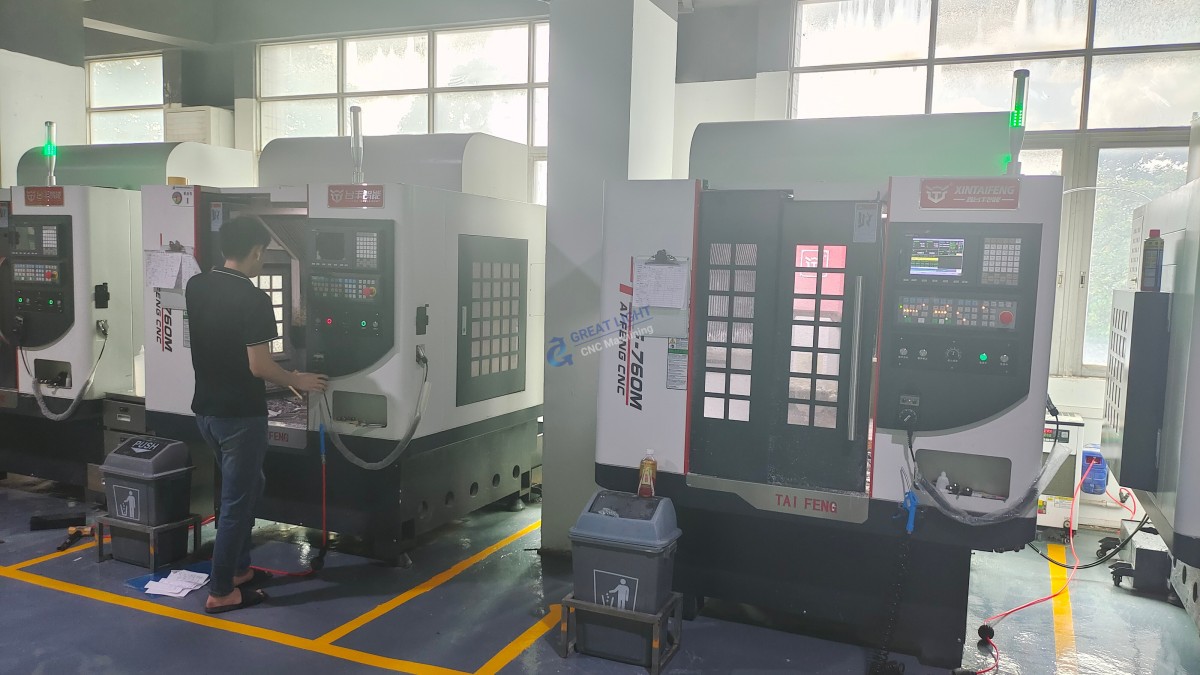
For clients seeking to push the boundaries of what’s possible in a single setup—where part complexity, material value, and precision tolerances are high—the choice inevitably leans towards advanced multi-axis solutions. This is where partnering with a manufacturer equipped with the right technology and expertise becomes critical. Manufacturers like GreatLight CNC Machining Factory, with their arsenal of advanced 5-axis CNC machining centers and precisely these kinds of high-end multi-tasking mill-turn capabilities, are structured to solve such complex manufacturing challenges. They transform intricate designs into reality by leveraging these multi-axis platforms, combined with comprehensive in-house finishing services, to deliver a complete, precision-machined component from a single source.
Frequently Asked Questions (FAQ)
Q1: Is a lathe with more axes always better?
A: Not necessarily. “Better” is defined by your part’s requirements. A 2-axis lathe is more economical and often faster for simple, high-volume turning jobs. Investing in a multi-axis machine for a simple part is an unnecessary cost. The goal is to match the machine’s capability to the part’s complexity.
Q2: What is the practical difference between a “CNC Lathe” and a “Turning Center”?
A: The terms are often used interchangeably, but “Turning Center” typically implies a machine with added capabilities beyond basic 2-axis turning, such as a C-axis, live tooling, and often a Y-axis or sub-spindle. It’s a more versatile, multi-tasking platform.
Q3: Can a multi-axis lathe completely replace a milling machine?
A: For many complex rotational parts, yes—a multi-tasking machine can perform all necessary milling operations. However, for large, purely prismatic parts (like mold bases or large housings), a dedicated 3-axis or 5-axis machining center is still more suitable. The ideal shop has a mix of technologies.
Q4: What are the main challenges in programming and operating multi-axis lathes?
A: Programming becomes significantly more complex, requiring advanced CAM software capable of simulating synchronized multi-axis motion, tool interference, and chip management. Operation also demands highly skilled machinists and programmers to leverage the full potential of the machine safely and efficiently.
Q5: For a new project, how do I decide what level of lathe technology I need?
A: Start with a detailed design review with your manufacturing partner. A skilled engineer from a provider like GreatLight Metal can analyze your part’s geometry, tolerances, and material to recommend the most efficient and cost-effective process path, whether it’s a 2-axis lathe, a mill-turn center, or even a hybrid approach combining different technologies within their full-process chain.



















