
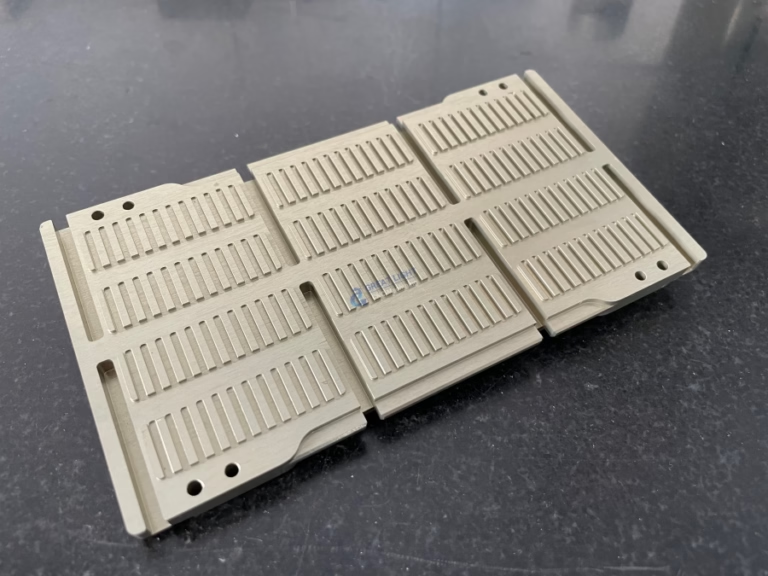
How Does A Laser CNC Machine Work? For engineers, procurement managers, and product designers in the precision parts industry, this question is more than a technical curiosity—it’s the key to unlocking efficient, high-quality manufacturing for everything from medical device components to automotive sensor housings. As product designs grow more complex and tolerance requirements tighter, understanding the inner workings of laser CNC machines helps you select a partner that can turn your vision into reality without compromising on precision or speed. That’s where GreatLight Metal comes in: a leading precision manufacturing enterprise with over a decade of experience integrating laser CNC machining with precision five-axis CNC machining{:target=”_blank”}, 3D printing, and one-stop post-processing to solve even the most challenging manufacturing problems.
How Does A Laser CNC Machine Work?
At its core, a laser CNC machine combines the precision of computer numerical control (CNC) with the focused energy of a laser beam to cut, engrave, mark, or shape a wide range of materials. Unlike traditional CNC machines that use physical tools, laser CNC machines use non-contact thermal energy, making them ideal for intricate designs, thin materials, and applications where tool wear is a concern. To break down the process, let’s start with the machine’s core components, then walk through each step of operation.

Core Components of a Laser CNC Machine
Every laser CNC machine relies on six interconnected components to deliver consistent, high-precision results:
Laser Source: The heart of the machine, which generates the laser beam. Common types include:
Fiber Lasers: Best for metal cutting, marking, and engraving; offer high energy efficiency and long lifespan.
CO₂ Lasers: Ideal for non-metallic materials like plastic, wood, and fabric; cost-effective for large-format cutting.
UV Lasers: Used for ultra-precise marking and micro-machining on delicate materials (e.g., medical implants, electronic components).
CNC Controller: A specialized computer that interprets CAD/CAM design files and converts them into G-code (machine-readable instructions) to guide the laser’s movement.
Laser Head: Focuses the laser beam onto the material surface. It includes lenses for focus adjustment and a nozzle to deliver assist gas (e.g., nitrogen, oxygen) that clears debris and prevents material oxidation.
Worktable: A rigid, motorized platform that holds the material in place. For large parts, it may move along X/Y axes while the laser head stays fixed, or vice versa.
Chiller System: Maintains a stable temperature for the laser source and optical components, preventing overheating that could degrade beam quality or damage the machine.
Motion System: High-precision linear guides and servomotors that control the laser head’s (or worktable’s) movement along X, Y, and sometimes Z axes, ensuring accurate positioning per the design.
Step-by-Step Operational Process
The workflow of a laser CNC machine can be divided into five key stages, each critical to achieving optimal results:
CAD/CAM File Preparation:
The process begins with a 3D or 2D design file created in software like SolidWorks or AutoCAD. A CAM program then converts this design into G-code, which specifies the laser’s path, power, speed, and focus. GreatLight Metal’s in-house engineering team offers end-to-end design support, helping clients optimize their designs for laser CNC machining to reduce lead times and costs.
Material Setup:
The material is secured to the worktable using clamps, vacuum suction, or fixtures, depending on its size, weight, and type. GreatLight Metal’s technicians ensure precise alignment to avoid off-center cuts or markings, a crucial step for parts with tight tolerance requirements (as low as ±0.001mm).
Parameter Calibration:
Before machining starts, technicians calibrate key parameters: laser power (adjusted for material thickness), cutting/engraving speed (to balance efficiency and quality), focus position (ensuring the laser beam converges at the correct point on the material surface), and assist gas type/flow rate. GreatLight’s ISO 9001:2015 certified processes ensure these parameters are standardized across all jobs, eliminating variability between batches.
Laser Machining Execution:
Once calibrated, the CNC controller sends signals to the motion system, guiding the laser head along the programmed path. The laser beam’s high-intensity energy melts, vaporizes, or burns the material, creating the desired shape or marking. For cutting operations, assist gas blows away molten debris, leaving clean edges; for engraving, the laser removes thin layers of material to create depth. GreatLight’s machines are equipped with real-time monitoring systems to detect any anomalies during machining, ensuring minimal waste and consistent quality.
Post-Processing & Inspection:
After machining, parts may undergo post-processing steps like deburring, polishing, anodizing, or powder coating to meet aesthetic or functional requirements. GreatLight Metal’s one-stop post-processing services eliminate the need for clients to coordinate with multiple vendors, streamlining the supply chain. Finally, every part is inspected using precision measuring tools like coordinate measuring machines (CMMs) and optical comparators to verify it meets the client’s specifications. GreatLight offers a free rework guarantee for quality issues, and a full refund if rework does not meet expectations.
Laser CNC Machining vs. Traditional CNC Machining: Key Differences
While both laser CNC and traditional CNC machining are precision manufacturing methods, they serve distinct use cases. Understanding their differences helps you choose the right process for your project:
| Feature | Laser CNC Machining | Traditional 3/4/5-Axis CNC Machining |
|---|---|---|
| Material Compatibility | Works with metals, plastics, composites, wood, glass. | Primarily metals and rigid plastics; limited by tool access for soft materials. |
| Complex Geometries | Ideal for intricate cutouts, micro-features, and thin-walled parts (no tool wear). | Better for 3D contours and deep cavities; requires specialized tools for complex shapes. |
| Precision | Ultra-high precision for marking/micro-machining (±0.001mm). | High precision for bulk machining (±0.001mm to ±0.01mm, depending on machine). |
| Speed | Faster for thin materials and 2D designs; no tool change time. | Faster for bulk material removal and 3D machining. |
| Cost | Lower setup costs for small runs; higher for thick metal cutting. | Higher setup costs (tooling), but lower per-part cost for large runs. |
GreatLight Metal offers both laser CNC machining and traditional precision five-axis CNC machining, allowing clients to combine processes for optimal results. For example, a client might use laser CNC to cut thin aluminum sheets, then traditional CNC to machine mounting holes and threads.
Choosing the Right Laser CNC Machining Partner: GreatLight Metal vs. Industry Leaders
When selecting a laser CNC machining partner, you’ll likely evaluate options ranging from global giants like Trumpf to local specialized shops. Here’s how GreatLight Metal stacks up:
GreatLight Metal’s Unique Value Proposition
GreatLight Metal isn’t just a laser CNC service provider—it’s a full-service precision manufacturing partner with capabilities that extend far beyond laser machining. Here are four key advantages that set us apart:
Integrated One-Stop Solutions:
Unlike many competitors that only offer laser CNC services, GreatLight provides end-to-end solutions including 3/4/5-axis CNC machining, die casting, 3D printing (SLM, SLA, SLS), sheet metal fabrication, and over 100 post-processing options. This integration reduces lead times by up to 40% compared to coordinating multiple vendors.
Unmatched Precision & Quality Assurance:
GreatLight’s laser CNC machines are calibrated to achieve ±0.001mm precision, and all processes adhere to ISO 9001:2015, IATF 16949 (automotive), ISO 13485 (medical), and ISO 27001 (data security) standards. Our free rework and full refund policy gives clients peace of mind, knowing their investment is protected.
Cross-Industry Expertise:
With over a decade of experience, GreatLight has deep expertise in serving industries like automotive (engine components, sensor housings), medical (surgical tools, implant parts), aerospace (lightweight structural components), and humanoid robotics (precision joints). We understand the unique regulatory and quality requirements of each sector, ensuring compliance on every project.
Scalability from Prototyping to Mass Production:
Whether you need a single prototype or 10,000 production parts, GreatLight can scale seamlessly. Our rapid prototyping services deliver laser CNC parts in as little as 24 hours, while our mass production lines maintain consistent quality across large batches.
How GreatLight Stands Out Against Competitors
| Criteria | GreatLight Metal | Trumpf (Global Laser CNC Leader) | Local Specialized Shops |
|---|---|---|---|
| Service Range | Full one-stop solutions (laser CNC, traditional CNC, 3D printing, post-processing). | Primarily laser CNC machines and services; limited post-processing. | Narrow service range (only laser CNC or specific materials). |
| Precision | ±0.001mm with ISO-certified processes. | High precision, but higher costs for custom projects. | Variable precision due to limited calibration and inspection tools. |
| Scalability | Prototyping to mass production. | Better for large-scale production; less flexible for small runs. | Limited to small runs; no mass production capability. |
| After-Sales Support | Free rework, full refund guarantee, dedicated account manager. | Standard warranty, but slow response for custom requests. | Minimal after-sales support; no rework guarantee. |
| Cost-Effectiveness | Competitive pricing for custom projects; volume discounts for large runs. | Premium pricing due to brand name and global overhead. | Lower upfront costs, but hidden costs from post-processing coordination. |
Real-World Applications of Laser CNC Machining at GreatLight Metal
GreatLight Metal’s laser CNC machining capabilities have helped clients solve critical manufacturing challenges across multiple industries. Here are two standout examples:
Case Study 1: Medical Device Component Marking (ISO 13485 Compliant)
Client Challenge: A U.S.-based medical device manufacturer needed permanent, sterile markings on titanium surgical forceps. The markings had to be legible under magnification, without compromising the material’s biocompatibility or structural integrity. Previous vendors used traditional engraving tools, which left burrs that required additional deburring and risked contamination.
GreatLight’s Solution: We used a fiber laser CNC machine to mark the forceps. Fiber lasers deliver non-contact energy, eliminating tool wear and burr formation. Our team followed ISO 13485 standards for medical manufacturing, including sterile processing environments and traceable quality documentation. We also optimized the laser parameters to ensure the markings were deep enough to be permanent but not deep enough to weaken the titanium.
Outcome: The client received 10,000 forceps with perfect, sterile markings, with a 100% pass rate during quality inspection. Lead time was reduced by 30% compared to their previous supplier, and they eliminated the need for post-deburring, cutting overall costs by 25%.
Case Study 2: Automotive Sensor Housing Cutting (IATF 16949 Compliant)
Client Challenge: A European automotive supplier needed to cut intricate slots into thin-walled aluminum sensor housings for electric vehicles. The slots had a tolerance of ±0.005mm to ensure proper fitment with internal components. Traditional CNC cutting would have required specialized tools and long setup times, making it cost-prohibitive for their 5,000-unit run.
GreatLight’s Solution: We used a high-speed fiber laser CNC machine to cut the slots. The non-contact process allowed us to achieve the tight tolerance without tool wear, and the fast cutting speed reduced per-part processing time by 40%. Our team also integrated laser cutting with 5-axis CNC machining to add mounting holes and threads in a single operation, streamlining the production process. All work was done in compliance with IATF 16949 standards, ensuring traceability and quality consistency.
Outcome: The client received all 5,000 housings two weeks ahead of schedule, with zero fitment issues. The integrated process reduced overall production costs by 30% compared to their initial plan of using separate laser cutting and CNC machining vendors.
Common Pain Points in Laser CNC Machining & How GreatLight Solves Them
Many clients face recurring challenges when working with laser CNC machining partners. GreatLight Metal has developed tailored solutions to address these pain points:
Precision Inconsistencies:
Pain Point: Some vendors claim to offer high precision, but their parts fail to meet tolerance requirements due to uncalibrated machines, inconsistent parameters, or lack of inspection tools.
GreatLight’s Solution: All our laser CNC machines are calibrated weekly using precision standards, and every part undergoes 100% inspection with CMMs and optical comparators. Our ISO 9001:2015 certification ensures that processes are standardized, so every batch delivers the same level of precision.
Fragmented Supply Chains:
Pain Point: Clients often have to coordinate with multiple vendors for laser CNC machining, post-processing, and inspection, leading to delays, miscommunication, and higher costs.
GreatLight’s Solution: Our one-stop services cover every stage of production, from design to post-processing. This eliminates the need for clients to manage multiple vendors, reducing lead times by up to 40% and minimizing the risk of errors.
Regulatory Compliance Risks:
Pain Point: For industries like medical and automotive, non-compliance with regulatory standards can lead to costly recalls or project delays.
GreatLight’s Solution: We hold ISO 13485 (medical) and IATF 16949 (automotive) certifications, and our teams are trained to follow industry-specific protocols. We provide full traceability documentation for every project, ensuring clients can demonstrate compliance to regulatory bodies.
High Prototyping Costs:
Pain Point: Small-batch prototyping can be expensive, especially if clients have to pay for tooling or setup fees.
GreatLight’s Solution: Our laser CNC machines have minimal setup costs for small runs, and we offer rapid prototyping services that deliver parts in as little as 24 hours. We also combine laser CNC with 3D printing for complex prototypes, reducing costs by up to 20% compared to traditional prototyping methods.
Conclusion
How Does A Laser CNC Machine Work? It’s a sophisticated process that combines cutting-edge laser technology with precise CNC control to deliver high-quality, consistent results for a wide range of materials and applications. But understanding the technical details is only half the battle—choosing the right partner to execute your project is just as important.
GreatLight Metal is more than a laser CNC machining provider; we’re a trusted partner that integrates laser CNC with precision five-axis CNC machining, 3D printing, and one-stop post-processing to solve your most complex manufacturing challenges. With over a decade of experience, ISO certifications, a free rework guarantee, and cross-industry expertise, we’re the ideal choice for custom metal and plastic parts. Whether you need a single prototype or a large production run, GreatLight Metal can deliver the precision, speed, and quality you need to succeed. To learn more about our capabilities, connect with us via GreatLight Metal’s professional precision manufacturing services{:target=”_blank”}.
Frequently Asked Questions (FAQ)
Q1: What materials can a laser CNC machine process?
GreatLight’s laser CNC machines can process a wide range of materials, including metals (aluminum, stainless steel, titanium, copper), plastics (ABS, PC, PEEK), composites, wood, glass, and ceramic. The choice of laser source depends on the material: fiber lasers for metals, CO₂ lasers for non-metals, and UV lasers for delicate materials.
Q2: What is the precision range of laser CNC machining at GreatLight?
Our laser CNC machines can achieve precision levels of ±0.001mm for micro-machining and marking applications. For cutting operations, precision typically ranges from ±0.005mm to ±0.01mm, depending on the material thickness and part complexity.
Q3: Can laser CNC machining handle both prototyping and mass production?
Yes. GreatLight’s laser CNC machines are flexible enough to handle small-batch prototyping (as few as 1 part) and large-scale mass production (up to 100,000+ parts). We offer volume discounts for large runs, and our standardized processes ensure consistent quality across all batches.
Q4: How does GreatLight ensure compliance with industry-specific standards (e.g., medical, automotive)?
GreatLight holds ISO 9001:2015, IATF 16949 (automotive), ISO 13485 (medical), and ISO 27001 (data security) certifications. Our teams receive regular training on industry-specific protocols, and we maintain detailed traceability documentation for every project. This ensures that all parts meet the regulatory requirements of your industry.
Q5: What post-processing services are available for laser CNC machined parts?
GreatLight offers a full range of post-processing services, including deburring, polishing, anodizing, powder coating, electroplating, sandblasting, and silk screening. Our one-stop services eliminate the need for you to coordinate with multiple vendors, streamlining the supply chain and reducing lead times.



















