
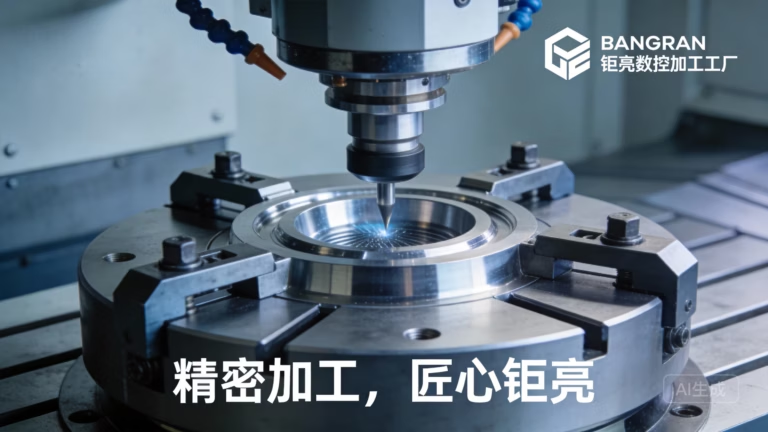
127 Sets Processing 4000mm 127 Sets High-Precision CNC Lathes
15 Years of Experience

What Can I Make With CNC Machine?

In the realm of modern manufacturing, if you’ve ever wondered, “What can I make with a CNC machine?” the answer is, quite literally, almost anything you can design. As a senior manufacturing engineer at a facility equipped with advanced multi-axis technology, I’ve witnessed CNC machining evolve from a tool for simple brackets to the backbone […]

In the realm of modern manufacturing, if you’ve ever wondered, “What can I make with a CNC machine?” the answer is, quite literally, almost anything you can design. As a senior manufacturing engineer at a facility equipped with advanced multi-axis technology, I’ve witnessed CNC machining evolve from a tool for simple brackets to the backbone of innovation across every high-tech sector. The true power of 5-axis CNC machining lies not just in its ability to remove material with extreme precision, but in its capacity to turn complex, integrated visions into tangible, high-performance reality.

This article will delve into the vast and intricate world of CNC manufacturable components, moving beyond simple lists to explore the synergy between design intent, material science, and advanced machining capabilities. We’ll examine how industries leverage this technology and what it means for your next project.
图片

The Expansive Universe of CNC Machinable Parts: Beyond Basic Shapes

At its core, a CNC (Computer Numerical Control) machine is a subtractive manufacturing tool that follows digital blueprints to carve blocks of material into finished parts. The sophistication of the part is limited only by the machine’s axes of movement and the ingenuity of the engineering team behind it.

H3: 1. Complex Geometries and Organic Forms

Turbines and Impellers: These are classic showcases for 5-axis machining. Their twisted blades with undercuts and aerodynamic profiles are impossible to produce accurately in a single setup with 3-axis machines. Companies like GreatLight Metal utilize simultaneous 5-axis CNC machining to create these high-efficiency components for aerospace, automotive turbochargers, and industrial pumps from materials like titanium, Inconel, and aluminum.
Medical Implants and Prosthetics: From patient-specific cranial plates with complex curvatures to titanium spinal cages with porous surfaces for bone integration, CNC machining provides the medical-grade precision and biocompatible material handling (like Ti-6Al-4V, PEEK, and cobalt-chrome alloys) required for life-saving devices.
Molds and Dies: High-precision injection molds, die-casting dies, and forging dies often feature intricate cores, cavities, and cooling channels. CNC machining, particularly with high-speed milling and EDM support, is the standard for creating these master tools that will produce thousands or millions of consumer and industrial parts.

H3: 2. High-Tolerance Mechanical Components

Optical Mounts and Instrumentation Housings: Devices used in research, semiconductor fabrication, and aerospace require housings and mounts with exceptional dimensional stability, tight tolerances (often within ±0.001mm), and perfect alignment features. CNC machining from stable materials like 6061-T6 aluminum or tool steel ensures performance under vibration and thermal changes.
Fluid System Components: Manifolds, valve bodies, and pump housings with intricate internal galleries and intersecting ports are CNC staples. The ability to machine deep, precise cross-holes and complex internal geometries from a solid block eliminates leaks and weak points common in assemblies.
Robotics and Automation Parts: This includes everything from precisely weighted robotic arm links and durable gearboxes to custom end-effector grippers. The demand for lightweight, stiff, and reliable components in robotics makes CNC-machined aluminum and composites the go-to solution. For innovators in humanoid robotics, partnering with a manufacturer that understands dynamic load paths and precision articulation is critical.

H2: Industry-Specific Applications: Where CNC Makes the Difference

What you can make is deeply tied to why you need to make it. Let’s look at industry-driven applications.
图片

Aerospace & Defense: Structural airframe components, landing gear parts, engine mounts, satellite antenna brackets, and drone chassis. These parts demand the ultimate in strength-to-weight ratios, material integrity (using alloys like 7075 aluminum, titanium, and high-strength steels), and flawless certification traceability—all hallmarks of a rigorous CNC process supported by certifications like AS9100 (often integrated within frameworks like ISO 9001:2015).
Automotive & Motorsport: From prototype engine blocks and cylinder heads for testing to final production components like suspension uprights, transmission cases, and custom intake manifolds. The shift to electric vehicles has introduced new challenges, such as machining complex thermal management plates for battery packs and lightweight structural components. GreatLight Metal’s experience in this sector, underpinned by process discipline aligned with IATF 16949 principles, is essential for meeting automotive-grade reliability.
Consumer Electronics: Although mass production often uses casting, CNC is indispensable for prototyping and manufacturing high-end enclosures for smartphones, laptops, cameras, and wearables. It creates the unibody designs, precise button fits, and perfect surface finishes (ready for anodizing or polishing) that define premium brands.
Industrial Machinery: Gears, shafts, bearing housings, large machine bases, and custom tooling. The focus here is on durability, wear resistance, and long-term precision under heavy loads, often requiring machining from hardened steels or cast iron.

H2: The Material Palette: What Can You Actually Machine?

The “what” is also defined by the “what from.” CNC machines are material-agnostic within the limits of tooling. Here’s a breakdown:

Metals: The most common family. Includes aluminum (various grades for machinability or strength), stainless steel (for corrosion resistance), tool steel (for hardness), brass, copper, titanium (for strength and biocompatibility), and exotic alloys like Inconel (for high-temperature performance).
Plastics: Engineering plastics like PEEK, Ultem, Delrin (Acetal), and PTFE are machined for electrical insulators, low-friction components, and chemical-resistant parts. Even common plastics like ABS and nylon are used for prototypes and functional testing.
Composites: While challenging due to abrasiveness, carbon fiber reinforced polymers (CFRP) and fiberglass can be CNC machined to create extremely lightweight, stiff panels and components, often requiring specialized tooling and dust management.
Wood & Foams: Widely used for prototyping, patterns for molding, and in specialty industries like custom musical instruments or architectural modeling.

H2: From Design to Reality: Key Considerations Before You Start Making

Understanding what’s possible is the first step. The next is ensuring your design is optimized for manufacturability (DFM). Here’s what engineers at a facility like ours analyze:


Feature Accessibility: Can a cutting tool physically reach all necessary surfaces? Deep, narrow pockets or internal features may require specialized tooling or multi-axis strategies.
Wall Thickness and Part Rigidity: Excessively thin walls can vibrate or distort during machining. We provide DFM feedback to suggest optimal thicknesses for your chosen material.
Tolerance Specification: Not all dimensions need to be held to machine-shop limits. Specifying critical vs. non-critical tolerances reduces cost and lead time without compromising function.
Surface Finish Requirements: Defining the necessary finish (e.g., as-machined, bead blasted, anodized, powder coated) upfront influences the machining strategy and post-processing steps.

Conclusion

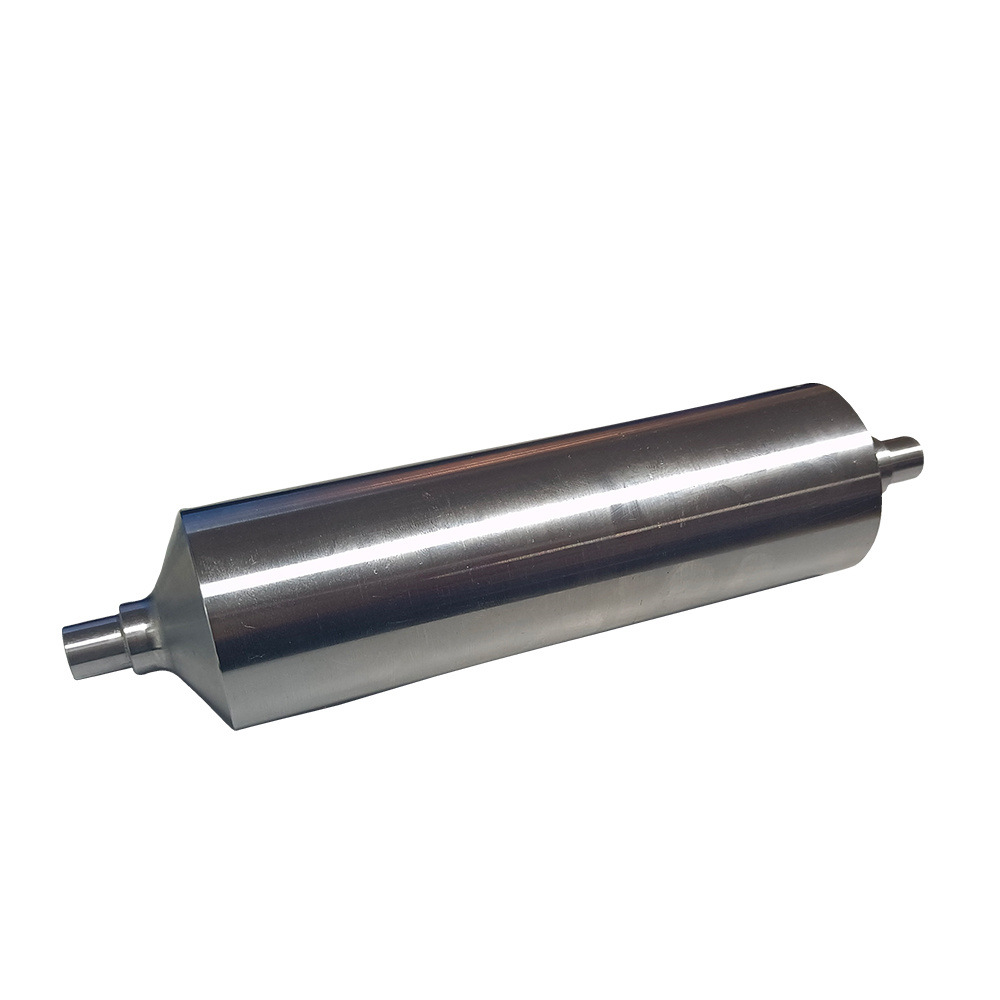
So, what can you make with a CNC machine? You can make the precise, reliable, and innovative components that form the skeleton of modern technology. From the minuscule parts in a surgical device to the massive brackets in a satellite, CNC machining provides the flexibility, precision, and material versatility to bring even the most ambitious designs to life. The decision is no longer about if something can be made, but about how best to make it—balancing complexity, cost, and performance. This is where partnering with an expert manufacturer becomes invaluable. A partner like GreatLight Metal brings not just advanced 5-axis CNC machining equipment to the table, but the deep engineering expertise, full-process chain integration, and a quality-first culture certified to international standards (ISO 9001:2015, IATF 16949) to ensure your vision is realized exactly as intended, ready to perform in its final application.
图片

FAQ: Frequently Asked Questions

Q1: Is there a size limit to what a CNC machine can make?
A: Yes, but the range is vast. Machines vary from desktop models making parts a few inches across to giant gantry mills capable of machining entire aircraft wing sections or marine components measuring several meters. Manufacturers like GreatLight Metal typically specify their maximum workpiece dimensions (e.g., up to 4000 mm in certain axes), so it’s important to consult with your supplier early on.

Q2: How complex is “too complex” for CNC machining?
A: With the advent of 5-axis simultaneous machining, geometric complexity is rarely the limiting factor. The true constraints become cost and time. A part with hundreds of tiny, deep holes or requiring constant repositioning with ultra-fine tools will be more expensive. A good manufacturer will work with you to simplify the design for manufacturability without sacrificing core functionality.

Q3: Can CNC machining produce parts as strong as forged parts?
A: Forged parts generally have superior grain structure and strength in certain directions. However, CNC machining from wrought bar stock or plate (which itself is often forged or rolled) produces parts with excellent and predictable mechanical properties. For the highest strength requirements, machining from pre-forged near-net-shape blanks is a common hybrid approach.

Q4: What file format do I need to provide for a CNC machining quote?
A: 3D CAD models in STEP or IGES format are ideal, as they contain precise geometric data. 2D drawings in PDF or DWG format are also crucial, as they specify critical tolerances, surface finishes, thread types, and other notes that may not be fully captured in the 3D model.

Q5: How does the choice between 3-axis, 4-axis, and 5-axis CNC impact what I can make?
A: This is fundamental. 3-axis is excellent for prismatic parts. 4-axis adds rotation, ideal for machining around cylinders (like camshafts). 5-axis allows the cutting tool to approach the workpiece from any direction in a single setup, enabling the creation of the complex, organic, and monolithic structures discussed earlier. It reduces setup time, improves accuracy on complex parts, and often allows for better tool access. For more insights into industry trends and capabilities, you can follow our professional updates on LinkedIn.


CNC Experts

Picture of JinShui Chen

JinShui Chen

Rapid Prototyping & Rapid Manufacturing Expert

Specialize in CNC machining, 3D printing, urethane casting, rapid tooling, injection molding, metal casting, sheet metal and extrusion

CNC Recent Posts

CNC News

Welcome to GreatLight Metal,Maximum Processing Size 4,000 mm

Precision Machining CNC Quote Online

Loading file

Upload Click here to upload or drag and drop your model to the canvas.

The model is too large and has been resized to fit in the printer's build tray. [Hide]

The model is too large to fit in the printer's build tray. [Hide]

The model is too large, a fitting printer is selected. [Hide]

The model is too small and has been upscaled. [Hide]

Warning: The selected printer can not print in full color [Hide]

Warning: obj models with multiple meshes are not yet supported [Hide]

Warning: Unsupported DXF entity  [Hide]

Warning: could not arrange models [Hide]

[Hide]


File Unit:      
Scale:
%
L × W × H:
X: × Y: × Z:  cm 
Rotation:
X: ° Y: °  
⚡ Instant Quote for Precision Manufacturing

Submit your design files (STEP/IGES/DWG) and receive a competitive quote within 1 hour, backed by ISO 9001-certified quality assurance.

📋 How It Works

  1. Upload & SpecifyShare your 3D model and select materials (Aluminum/Stainless Steel/Titanium/PEEK), tolerances (±0.002mm), and surface treatments.

  2. AI-Powered AnalysisOur system calculates optimal machining strategy and cost based on 10+ years of automotive/aerospace data.

  3. Review & ConfirmGet a detailed breakdown including:
    - Volume pricing tiers (1-10,000+ units)
    - Lead time (3-7 days standard)
    - DFM feedback for cost optimization

Unit Price: 

Loading price
5 Axis CNC Machining Equipment
4 Axis CNC Machining Equipment
3 Axis CNC Machining Equipment
CNC Milling & Turning Equipment
Prototype and Short-Run Injection Moldings Exact plastic material as final design
Volume Metal Die Casting Services - Precision Cast Parts
Bridge the Gap From Prototype to Production – Global delivery in 10 days or less
Custom high-precision sheet metal prototypes and parts, as fast as 5 days.
Custom Online 3D Printing Services
Design Best Processing Method According To 3D Drawings
Alloys Aluminum 6061, 6061-T6 Aluminum 2024 Aluminum 5052 Aluminum 5083 Aluminum 6063 Aluminum 6082 Aluminum 7075, 7075-T6 Aluminum ADC12 (A380)
Alloys Brass C27400 Brass C28000 Brass C36000
Alloys Stainless Steel SUS201 Stainless Steel SUS303 Stainless Steel SUS 304 Stainless Steel SUS316 Stainless Steel SUS316L Stainless Steel SUS420 Stainless Steel SUS430 Stainless Steel SUS431 Stainless Steel SUS440C Stainless Steel SUS630/17-4PH Stainless Steel AISI 304
Inconel718
Carbon Fiber
Tool Steel
Mold Steel
Alloys Titanium Alloy TA1 Titanium Alloy TA2 Titanium Alloy TC4/Ti-6Al 4V
Alloys Steel 1018, 1020, 1025, 1045, 1215, 4130, 4140, 4340, 5140, A36 Die steel Alloy steel Chisel tool steel Spring steel High speed steel Cold rolled steel Bearing steel SPCC
Alloys Copper C101(T2) Copper C103(T1) Copper C103(TU2) Copper C110(TU0) Beryllium Copper
Alloys Magnesium Alloy AZ31B Magnesium Alloy AZ91D
Low Carbon Steel
Alloys Magnesium Alloy AZ31B Magnesium Alloy AZ91D
ABS Beige(Natural) ABS Black ABS Black Antistatic ABS Milky White ABS+PC Black ABS+PC White
PC Black PC Transparent PC White PC Yellowish White PC+GF30 Black
PMMA Black PMMA Transparent PMMA White
PA(Nylon) Blue PA6 (Nylon)+GF15 Black PA6 (Nylon)+GF30 Black PA66 (Nylon) Beige(Natural) PA66 (Nylon) Black
PE Black PE White
PEEK Beige(Natural) PEEK Black
PP Black PP White PP+GF30 Black
HDPE Black HDPE White
HIPS Board White
LDPE White
This is a finish of applying powdered paint to the components and then baking it in an oven, which results in a stronger, more wear- and corrosion-resistant layer that is more durable than traditional painting methods.
No coating required, product’s natural color!
This is a finish of applying powdered paint to the components and then baking it in an oven, which results in a stronger, more wear- and corrosion-resistant layer that is more durable than traditional painting methods.
This finishing option with the shortest turnaround time. Parts have visible tool marks and potentially sharp edges and burrs, which can be removed upon request.
Sand blasting uses pressurized sand or other media to clean and texture the surface, creating a uniform, matte finish.
Polishing is the process of creating a smooth and shiny surface by rubbing it or by applying a chemical treatmen
A brushed finish creates a unidirectional satin texture, reducing the visibility of marks and scratches on the surface.
Anodizing increases corrosion resistance and wear properties, while allowing for color dyeing, ideal for aluminum parts.
Black oxide is a conversion coating that is used on steels to improve corrosion resistance and minimize light reflection.
Electroplating bonds a thin metal layer onto parts, improving wear resistance, corrosion resistance, and surface conductivity.
This is a finish of applying powdered paint to the components and then baking it in an oven, which results in a stronger, more wear- and corrosion-resistant layer that is more durable than traditional painting methods.
Please provide additional text description for other surface treatment requirements!
Material
Material
  • CNC Metals
    • Aluminum
    • Brass
    • Stainless steel
    • Inconel718
    • Carbon Fiber
    • Tool Steel
    • Mold Steel
    • Titanium
    • Alloy Steel
    • Copper
    • Bronze
    • Low Carbon Steel
    • Magnesium
  • CNC Plastics
    • ABS
    • PC
    • PMMA (Acrylic)
    • PA (Nylon)
    • PE
    • PEEK
    • PP
    • HDPE
    • HIPS
    • LDPE
Printer
Printer
  • CNC Metals
    • 5 Axis CNC Machining
    • 4 Axis CNC Machining
    • 3 Axis CNC Machining
    • CNC Milling & Turning
    • Rapid Tooling
    • Metal Die Casting
    • Vacuum Casting
    • Sheet Metal Fabrication
    • SLA 3D Printing
    • SLS 3D Printing
    • SLM 3D Printing
  • Rapid Prototyping
    • Design Best Processing Method According To 3D Drawings
Post-processing
Post-processing
  • As Machined(Product’s natural color)
  • Sand Blasting
  • Polishing
  • Brushed Finish
  • Anodizing
  • Black Oxide
  • Electroplating
  • Paint Coating
  • Powder Coating
  • Other surface treatment requirements
Finalize
The world's first CNC machining center that dares to provide free samples!

Free for first product valued at less than $200. (Background check required)

precision machining cnc quote online

15 Years CNC Machining Services

When you’re ready to start your next project, simply upload your 3D CAD design files, and our engineers will get back to you with a quote as soon as possible.
Scroll to Top

ISO 9001 Certificate

ISO 9001 is defined as the internationally recognized standard for Quality Management Systems (QMS). It is by far the most mature quality framework in the world. More than 1 million certificates were issued to organizations in 178 countries. ISO 9001 sets standards not only for the quality management system, but also for the overall management system. It helps organizations achieve success by improving customer satisfaction, employee motivation, and continuous improvement. * The ISO certificate is issued in the name of FS.com LIMITED and applied to all the products sold on FS website.

greatlight metal iso 9001 certification successfully renewed
GB T 19001-2016 IS09001-2015
✅ iso 9001:2015
greatlight metal iso 9001 certification successfully renewed zh

IATF 16949 certificate

IATF 16949 is an internationally recognized Quality Management System (QMS) standard specifically for the automotive industry and engine hardware parts production quality management system certification. It is based on ISO 9001 and adds specific requirements related to the production and service of automotive and engine hardware parts. Its goal is to improve quality, streamline processes, and reduce variation and waste in the automotive and engine hardware parts supply chain.

automotive industry quality management system certification 01
Certification of Production Quality Management System for Engine Hardware Parts Engine Hardware Associated Parts
automotive industry quality management system certification 00
发动机五金零配件的生产质量管理体系认证

ISO 27001 certificate

ISO/IEC 27001 is an international standard for managing and processing information security. This standard is jointly developed by the International Organization for Standardization (ISO) and the International Electrotechnical Commission (IEC). It sets out requirements for establishing, implementing, maintaining, and continually improving an information security management system (ISMS). Ensuring the confidentiality, integrity, and availability of organizational information assets, obtaining an ISO 27001 certificate means that the enterprise has passed the audit conducted by a certification body, proving that its information security management system has met the requirements of the international standard.

greatlight metal technology co., ltd has obtained multiple certifications (1)
greatlight metal technology co., ltd has obtained multiple certifications (2)

ISO 13485 certificate

ISO 13485 is an internationally recognized standard for Quality Management Systems (QMS) specifically tailored for the medical device industry. It outlines the requirements for organizations involved in the design, development, production, installation, and servicing of medical devices, ensuring they consistently meet regulatory requirements and customer needs. Essentially, it's a framework for medical device companies to build and maintain robust QMS processes, ultimately enhancing patient safety and device quality.

greatlight metal technology co., ltd has obtained multiple certifications (3)
greatlight metal technology co., ltd has obtained multiple certifications (4)

Get The Best Price

Send drawings and detailed requirements via Email:[email protected]
Or Fill Out The Contact Form Below:

All uploads are secure and confidential.











