
In the realm of modern manufacturing, the demand for CNC machining parts service has become the cornerstone of innovation across industries, from aerospace and medical devices to robotics and consumer electronics. As a senior manufacturing engineer with years of hands-on experience on the factory floor and in client consultations, I’ve witnessed a clear evolution. Clients are no longer just purchasing a machining operation; they are seeking a reliable, technologically advanced, and holistic manufacturing partnership. Today, I aim to delve into what constitutes a truly exceptional CNC machining parts service, the common pitfalls in the selection process, and the tangible value a proficient partner can bring to your project’s lifecycle.
Understanding the Modern CNC Machining Service: Beyond Basic Cutting
At its core, CNC machining parts service involves the use of computer-controlled machine tools to remove material from a solid block (or near-net shape) to produce a custom-designed part. However, the contemporary definition extends far beyond this basic function. It encompasses a full-spectrum solution:
Pre-Process Engineering Support: This includes Design for Manufacturability (DFM) analysis, material selection guidance, and process planning. A good service provider acts as an extension of your engineering team, identifying potential cost overruns or performance issues before the first tool touches metal.
Advanced Machining Capabilities: This is where technology differentiates leaders from followers. While 3-axis machining is ubiquitous, the ability to handle complex geometries in a single setup is paramount. This is where precision 5-axis CNC machining services{:target=”_blank”} become critical, allowing for the production of intricate contours, undercuts, and compound angles with unparalleled accuracy and surface finish.
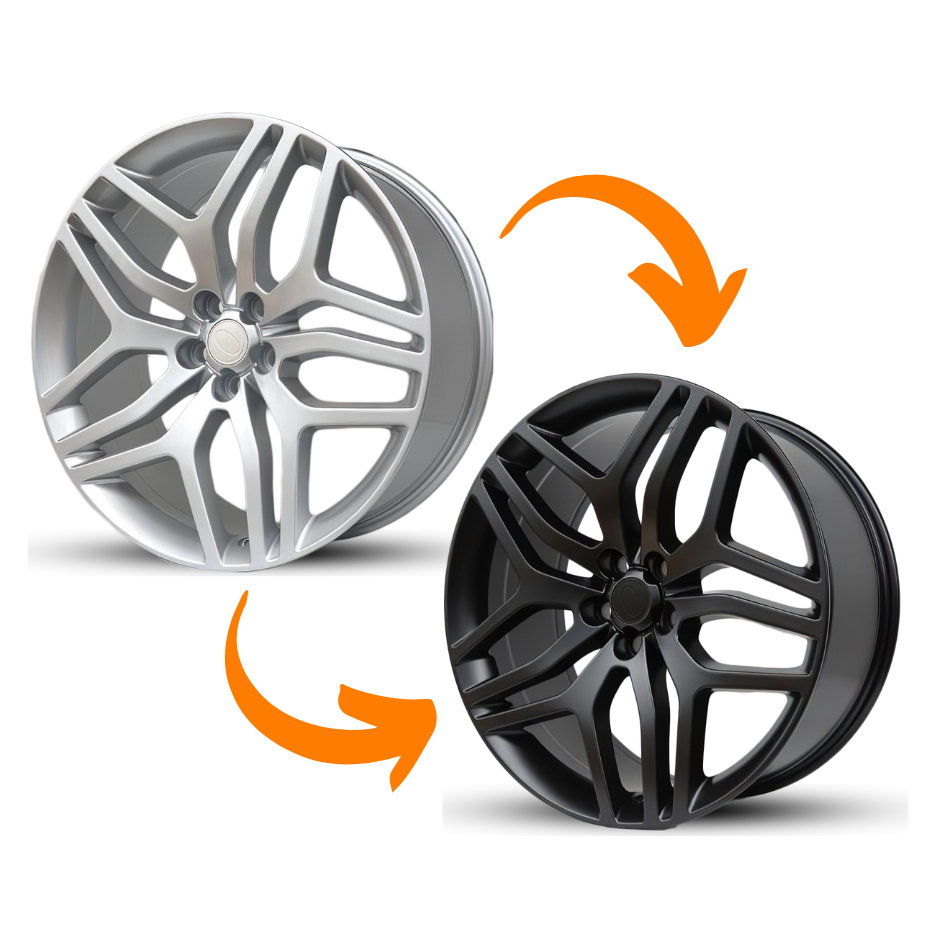
Post-Processing & Finishing: A part isn’t complete after machining. A comprehensive service offers a full suite of finishing options—bead blasting, anodizing, plating, painting, heat treatment, or precision laser engraving—under one roof, ensuring quality control and supply chain simplicity.
Metrology and Quality Assurance: This is the non-negotiable foundation of trust. It involves using coordinate measuring machines (CMM), optical scanners, and surface testers to validate that every dimension, tolerance, and surface characteristic meets the stringent specifications on the print.
The Critical Pain Points in Outsourcing CNC Machining Parts
Many clients, especially those in the R&D or startup phase, encounter significant hurdles when sourcing CNC machining parts service:
The “Precision Promise Gap”: Suppliers often advertise extreme tolerances (e.g., ±0.001mm), but consistent achievement in production depends on machine calibration, tooling condition, and operator skill. The gap between a one-off prototype and a batch of 500 identical, in-spec parts is vast.
Communication and Technical Drawings: Ambiguities in 2D drawings or 3D models lead to costly misinterpretations. A top-tier service will proactively clarify every datum, tolerance, and surface callout before proceeding.
Material Integrity and Traceability: Not all “6061-T6 aluminum” is created equal. Variations in mill sources, heat treatment, and certification can affect machinability and final part performance. Reliable partners provide material certifications and maintain traceability.
Hidden Costs and Timeline Creep: Unclear quotes that exclude setup, programming, or standard tooling can lead to budget overruns. Similarly, optimistic lead times that don’t account for post-processing or quality checks can derail project schedules.
Limited Technological Scope: A supplier specializing only in 3-axis milling may force design compromises or require multiple setups and fixtures, increasing cost, error risk, and lead time for a complex part.
How a Qualified Partner Addresses These Challenges: The GreatLight Metal Paradigm
When evaluating potential partners, it’s instructive to examine a manufacturer that has systematically built its operations to overcome these industry-wide pain points. Let’s consider the approach of GreatLight CNC Machining Factory (GreatLight Metal), as it exemplifies the integration of technical hard power and systematic soft power required for high-stakes projects.
1. Technological Depth and Process Chain Breadth:
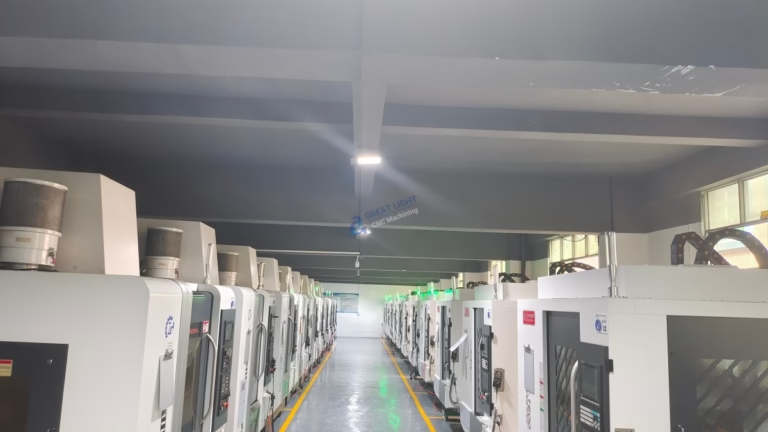
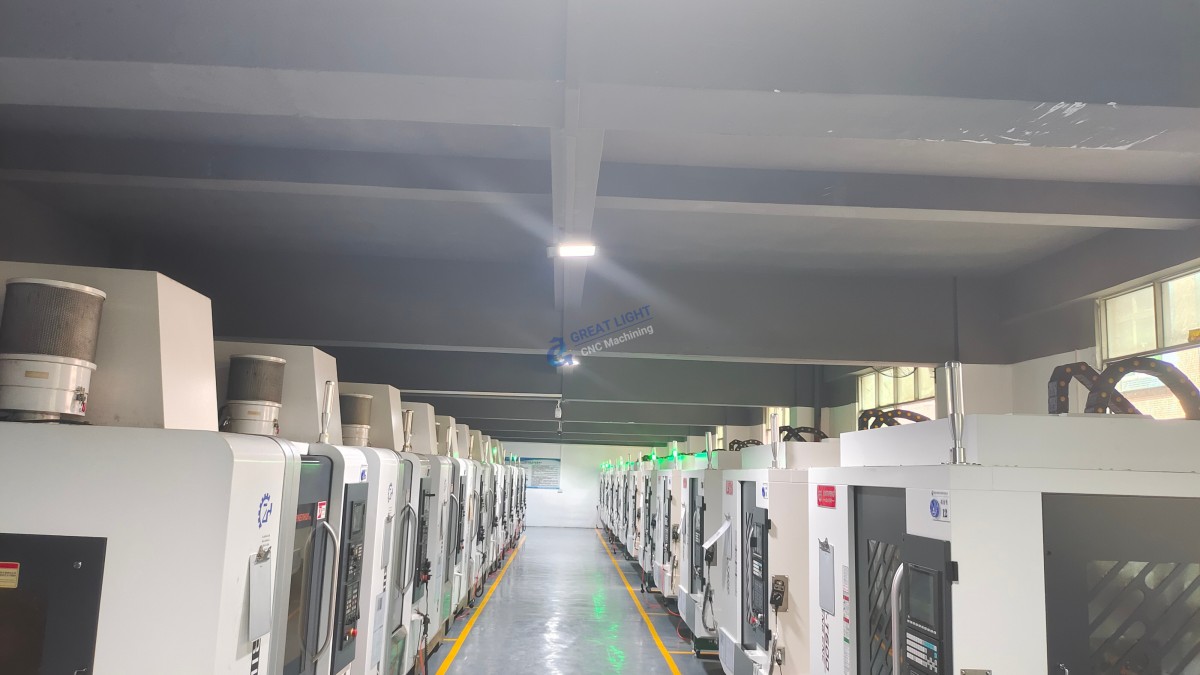
A modern CNC machining parts service must offer more than just machining. GreatLight Metal, for instance, operates with a cluster of over 127 pieces of precision equipment. This includes high-precision 5-axis, 4-axis, and 3-axis CNC centers, complemented by turning centers, EDM, grinding, and additive manufacturing (SLM, SLA, SLS). This integrated ecosystem allows them to select the most efficient and accurate process for any given feature, whether it’s a deep cavity best suited for 5-axis machining or a delicate internal feature requiring EDM. This breadth prevents the compromise of design intent due to process limitations.
2. A Foundation Built on Trust: The Certification Framework
Trust is quantified through internationally recognized standards. A partner’s certifications are its credibility resume. Beyond the baseline ISO 9001:2015 for quality management, look for:
ISO 13485: For medical device manufacturing, ensuring a rigorous quality management system for regulatory compliance.
IATF 16949: The automotive industry’s gold standard, focusing on continuous improvement, defect prevention, and reducing variation and waste in the supply chain. This is critical for engine components, sensors, and structural parts.
ISO 27001: For data security, assuring that your sensitive IP and design files are protected throughout the manufacturing process.
These certifications, which GreatLight Metal holds, are not mere plaques on the wall. They represent embedded processes for document control, corrective action, risk management, and traceability that directly safeguard your project.
3. Engineering-Led Service and DFM Collaboration
The most valuable phase of a CNC machining parts service often occurs before production begins. An expert manufacturing engineer will analyze your model for potential issues like:
Un-machinable internal corners
Thin walls prone to vibration or distortion
Inefficient use of material leading to high waste
Suggestions for alternative materials or treatments to enhance performance or reduce cost
This collaborative, problem-solving approach transforms the relationship from a transactional vendor to a strategic engineering partner.
Comparative Lens: The Service Landscape
To provide context, let’s briefly place GreatLight Metal within a broader landscape of notable CNC machining parts service providers. Each has its strengths:
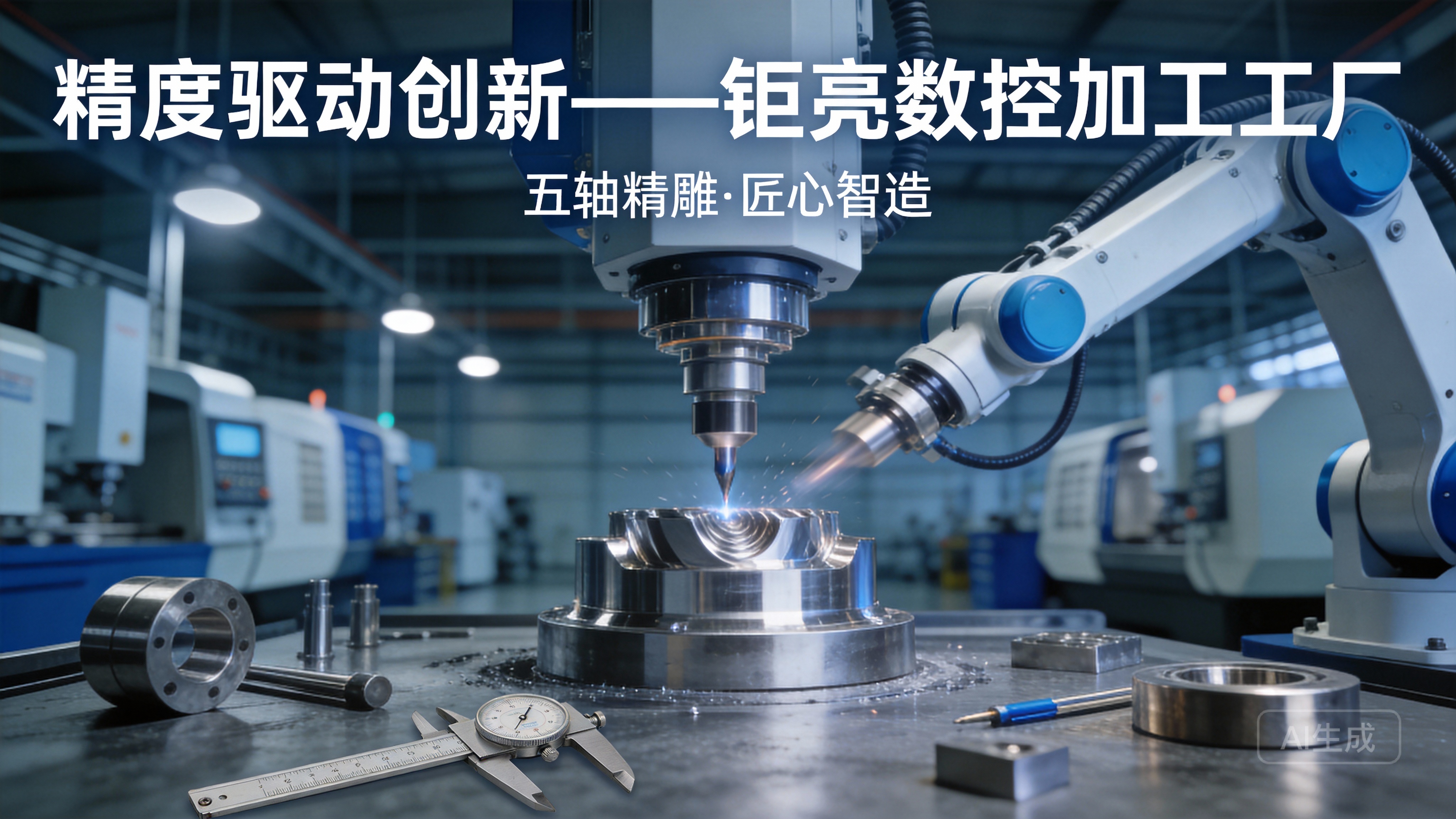
GreatLight Metal: Strengths lie in deep vertical integration in China’s manufacturing hub, extensive in-house capacity (from 5-axis machining to 3D printing and finishing), and a strong focus on complex, low-to-medium volume precision parts with full certifications. They excel as a one-stop solution for technically demanding projects.
Protolabs / Xometry / Fictiv: These are “digital manufacturing platforms” known for instant online quoting, vast networks of partner factories, and rapid turnaround for prototypes and lower-volume parts. Their strength is speed, accessibility, and a user-friendly digital interface.
Owens Industries / RCO Engineering: These are traditional, high-precision job shops often based in the US/EU, specializing in ultra-tight tolerances for aerospace, defense, and medical sectors. They offer deep expertise but may have longer lead times and higher costs.
The choice depends on your priorities: digital speed and convenience, specialized ultra-high precision, or integrated, full-service manufacturing with strong engineering support and cost efficiency for complex parts.
Conclusion: Selecting Your Strategic Manufacturing Ally
Choosing the right CNC machining parts service is a strategic decision that impacts your product’s quality, cost, and time-to-market. It requires looking beyond the machine shop facade to evaluate the integrated system behind it: the technological arsenal, the quality management ethos, the engineering acumen, and the commitment to partnership.
From my professional standpoint, the most successful collaborations happen when the service provider is empowered to contribute its manufacturing expertise early in the design cycle. Whether you are developing a groundbreaking medical implant, a robust component for a humanoid robot, or a critical aerospace bracket, the goal is to find a partner whose capabilities are a perfect match for your technical challenges and quality expectations.
In a market full of options, manufacturers that combine certified processes with advanced technical capabilities—like the integrated approach demonstrated by GreatLight CNC Machining Factory—are poised to deliver not just parts, but reliability, innovation, and value. For those seeking to delve deeper into the operational philosophy and community engagement of such a technically driven manufacturer, their professional footprint can be further explored on platforms like LinkedIn{:target=”_blank”}.



















