
Considering the problem of CNC milling deformation of thin-walled aluminum alloy parts, the main factors affecting the deformation of parts were determined from aspects such as raw material performance of parts, distribution of residual stresses before and after. milling, selection of tools and parameters of the cutting process, as well as the use of different precision tools. This article introduces the current deformation control methods and research status at home and abroad, providing a theoretical basis and research direction for CNC milling of thin-walled parts.
1 Preface
Currently, the aerospace industry has increasing demands on aircraft maneuverability, stability and economy. In order to meet aircraft usage requirements, the R&D unit must not only ensure that the structural strength and rigidity requirements of the aircraft are met, but also meet the requirements for reducing the overall mass of the aircraft. ‘plane. Based on the weight reduction requirements of aviation aircraft, thin-walled parts made of steel, aluminum and titanium alloy have been widely used.
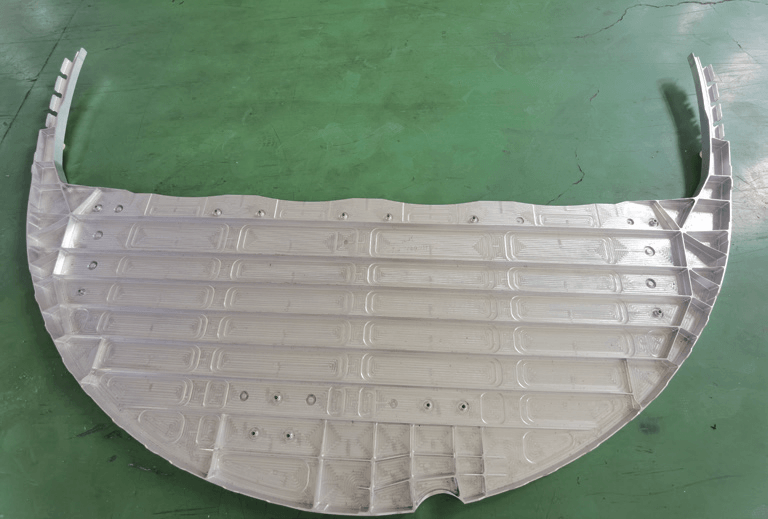
Thin-walled parts refer to rotating parts with a ratio of wall thickness to radius of curvature <1:20, or parts such as frames, beams, wall plates, webs and ribs with a wall thickness <3mm, as shown in Figures 1 and 2. These are thin-walled web and beam parts used in aviation aircraft, respectively. Due to the characteristics of thin-walled parts, they are prone to deformation due to factors such as large blank shrinkage and complex processes during processing; cutting forces and clamping forces during the cutting process will also cause deformation of thin-walled parts; At the same time, workpiece materials, factors such as workpiece geometry and rigidity, residual stress, CNC machining process defects, unreasonable cutting parameters and insufficient precision of tooling fixtures will all affect the machining accuracy of the part. If the deformation of thin-walled parts is too large, it will affect the quality, service life and assembly accuracy of the parts, and even flight safety.
In summary, deformation control in CNC machining of thin-walled parts is very necessary. Aluminum alloy is the most widely used thin-walled part material in aviation companies. It has the characteristics of low density, light weight, thin wall, high precision and strong connection. This article analyzes the processing of thin-walled parts of aluminum alloy frame. many aspects. The causes of deformation by CNC milling are summarized, the related processes and solutions for deformation control are summarized, and the current state of research on deformation control methods for thin-walled parts domestically and abroad is presented.
Figure 1 Thin-walled aluminum alloy parts
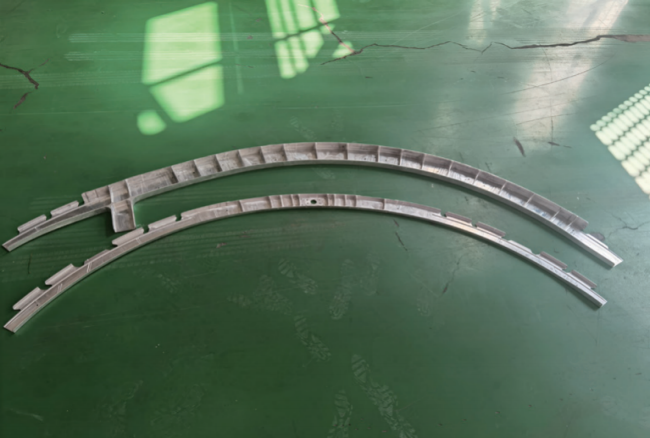
Figure 2: Thin-walled parts of an aluminum alloy beam
2 Methods for analyzing and controlling the causes of deformation by milling of thin-walled parts
Many factors affect the precision of milling of thin-walled parts, including the initial performance of the raw materials of the parts, the geometric shape and rigidity requirements of the part design, the distribution and release of residual stress before and after milling, selection of cutting tools and milling process parameters, structural design of tools and accessories, as well as processing technology. The selection of processing methods and equipment are all related. Due to the thin wall of the workpiece, the overall rigidity is poor and the stress distribution after milling is uneven. Therefore, under the action of a certain cutting force and clamping force, thin-walled parts are prone to deformation. Deformation and control of CNC milling of thin-walled parts is an interdisciplinary problem, which mainly involves the fields of materials mechanics, metal cutting, tool design, materials science, forming materials and machine manufacturing. Thin-walled parts are a significant problem in aviation. One of the persistent problems in aerospace product processing technology.[1]. At present, after research and analysis by a large number of scientific researchers, the main factors affecting the deformation of CNC milling of thin-walled parts have been summarized, including the following four aspects.
(1) Physical properties of raw materials and design structure The elastic modulus of aerospace aluminum alloy materials is generally about 70 GPa, which is about 1/4 of steel structure materials. Since the elastic modulus of aluminum alloy raw materials is small and the toughness is relatively large, deformation, rebound and “cutting” phenomena are likely to occur during CNC milling, especially for large frames, cores and thin wall panels. , and their impact on part accuracy cannot be ignored. Judging from most of the manufacturing and processing examples of aerospace products, under the same processing conditions, the deformation of aluminum alloy parts is much higher than that of steel parts. In addition, most of the thin-walled parts in the frame have complex shapes, many thin-walled parts, low hardness and asymmetrical structures, which will have a great impact on the machining accuracy of the parts.
(2) Residual stress of the blank: blanks are parts that have not been deeply processed. In order to obtain good mechanical properties, aluminum alloy plates generally undergo a series of processes such as rolling, drawing, heat treatment and aging. During these processes, uneven stress fields and temperature fields are generated, leading to residual stresses in the plates. In the bulk state, residual stress exists in the plate at equilibrium state. As the cutting process progresses, the internal stress of the part loses its original balance. The residual stress in the part blank changes due to cutting. Part of the residual stress is removed with chips and cutting heat, and the other part of the residual stress is removed. the residual stress is removed by cutting heat and cutting heat. The influence of force increases and the residual stress distribution appears uneven. In order to obtain a balanced distribution of forces inside the part, the balance of internal stresses can only be restored by. distort the part. For aluminum alloy parts processed by CNC machining, the residual stress depth left due to the influence of cutting heat, cutting force and chips is generally around 0.1mm. When the design thickness of the part is relatively large, its rigidity after milling will also be large. At present, due to the residual stress generated by cutting heat, the cutting force and chips are not enough to overcome the yield strength of the workpiece raw material and cause plastic deformation. However, for medium and large thin-walled aerospace parts with a thickness of less than 2mm, the residual stress generated by cutting heat, cutting force and chips is sufficient to overcome the yield strength of the raw material of the part and cause plastic deformation. deformation. A large number of researches and studies have shown that the residual stress of the blank is one of the important factors affecting the deformation of thin-walled parts.[2]。
(3) Cutting tools and parameters Aluminum alloy materials have relatively low rigidity and good plasticity. Choosing appropriate tool materials is very important for the precision of workpiece processing. When cutting aluminum alloys, milling tools should choose materials with high hardness, high impact resistance and wear resistance, as well as materials with low affinity to the workpiece material, so as to avoid tool deformation, edge curling and tool sticking. In real engineering applications, coated carbide cutting tools are recommended.
The selection of cutting parameters not only has a great impact on the precision of the workpiece, but also affects the working state of the machine tool. When selecting cutting parameters, major factors such as machine power, raw material, tool diameter and length should be considered. In actual milling, increasing the milling speed vc can not only greatly increase the metal removal rate, but also optimize the surface treatment quality of the workpiece. In current research, for large aluminum alloy beams, wall panels, webs and thin-walled structural parts, cutting force is used as the selection criterion for milling speed. The milling force increases with increasing feed rate fz. The greater the cutting force, the worse the quality of the parts. When finishing milling parts, a relatively appropriate feed quantity should be selected. In actual processing, the feed rate is generally 0.1-0.15mm/z, which can not only ensure moderate milling force, but also ensure the efficiency of workpiece processing. In the CNC milling process, the cutting depth and width also have a great impact on the precision of workpiece processing and the quality of surface processing. In actual processing, the milling method with small cutting depth and large cutting width, that is, “shallow cutting and fast moving”, can effectively improve the precision and surface quality parts. It is generally recommended that the cutting depth is 1-5mm and the cutting width is 0.3D-0.7D (D is the tool diameter).
The tool holder mainly plays the role of transmitting the output torque of the CNC machine tool and transmitting the original precision of the CNC machine tool. One end of the tool holder is connected to the spindle of the machine tool and the other end is connected to the tool. Since high-precision milling places extremely high demands on the tool holder, the tool holder must have the characteristics of high precision, high strength and high clamping repeatability. At present, tapered hollow tool holders are widely used in high-speed cutting machine tools. Likewise, the heat shrink tool sleeve clamping system which uses the principle of thermal expansion and contraction is widely used in processing some special deep cavity parts or complex thin-walled parts, because it can meet the characteristics ultra-high speed cutting. In addition, angle heads are also used when processing some special thin-walled parts. The transmission of machine tool precision, torque and spindle angle through the angle head will also affect the accuracy of parts.
(4) Workpiece clamping Workpiece clamping is the most fundamental link in mechanical processing. The clamping methods of thin-walled parts mainly include mechanical, hydraulic and vacuum adsorption clamping.[3]. Tightening mainly includes two parts: positioning and tightening interact with each other regardless of priority. Reasonable clamping and positioning have a very significant impact on the quality and precision of workpiece processing. First, place the blank correctly in the tooling fixture to ensure that the clamping force is moderate and the action point and action direction are accurate. In order to improve machining accuracy, attention should be paid to adjusting the clamping force distribution to avoid centralized clamping problems, and try to clamp in a position with better rigidity. If the clamping force is too large, thin-walled parts will be easily deformed during processing and “undercut” may occur; if the clamping force is too small, thin-walled parts will be deformed due to changes in cutting force during CNC cutting; Vibrations can also be accompanied by a phenomenon of “over-cutting” of the tool on the part, leading to excessive geometric deformation of the surface of the part and increasing the risk of parts being scrapped.
In addition to the above main factors, factors such as machine tool positioning accuracy, repeated positioning accuracy, process program milling trajectory, tooling fixture rigidity, tooling state The wear of milling tools, the thermal effects of cutting tools and parts and the cooling systems have an impact. on the processing accuracy and performance of thin-walled milled parts. Warp control has an impact. If you want to comprehensively and thoroughly understand the mechanisms that cause deformation of thin-walled parts by CNC milling, you need scientific researchers, craftsmen and operators to jointly conduct in-depth analysis and research on the whole process of CNC machining of thin-walled parts and the factors that affect deformation.
3. Research status on deformation control in CNC machining of thin-walled parts
At present, countries with high industrial manufacturing levels such as Germany, Japan, the United States, France and the United Kingdom have accumulated many years of experience in deformation control by CNC milling of thin-walled aluminum alloy parts and have made significant progress. These countries have certain advantages in CNC machine tools, machining tools, CNC control systems, raw materials of fasteners and parts, as well as theoretical research and production practice in CNC machining technology. The University of Michigan in the United States has researched and developed milling path optimization theory and finite element simulation computer software that can effectively control the CNC milling deformation of large overall structural parts and parts. thin-walled core.[4]. The French Institute of Aeronautics and Industry in Paris and its National Aeronautics and Space Administration jointly established a specialized strength laboratory to mainly study how to solve design problems and deformation problems processing and manufacturing of large overall structural parts for aerospace vehicles. he also carried out in-depth process planning optimization methods and research on part safety correction technology.[5]but since these are key national defense technologies, only a few sub-technologies related to deformation control have been found. In order to solve the problem of deformation of thin-walled parts during CNC milling with a single spindle, the Japanese company IWABE et al. proposed a two-spindle parallel machining solution.[6]. TLUSTY et al. proposed a milling processing plan that makes full use of the overall rigidity of the workpiece itself. The deformation control ability and production efficiency of the part have been significantly improved.[7,8]。
Domestic research on the prediction and control of deformation in CNC milling of aerospace aluminum alloy thin-walled parts is mainly concentrated in universities and scientific research institutes, including the Institute of Manufacturing of the aviation industry, the Metals Research Institute, the Chinese Academy of Sciences and the Beijing Aeronautical University. and Astronautics, Nanjing University of Aeronautics and Astronautics, Dalian University of Science and Technology and Shenyang University of Aeronautics and Astronautics, etc. Some manufacturing companies also carry out relevant research on deformation control of thin-walled parts, such as Shenyang Machine Tool Co., Ltd., Shanghai Unis Industrial Services Co., Ltd., Aviation Industry Chengdu Aircraft and AVIC Xicheng. . Mei Zhongyi and others from Beijing Aeronautics and Astronautics University studied the deformation of CNC milling of large arc-shaped thin-walled parts for aircraft, analyzed the influence of cutting stress and of the clamping structure on the deformation of milled parts during CNC processing and proposed a deformation control scheme.[9-11]. Wu Kai of Nanjing Aeronautics and Astronautics University and others used numerical simulation technology to analyze the deformation rules of webs, ribs and edge bars of structural parts of frame beams, and proposed a deformation control method for CNC machining of thin-walled frame beam parts. , namely the large cutting depth method and distributed ring cutting method can effectively utilize the rigidity of thin-walled parts to reduce deformation and improve the precision of CNC milling.[12-14]. Miao Weimin and He Wei from the Institute of Special Materials and Aerospace Process Technology summarized the residual stress release of parts before and after processing, the distribution of thermal stress during processing, and the impact of the force of clamping of parts on deformation, and proposed using computer finite element simulation. analysis for success Optimization of high-precision fixtures, optimization of CNC milling paths, etc. to control the tendency of thin-walled parts to warp[15,16]. Yu Jin and Gao Yanliang of Shenyang Aeronautical and Astronautical University proposed using ABAQUS simulation to predict the deformation of thin-walled parts, using genetic algorithms to obtain the optimal multi-point flexible tool clamping system and by verifying the accuracy of the theoretical model with real results. processing of parts.[17-19]。
4 Conclusion
The method of controlling deformation during CNC machining of thin-walled aluminum alloy parts is very complex. Due to the characteristics of thin wall thickness, low rigidity and low density, many factors affect the deformation of thin wall parts, including the performance of the raw material of the part itself, the distribution of residual stresses before and after. milling, tool selection and cutting process parameters, and different precision, tooling usage, etc. This paper analyzes in detail the influence of tool materials, cutting process parameters, structural shape of the tool holder and tool clamping force on CNC milling of thin-walled parts. It also summarizes the current deformation control methods and the state of domestic and foreign research, which provides. domestic craftsmen and It provides a certain theoretical basis for CNC operators to control the deformation of CNC milling of thin-walled parts.
Expert commentary
The causes of CNC milling deformation of thin-walled aluminum alloy parts are very complex, and deformation control involves multiple disciplines. The author comprehensively analyzes the main factors affecting deformation, as well as the degree of influence and control method of tool material, cutting parameters, tool holder structure and force of tightening of the tool on the deformation by milling.
The article contains precise arguments and in-depth analysis. The highlight is the analysis of the causes of milling deformation of thin-walled parts and the influence of various factors on deformation control. It can grasp the key to the problem and carry out in-depth research, objectively summarize the current deformation control methods and research directions at home and abroad, and provide a reference base for controlling the milling deformation of thin-walled parts.
Daguang focuses on providing solutions such as precision CNC machining services (3-axis, 4-axis, 5-axis machining), CNC milling, 3D printing and rapid prototyping services.



















