
As the core equipment of the automatic warehousing system, the stacker crane has stable and reliable mechanical and electrical performance, and its excellent incoming and outgoing processing capabilities fully meet the needs of users.
According to the number of columns, stackers can be divided into two basic shapes: single column and double column;
According to the load capacity, stackers can be divided into light load (less than 100 kg), medium load (less than 1000 kg) and heavy load;
According to the characteristics and depth of the fork, the stacker can be divided into two forms: single deep position and double deep position. Double deep position is further divided into single motor double deep position and double motor double deep position;
According to the driving mode, stacker cranes can be divided into two types: single drive and double drive;
According to the route, stackers can be divided into straight stackers, rotating stackers and swing stackers;
According to the lifting means, stackers can be divided into chain counterbalance stackers and wire rope winch stackers;
There are different types of stackers, and it’s hard to say which is better or worse. As long as they are suitable for the required application scenarios, they are all good stackers.
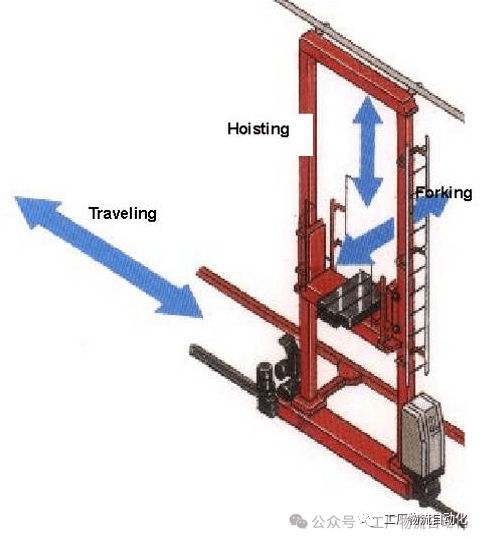
The stacker crane complements a goods forklift, which is mainly completed by movements in three directions:
Walking: the stacker moves forward and backward along the tunnel driven by the engine.
Lifting: The loading platform moves up and down along the column driven by the engine.
Fork pickup: The fork moves back and forth in the direction of the depth of the shelf, driven by the motor.
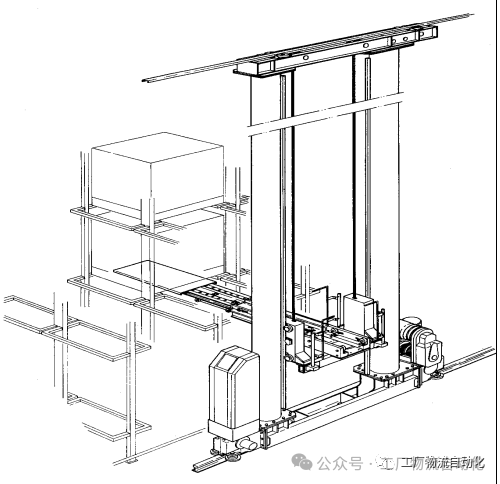
The figure below shows the structure of a typical double column straight travel stacker.
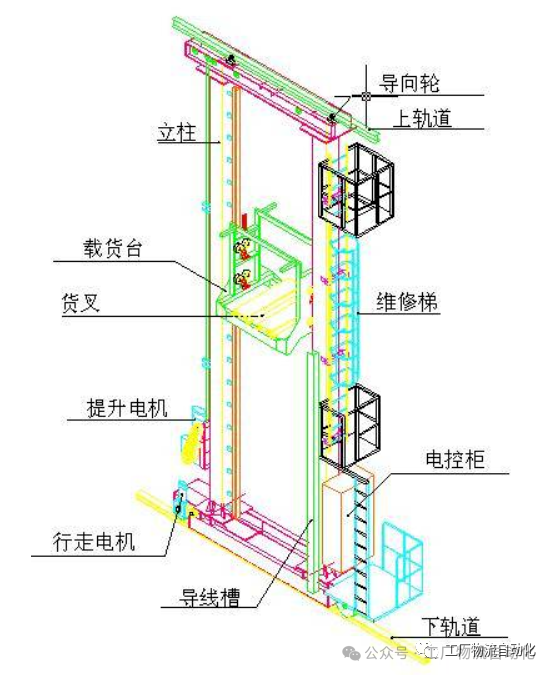
lower beam
As for the overall support base of the stacker, the dynamic and static loads generated during the operation of the stacker are transmitted from the chassis to the running wheels. Therefore, the chassis is made of heavy steel as the main body and is welded or bolted. to maintain good rigidity. At the same time, the sturdy bottom beam can also reduce the center of gravity of the stacker to a certain extent and increase the stability of the stacker during operation.
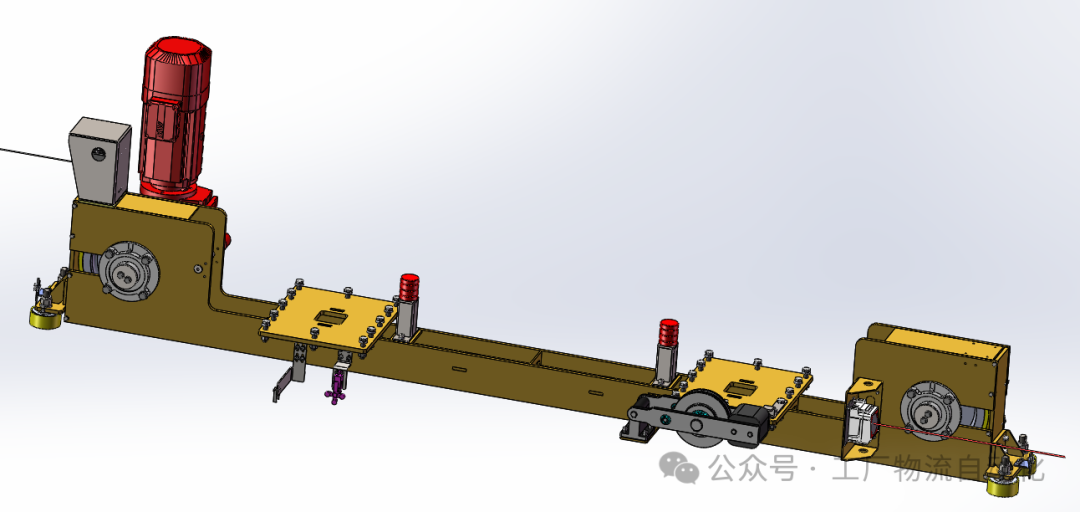
Undercarriage
(1) In order to maintain the stable operation of the stacker, the traveling mechanism adopts an AC motor controlled by frequency conversion, and the traveling wheel is driven by a reducer to move forward and backward along the guide rail at ground.
(2) Some stackers with light/medium load height or high precision requirements also use servo motors combined with planetary gearboxes as the travel energy source.
(3) Each moving wheel is equipped with a side guide wheel to maintain the stability of the stacker. The movable wheel assembly is equipped with an anti-derailment mechanism. When the movable wheel or side guide wheel loosens accidentally, this mechanism can take over. the bottom beam to the ground on the guide rail.
(4) Travel mechanisms driven by AC motors generally use variable frequency motors with power boosting functions. This motor can operate at a high frequency of 87 Hz to maintain a constant output torque. By increasing the frequency, the motor speed is increased, thereby reaching the value. goal of improving power.
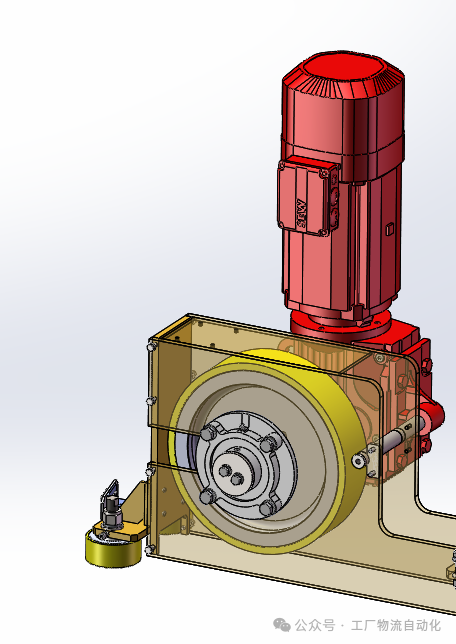
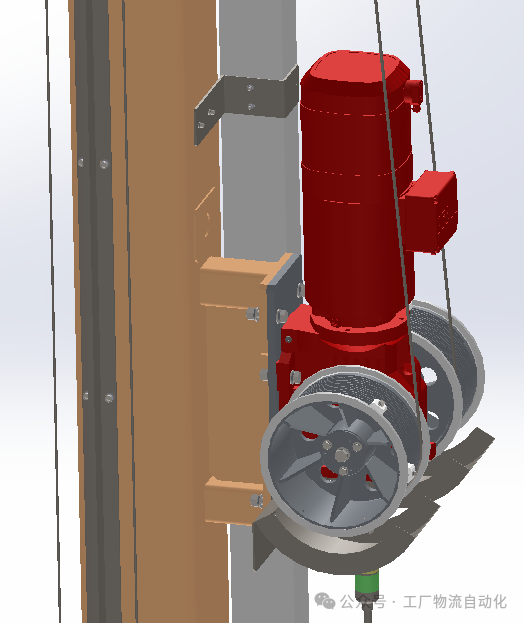
Lifting mechanism
(1) Variable speed type, which uses variable frequency to control the AC motor and drives the charging platform to move up or down through a reducer. The selected lifting motors are equipped with electromagnetic safety brakes to stably hold the loading platform at a certain height.
(2) The lifting mechanism includes a sprocket, a guide wheel and a chain tension adjuster, or a rope pulley, a guide rope pulley and a rope tension adjuster.
(3) For lifting drives, AC motors with power boosting functions are usually selected to improve speed and performance during lifting.
(4) The lifting mechanism is generally equipped with a guide device, which uses guide wheels to guide on the columns, or guide shoes to cooperate with special elevator guide rails. Some small and high precision stackers also use linear guide rails + sliders. for information only. However, this guiding method requires relatively high precision for other parts (whether processing or assembly), and the overall performance of the equipment will also be improved to a higher level.
Column
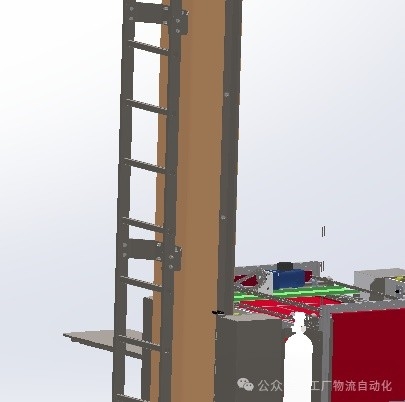
(1) The stacking column generally adopts single column or double column. Single column is used for small, light and medium loads, and double column is used for large, medium and heavy loads.
(2) Most columns are made of square profiles and some single column stacking possibilities use aluminum profiles as columns to reduce the overall weight of the stacker and improve the overall aesthetics of the equipment.
(3) The lower ends of the columns are connected to the lower beam with high-strength bolts. The tops of the double columns are connected to the upper beam. The upper beam is equipped with guide wheels. directly equipped with side guide wheels. When walking, the guide wheels will move along the upper beam (sky rails) to support the guide and increase its stability.
(4) Set up a maintenance operation ladder along the entire length of the column to facilitate inspection of installations at the top of the column. Traditional ladders are equipped with cages to protect the safety of maintenance personnel. Newer ladders generally use safety ropes instead of cages. The ladders themselves are also assembled with aluminum profiles instead of welded steel profiles, which makes the appearance more beautiful and concise.
upper beam
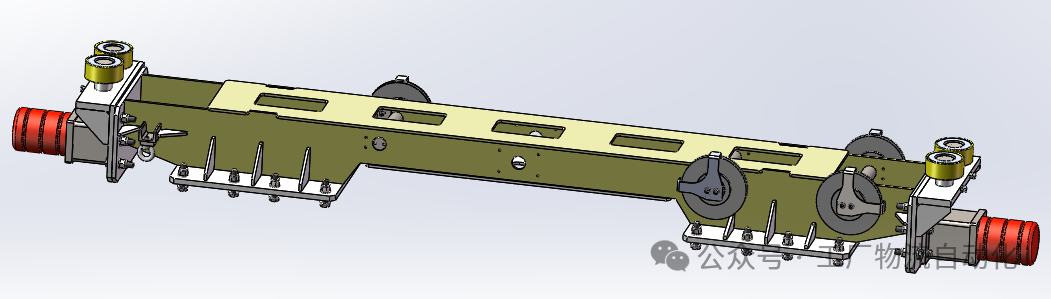
The top crossmember is usually a specific component of a double post stacker. It is placed on top of the double column. Together with the lower crossbar and the double column, it forms a stable frame structure. prevent the stacker from falling off the top rail.
In order to ensure the overall rigidity and load of the chassis, the upper beam must be light to reduce the center of gravity of the stacker.
Lifting loading platform
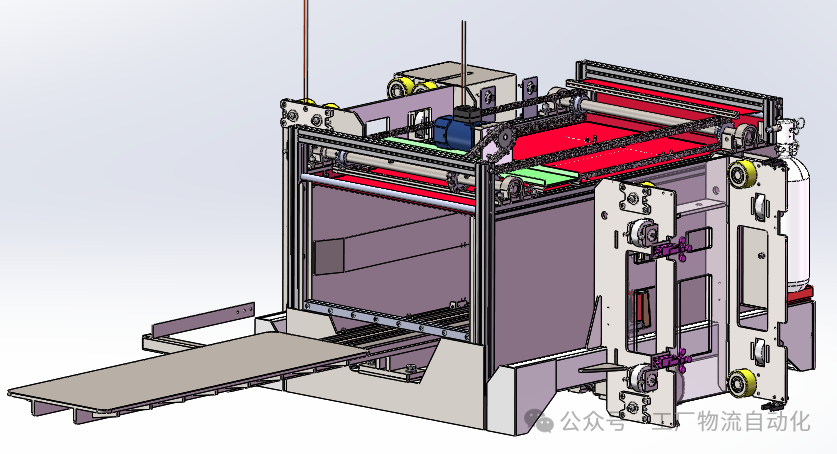
The loading platform is located in the middle of the double columns, and the lifting motor drives the loading platform to move up and down. There are generally two sets of guide wheels or guide shoes on both sides of the loading platform, so that the loading platform can roll along the column or the track on the column. The guide wheels arranged up and down enable the loading platform to overcome certain eccentric loads and prevent the loading platform from bending. For example, when the loading fork is extended or the center of gravity of the cargo is not in the center, the loading platform. can still maintain a good level.
The loading platform is equipped with length, width and height sensors to avoid the danger caused by the cargo being oversized or the stacker continuing to walk or lift without detecting it when dumped.
The loading platform also has a virtual and real loading space detector to avoid double storage due to unexpected circumstances.
The lithium battery industry stacker loading platform is also equipped with special configurations such as fire-rated roller shutters, video cameras and anti-trampling detection switches.
Fork
The fork mechanism is installed on the loading platform. The device includes three (or four) forks, accessory followers and guiding devices. The transmission device includes gears, racks, pinions, chains, etc. damage caused by impact.
The fork is usually of the bottom support type, that is, it lifts the goods from below, like when a forklift picks up goods. Traditional forks are all driven by chains, while new forks have structures such as gears and racks. With the continuous emergence of new application scenarios, other forms of new forks such as clamp and hook forks have emerged.
The fork motor is a 4-pole asynchronous motor with braking device (electromagnetic structure), meeting IP54 protection standards. The motor is controlled by a frequency converter.
The fork is equipped with an encoder, a home position detection switch, and left and right limit detection switches to detect the status of the fork itself.
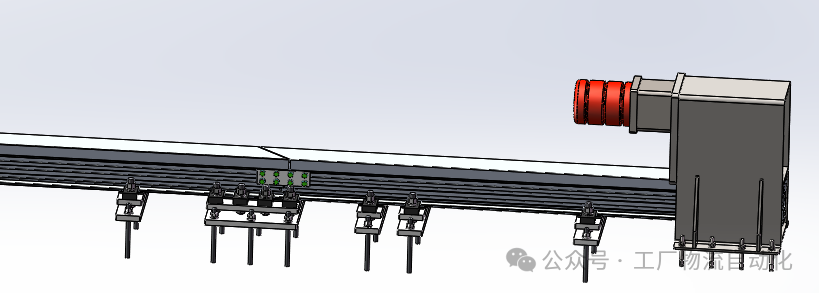
Get off the track
Also called ground rail, it usually uses standard light/heavy rails or special aluminum profiles and is fixed in the tunnel where the stacker is operating with anchor expansion bolts. The stacker goes along the lower track. Since the bottom rail is installed on the floor and is not directly connected to the shelf itself, the space between the bottom pad and the rail is filled with shock-absorbing material to reduce noise and improve proper functioning.
Steel rails are suitable for medium and heavy loads, while aluminum rails are suitable for light and medium loads. Aluminum rails are suitable for higher speeds. With the improvement of the rubber coating process of wheels, rubber-coated wheels are gradually used for heavy and ultra-heavy loads, so the problem of rail noise in high-speed situations is gradually alleviated. Even if steel rails are used, the movement speed of the stacker can also be very high.
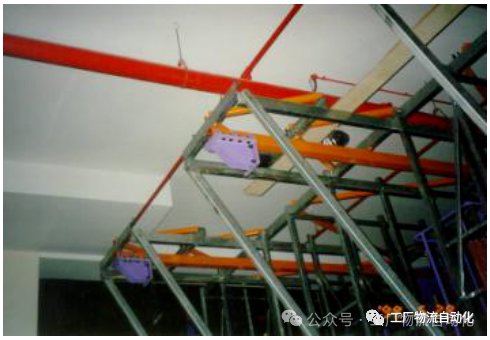
On track
Also called sky rail, it is installed on the lower part of the upper cross beam of the two rows of shelves on the left and right of the track to guide the operation of the stacker. The upper track connected as a whole can fully ensure the smooth operation of the stacker.
Rubber buffer stops are installed at both ends of the track to prevent the stacker from derailing.
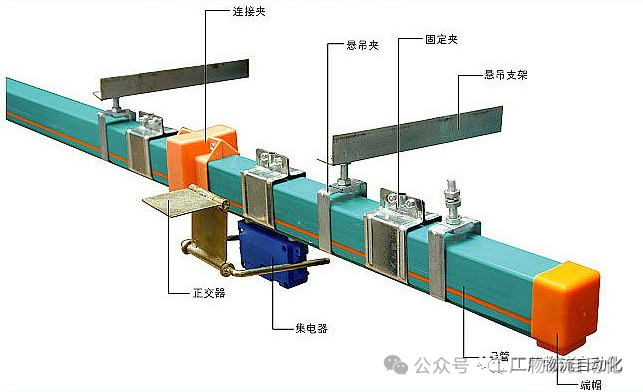
Power rail
Located in the lower part of the racking in the stacker’s operating tunnel, it provides the electrical power necessary for the operation of the stacker. For safety reasons, a sliding tubular contact line is generally used with the pipe mouth facing down. In recent years, due to the emergence of high-speed stackers, their operating speeds have become faster and faster, and the choice of row trolley lines has become more and more widespread.
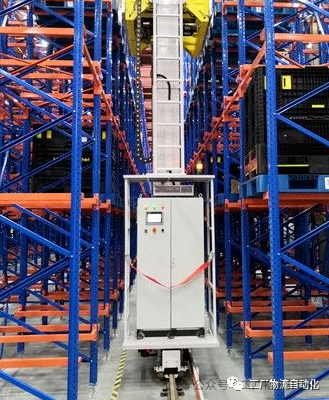
Control panel on stacker crane
Installed on the stacker, it has integrated PLC, frequency converter, power supply, electromagnetic switch and other components. The top panel is controlled by a touch screen, replacing the original control buttons, keys and selectors. There is a standing position directly in front of the control panel to facilitate manual debugging of the stacker. The airborne control panel is associated with the ground control panel. When operating automatically, it operates according to instructions from the ground control panel and computer system.
Everyone, that’s all for today, I’ll expand on that later.
Daguang focuses on providing solutions such as precision CNC machining services (3-axis, 4-axis, 5-axis machining), CNC milling, 3D printing and rapid prototyping services.



















