
Principle of CMP technology
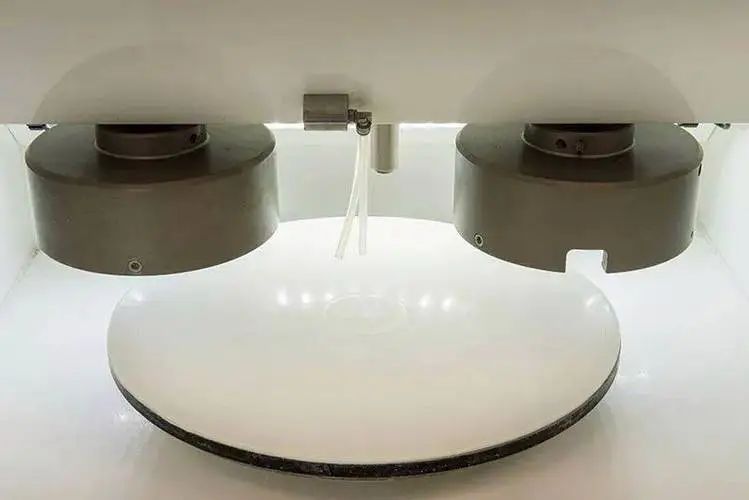
CMP is a method that combines chemical etching and physical grinding. It softens the surface material of the insert through chemical reaction, and then polishes it using mechanical grinding to achieve smoothness of the insert surface. This process uses special abrasive fluids and polishing pads to remove chip surface material to a fine level by bringing the polishing wheel or disc into contact with the wafer surface under pressure and heat.
Main components of the CMP
Abrasive Fluid: This includes corrosive chemicals to soften the surface material and abrasive particles to physically grind the wafer surface.
Polishing Pad: This is a flexible pad fitted to the grinding disc that helps carry grinding fluid and transfer pressure and heat.
Grinding or polishing disc: it rotates and brings the polishing pad into contact with the surface of the insert.
CMP Key Steps
Cleaning: Prior to CMP, the pad should be thoroughly cleaned to ensure that there are no particles or residue on the surface that interfere with the polishing process.
Apply abrasive fluid: Apply abrasive fluid evenly to the polishing disc.
Polishing: Place the pad face down on the polishing pad and apply the appropriate pressure and temperature to begin the polishing process.
Cleaning and Inspection: After polishing, the insert should be cleaned again and its flatness and cleanliness should be checked.
The importance of CMP technology
In the manufacturing process of multilayer interconnect chips, each additional layer will cause the wafer surface irregularities to increase. If this issue is not resolved, it will seriously affect the quality of photolithography and pattern transfer of subsequent layers, thereby harming the performance and overall throughput of the chip. CMP technology avoids these problems by flattening the surface, ensuring high precision and high throughput.
Development challenges and trends
Although CMP technology is extremely important, it also faces several challenges, including increasing polishing speeds, reducing the number of polish-induced defects, and processing an ever-increasing variety of materials. Manufacturers are investigating how to optimize slurry formulations, improve polishing pad performance, and improve mechanical platforms to overcome these challenges.
Moreover, with the emergence of advanced structures such as 3D-IC and FinFET, the application of CMP is also growing in the direction of supporting new materials and structures. These new technologies and structures require CMP to provide more detailed and proprietary solutions to meet the needs of a continually improved manufacturing process.
Overall, CMP technology is an essential part of the modern integrated circuit manufacturing process. It provides an efficient method to ensure chip surface flatness to support higher density and smaller circuit manufacturing. With the continuous advancement of technology, CMP technology will continue to develop in the future semiconductor industry and adapt to the needs of new materials, structures and manufacturing processes to achieve more precise and reliable chip production. more efficient.
Daguang focuses on providing solutions such as precision CNC machining services (3-axis, 4-axis, 5-axis machining), CNC milling, 3D printing and rapid prototyping services.



















