

How to Work with CNC Machines: A Professional Guide to Precision Machining with Five-Axis CNC (PDF Insight Included)
When it comes to custom precision parts machining, especially in industries such as aerospace, automotive, robotics, and medical devices, CNC (Computer Numerical Control) machining stands as a cornerstone technology. Among the various CNC methods available, five-axis CNC machining represents the pinnacle of precision, flexibility, and complexity handling. In this comprehensive guide, we’ll explore how to work with CNC machines, focusing on operational principles, technical insights, manufacturing workflows, and why GreatLight CNC Machining Factory is your optimal partner for high-precision CNC part production.
What Is CNC Machining and Why It Matters?
CNC machining is a subtractive manufacturing process where pre-programmed computer software dictates the movement of factory tools and machinery. The process can control a range of complex machinery, from grinders and lathes to mills and routers. With CNC, you can produce parts with extremely tight tolerances, complex geometries, and superior surface finishes.
Key Benefit: CNC allows for consistent, repeatable, and highly accurate production of both metal and plastic components directly from digital 3D models or CAD files.
The Rise of Five-Axis CNC Machining
Among various CNC configurations — such as 3-axis, 4-axis, and 5-axis — the five-axis CNC machine offers unmatched capabilities:
What is Five-Axis CNC Machining?
A five-axis CNC machine operates on three linear axes (X, Y, Z) and two rotational axes (typically A and C or B and C), allowing the cutting tool to approach the workpiece from virtually any direction. This facilitates:
Complex geometry machining without re-fixturing
Improved surface finish through better tool orientation
Shorter lead times due to fewer setups
Enhanced precision for tight-tolerance parts
🔗 Learn more about our advanced 5-axis CNC services here.
How to Operate a CNC Machine: Step-by-Step Workflow
Working with CNC machines, especially five-axis systems, involves a structured and technical workflow. Here’s how the process typically unfolds:
1. Design & CAD Modeling
Begin with a 3D CAD model of the part you want to manufacture.
Ensure the design accounts for machinability, tool access, and material properties.
2. CAM Programming
Import the CAD file into Computer-Aided Manufacturing (CAM) software.
Define toolpaths, cutting speeds, feeds, and select appropriate tools.
Simulate the machining process to detect collisions or errors.
3. Machine Setup
Secure the raw material (metal or plastic block) onto the CNC machine table.
Install the correct cutting tools in the tool magazine.
Calibrate the machine axes and set the datum reference.
4. Machining Execution
Upload the G-code (generated from CAM) to the CNC controller.
The machine follows the programmed instructions to cut, drill, or shape the part.
For five-axis CNC, the machine dynamically adjusts the tool angle to maintain optimal cutting conditions.
5. Post-Processing & Finishing
Remove the part from the machine.
Perform secondary operations: deburring, heat treatment, surface polishing, anodizing, etc.
GreatLight CNC offers comprehensive one-stop post-processing, ensuring the final part matches exact specifications.
Why Choose Five-Axis CNC Over Traditional Methods?
| Feature | 3-Axis CNC | 4-Axis CNC | 5-Axis CNC |
|---|---|---|---|
| Complexity | Moderate | Higher | Very High |
| Tool Accessibility | Limited | Better | Unparalleled |
| Setup Changes | Multiple | Fewer | Minimal |
| Surface Finish | Good | Improved | Excellent |
| Lead Time | Longer | Medium | Shorter |
| Ideal For | Simple parts | Moderate complexity | Complex, high-precision parts |
Conclusion: If your part has intricate features, undercuts, or requires high accuracy, five-axis CNC is the definitive solution.
Key Considerations When Working with CNC Machining
To ensure success when producing precision parts, keep the following factors in mind:
1. Material Selection
Different materials (aluminum, stainless steel, titanium, PEEK, etc.) behave differently under machining. Choose based on strength, weight, corrosion resistance, and machinability.
2. Tolerances and Precision
Understand your part’s functional tolerance requirements. GreatLight CNC can achieve ±0.001mm precision, essential for industries like aerospace and medical.
3. Tooling and Cutting Parameters
Incorrect tool selection or speed settings can lead to defects. Professional CAM programming and experienced machinists are crucial.
4. Quality Assurance
Use coordinate measuring machines (CMM), surface roughness testers, and other QA tools to validate part compliance.
Common Challenges in CNC Machining (And How to Solve Them)
| Problem | Root Cause | Solution |
|---|---|---|
| Dimensional inaccuracies | Tool wear, incorrect offsets | Regular tool inspection, proper calibration |
| Poor surface finish | Wrong feed/speed, dull tool | Optimize cutting parameters, replace tools |
| Vibration/chatter | Unstable setup, high RPM | Improve clamping, adjust speed |
| Fixturing errors | Improper part holding | Use custom fixtures, ensure rigidity |
Pro Tip: Partnering with an experienced manufacturer like GreatLight CNC Machining Factory minimizes these risks through proven processes and quality systems.
Why GreatLight CNC Machining Factory Is Your Best Choice
Founded in 2011 and headquartered in Chang’an, Dongguan — the heart of China’s precision hardware industry — GreatLight CNC Machining Factory brings over a decade of expertise in custom CNC machining, particularly five-axis CNC.
What Sets GreatLight Apart:
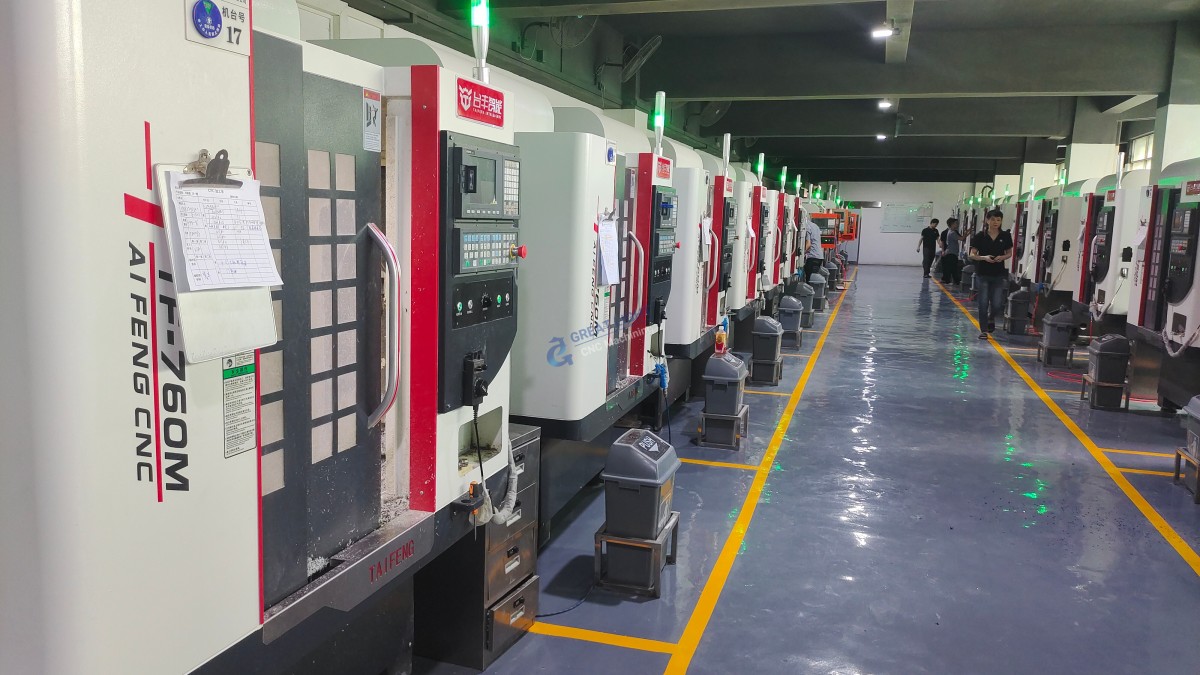
✅ Advanced Equipment Fleet: 127 units of high-precision CNC machines, including 5-axis, 4-axis, and 3-axis machining centers, lathes, mills, and even 3D metal printers (SLM/SLA/SLS).
✅ Certified Quality Assurance: ISO 9001:2015 certified, with capabilities aligned to IATF 16949 (automotive), ISO 13485 (medical), and ISO 27001 (data security).
✅ End-to-End Services: From rapid prototyping to mass production, including CNC milling, turning, die casting, vacuum casting, sheet metal, and full post-processing.
✅ Engineering Excellence: Tackles parts for humanoid robots, aerospace components, automotive engines, and more with tolerances as tight as ±0.001mm.
✅ Risk Mitigation: Offers free rework for quality issues, and a full refund if issues persist — an assurance of confidence and accountability.
🔗 Connect with their professional team via LinkedIn.
Conclusion: Mastering CNC Machining Starts with the Right Partner
Understanding how to work CNC machines, especially five-axis systems, is fundamental for producing high-precision, complex parts efficiently and reliably. While the technical workflow may seem daunting, aligning with an experienced, certified manufacturer like GreatLight CNC Machining Factory removes the guesswork, accelerates time-to-market, and ensures parts meet the most demanding standards.
Whether you’re developing next-gen robotics, precision medical devices, or high-performance automotive components, five-axis CNC machining is your strategic advantage — and GreatLight is your expert manufacturing partner.
Ready to transform your design into reality? Custom precision parts are more accessible — and more precise — than ever.
Frequently Asked Questions (FAQ)
Q1: What is the difference between 3-axis, 4-axis, and 5-axis CNC machining?
3-axis machines move in X, Y, and Z directions. Best for simple geometries.
4-axis adds one rotational axis, enabling more complex shapes.
5-axis utilizes two rotational axes, allowing intricate angles and fewer setups — ideal for complex parts.
Q2: Can I get a prototype before mass production?
Yes. GreatLight CNC specializes in rapid prototyping and can produce functional prototypes within days using CNC or 3D printing technologies.
Q3: What materials can be CNC machined?
Common materials include aluminum, stainless steel, titanium, brass, copper, plastics (ABS, PC, PEEK), and more. GreatLight supports a wide range of metals and engineering plastics.
Q4: How tight can the tolerances be?
With five-axis CNC, GreatLight achieves ±0.001mm (0.00004 inches) or better, suitable for the most demanding applications.
Q5: Do you offer post-processing services?
Absolutely. GreatLight provides one-stop post-processing, including anodizing, polishing, plating, heat treatment, and more.
Q6: Is my design data secure?
Yes. GreatLight adheres to ISO 27001 standards for data security, ensuring your intellectual property is protected.
By leveraging state-of-the-art technology, rigorous quality control, and deep industry experience, GreatLight CNC Machining Factory isn’t just a manufacturer — it’s your strategic partner in precision innovation.



















