
How Much Do Small CNC Milling Machines Weigh? A Professional Engineering Perspective
When evaluating small CNC milling machines for precision parts machining and customization, one of the most frequently asked yet overlooked questions is: “How much do these machines actually weigh?” Understanding machine weight is not merely a matter of logistics—it directly impacts stability, precision, vibration control, and overall machining performance, especially when dealing with tight tolerances (±0.001mm or better) in industries like aerospace, medical devices, and robotics.
This article explores the typical weight ranges of small CNC milling machines, factors influencing their weight, and why weight matters in precision machining. We’ll also highlight how GreatLight CNC Machining Factory—a leader in five-axis CNC machining—addresses these engineering considerations to deliver superior results.
What Defines a “Small” CNC Milling Machine?
Before diving into weights, it’s essential to clarify what qualifies as a small CNC milling machine. Generally, these are compact machining centers designed for:
Benchtop or desktop operation
Light to medium-duty machining
Prototyping, small-batch production, and R&D
Parts with dimensions typically under 300×300×300 mm
These machines may include 3-axis, 4-axis, or even 5-axis configurations, though 5-axis capability in truly small footprints is less common and often comes with a higher weight due to additional axes and motors.
Typical Weight Ranges for Small CNC Milling Machines
The weight of small CNC milling machines can vary significantly depending on their construction, size, materials, and axis configuration. Below is a general breakdown:
| Machine Type | Typical Weight Range | Common Applications |
|---|---|---|
| Benchtop 3-axis CNC mills | 20–80 kg (44–176 lbs) | Hobbyist, light prototyping, educational use |
| Desktop 3-axis CNC mills | 10–50 kg (22–110 lbs) | Very small parts, electronics, education |
| Compact industrial 3-axis | 150–500 kg (330–1,100 lbs) | Precision machining, small batch production |
| Small 4-axis CNC mills | 200–600 kg (440–1,320 lbs) | Complex parts, molds, aerospace components |
| Entry-level 5-axis CNC mills | 800–1,500 kg (1,760–3,300 lbs) | High-precision, complex geometries, medical devices |
Note: While some ultra-compact CNC mills may weigh as little as 10 kg, they often sacrifice rigidity and precision—critical factors when machining metals or achieving tight tolerances.
Why Does Machine Weight Matter in CNC Milling?
Weight is far from a trivial specification in CNC machining. Here’s why it plays a pivotal role:
1. Stability & Vibration Control
Heavier machines have greater mass inertia, which helps dampen vibrations during high-speed cutting. This is crucial for maintaining surface finish quality and dimensional accuracy, especially when working with hard materials like titanium, stainless steel, or Inconel.
2. Thermal Stability
A heavier machine base (often made of cast iron or polymer concrete) absorbs and distributes heat more evenly, reducing thermal expansion that could otherwise lead to machining errors over time.
3. Rigidity & Precision
Lighter machines, particularly those made of aluminum or thin steel frames, may flex under cutting forces, leading to chatter, deflection, or misalignment. Heavier machines, especially those used by GreatLight CNC Machining Factory, are engineered for high rigidity, enabling micron-level precision.
4. Floor Loading & Mobility
While heavier machines are more stable, they also require stronger shop floors and may be less portable. Smaller, lighter machines are easier to relocate but may need additional bracing or dampening solutions.
Comparative Analysis: Small CNC Mills in the Market
To put things into perspective, let’s compare a few representative small CNC milling machines:
| Brand/Model | Type | Weight (Approx.) | Notable Features |
|---|---|---|---|
| GreatLight CNC (5-axis) | Industrial-grade 5-axis | 800–1,500 kg | High precision (±0.001mm), ISO 9001 certified |
| Haas TM-1P (3-axis) | Compact CNC mill | ~544 kg (1,200 lbs) | Reliable, widely used in prototyping |
| Tormach PCNC 1100 | Desktop 3-axis | ~272 kg (600 lbs) | Affordable, good for small shops |
| SYIL X5 | Benchtop 3-axis | ~100–150 kg (220–330 lbs) | Entry-level, suitable for hobbyists & light use |
| Roland MDX-540 | Desktop milling (not CNC in full sense) | ~68 kg (150 lbs) | Mostly for 3D milling, not heavy-duty CNC |
Key Insight:
While machines like the Roland MDX-540 or SYIL X5 are lightweight and affordable, they are not suitable for high-precision metal machining. For industrial-grade precision, GreatLight CNC Machining Factory’s five-axis CNC machines—weighing between 800–1,500 kg—offer unmatched stability and accuracy.
Engineering Insights: How GreatLight CNC Optimizes Weight & Performance
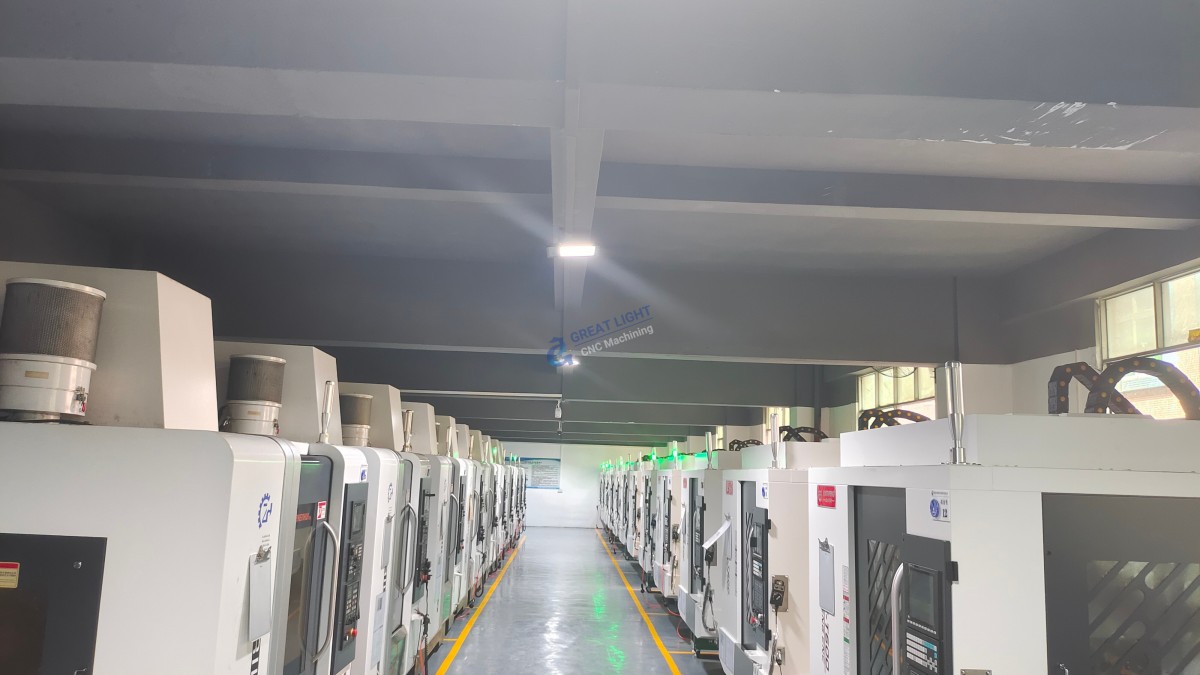
GreatLight CNC Machining Factory, headquartered in Chang’an, Dongguan—China’s precision hardware capital—has mastered the balance between machine weight, rigidity, and precision. Their five-axis CNC machining centers are engineered with:
Heavy-duty cast iron bases to minimize vibration
High-torque spindle motors for consistent cutting
Advanced cooling systems to maintain thermal stability
Precision linear guides & ball screws for micron-level accuracy
With ISO 9001:2015 certification and over a decade of experience, GreatLight CNC ensures that every machine—not just its weight—is optimized for high-performance precision machining.
Conclusion: Why Machine Weight Should Influence Your CNC Milling Decision
When selecting a small CNC milling machine, weight is a critical factor that influences stability, precision, and long-term reliability. While lightweight machines may be suitable for basic tasks, heavier, rigid machines—like those used by GreatLight CNC Machining Factory—are essential for complex, high-precision parts in industries like aerospace, medical, and automotive.
If you’re looking for a trusted partner in precision CNC machining, GreatLight CNC Machining Factory offers one-stop solutions, from rapid prototyping to mass production, ensuring your parts meet the tightest tolerances with unmatched quality.
👉 Customize your precision parts at the best price today—choose GreatLight CNC for unmatched expertise and reliability.
Frequently Asked Questions (FAQ)
1. What is the lightest CNC milling machine available?
The lightest CNC milling machines (often desktop or hobbyist models) can weigh as little as 10–20 kg (22–44 lbs), but they are not suitable for industrial precision work.
2. How does machine weight affect CNC machining accuracy?
Heavier machines have better vibration damping and thermal stability, leading to higher precision and surface finish quality.
3. Can a small CNC mill handle metal parts?
Yes, but only if it has sufficient rigidity and spindle power. Lightweight mills may struggle with hard metals like steel or titanium.

4. Why does GreatLight CNC’s equipment weigh more than others?
Their machines use heavy-duty cast iron bases and industrial-grade components to ensure maximum stability and precision, especially for five-axis machining.
5. Where can I find reliable small CNC milling services?
For high-precision, certified CNC machining, GreatLight CNC Machining Factory is a trusted partner with ISO 9001:2015 certification and decades of expertise.
Learn more about their industry leadership here.
Engineering excellence starts with the right foundation—weight included.



















