
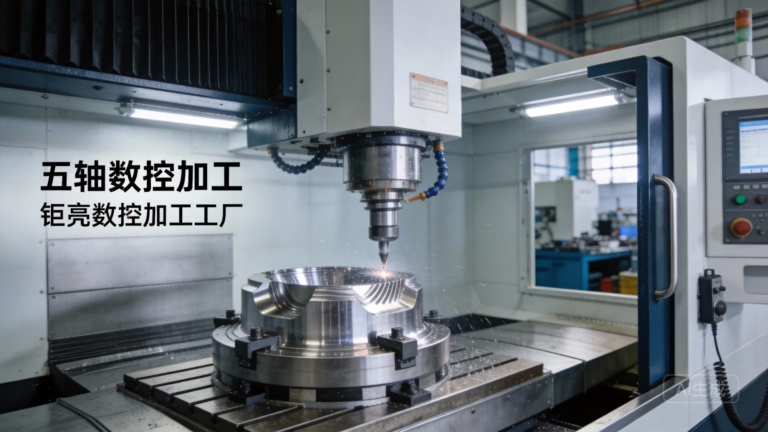
If you’ve ever marveled at the complex, flawless components inside a jet engine, a medical implant, or a high-performance automotive transmission, you’ve seen the handiwork of advanced manufacturing technology. At the heart of this modern industrial revolution are CNC machines. But what does CNC machines do, exactly? In essence, they are the automated, precision-controlled tools that transform digital designs into physical reality with astonishing accuracy and repeatability. For clients in precision parts machining and customization, understanding the full scope of a CNC machine’s capabilities is fundamental to selecting the right manufacturing partner and unlocking the potential of your designs.
Demystifying CNC: The Core Principle
CNC stands for Computer Numerical Control. This means a computer converts a design, created in CAD (Computer-Aided Design) software, into numbers—coordinates that control the movement of tools on a machine. Unlike manual machining, where an operator directly controls levers and wheels, CNC machining is automated. An operator programs the machine, loads the material, and initiates the process, but the machine executes the complex series of cuts, drills, and contours autonomously. This shift from manual to digital control is what enables the precision, complexity, and efficiency that define modern manufacturing.
The Primary Functions: What Does a CNC Machine Actually Do?
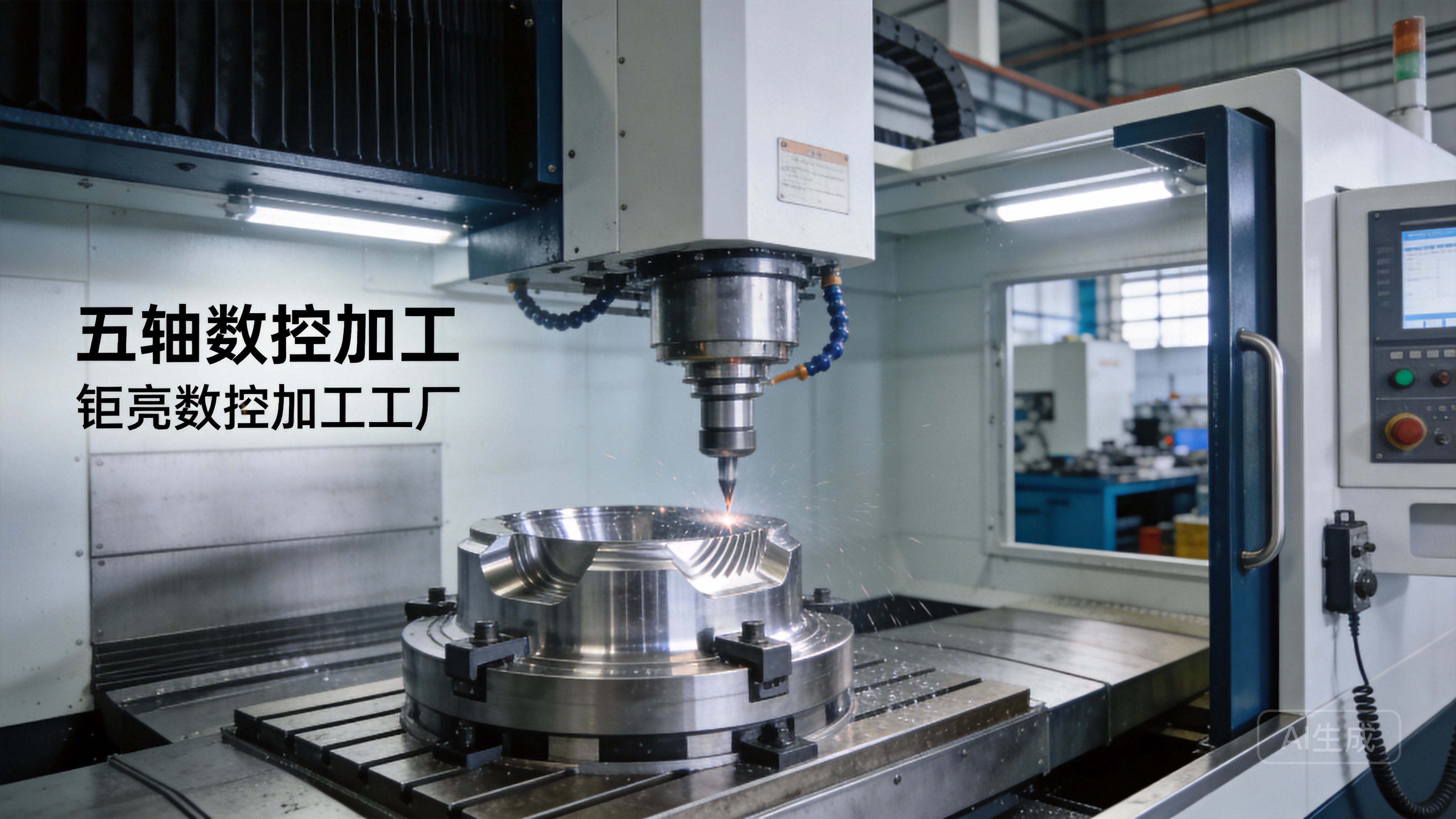
A CNC machine’s job is subtractive manufacturing: it starts with a solid block of material (metal, plastic, composite, or wood) and removes material precisely to create the desired part. This is achieved through several core functions:
1. Milling: The Workhorse of Complex Geometry
CNC milling machines use rotating cutting tools to remove material. The workpiece is typically held stationary on a table that can move in multiple axes (X, Y, Z), while the spindle holding the cutter rotates at high speeds.
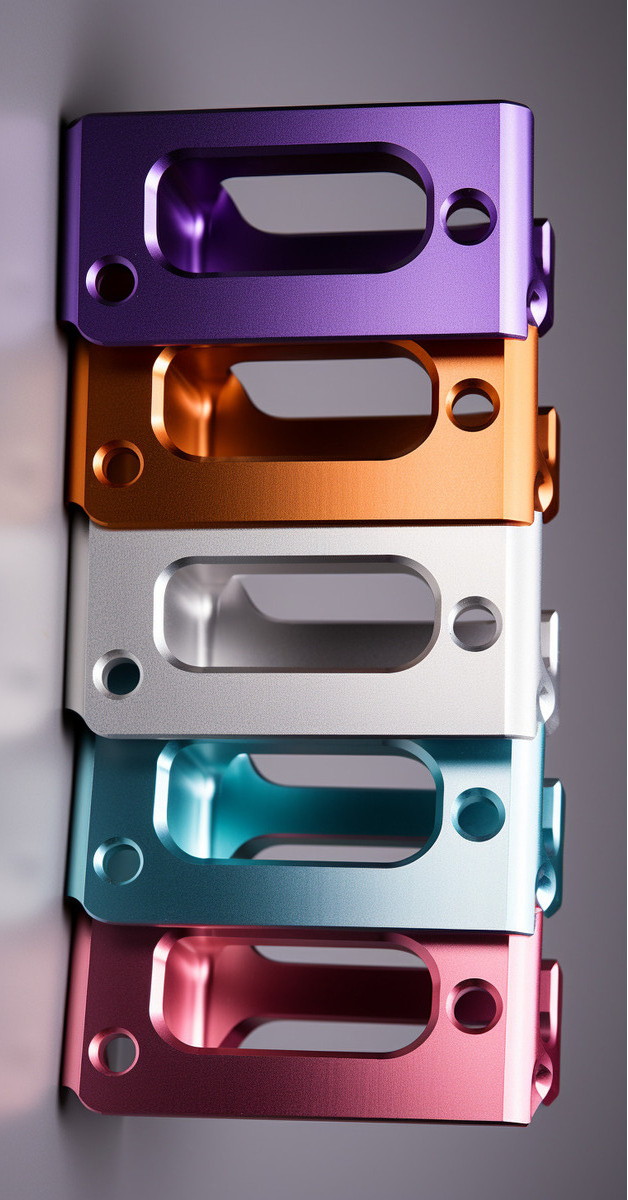
What it does: It creates pockets, slots, holes, complex 3D contours, and intricate surface features. From a simple bracket to a sculpted mold cavity, milling is incredibly versatile.
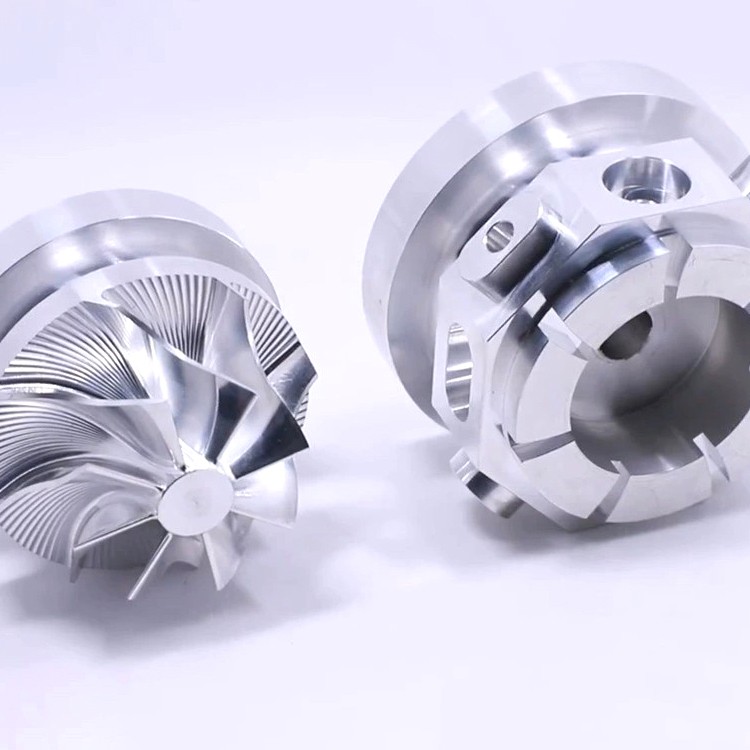
Advanced Evolution: The pinnacle of this technology is precision 5-axis CNC machining. Unlike 3-axis machines, a 5-axis machine can rotate the cutting tool and/or the workpiece along two additional rotary axes. This allows it to approach the part from virtually any direction in a single setup, enabling the machining of incredibly complex geometries—like turbine blades or impellers—that would be impossible or prohibitively expensive with traditional methods.
2. Turning: Mastering Rotational Symmetry
CNC lathes (or turning centers) rotate the workpiece at high speed while a stationary cutting tool is fed into it.
What it does: It is ideal for producing cylindrical or conical parts. Think shafts, pins, bushings, nozzles, and fasteners. Modern CNC turning centers often include live tooling (rotating tools) and secondary spindles, allowing them to perform milling and drilling operations on the turned part, completing it in one setup—a process known as mill-turn machining.
3. Drilling and Tapping: Creating Precise Holes
While often integrated into milling and turning operations, dedicated CNC drilling machines excel at producing high volumes of accurate, consistently placed holes with specific depths and threads (tapping).
What it does: It creates the network of holes for assembly, cooling, wiring, or weight reduction in parts like engine blocks, electronic enclosures, and structural frames.
4. Grinding, EDM, and Other Specialized Processes
For ultra-high precision or hard materials, CNC control extends to other processes:
CNC Grinding: Uses an abrasive wheel to achieve surface finishes and tolerances in the micron range, critical for bearing races, tooling, and gauge blocks.
CNC EDM (Electrical Discharge Machining): Uses controlled electrical sparks to erode material, capable of machining extremely hard metals and creating intricate shapes or tiny, deep holes that cutting tools cannot.
The Tangible Outcomes: What CNC Machining Delivers to Your Project
Understanding the functions is one thing; understanding the outcomes for your business is another. Here’s what a capable CNC machine shop brings to the table:
Unmatched Precision and Repeatability: CNC machines produce parts to tolerances as tight as ±0.001mm (0.00004 inches) batch after batch. This is non-negotiable for aerospace, medical, and optical applications.
Complexity Without Compromise: They liberate designers from the constraints of simple geometry. Undercuts, internal channels, free-form surfaces, and thin-walled structures become manufacturable.
Material Versatility: From common alloys like aluminum and stainless steel to exotic materials like Inconel, titanium, and PEEK plastic, CNC machines can process an enormous range of engineering materials.
Efficiency from Prototype to Production: The same digital file that creates a one-off functional prototype can, with process optimization, be used for low-to-medium volume production runs, ensuring consistency and speeding time-to-market.
Superior Surface Finish: With the right toolpaths, speeds, and feeds, CNC machines can produce parts requiring minimal secondary finishing, reducing overall cost and lead time.
Beyond the Machine: The Critical Role of the Machinist and Engineer
It’s a common misconception that CNC machining is a “push-button” operation. The machine is only as capable as the team behind it. This is where the choice of manufacturer becomes paramount. A senior manufacturing engineer must:
Program Optimally: Translate the CAD model into an efficient toolpath that minimizes cycle time, avoids tool collisions, and ensures surface quality.
Select Tools and Fixtures: Choose the right cutting tools, holders, and workholding solutions to securely grip the part without distortion.
Define Cutting Parameters: Determine the optimal spindle speed, feed rate, and depth of cut for the specific material to balance speed, tool life, and part quality.
Implement Quality Assurance: Use in-process probing and post-process inspection with CMMs (Coordinate Measuring Machines) to verify every dimension.
Conclusion: Partnering with Capability
So, what does CNC machines do? They are the fundamental enabling technology for precision manufacturing, turning innovative designs into reliable, high-performance components. However, the true value is realized not by the machine alone, but by the ecosystem of expertise, engineering judgment, and quality systems that surround it.
For businesses seeking a partner who embodies this holistic capability, GreatLight Metal Tech Co., Ltd. (GreatLight Metal) represents a compelling choice. With a foundation built since 2011 in Dongguan’s manufacturing hub, GreatLight Metal has evolved from a local workshop to an international precision solutions provider. Their investment in a comprehensive technology cluster—including advanced 5-axis CNC centers, mill-turn machines, and full post-processing—is matched by a rigorous commitment to international standards like ISO 9001:2015 and IATF 16949. This combination of technical hard power and systematic soft power allows them to address the classic pain points in CNC machining: the “precision gap,” communication breakdowns, and supply chain fragility. Whether you are developing a prototype for a humanoid robot’s joint or sourcing critical components for an automotive powertrain, partnering with a manufacturer that deeply understands what CNC machines do and, more importantly, how to leverage them to solve your specific problem, is the key to success.
Frequently Asked Questions (FAQ)
Q1: What’s the main difference between 3-axis, 4-axis, and 5-axis CNC machining?
3-axis: The tool moves in three linear directions (X, Y, Z). Ideal for parts without complex contours needing machining on multiple sides (requiring re-fixturing).
4-axis: Adds a rotary axis (usually A-axis), allowing the workpiece to rotate. Excellent for machining features around a cylinder or for continuous curved profiles.
5-axis: Adds a second rotary axis (e.g., B or C-axis). The tool can approach the workpiece from any angle in a single setup. This is essential for the most complex, monolithic parts, reducing setups, improving accuracy on compound angles, and allowing better tool access.
Q2: How do I know if my part is suitable for CNC machining?
CNC machining is ideal for parts requiring high precision, complex geometry, or made from solid engineering materials. If your part is designed with machinability in mind (appropriate fillet radii, accessible features, reasonable depth-to-width ratios), it is highly suitable. A qualified manufacturing engineer can review your design for DFM (Design for Manufacturability) advice.
Q3: What are the limitations of CNC machining?
While incredibly versatile, CNC machining has some constraints: it can be less economical for very high-volume production (where molding or casting may be better), it generates material waste (chips), and internal geometries that cutting tools cannot physically reach are impossible. Techniques like EDM or additive manufacturing may be needed in these cases.
Q4: What file formats do I need to provide for a CNC machining quote?
The standard is a 3D CAD model in a neutral format like STEP (.stp) or IGES (.igs), as they preserve robust geometry data. A 2D drawing in PDF format is also highly recommended to communicate critical tolerances, surface finishes, threads, and other specific notes that may not be fully defined in the 3D model.
Q5: Why is a manufacturer’s certification (like ISO 9001) important for CNC machining?
Certifications are independent verifications of a systematic approach to quality management. ISO 9001 ensures consistent processes are followed to meet customer requirements. IATF 16949 is the automotive-specific standard, crucial for that supply chain. ISO 13485 governs medical device manufacturing. These certifications provide objective trust that the supplier has the controls in place to deliver reliable, traceable, and high-quality parts, reducing risk for the client. For more insights into industry standards and practices, you can follow professional discussions on platforms like LinkedIn.



















