
For many DIY enthusiasts, makers, and engineers, the idea of building a CNC drawing machine at home is an exciting project that blends creativity, electronics, and basic mechanical engineering. A quick search for “How To Make A CNC Drawing Machine At Home Youtube” yields countless tutorials, from simple pen plotters to more complex laser engravers. These projects are fantastic for learning the core principles of Computer Numerical Control (CNC) in a hands-on, affordable way.
However, it’s crucial to understand the distinction between a hobbyist-grade CNC drawing machine built from YouTube guides and a professional-grade CNC machining system used for precision parts manufacturing. This article will guide you through the essence of a DIY build while highlighting the industrial context where companies like GreatLight Metal operate, transforming digital designs into high-precision, functional components.
H2: Deconstructing the DIY CNC Drawing Machine: Core Components and Principles
A basic 2D or 3D CNC drawing machine (often a pen plotter or a lightweight engraver) operates on the same fundamental principle as a industrial 5-axis CNC mill: it translates digital G-code instructions into precise physical movements.
H3: The Essential Building Blocks (What You’ll See on YouTube)
Most home-built projects consist of these key subsystems:
Mechanical Frame & Motion System: This provides the structure and enables movement.
Frame: Commonly built from aluminum extrusions (like 2020 or 2040 profiles), acrylic, or wood. It needs to be rigid enough to minimize wobble.
Linear Motion: Uses linear rods/bearings or V-slot wheels on aluminum extrusions for smooth movement.
Drive System: Stepper motors coupled with lead screws, belts (like GT2 timing belts), or threaded rods to convert rotary motion into linear motion.
Electronics & Control System: The “brain” and “nervous system” of the machine.
Controller Board: An Arduino Uno or Mega paired with a CNC shield (like the GRBL-based shield) is the most popular choice. It interprets G-code and controls the motors.
Stepper Motors & Drivers: NEMA 17 stepper motors are typical for small machines. Driver modules (like A4988 or DRV8825) on the CNC shield provide the power and control pulses to the motors.
Power Supply: A 12V or 24V DC power supply unit (PSU) to energize the motors and board.
Software Workflow: The digital chain from idea to motion.
Design Software (CAD): You create your drawing or design in software like Inkscape (vector) or Fusion 360 (3D).
CAM Software/Slicer: This converts the design into toolpaths (G-code). For simple plotters, plug-ins for Inkscape (like JTech Photonics Laser Tool) or dedicated software like LaserGRBL are used.
Control Software: Software like Universal G-code Sender (UGS) or Candle sends the generated G-code to the Arduino/GRBL controller.
H3: The Typical Build Process (A YouTube Tutorial Summary)
A standard tutorial will walk you through:
Assembling the frame according to a design (like a CoreXY or Cartesian setup).
Mounting the linear motion components and stepper motors.
Wiring the electronics—connecting motors to drivers, drivers to the board, and the board to the power supply.
Installing firmware (like GRBL) onto the Arduino and configuring the steps-per-millimeter for each axis.
Testing basic movements and calibrating the machine.
Finally, attaching a writing tool (pen, marker) or a low-power laser module to the Z-axis and creating your first drawing.
H2: From Hobbyist Project to Industrial Powerhouse: The GreatLight Metal Contrast
While building a CNC drawing machine is an excellent educational venture, the capabilities, precision, and materials involved are worlds apart from professional CNC machining services required for engineering prototypes and end-use parts. This is where the journey from a YouTube tutorial meets the reality of industrial manufacturing.
H3: Key Limitations of Home-Built Machines
Material Capability: Limited to paper, cardboard, thin wood, or engraving soft surfaces. Cannot machine metals, tough engineering plastics, or composites.
Precision & Accuracy: Tolerances are often in the range of 0.5mm to 1mm, susceptible to backlash, frame flex, and calibration errors.
Rigidity & Power: Lack the structural rigidity and high-torque spindles needed to remove material from hard substances.
Repeatability & Reliability: Suitable for one-off art projects but not for producing multiple identical, dimensionally critical parts.
Software & Complexity: Handles 2D or simple 2.5D movements. Cannot generate or execute the complex 5-axis toolpaths needed for intricate 3D geometries.
H3: The Professional CNC Machining Ecosystem, Exemplified by GreatLight Metal
A service provider like GreatLight Metal represents the other end of the spectrum. They don’t build machines from kits; they operate advanced industrial equipment to solve real manufacturing challenges.
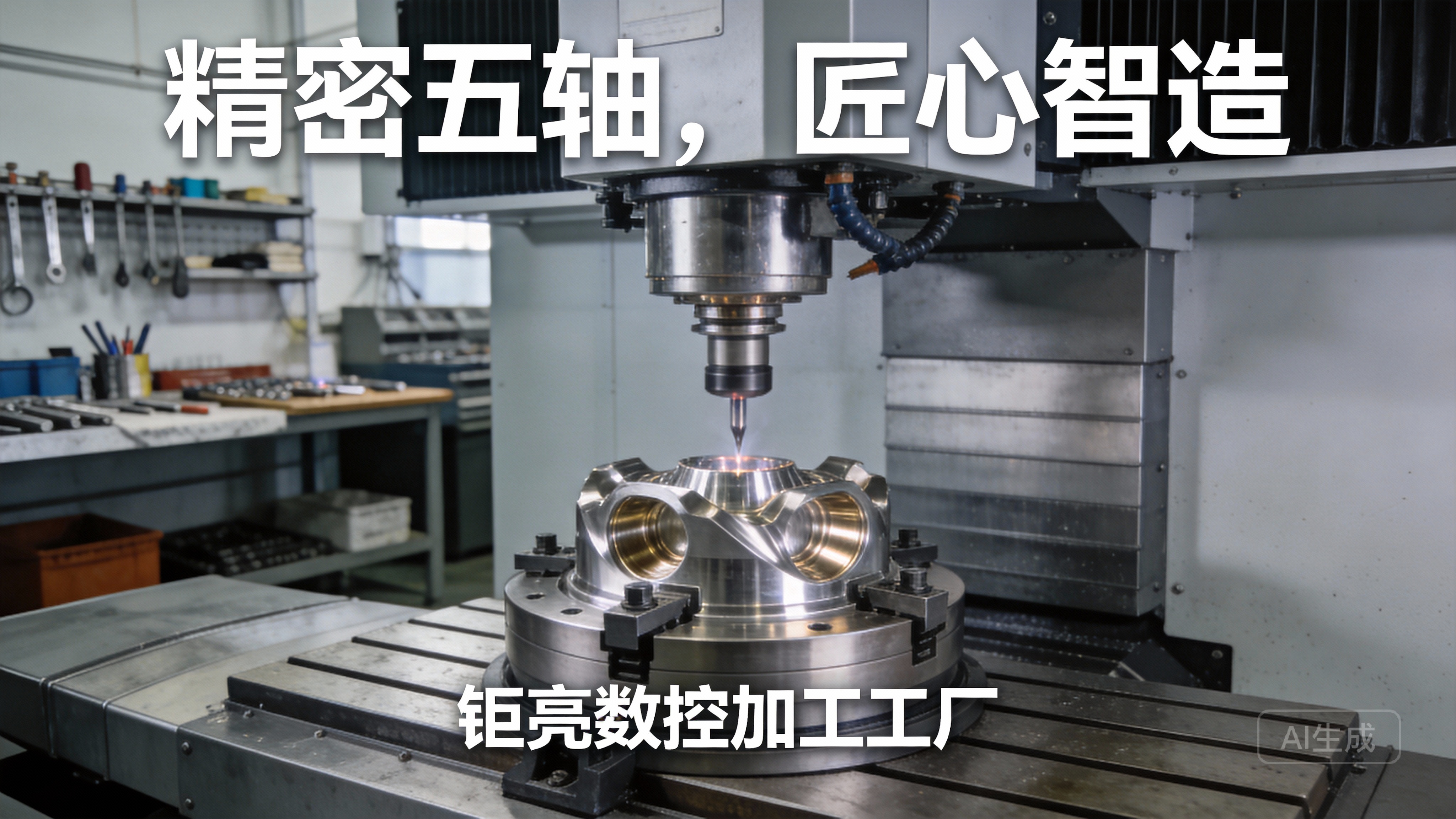
Advanced Equipment: Instead of Arduino and NEMA 17 motors, they utilize high-speed, high-precision 5-axis CNC machining centers from brands like Dema and Beijing Jingdiao. These machines have rigid cast iron frames, automatic tool changers, and coolant systems, capable of machining everything from aluminum and stainless steel to titanium and engineering ceramics.
Engineering-Grade Software: They employ professional CAD/CAM/CAE software suites (e.g., Siemens NX, Mastercam, PowerMill) for complex 3D modeling, simulation, and optimized toolpath generation, ensuring efficiency and preventing collisions.
Metrology and Quality Assurance: Beyond simple calibration, they use coordinate measuring machines (CMM), optical scanners, and surface roughness testers to verify parts meet tolerances as tight as ±0.001mm, backed by an ISO 9001:2015 certified quality management system.
Full-Process Chain: A DIY project ends with a drawing. GreatLight Metal offers a one-stop solution: from initial design consultation and precision CNC machining to post-processing (anodizing, polishing, painting) and final inspection. For projects requiring different technologies, they integrate services like metal 3D printing (SLM), vacuum casting, and sheet metal fabrication under one roof.
Industry-Specific Compliance: Their operations adhere to stringent standards like IATF 16949 for automotive parts and ISO 13485 for medical device manufacturing—requirements far beyond the scope of any home workshop.
Conclusion
Searching “How To Make A CNC Drawing Machine At Home Youtube” opens a door to the fascinating world of mechatronics and digital fabrication. It’s a highly recommended project for learning and prototyping simple concepts. It demystifies the core idea of CNC: digital control over physical movement.
However, when your project evolves from drawing on paper to manufacturing a precision aluminum housing for a drone, a complex titanium orthopedic implant, or a high-performance automotive component, the hobbyist machine hits its limits. This is the domain of professional partners like GreatLight Metal. Their value lies in translating advanced engineering designs into reliable, high-tolerance, and functional metal and plastic parts, supported by authoritative certifications and a deep commitment to solving complex manufacturing challenges. The journey from a YouTube tutorial to producing flight-critical aerospace hardware is vast, but it begins with understanding these fundamental differences in capability, scale, and purpose.
Frequently Asked Questions (FAQ)
H3: Q1: Can I upgrade my homemade CNC drawing machine to cut metal?
A: It is possible but challenging and potentially unsafe. Cutting metal requires significant rigidity, power (a high-wattage spindle), proper fixturing, and coolant. Upgrading a wood/acrylic frame machine would essentially require rebuilding it with much more robust components. For consistent, safe, and precise metal cutting, professional equipment is strongly recommended.
H3: Q2: What is the main cost difference between a DIY machine and using a service like GreatLight Metal?
A: A DIY machine costs a few hundred dollars in parts and your time. You are paying for the learning experience and low-volume, non-critical output. Using a professional service involves costs for advanced equipment depreciation, skilled labor, premium materials, quality control systems, and certifications. You are paying for guaranteed precision, material integrity, reliability, and the ability to produce functional, often safety-critical, parts.
H3: Q3: I have a 3D model. Can GreatLight Metal machine it directly?
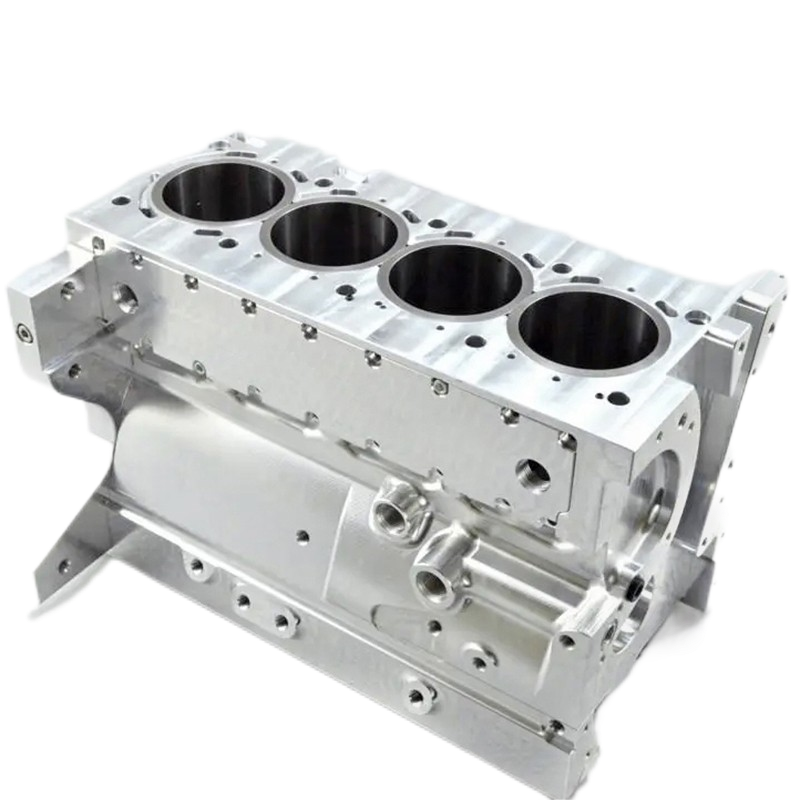
A: Yes, absolutely. This is their core service. You provide the 3D CAD file (e.g., STEP, IGES), and their engineering team will handle the CAM programming, material selection, machining, and finishing. They offer precision 5-axis CNC machining services ideal for complex geometries that a 3-axis machine or a DIY plotter could not produce.
H3: Q4: Are the skills learned from a DIY CNC project transferable to professional CNC programming?
A: Definitely. Understanding G-code basics, the relationship between CAD/CAM, and the mechanics of motion is a valuable foundation. Professional programming uses the same principles but with more complex software, multi-axis toolpath strategies, and deep considerations for tool life, cutting forces, and material behavior.
H3: Q5: How do I know if my part needs a professional CNC service instead of a DIY solution?
A: Ask these questions:
Material: Does it need to be metal or high-performance engineering plastic?
Precision: Do features need to be within 0.1mm or tighter tolerances?
Function: Is it a prototype for form/fit testing, or a functional part for a mechanism, engine, or medical device?
Quantity: Do you need more than one or two identical parts?
If the answer to any of these is “yes,” then a professional service like GreatLight Metal is the appropriate path. For more insights into industry applications, you can explore their professional network on LinkedIn.



















