
How Metal Stock Is Used in a CNC Milling Machine: A Deep Dive into Precision Machining with Five-Axis Capabilities
When it comes to precision parts machining and customization, especially in industries demanding tight tolerances and complex geometries, understanding how metal stock is utilized in a CNC milling machine is fundamental. This process sits at the heart of modern manufacturing — transforming raw metal materials into intricately designed components used in everything from aerospace to medical devices. In this article, we’ll explore the intricacies of how metal stock is prepared, loaded, and machined in CNC milling — with a special focus on the advanced capabilities of five-axis CNC machining, and why GreatLight CNC Machining Factory stands out as your optimal manufacturing partner.
What Is CNC Milling and Why Metal Stock Matters?
CNC milling is a subtractive manufacturing process where rotary cutters remove material from a workpiece — typically metal stock — to create parts with precise dimensions and complex features. Unlike 3D printing which builds parts layer-by-layer, CNC milling carves away excess material based on a digital design (usually a CAD file), resulting in high strength, durability, and surface integrity.
Metal stock refers to the raw material — such as aluminum, steel, titanium, brass, or copper — that is supplied in standard shapes like bars, blocks, sheets, or tubes. The selection and preparation of metal stock significantly influence the machining process, final part quality, and cost-efficiency.
The Role of Metal Stock in CNC Milling: From Raw Material to Finished Part
1. Selection of Metal Stock
The first critical step is choosing the appropriate type and form of metal stock based on:
Part Functionality: Strength, corrosion resistance, thermal conductivity
Design Requirements: Tolerances, surface finish, complexity
Cost & Lead Time: Material availability and machining difficulty
| Common Metal Stock Types | Best Applications |
|---|---|
| Aluminum 6061/7075 | Aerospace, automotive, lightweight structures |
| Stainless Steel 304/316 | Medical devices, food processing, marine applications |
| Titanium Grade 5 | Aerospace, high-performance implants |
| Brass/Copper | Electrical components, decorative parts |
At GreatLight CNC Machining Factory, clients benefit from the flexibility of working with nearly a hundred types of metals and alloys, ensuring the right match for both prototyping and end-use production.
2. Metal Stock Preparation
Before milling begins, metal stock must be:
Cut to rough size to fit the CNC machine’s work envelope
Deburred or cleaned to remove surface impurities
Securely fixtured on the machine bed or in a vise
Proper preparation reduces waste, minimizes vibration during cutting, and ensures dimensional accuracy — all vital for high-precision CNC milling.
3. Loading Metal Stock into the CNC Milling Machine
In a typical CNC milling setup:
The metal stock is mounted onto the machine table using clamps, vises, or specialized fixtures.
For complex geometries or hard-to-machine materials, custom fixtures or vacuum beds may be used.
The work coordinate system (WCS) is set based on the stock’s position to guide the toolpath accurately.
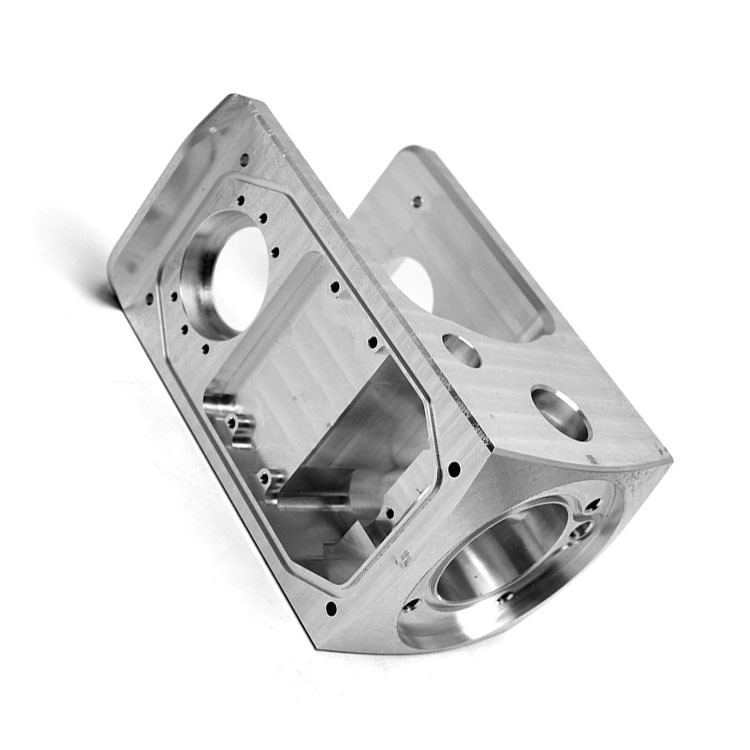
Advanced setups, such as those involving five-axis CNC machining, allow for dynamic orientation of the stock, enabling access to multiple part faces without re-fixturing — a major advantage for reducing lead times and improving accuracy.
How Five-Axis CNC Milling Maximizes Metal Stock Utilization
Five-axis CNC machining represents the pinnacle of milling technology, offering unmatched flexibility and precision. Unlike traditional three-axis machines that move in X, Y, and Z linear directions, five-axis machines add two rotational axes — typically referred to as A and C or B and C — allowing the cutting tool to approach the workpiece from virtually any direction.
Advantages of Five-Axis Milling for Metal Stock:
Complex Geometry: Ideal for intricate designs with undercuts, curved surfaces, or tight internal cavities.
Reduced Setups: Single-fixturing for multi-sided parts improves accuracy and saves time.
Better Surface Finish: Continuous toolpath optimization reduces tool marks and enhances part aesthetics.
Material Efficiency: More precise cuts mean less wasted metal stock, lowering costs.
GreatLight CNC Machining Factory specializes in five-axis CNC machining, providing manufacturers with the ability to produce high-tolerance parts from challenging materials while maximizing the utility of each metal stock block.
🎯 “Customize your precision parts at the best price today!” — leveraging five-axis capabilities ensures you’re not just machining parts, but engineering excellence.
The CNC Milling Process: Step-by-Step with Metal Stock
CAD Design: Engineers create a 3D model of the part using CAD software.
CAM Programming: Toolpaths are generated based on the part geometry and metal stock properties.
Machine Setup: Metal stock is secured, tools are loaded, and zero points are established.
Roughing: Excess material is removed quickly using high-speed roughing tools.
Finishing: Precision tools refine the part to achieve final dimensions and surface quality.
Post-Processing: Includes deburring, heat treatment, surface treatments (anodizing, plating), and inspection.
GreatLight CNC Machining Factory offers one-stop post-processing and finishing services, ensuring that each milled component not only meets dimensional specs but also aligns with aesthetic and functional requirements.
Why Metal Stock Handling Matters for Precision and Cost
Poor handling or misalignment of metal stock can lead to:
Dimensional inaccuracies
Tool wear or breakage
Increased scrap rates
Longer lead times and higher costs
Experienced manufacturers like GreatLight Metal Tech Co., LTD. (GreatLight Metal) mitigate these risks through:
ISO 9001:2015-certified processes
Advanced metrology and in-process inspection
Engineered fixturing and automated loading systems
Skilled technicians with decades of hands-on expertise
Choosing the Right CNC Machining Partner: What to Look For
Not all CNC milling services are created equal. When selecting a provider for your metal part needs, consider:
| Factor | Why It Matters |
|---|---|
| Equipment Capability | Five-axis machines handle complex jobs better |
| Material Versatility | Ability to work with exotic or high-performance metals |
| Quality Certifications | Ensures adherence to international standards |
| Prototyping to Production | Seamless scale-up from one-off to batch manufacturing |
| Post-Processing Services | Saves time and ensures final part readiness |
GreatLight CNC Machining Factory brings together all these elements — from state-of-the-art five-axis CNC machining centers to full-service post-processing — under one roof. Located in Dongguan’s precision hardware hub, the factory combines over a decade of expertise with a commitment to innovation and customer success.
Conclusion: Mastering Metal Stock in CNC Milling for Unmatched Precision
Understanding how metal stock is used in a CNC milling machine is essential for anyone involved in product development, prototyping, or high-volume manufacturing. From material selection and stock preparation to precision milling — especially with advanced five-axis CNC technology — each step influences the quality, cost, and delivery of the final part.

When precision, reliability, and scalability matter, GreatLight CNC Machining Factory delivers with industry-leading equipment, certified processes, and a proven track record across aerospace, automotive, medical, and robotics industries. For your next project, think beyond basic machining — choose a partner that transforms metal stock into engineering excellence.
🔗 Customize your precision parts with GreatLight CNC Machining Factory, your expert in five-axis CNC machining services — where innovation meets precision.
Frequently Asked Questions (FAQ)
Q1: What types of metal stock are commonly used in CNC milling?
Common metals include aluminum (6061, 7075), stainless steel (304, 316), titanium, brass, copper, and various alloys. The choice depends on the application requirements for strength, weight, corrosion resistance, and machinability.
Q2: Can I use metal stock of irregular shapes in CNC milling?
While standard shapes like blocks, bars, and sheets are preferred for ease of fixing and machining, irregular stock can sometimes be used — but may require custom fixturing or additional setup time. Consult with your machining provider for feasibility.
Q3: What is the advantage of five-axis CNC milling over three-axis?
Five-axis machining allows for greater flexibility in part geometry, fewer setups, improved tool orientation, and better surface finishes. It’s ideal for complex, high-precision components that would be difficult or impossible to machine with three-axis equipment.
Q4: How does GreatLight CNC Machining Factory ensure the quality of milled parts?
The factory is ISO 9001:2015 certified, utilizes advanced in-process inspection tools, and follows strict quality protocols. They offer free rework for quality issues and a full refund if issues persist, ensuring customer satisfaction.
Q5: Is GreatLight CNC suitable for both prototyping and mass production?
Yes. With three wholly-owned plants, advanced machinery, and a strong focus on rapid prototyping and precision machining, GreatLight serves clients from initial concept validation to full-scale production runs.
🔗 Follow the journey of precision manufacturing excellence on LinkedIn and discover how GreatLight Metal Tech Co., LTD. is shaping the future of custom metal and plastic parts.



















