
What Are The Recent Development And Advancement With CNC Machines?
In the world of precision parts machining and customization, staying ahead of the curve means understanding the latest advancements in CNC (Computer Numerical Control) machining technologies. Whether you’re producing components for aerospace, automotive, medical devices, or high-end consumer electronics, the evolution of CNC machining — particularly with innovations like five-axis CNC machining — is redefining what’s possible in terms of precision, efficiency, and scalability. This is where GreatLight CNC Machining Factory, a seasoned leader in the field, continues to set industry benchmarks.
This article explores the recent developments and technological advancements in CNC machining, focusing on how these innovations solve real-world manufacturing challenges, improve part complexity, and accelerate time-to-market — all while maintaining the highest levels of precision and quality.
🔍 What Is CNC Machining and Why Does It Matter?
CNC machining is a subtractive manufacturing process where pre-programmed computer software dictates the movement of factory tools and machinery. The process can control a range of complex machinery, from grinders and lathes to mills and routers, enabling the production of custom-designed parts with high accuracy.
For industries demanding tight tolerances (as low as ±0.001mm), intricate geometries, and consistent quality across batches, CNC machining — especially when enhanced with multi-axis capabilities — is indispensable.
🚀 Recent Developments in CNC Machining Technology
Over the past decade, CNC machining has undergone transformative advancements driven by the demands of modern engineering, digitalization, and Industry 4.0. Below are the key developments shaping the future of precision manufacturing:
1. Multi-Axis Machining: The Rise of 4-Axis and 5-Axis Capabilities
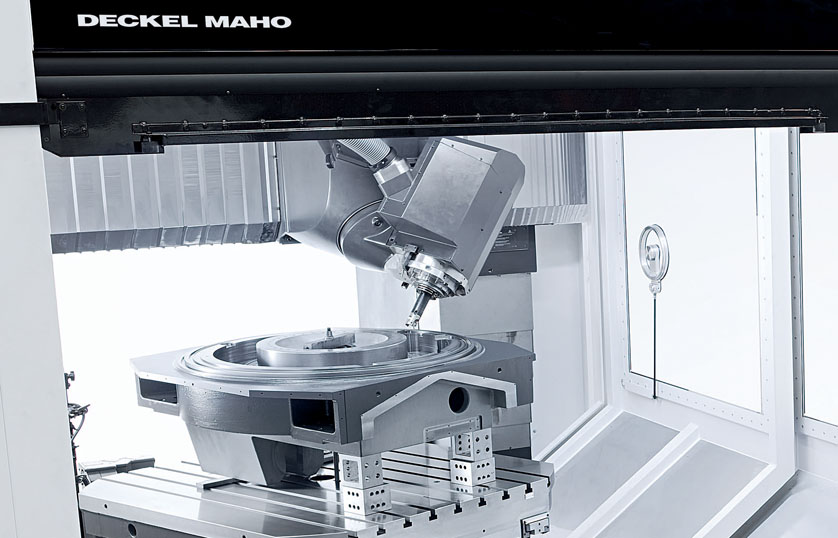
One of the most significant advancements in CNC technology is the expanded use of multi-axis machining, particularly five-axis CNC machines.
What is 5-axis CNC machining?
It refers to a machining process where the cutting tool moves along five different axes simultaneously. This allows for the production of highly complex geometries that are either impossible or extremely inefficient to achieve with 3-axis machines.
Why it matters:
Enables single-setup machining, reducing alignment errors.
Improves surface finish and part accuracy.
Allows access to hard-to-reach features without repositioning.
Ideal for aerospace components, medical implants, molds, and turbines.
🔧 GreatLight CNC Machining Factory specializes in five-axis CNC machining, offering this advanced capability as part of its one-stop precision manufacturing solutions. Their investment in state-of-the-art 5-axis machines ensures that even the most challenging designs are executed with unmatched precision.
💡 “Five-axis machining isn’t just about complexity — it’s about efficiency, accuracy, and future-proofing your production line.”
2. Integration with CAD/CAM and Digital Twins
Modern CNC machines are deeply integrated with Computer-Aided Design (CAD) and Computer-Aided Manufacturing (CAM) software, enabling:
Real-time simulation of machining processes.
Faster programming and reduced setup times.
Digital twin technology, where a virtual model of the part and machine mimics the real-world manufacturing environment for predictive maintenance and optimization.
This digital integration minimizes human error, accelerates prototyping, and supports agile manufacturing workflows — crucial for industries operating in fast-paced markets.
3. Automation and Smart Manufacturing (Industry 4.0)
CNC machining is a cornerstone of smart factories. Recent trends include:
Lights-out manufacturing: Fully automated CNC operations running without human intervention.
IoT-enabled machines: Real-time monitoring of machine performance, tool wear, and environmental conditions.
AI-driven analytics: Predictive maintenance, adaptive toolpath optimization, and quality control.
These advancements contribute to higher uptime, lower operational costs, and consistent part quality, even in high-volume production environments.
4. Advanced Materials Machining
As industries push the boundaries of material science, CNC machining has adapted to handle:
Exotic metals: Titanium, Inconel, Hastelloy, and tungsten.
High-performance alloys: Used in aerospace and energy sectors.
Advanced composites and plastics: Including PEEK, ULTEM, and carbon fiber-reinforced polymers.
Machining these materials requires not only advanced tooling strategies but also machine stability, thermal control, and specialized cutting techniques — areas where GreatLight Metal Tech Co., LTD. has demonstrated exceptional capability.
5. Enhanced Precision and Micro-Machining
With growing demand for miniaturized components (e.g., in medical devices and electronics), micro-CNC machining has emerged as a critical capability.
Tolerances as tight as ±0.0001 inches (0.00254 mm) are now achievable.
Specialized high-speed spindles, vibration-dampening systems, and precision tooling make micro-machining possible.
This development supports innovations in micro-electromechanical systems (MEMS), surgical instruments, and semiconductor components.
6. Hybrid Manufacturing: Combining Additive and Subtractive Processes
A groundbreaking trend is the fusion of CNC machining with additive manufacturing (3D printing) into hybrid systems.
Benefits include:
Ability to produce complex lattice structures and then refine them via CNC.
Reduced material waste.
Faster prototyping and functional part production.
While still evolving, hybrid manufacturing is gaining traction in industries like aerospace, dental, and high-end automotive.
🏭 Why GreatLight CNC Machining Factory Leads the Way
With over a decade of experience and a firm foothold in Dongguan — China’s precision hardware capital — GreatLight CNC Machining Factory embodies the advancements discussed above. Here’s what sets them apart:
127+ precision CNC machines, including 5-axis, 4-axis, and 3-axis machining centers.
ISO 9001:2015 certified, ensuring adherence to global quality standards.
Capable of processing nearly 100 types of materials, from metals to engineering plastics.
Offers comprehensive post-processing and finishing services — an essential factor for delivering production-ready parts.
Provides rapid prototyping to low-volume production, accelerating time-to-market without compromising precision.
Their ability to machine parts with tolerances as tight as ±0.001mm, combined with free rework for quality issues, makes them a trusted partner for engineers and product developers worldwide.
✅ Whether you’re developing components for humanoid robots, automotive engines, or next-gen medical devices, GreatLight’s five-axis CNC machining services deliver the precision, reliability, and scalability you need.
👉 Explore their precision 5-axis CNC machining services to see how they can bring your designs to life.
📌 Conclusion: The Future Is Precision-Driven
The recent advancements in CNC machining technologies reflect a broader shift toward intelligent, automated, and highly precise manufacturing ecosystems. From multi-axis capabilities and smart factory integration to hybrid manufacturing and exotic material processing, these innovations empower businesses to turn complex designs into reality with unprecedented efficiency and accuracy.
For companies seeking a reliable, certified, and technologically advanced manufacturing partner, GreatLight CNC Machining Factory represents the pinnacle of what modern CNC machining can achieve. Their commitment to precision, quality, and customer success makes them the best choice for custom metal and plastic parts, whether you’re in the prototyping phase or preparing for full-scale production.
When precision matters, five-axis CNC machining isn’t just an option — it’s the future. And with GreatLight, that future is already here.
❓ Frequently Asked Questions (FAQ)
Q1: What is the biggest advantage of 5-axis CNC machining over 3-axis?
A: The primary advantage is the ability to machine complex geometries in a single setup by moving the cutting tool along five different axes simultaneously. This reduces production time, improves accuracy, and allows access to hard-to-reach features without reorienting the workpiece.
Q2: Can CNC machines work with exotic materials like titanium or Inconel?
A: Yes, modern CNC machines, especially those equipped with advanced tooling and cooling systems (like those used by GreatLight Metal), are fully capable of machining high-performance materials such as titanium, Inconel, and other superalloys.
Q3: How does CNC machining support rapid prototyping?
A: CNC machining allows for quick turnaround of functional prototypes directly from CAD files. With high precision and a variety of material options, it’s ideal for testing form, fit, and function before moving to mass production.
Q4: What industries benefit the most from advanced CNC machining?
A: Industries such as aerospace, automotive, medical, robotics, electronics, and mold-making benefit significantly due to their need for high precision, complex parts, and reliable quality.
Q5: Is GreatLight CNC Machining Factory certified for quality management?
A: Absolutely. They hold ISO 9001:2015 certification, ensuring that their manufacturing processes meet international quality standards. They also comply with additional standards like ISO 13485 (medical), IATF 16949 (automotive), and ISO 27001 (data security) for specialized projects.
🔗 Learn more about their innovative manufacturing approach and global partnerships on their LinkedIn company page.



















