
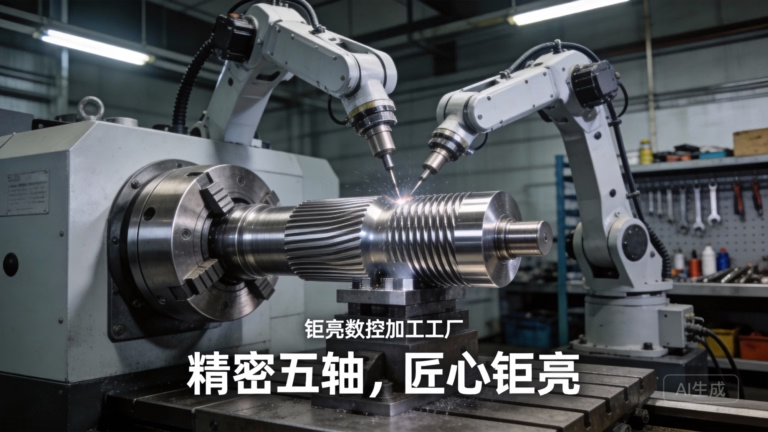
In the world of modern manufacturing, few acronyms carry as much weight as CNC. For clients seeking precision parts machining and customization, understanding this foundational technology is the first step toward making informed decisions. CNC stands for Computer Numerical Control. At its core, it is a revolutionary manufacturing process where pre-programmed computer software dictates the movement of factory tools and machinery. This digital command system allows for the automated control of complex industrial machinery—from grinders and lathes to mills and routers—enabling the production of parts with a degree of accuracy, consistency, and complexity that is simply unattainable with manual operation.
The journey from a digital design to a physical, high-tolerance component begins and ends with CNC machining. This process has become the backbone of industries where precision is non-negotiable, such as aerospace, medical devices, automotive, and robotics. For a manufacturing partner like us at GreatLight CNC Machining Factory, CNC is not just a technology we use; it is the language through which we translate intricate engineering visions into tangible, high-performance reality.
From Concept to Code: The Heart of CNC
To truly appreciate CNC, one must look beyond the acronym. Computer Numerical Control implies a seamless flow of information:
Computer: The process starts with a 3D computer-aided design (CAD) model of the part.
Numerical: Specialized CAM (Computer-Aided Manufacturing) software then converts this model into a set of numerical codes—primarily G-code and M-code. These codes are precise coordinates and instructions (e.g., “move tool to X10 Y20 Z-5 at speed S5000”).
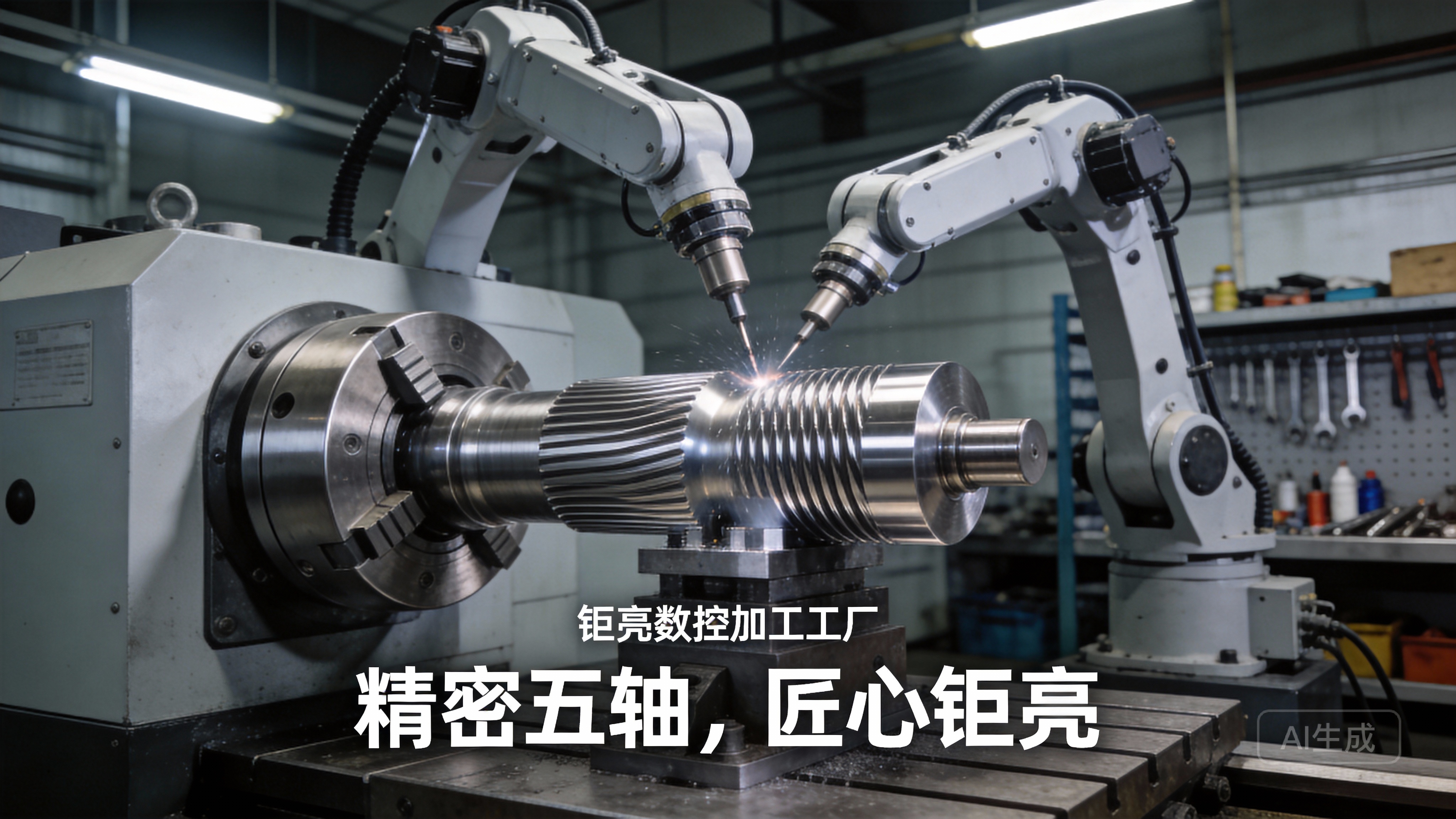
Control: The CNC machine’s onboard controller reads this code line by line, executing commands to drive servo motors. These motors move the cutting tool or workpiece along multiple axes with microscopic precision, removing material to form the final part.
This triad eliminates human error from the machining equation, ensuring that the ten-thousandth part is identical to the first.
The Evolution and Core Components of a CNC System
The development of CNC marked a paradigm shift from the skilled but variable hands of a machinist to the unwavering repeatability of digital automation. A typical CNC machining system comprises several key components:
CAD/CAM Software: The digital workshop where designs are created and machining strategies are planned.
Machine Control Unit (MCU): The “brain” of the operation, interpreting the code and sending signals to the machine’s mechanical components.
Drives & Motors: The “muscles” that translate electrical signals into precise physical movement along linear or rotary axes.
Machine Tool: The physical structure—be it a milling machine, lathe, or 5-axis machining center—that performs the cutting operation.
Feedback System: Typically using encoders, this system continuously monitors the tool’s position and speed, sending data back to the MCU to ensure accuracy and make real-time corrections—a process known as closed-loop control.
Types of CNC Machines: Choosing the Right Tool for the Job
Understanding the different types of CNC machines is crucial for specifying the right manufacturing process for a part. The most common categories include:
CNC Milling Machines: Utilize rotating cutting tools to remove material from a stationary workpiece. Capabilities range from 3-axis (X, Y, Z) to sophisticated 5-axis CNC machining, which allows the tool to approach the workpiece from virtually any direction in a single setup, essential for complex geometries like impellers, turbine blades, and medical implants.
CNC Lathes/Turning Centers: Rotate the workpiece against a stationary cutting tool, ideal for creating cylindrical or conical parts like shafts, bolts, and fittings. Modern mill-turn centers combine turning and milling capabilities for complete part processing in one machine.
CNC Electrical Discharge Machining (EDM): Uses controlled electrical sparks to erode material, perfect for machining extremely hard metals or creating intricate shapes and sharp internal corners that cutting tools cannot achieve.
CNC Grinders: Employ abrasive wheels to achieve the highest levels of surface finish and dimensional accuracy on hardened materials.
For projects demanding the utmost in geometric freedom and precision, partnering with a specialist in 5-axis CNC machining is often the decisive factor for success.
Why CNC Machining is Indispensable for Precision Custom Parts
The dominance of CNC in precision manufacturing is due to a compelling set of advantages:
Unmatched Precision and Tolerance: CNC machines routinely hold tolerances within ±0.001 inches (±0.025 mm), with high-end machines capable of sub-micron levels. This is critical for parts that must interface perfectly in an assembly.
Superior Consistency and Repeatability: Once a program is verified, a CNC machine can produce thousands of identical parts, batch after batch, ensuring quality and reliability in mass production.
Complex Geometry Capability: Complex 3D contours, deep cavities, undercuts, and organic shapes that are impossible with manual machining become feasible with multi-axis CNC technology.
Enhanced Efficiency and Automation: CNC machines can run unattended for hours or even days, optimizing production time and reducing labor costs. Quick changeover between jobs also makes them excellent for both prototyping and high-volume runs.
Broad Material Versatility: From common alloys like aluminum and stainless steel to challenging exotics like Inconel, titanium, and engineering plastics, CNC processes a vast spectrum of materials.
Applications Across Industries: Where CNC Makes the Difference
The application of CNC machining is a testament to its versatility:
Aerospace: Manufacturing lightweight, high-strength structural components, engine parts, and landing gear assemblies with uncompromising safety standards.
Medical: Producing sterile, biocompatible surgical instruments, orthopedic implants, and diagnostic device components with flawless surface finishes.
Automotive: Creating high-performance engine blocks, transmission components, and custom aftermarket parts with tight tolerances for durability and efficiency.
Robotics & Automation: Fabricating precise joints, actuator housings, and sensor mounts that enable smooth and accurate robotic movement.
Conclusion: Partnering with Precision Expertise
Understanding “What is CNC machine full form?” is more than learning an acronym; it’s about recognizing the technological pillar of modern precision manufacturing. Computer Numerical Control represents the synergy of digital design and physical execution, a synergy that turns ambitious engineering concepts into reliable, high-performance hardware.
For clients navigating the complex landscape of custom part sourcing, the choice of manufacturing partner is critical. A factory’s true capability is measured not just by its possession of CNC machines, but by its mastery over them—the engineering expertise to program optimal toolpaths, the metrology to validate microscopic tolerances, and the process knowledge to handle advanced materials.
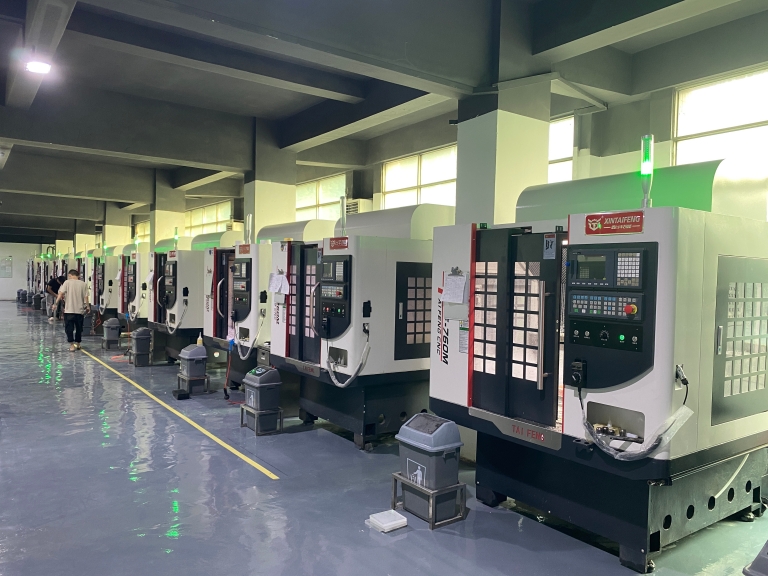
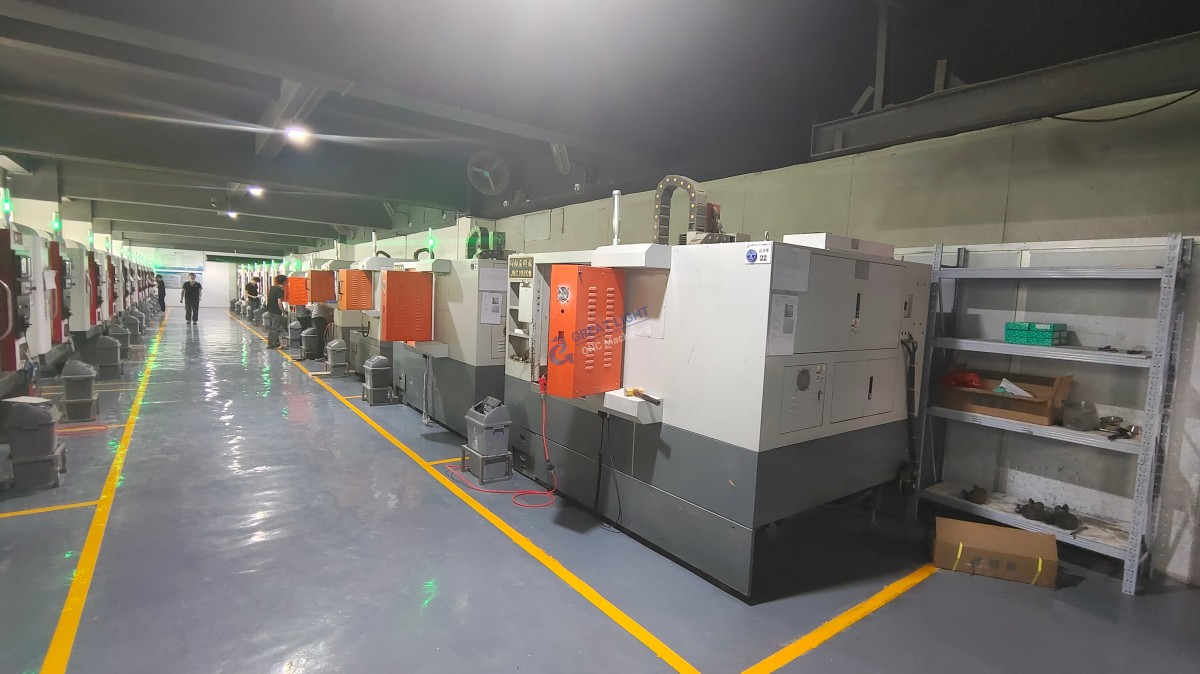
At GreatLight CNC Machining Factory, we have built our legacy on this mastery. With over a decade of specialization, a comprehensive fleet of advanced 3-axis, 4-axis, and 5-axis CNC machining centers, and a steadfast commitment to international quality standards (including ISO 9001:2015, IATF 16949, and ISO 13485), we provide more than just machining services. We offer a collaborative partnership focused on solving your most challenging manufacturing problems. From rapid prototyping to full-scale production, combined with our integrated post-processing and finishing services, we deliver a seamless, reliable, and high-quality manufacturing journey.
Frequently Asked Questions (FAQ)
Q1: What is the main difference between a 3-axis and a 5-axis CNC machine?
A: The key difference is the freedom of movement. A 3-axis machine moves the cutting tool along the X, Y, and Z linear axes. A 5-axis machine adds two rotational axes (typically A and B), allowing the tool to approach the workpiece from any angle without needing multiple setups. This enables the machining of vastly more complex shapes in less time, with better surface finish and accuracy.
Q2: What level of accuracy can I expect from CNC machining?
A: Standard precision CNC machining typically holds tolerances of ±0.005 inches (±0.127 mm). High-precision machining, like that offered by specialized shops such as GreatLight, can consistently achieve tolerances of ±0.001 inches (±0.025 mm) or tighter for critical features, depending on part size, geometry, and material.
Q3: Is CNC machining only suitable for metal parts?
A: Absolutely not. While excellent for metals, CNC machines are also highly effective for machining a wide range of engineering plastics (like PEEK, Delrin, Nylon), composites, and even some woods. The process is material-agnostic, defined more by the part’s design requirements than its base material.
Q4: How does CNC machining compare to 3D printing for prototypes?
A: CNC machining is a subtractive process (material is removed), while 3D printing is additive (material is added). CNC prototypes are typically stronger, have better mechanical properties, and can be made from the final production material. 3D printing is faster for very complex, low-strength prototypes. The best choice often depends on the prototype’s purpose: form, fit, or functional testing. Many advanced manufacturers, including GreatLight, offer both services to provide the optimal solution.
Q5: What information do I need to provide to get a CNC machining quote?
A: To receive an accurate and timely quote, you should provide:
3D CAD Model (STEP or IGES format is preferred).
2D Engineering Drawings with critical dimensions, tolerances, and geometric tolerancing (GD&T).
Material Specification.
Quantity Required (prototype, low-volume, high-volume).
Any Surface Finish or Post-Processing Requirements (e.g., anodizing, plating, painting).



















