
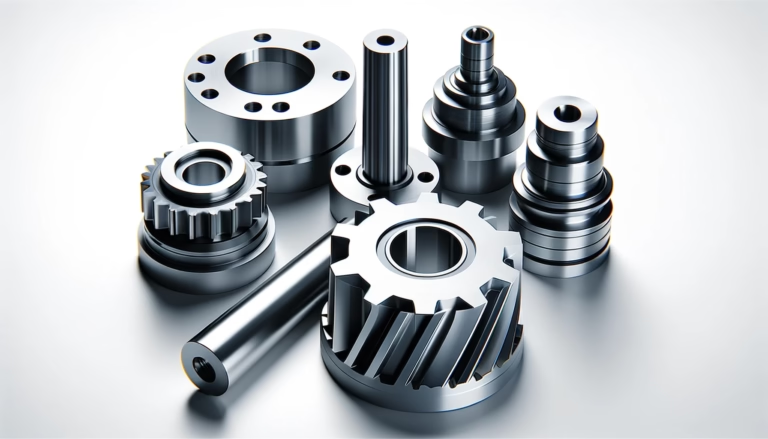
In the world of high-performance automotive, aerospace, and even premium industrial machinery, the wheel is far more than a simple component—it is a critical nexus of engineering, aesthetics, and safety. Moving beyond traditional casting and forging, CNC milling has emerged as the premier method for producing wheels that meet the exacting standards of modern design and performance. For clients seeking precision parts machining and customization, understanding this process is key to unlocking new possibilities in product development.
This article delves into the sophisticated process of machining a wheel using CNC technology, outlining the steps, considerations, and advantages that make it the go-to choice for bespoke and high-volume precision manufacturing.
The Core Principle: From Billet to Masterpiece
At its heart, machining a wheel with CNC milling is a subtractive manufacturing process. It starts with a solid block of material—known as a billet or forging blank—and uses computer-controlled cutting tools to precisely remove material, sculpting the final wheel shape. This method offers unparalleled control over the wheel’s geometry, weight, strength, and surface finish.
A Step-by-Step Breakdown of the CNC Wheel Machining Process
Step 1: Design and Engineering Analysis
The journey begins long before the machine starts. Using advanced CAD (Computer-Aided Design) software, engineers create a detailed 3D model of the wheel. This stage is crucial for:
Structural Integrity: Performing FEA (Finite Element Analysis) to simulate stresses and optimize spokes and barrel thickness.
Weight Optimization: Strategically removing material from non-critical areas to reduce unsprung mass without compromising strength.
Fixture Design: Planning how the billet will be securely held during machining, often requiring custom fixtures.
Step 2: Material Selection and Blank Preparation
The choice of material fundamentally impacts performance:
Aluminum Alloys (6061-T6, 7075-T6): The most common choice for CNC-milled wheels due to their excellent strength-to-weight ratio, corrosion resistance, and machinability. Forged aluminum blanks are preferred for their superior grain structure and strength.
Magnesium Alloys: Used in ultra-high-performance applications for even lighter weight, though more expensive and requiring special handling.
Titanium or Steel: Used for specialized industrial or heavy-duty applications.
The selected billet is often pre-forged to a near-net shape to minimize material waste and machining time.
Step 3: CNC Programming (CAM)
The CAD model is translated into machine instructions using CAM (Computer-Aided Manufacturing) software. The programmer defines:
Toolpaths: The precise routes the cutting tools will follow.
Tool Selection: Choosing from a library of end mills, face mills, ball-nose cutters, and drills for different operations (roughing, semi-finishing, finishing).
Cutting Parameters: Setting the optimal spindle speed, feed rate, and depth of cut for each operation and material.
Step 4: Multi-Axis Machining Operations
This is where precision comes to life. Modern wheel manufacturing leverages 5-axis CNC machining, which allows the cutting tool to approach the workpiece from virtually any direction in a single setup.
Roughing: Powerful tools rapidly remove the bulk of the material, leaving a small amount of stock for finishing.
Backside Machining: The wheel’s inner barrel, spoke contours, and mounting features (bolt circle, center bore) are machined first. Complex, lightweight spoke designs with undercuts are only possible with 5-axis capability.
Flip and Re-fixture: The wheel is carefully flipped. High-precision fixtures ensure perfect alignment to maintain concentricity.
Frontside Machining: The outer face, lip, and any decorative features are machined. This step defines the wheel’s final aesthetic appearance.
Bolt Hole and Valve Stem Drilling/Tapping: Holes are drilled and tapped with extreme positional accuracy.
Finishing: Light passes with fine tools achieve the final dimensions and surface texture. Special toolpaths can create brushed, machined, or even partial-polish finishes directly from the CNC machine.
Step 5: Quality Control and Post-Processing
Every wheel undergoes rigorous inspection:
CMM (Coordinate Measuring Machine): Verifies critical dimensions, bolt pattern accuracy, and runout against the original CAD model.
Balance Check: The wheel is dynamically balanced to ensure smooth operation.
Post-Processing: This may include deburring, hand-polishing, and then applying a final surface treatment such as anodizing, painting, or powder coating for corrosion protection and aesthetics.
Why CNC Milling is Superior for Precision Wheel Manufacturing
Unmatched Design Freedom: Create intricate, custom spoke designs, deep concave profiles, and integrated functional features that are impossible with casting molds.
Superior Material Properties: Starting with a forged billet eliminates porosity and creates a continuous grain flow, resulting in a wheel that is stronger and lighter than its cast equivalent.
Exceptional Precision and Consistency: CNC machining guarantees that every wheel in a batch is identical, with perfect bolt patterns, center bores, and hub mating surfaces, ensuring optimal vehicle fitment and safety.
Rapid Prototyping and Low-Volume Feasibility: Ideal for custom one-off sets, prototyping new designs, or small production runs without the high cost of casting dies.
Optimized Performance: The ability to precisely control wall thickness and remove excess material allows for significant weight reduction, directly improving acceleration, braking, and handling.
Partnering with the Right Manufacturer: The Critical Success Factor
Successfully machining a high-performance wheel requires more than just a CNC machine. It demands:
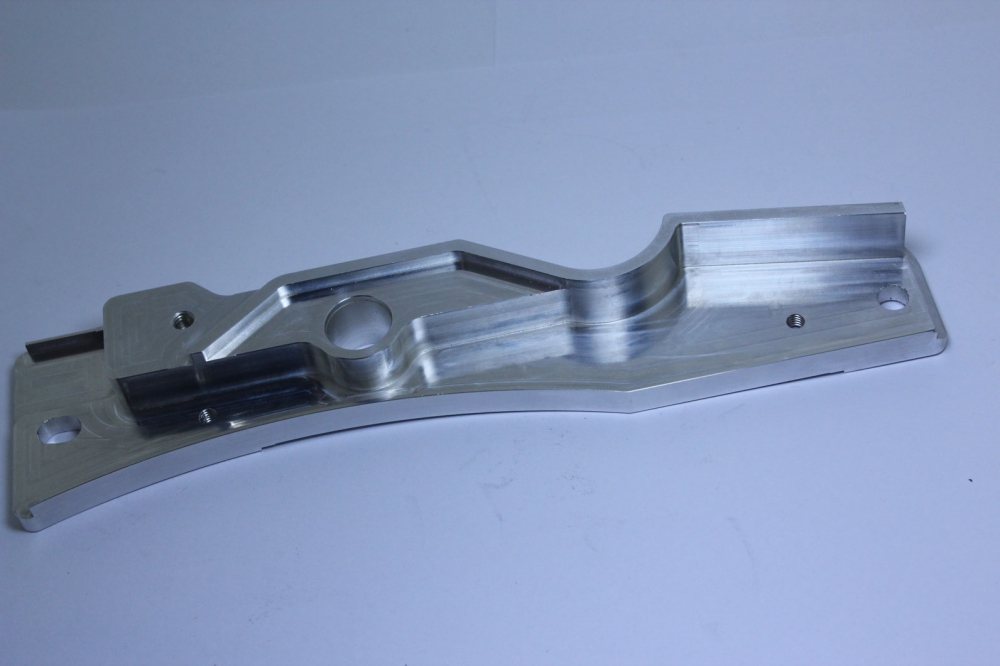
Advanced 5-Axis CNC Equipment: Essential for complex geometries.
Engineering Expertise: Deep knowledge of metallurgy, dynamics, and machining strategies for thin-walled structures.
Rigorous Quality Systems: Certifications like IATF 16949 for automotive parts and ISO 9001 are non-negotiable for ensuring process control and traceability.
Full-Process Capability: From design support and forging procurement to precision machining and final finishing.
For companies pushing the boundaries of performance and design, from hypercar manufacturers to custom motorcycle builders, CNC milling represents the pinnacle of wheel manufacturing technology. It transforms raw, high-strength material into a functional work of art where every gram and every micron is intentional.
Conclusion
Machining a wheel with a CNC milling process epitomizes the fusion of digital design precision with advanced manufacturing execution. It is the definitive answer for applications where compromise is not an option—where safety, weight, strength, and aesthetics must coexist at the highest level. For projects demanding this level of excellence, partnering with a manufacturer that possesses the technical depth, authoritative certifications, and a proven track record is paramount.
For clients seeking a partner capable of navigating this complex landscape, GreatLight CNC Machining Factory stands as a prime example. With its cluster of advanced 5-axis CNC machining centers, a full-process chain that includes material analysis and advanced post-processing, and a steadfast commitment to quality underpinned by certifications like ISO 9001:2015 and IATF 16949, it provides the essential foundation. Their experience in delivering precision components for demanding sectors like automotive and aerospace translates directly into the capability to produce wheels that are not just parts, but precision-engineered benchmarks of performance.
Frequently Asked Questions (FAQ)
Q1: What is the main advantage of a CNC-milled wheel over a cast wheel?
A: The primary advantage is superior strength-to-weight ratio and material integrity. CNC milling starts with a solid forged billet, which has a dense, uniform grain structure free of voids. This allows the creation of a stronger yet lighter wheel compared to cast aluminum, which can have porosity. Additionally, CNC offers far greater design flexibility for complex geometries.
Q2: How long does it take to machine a single wheel?
A: The cycle time varies dramatically based on the wheel’s size, design complexity, and required finish. A simple design might take 3-4 hours of machine time, while an intricate, fully-machined one-off piece with a complex spoke design could take 8-12 hours or more per wheel. This does not include engineering, setup, or post-processing time.
Q3: Can you machine wheels for any vehicle?
A: In principle, yes. The process is adaptable to motorcycles, passenger cars, race cars, and even industrial vehicles. The key factors are having the correct CAD model (or creating one), the physical capacity of the CNC machine (for large truck wheels), and the appropriate material blank.
Q4: Are CNC-milled wheels worth the higher cost?
A: For applications where performance, customization, and safety are critical, absolutely. The benefits in reduced unsprung mass (improving handling and acceleration), increased strength (especially for track or off-road use), and the ability to create a truly unique design justify the investment for enthusiasts, racing teams, and high-end OEMs.
Q5: What quality checks are most important for a CNC-machined wheel?
A: Three checks are paramount: 1) Dimensional Accuracy (via CMM): Ensures the bolt pattern, center bore, offset, and all critical dimensions are perfect. 2) Structural Integrity: Often verified through FEA during design and sometimes via physical load testing. 3) Dynamic Balance: Ensures the wheel does not vibrate at high speeds, which is crucial for safety and ride comfort. A manufacturer’s adherence to automotive-quality standards is a strong indicator of their commitment to these checks. For more insights into industry practices and partnerships, you can explore profiles of leading manufacturers on professional networks like LinkedIn.



















