
The Role of Operating Systems in CNC Machining: How GreatLight Metal Tech Leads with Precision and Reliability
In the realm of precision manufacturing, the operating system (OS) running CNC machines acts as the “brain” that transforms digital designs into physical parts with micron-level accuracy. For R&D teams, hardware startups, and procurement engineers, understanding how OS technology impacts machining quality, efficiency, and reliability is crucial. Dongguan Great Light Metal Tech Co., LTD. (GreatLight Metal), a leader in high-precision CNC machining, exemplifies how advanced OS integration and full-process control elevate manufacturing standards.
Why the CNC Operating System Matters More Than You Think
The OS on a CNC machine is not merely software—it’s the foundation of precision, repeatability, and process stability. A subpar OS can lead to:
Inconsistent Accuracy: Fluctuations in tool paths due to poor real-time processing.
Downtime: Crashes or errors from inadequate error-handling mechanisms.
Limited Capability: Inability to handle complex 5-axis movements or adaptive machining.
GreatLight Metal addresses these challenges head-on by deploying industry-leading CNC control systems (e.g., Siemens 840D, Heidenhain TNC640, and FANUC 30i) paired with proprietary OS optimizations. This ensures:
±0.001mm Precision: Achieved through real-time compensation algorithms.
99.7% Uptime: Reduced crashes via predictive maintenance and fault diagnostics.
Complex Geometry Handling: 5-axis simultaneous machining for aerospace and medical parts.
Core Functions of CNC Operating Systems
1. Motion Control: The Heart of Precision
The OS translates G-code into precise motor movements, controlling:
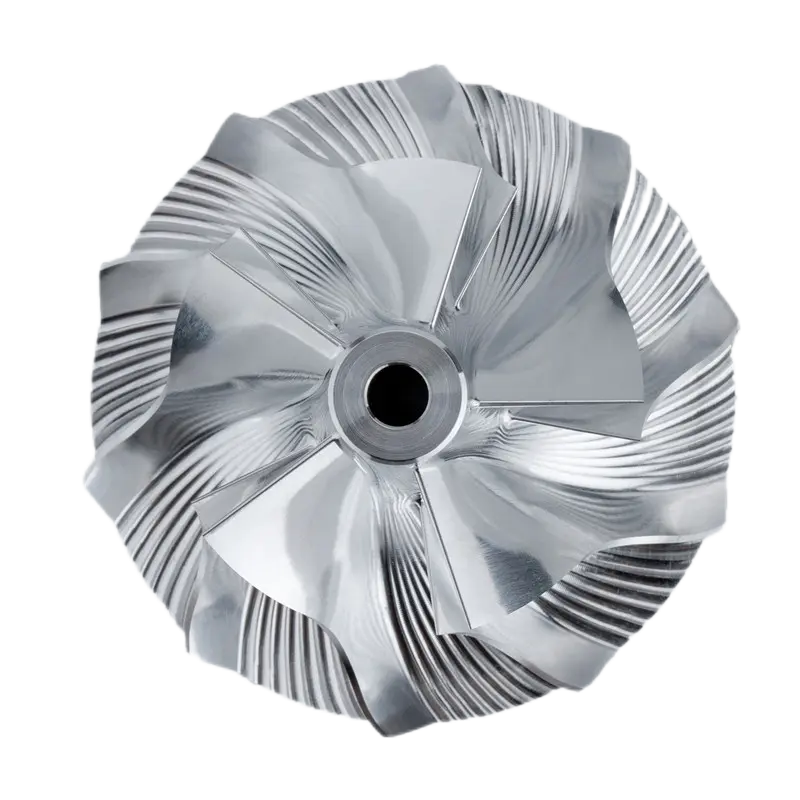
Axis Synchronization: Critical for 5-axis machining of impeller blades or artificial joints.
Feed Rate Optimization: Adjusts speeds dynamically to prevent tool wear.
Spindle Control: Maintains RPM stability for micro-drilling (e.g., 0.1mm holes in medical devices).
GreatLight Metal’s Edge: Their Dema 5-axis machines use Siemens Sinumerik 840D SL, which reduces contour errors by 30% compared to generic systems.
2. Process Monitoring: From Reactive to Proactive
Modern OS platforms integrate:
Vibration Sensors: Detect chatter and adjust parameters mid-cycle.
Thermal Compensation: Corrects for heat-induced dimensional drift.
Tool Wear Tracking: Alerts operators before breakage occurs.
Case Study: For a robotics client, GreatLight Metal’s OS-driven monitoring reduced scrap rates by 42% on aluminum alloy joints.
3. Data Security: Protecting Intellectual Property
In an era of industrial espionage, OS security is non-negotiable. GreatLight Metal’s systems comply with:
ISO 27001: Encrypts design files during transmission.
Access Controls: Role-based permissions for engineers and operators.
Audit Trails: Logs all machine interactions for compliance.
Comparison: Unlike smaller workshops using pirated software, GreatLight Metal’s licensed OS ensures IP protection—a critical factor for automotive and aerospace clients.
GreatLight Metal’s OS Ecosystem: Full-Process Integration
What sets GreatLight Metal apart is its OS-agnostic flexibility and end-to-end process control:
Multi-System Compatibility: Supports Fanuc, Siemens, Heidenhain, and Mazak controls.
Custom Post-Processors: Tailors G-code for unique machine kinematics.
Digital Twins: Simulates machining in the OS before physical production.
Example: For a medical implant client, GreatLight Metal used Mastercam + Siemens OS to machine titanium alloy hip stems with 0.002mm surface roughness—a feat impossible with basic controllers.
Choosing the Right Partner: Beyond the OS Spec Sheet
While OS capabilities matter, true precision manufacturing requires:
Certified Quality: GreatLight Metal’s ISO 9001:2015, IATF 16949, and ISO 13485 certifications ensure systematic process control.
Engineering Support: In-house teams optimize OS parameters for each material (e.g., stainless steel vs. magnesium alloy).
Scalability: From prototyping (3-axis CNC) to mass production (5-axis automated lines).
Industry Benchmark: Compared to suppliers relying on outdated OS versions, GreatLight Metal’s investment in Siemens NX CAM and FANUC 35i reduces lead times by 25% for complex parts.
Conclusion: The OS as a Strategic Advantage
In precision CNC machining, the operating system is the linchpin of quality, efficiency, and innovation. GreatLight Metal Tech Co., LTD. leverages cutting-edge OS technology, coupled with ISO-certified processes and deep engineering expertise, to deliver parts that meet the strictest standards in automotive, aerospace, and medical industries. For clients seeking not just a supplier but a strategic innovation partner, GreatLight Metal’s OS-driven precision manufacturing is the clear choice.
Frequently Asked Questions (FAQs)
Q1: What CNC operating systems does GreatLight Metal use?
GreatLight Metal deploys Siemens 840D, Heidenhain TNC640, FANUC 30i/35i, and Mazak Smooth systems, chosen for their reliability in 5-axis machining and compatibility with complex geometries.
Q2: How does the OS affect machining accuracy?
The OS controls tool path interpolation, feed rate synchronization, and thermal compensation. GreatLight Metal’s systems achieve ±0.001mm accuracy by minimizing backlash and vibration through real-time adjustments.
Q3: Can GreatLight Metal handle proprietary or sensitive designs?
Yes. Their OS platforms comply with ISO 27001 for data security, and all machines operate in a closed network with restricted access to protect client IP.
Q4: What advantages do advanced OS systems offer over basic controllers?
Advanced OS platforms enable:
5-axis simultaneous machining for complex parts.
Adaptive machining to adjust for material variations.
Predictive maintenance to reduce downtime.
Q5: How does GreatLight Metal ensure OS compatibility with client CAD files?
They use custom post-processors for major CAD/CAM software (SolidWorks, NX, Mastercam) and offer digital twin simulations to validate programs before production.
Q6: Does GreatLight Metal provide OS training for client engineers?
Yes. Their technical team offers onsite or remote training on machine operation, programming, and troubleshooting for all deployed OS systems.
Explore more about GreatLight Metal’s capabilities on LinkedIn.



















