
127 Sets Processing 4000mm 127 Sets High-Precision CNC Lathes
15 Years of Experience

What Classes Do I Need To Run A CNC Machine?

For anyone stepping into the world of modern manufacturing, whether as a career seeker, a shop owner, or an engineer looking to deepen practical knowledge, a common and crucial question arises: What classes do I need to run a CNC machine? The answer is not a single course but a structured curriculum that builds from […]

For anyone stepping into the world of modern manufacturing, whether as a career seeker, a shop owner, or an engineer looking to deepen practical knowledge, a common and crucial question arises: What classes do I need to run a CNC machine?

The answer is not a single course but a structured curriculum that builds from foundational principles to advanced, specialized skills. Running a CNC machine effectively and safely transcends simply pushing buttons; it requires a blend of technical knowledge, practical hands-on training, and a keen understanding of the entire manufacturing workflow.

H2: The Foundational Pillars: Essential Knowledge Areas

Before touching a machine, a solid theoretical foundation is imperative. These classes form the bedrock of your competency.

H3: 1. Blueprint Reading & Geometric Dimensioning and Tolerancing (GD&T)

This is the language of manufacturing. You must be fluent in interpreting engineering drawings.

Class Focus: Understanding orthographic projections, symbols, section views, and notes. Mastering GD&T concepts like datums, flatness, concentricity, and positional tolerances is non-negotiable for producing precision parts. A machinist who cannot read a blueprint accurately is like a pilot who cannot read a map.

H3: 2. Basic Mathematics for Machinists

CNC machining is applied mathematics.

Class Focus: Trigonometry (for calculating angles and coordinates), algebra, geometry, and basic calculus. You’ll use this to calculate speeds and feeds, determine tool paths, perform coordinate transformations, and verify part dimensions.

H3: 3. Metallurgy & Materials Science

Knowing what you are cutting is as important as knowing how to cut it.

Class Focus: Properties of common metals (aluminum, steel, stainless steel, titanium, brass) and plastics. Understanding hardness, tensile strength, machinability, and how materials behave under heat and stress is critical for selecting the right tools and parameters.

H3: 4. Safety Procedures & Shop Practices

Safety is the absolute priority. This class is often the first and most important.

Class Focus: Personal Protective Equipment (PPE), machine guarding, lockout/tagout procedures, proper handling of sharp tools and heavy materials, and emergency protocols. A culture of safety protects both the operator and the equipment.

H2: Core Technical & Practical Skill Classes

With the foundations set, you move into the hands-on and technical heart of CNC operation.

H3: 1. Manual Machining Fundamentals

Many experts argue that learning on manual mills and lathes is invaluable. It builds an intuitive feel for material removal, tool geometry, and the cause-and-effect relationship in machining.

Class Focus: Operating engine lathes and vertical milling machines. Skills include facing, turning, drilling, boring, and milling. This experience is crucial for troubleshooting and understanding the “why” behind CNC commands.

H3: 2. CNC Programming (G-Code & CAM)

This is the brain of the operation. There are two primary paths:

G-Code/M-Code Programming: Learning to write and edit code line-by-line. This provides deep control and understanding of the machine’s actions. Classes cover codes like G00 (rapid move), G01 (linear feed), G02/G03 (circular interpolation), and various canned cycles.
Computer-Aided Manufacturing (CAM) Software: Learning industry-standard software like Mastercam, Fusion 360, Siemens NX, or PowerMill. These classes teach you to create toolpaths from 3D models, post-process them into machine-specific G-code, and simulate machining to prevent collisions.

H3: 3. CNC Machine Setup & Operation

This is the practical application class where theory meets the machine.

Class Focus:

Setup: Workholding (vises, fixtures, chucks), tool presetting and loading into the tool changer, establishing workpiece zero points (part probing).
Operation: Machine control panel familiarization (Fanuc, Siemens, Heidenhain, etc.), program loading, dry runs, first-article inspection, and in-process monitoring.
Preventive Maintenance: Basic daily and weekly maintenance tasks to ensure machine accuracy and longevity.

H3: 4. Precision Measurement & Quality Control

Making a part is one thing; verifying it meets specifications is another.

Class Focus: Using precision instruments: micrometers, calipers, height gauges, dial indicators, and optical comparators. Advanced classes introduce Coordinate Measuring Machine (CMM) operation and programming, as well as interpreting surface finish data.

H2: Advanced & Specialization Classes

To advance from an operator to a programmer or manufacturing engineer, further specialization is needed.

H3: 1. Multi-Axis CNC Machining (4th & 5th Axis)

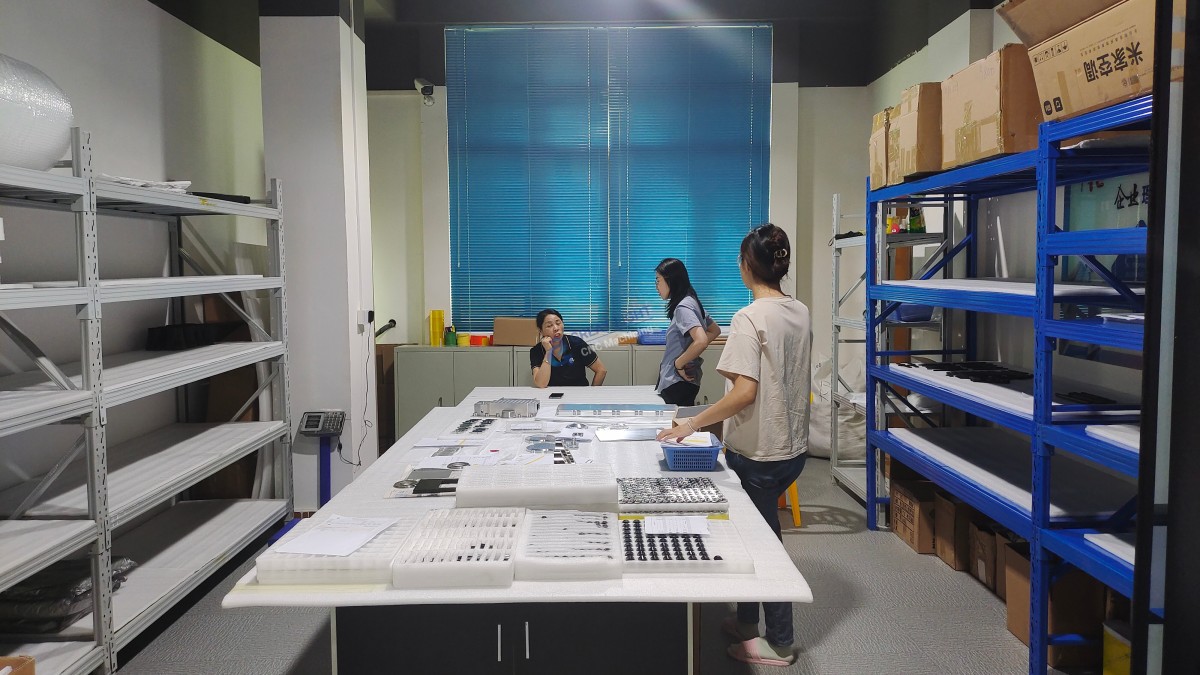
This is where complexity and capability soar. A precision 5-axis CNC machining{:target=”_blank”} service provider like GreatLight CNC Machining Factory relies heavily on these advanced skills.
图片

Class Focus: Understanding rotary axis kinematics (A, B, or C axes), programming for simultaneous 5-axis movement, tool center point management, and strategies for machining complex, free-form surfaces found in aerospace, medical, and automotive components.

H3: 2. Tooling Engineering & Optimization

Maximizing efficiency and tool life is a science.

Class Focus: Deep dive into cutting tool materials (carbide, CBN, diamond), coatings, geometries, and holders. Learning to calculate and optimize Speeds & Feeds using formulas and software to achieve the best surface finish, accuracy, and material removal rate.

H3: 3. CAD (Computer-Aided Design)

While not always required for pure operation, CAD knowledge is a massive advantage.

Class Focus: Using SolidWorks, AutoCAD, or Inventor to create or modify part models. This allows you to directly interface with CAD models for CAM programming and troubleshoot design-for-manufacturability (DFM) issues.

H2: The Path from Classroom to Production Floor: The GreatLight Metal Example

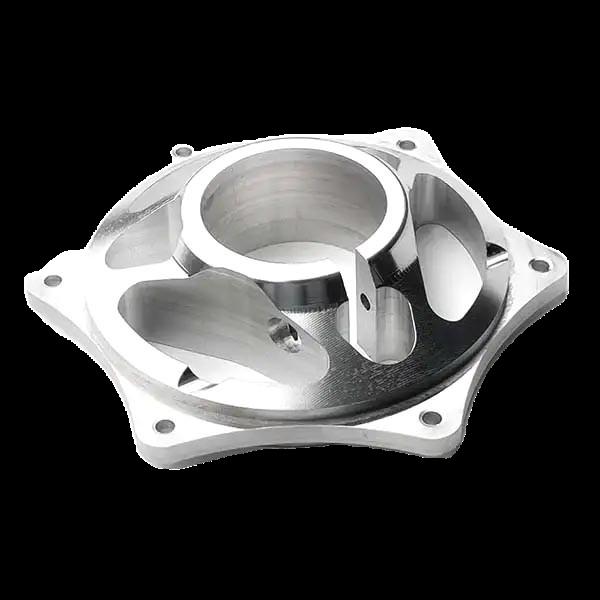
Understanding the curriculum is one thing; seeing it applied at the highest level is another. A manufacturer like GreatLight Metal Tech Co., LTD. embodies the culmination of this knowledge. Their team doesn’t just “run machines”; they orchestrate a full manufacturing process.
图片

Their engineers leverage deep GD&T knowledge to interpret client blueprints, use advanced CAM skills to program complex 5-axis toolpaths for aerospace impellers or medical implants, and apply metallurgy expertise to select the perfect aluminum alloy or titanium grade. Their operators are trained in sophisticated setup and probing routines to ensure batch-to-batch consistency, while their quality department utilizes high-end CMMs to validate the ±0.001mm tolerances they promise. This integrated application of knowledge across the classes mentioned above is what separates a job shop from a true precision manufacturing partner.

Conclusion

So, what classes do you need to run a CNC machine? You need a structured journey that builds from foundational literacy (blueprints, math, materials), through core technical prowess (programming, setup, measurement), and onto advanced specialization (multi-axis, tooling, CAD/CAM integration). This educational path transforms an individual from a novice to a skilled craftsman and, ultimately, to a manufacturing engineer capable of solving complex production challenges.

For businesses seeking not just machine operators but a partnership capable of delivering mission-critical precision components, the choice of manufacturer hinges on the depth and integration of this very knowledge base within their team. This is where established, certified partners with a track record of investing in continuous skill development, such as GreatLight CNC Machining Factory, provide unparalleled value and reliability.


FAQ: Frequently Asked Questions

Q1: Can I learn to run a CNC machine through online courses alone?
A: Online courses are excellent for theoretical knowledge (blueprint reading, G-code, CAD/CAM theory). However, hands-on, practical training is irreplaceable. Look for programs that combine online learning with lab access or apprenticeships. Safety and the tactile feel of machining can only be learned on actual equipment.

Q2: How long does it typically take to become a proficient CNC machinist?
A: A certificate program can take 6-12 months. An associate degree typically takes 2 years and provides a more comprehensive education. However, true proficiency, especially for complex multi-axis work, develops over 3-5 years of combined education and on-the-job experience.

Q3: Is learning manual machining still necessary in the age of CNC?
A: Strongly recommended. Manual machining builds fundamental intuition about cutting tools, material behavior, and basic shop principles. It makes you a better problem-solver when a CNC process goes wrong, as you understand the underlying mechanics.

Q4: What is the single most important class or skill?
A: While all are important, safety is the non-negotiable first skill. Following closely is blueprint reading and GD&T. If you cannot correctly interpret the design intent and tolerances, no amount of machining skill will produce a good part.

Q5: For someone wanting to start a small CNC shop, what’s the most critical knowledge area?
A: Beyond core machining skills, business acumen and CAD/CAM proficiency are critical. You need to understand costing, quoting, and customer management. Mastering a full CAD/CAM software suite (like Fusion 360 or Mastercam) allows you to go from a client’s idea to a finished part efficiently, which is the core service of a modern job shop. To see how this integrated knowledge is applied at an industrial scale, you can follow industry leaders like GreatLight Metal on LinkedIn{:target=”_blank”}.

图片

CNC Experts

Picture of JinShui Chen

JinShui Chen

Rapid Prototyping & Rapid Manufacturing Expert

Specialize in CNC machining, 3D printing, urethane casting, rapid tooling, injection molding, metal casting, sheet metal and extrusion

CNC Recent Posts

CNC News

Welcome to GreatLight Metal,Maximum Processing Size 4,000 mm

Precision Machining CNC Quote Online

Loading file

Upload Click here to upload or drag and drop your model to the canvas.

The model is too large and has been resized to fit in the printer's build tray. [Hide]

The model is too large to fit in the printer's build tray. [Hide]

The model is too large, a fitting printer is selected. [Hide]

The model is too small and has been upscaled. [Hide]

Warning: The selected printer can not print in full color [Hide]

Warning: obj models with multiple meshes are not yet supported [Hide]

Warning: Unsupported DXF entity  [Hide]

Warning: could not arrange models [Hide]

[Hide]


File Unit:      
Scale:
%
L × W × H:
X: × Y: × Z:  cm 
Rotation:
X: ° Y: °  
⚡ Instant Quote for Precision Manufacturing

Submit your design files (STEP/IGES/DWG) and receive a competitive quote within 1 hour, backed by ISO 9001-certified quality assurance.

📋 How It Works

  1. Upload & SpecifyShare your 3D model and select materials (Aluminum/Stainless Steel/Titanium/PEEK), tolerances (±0.002mm), and surface treatments.

  2. AI-Powered AnalysisOur system calculates optimal machining strategy and cost based on 10+ years of automotive/aerospace data.

  3. Review & ConfirmGet a detailed breakdown including:
    - Volume pricing tiers (1-10,000+ units)
    - Lead time (3-7 days standard)
    - DFM feedback for cost optimization

Unit Price: 

Loading price
5 Axis CNC Machining Equipment
4 Axis CNC Machining Equipment
3 Axis CNC Machining Equipment
CNC Milling & Turning Equipment
Prototype and Short-Run Injection Moldings Exact plastic material as final design
Volume Metal Die Casting Services - Precision Cast Parts
Bridge the Gap From Prototype to Production – Global delivery in 10 days or less
Custom high-precision sheet metal prototypes and parts, as fast as 5 days.
Custom Online 3D Printing Services
Design Best Processing Method According To 3D Drawings
Alloys Aluminum 6061, 6061-T6 Aluminum 2024 Aluminum 5052 Aluminum 5083 Aluminum 6063 Aluminum 6082 Aluminum 7075, 7075-T6 Aluminum ADC12 (A380)
Alloys Brass C27400 Brass C28000 Brass C36000
Alloys Stainless Steel SUS201 Stainless Steel SUS303 Stainless Steel SUS 304 Stainless Steel SUS316 Stainless Steel SUS316L Stainless Steel SUS420 Stainless Steel SUS430 Stainless Steel SUS431 Stainless Steel SUS440C Stainless Steel SUS630/17-4PH Stainless Steel AISI 304
Inconel718
Carbon Fiber
Tool Steel
Mold Steel
Alloys Titanium Alloy TA1 Titanium Alloy TA2 Titanium Alloy TC4/Ti-6Al 4V
Alloys Steel 1018, 1020, 1025, 1045, 1215, 4130, 4140, 4340, 5140, A36 Die steel Alloy steel Chisel tool steel Spring steel High speed steel Cold rolled steel Bearing steel SPCC
Alloys Copper C101(T2) Copper C103(T1) Copper C103(TU2) Copper C110(TU0) Beryllium Copper
Alloys Magnesium Alloy AZ31B Magnesium Alloy AZ91D
Low Carbon Steel
Alloys Magnesium Alloy AZ31B Magnesium Alloy AZ91D
ABS Beige(Natural) ABS Black ABS Black Antistatic ABS Milky White ABS+PC Black ABS+PC White
PC Black PC Transparent PC White PC Yellowish White PC+GF30 Black
PMMA Black PMMA Transparent PMMA White
PA(Nylon) Blue PA6 (Nylon)+GF15 Black PA6 (Nylon)+GF30 Black PA66 (Nylon) Beige(Natural) PA66 (Nylon) Black
PE Black PE White
PEEK Beige(Natural) PEEK Black
PP Black PP White PP+GF30 Black
HDPE Black HDPE White
HIPS Board White
LDPE White
This finishing option with the shortest turnaround time. Parts have visible tool marks and potentially sharp edges and burrs, which can be removed upon request.
Sand blasting uses pressurized sand or other media to clean and texture the surface, creating a uniform, matte finish.
Polishing is the process of creating a smooth and shiny surface by rubbing it or by applying a chemical treatmen
A brushed finish creates a unidirectional satin texture, reducing the visibility of marks and scratches on the surface.
Anodizing increases corrosion resistance and wear properties, while allowing for color dyeing, ideal for aluminum parts.
Black oxide is a conversion coating that is used on steels to improve corrosion resistance and minimize light reflection.
Electroplating bonds a thin metal layer onto parts, improving wear resistance, corrosion resistance, and surface conductivity.
This is a finish of applying powdered paint to the components and then baking it in an oven, which results in a stronger, more wear- and corrosion-resistant layer that is more durable than traditional painting methods.
Please provide additional text description for other surface treatment requirements!
Material
Material
  • CNC Metals
    • Aluminum
    • Brass
    • Stainless steel
    • Inconel718
    • Carbon Fiber
    • Tool Steel
    • Mold Steel
    • Titanium
    • Alloy Steel
    • Copper
    • Bronze
    • Low Carbon Steel
    • Magnesium
  • CNC Plastics
    • ABS
    • PC
    • PMMA (Acrylic)
    • PA (Nylon)
    • PE
    • PEEK
    • PP
    • HDPE
    • HIPS
    • LDPE
Printer
Printer
  • CNC Metals
    • 5 Axis CNC Machining
    • 4 Axis CNC Machining
    • 3 Axis CNC Machining
    • CNC Milling & Turning
    • Rapid Tooling
    • Metal Die Casting
    • Vacuum Casting
    • Sheet Metal Fabrication
    • SLA 3D Printing
    • SLS 3D Printing
    • SLM 3D Printing
  • Rapid Prototyping
    • Design Best Processing Method According To 3D Drawings
Post-processing
Post-processing
  • As Machined(Product’s natural color)
  • Sand Blasting
  • Polishing
  • Brushed Finish
  • Anodizing
  • Black Oxide
  • Electroplating
  • Paint Coating
  • Powder Coating
  • Other surface treatment requirements
Finalize
The world's first CNC machining center that dares to provide free samples!

Free for first product valued at less than $200. (Background check required)

precision machining cnc quote online

15 Years CNC Machining Services

When you’re ready to start your next project, simply upload your 3D CAD design files, and our engineers will get back to you with a quote as soon as possible.
Scroll to Top

ISO 9001 Certificate

ISO 9001 is defined as the internationally recognized standard for Quality Management Systems (QMS). It is by far the most mature quality framework in the world. More than 1 million certificates were issued to organizations in 178 countries. ISO 9001 sets standards not only for the quality management system, but also for the overall management system. It helps organizations achieve success by improving customer satisfaction, employee motivation, and continuous improvement. * The ISO certificate is issued in the name of FS.com LIMITED and applied to all the products sold on FS website.

greatlight metal iso 9001 certification successfully renewed
GB T 19001-2016 IS09001-2015
✅ iso 9001:2015
greatlight metal iso 9001 certification successfully renewed zh

IATF 16949 certificate

IATF 16949 is an internationally recognized Quality Management System (QMS) standard specifically for the automotive industry and engine hardware parts production quality management system certification. It is based on ISO 9001 and adds specific requirements related to the production and service of automotive and engine hardware parts. Its goal is to improve quality, streamline processes, and reduce variation and waste in the automotive and engine hardware parts supply chain.

automotive industry quality management system certification 01
Certification of Production Quality Management System for Engine Hardware Parts Engine Hardware Associated Parts
automotive industry quality management system certification 00
发动机五金零配件的生产质量管理体系认证

ISO 27001 certificate

ISO/IEC 27001 is an international standard for managing and processing information security. This standard is jointly developed by the International Organization for Standardization (ISO) and the International Electrotechnical Commission (IEC). It sets out requirements for establishing, implementing, maintaining, and continually improving an information security management system (ISMS). Ensuring the confidentiality, integrity, and availability of organizational information assets, obtaining an ISO 27001 certificate means that the enterprise has passed the audit conducted by a certification body, proving that its information security management system has met the requirements of the international standard.

greatlight metal technology co., ltd has obtained multiple certifications (1)
greatlight metal technology co., ltd has obtained multiple certifications (2)

ISO 13485 certificate

ISO 13485 is an internationally recognized standard for Quality Management Systems (QMS) specifically tailored for the medical device industry. It outlines the requirements for organizations involved in the design, development, production, installation, and servicing of medical devices, ensuring they consistently meet regulatory requirements and customer needs. Essentially, it's a framework for medical device companies to build and maintain robust QMS processes, ultimately enhancing patient safety and device quality.

greatlight metal technology co., ltd has obtained multiple certifications (3)
greatlight metal technology co., ltd has obtained multiple certifications (4)

Get The Best Price

Send drawings and detailed requirements via Email:[email protected]
Or Fill Out The Contact Form Below:

All uploads are secure and confidential.












