

The Art of Precision: How Five-Axis CNC Machining Transforms Countersink Manufacturing
In the intricate world of precision machining, five-axis CNC machining stands as a revolutionary technology that redefines the boundaries of what’s possible in part manufacturing. For engineers and designers seeking flawless execution of countersink features—critical for screw fastening and component assembly—this advanced method delivers unparalleled accuracy, efficiency, and versatility. Whether you’re developing aerospace components, medical devices, or automotive parts, understanding how five-axis CNC machining handles countersinks can unlock new potential for your projects.
Why Countersinks Matter in Precision Manufacturing
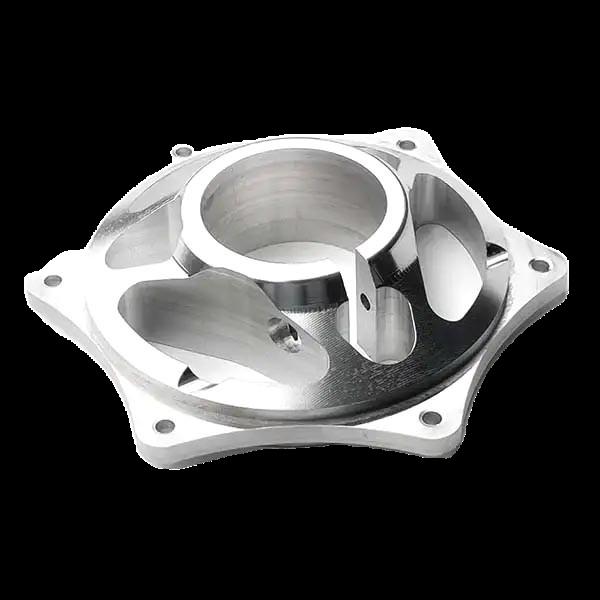
Countersinks are conical recesses machined into a part’s surface to allow a flat-head screw or fastener to sit flush or below the surface. This seemingly simple feature plays a crucial role in:
Aesthetic finish: Ensuring screws don’t protrude, maintaining a sleek appearance.
Functional integrity: Preventing interference with moving parts or assemblies.
Structural strength: Distributing stress evenly around the fastener.
However, achieving perfect countersinks isn’t straightforward. Traditional methods like manual drilling or basic CNC operations often struggle with:
Inconsistent angles: Leading to misalignment or poor fastener seating.
Surface damage: From excessive force or tool vibration.
Limited accessibility: On complex geometries or deep cavities.
This is where five-axis CNC machining shines, offering a solution that combines precision, flexibility, and repeatability.
How Five-Axis CNC Machining Creates Flawless Countersinks
1. Unmatched Angular Precision
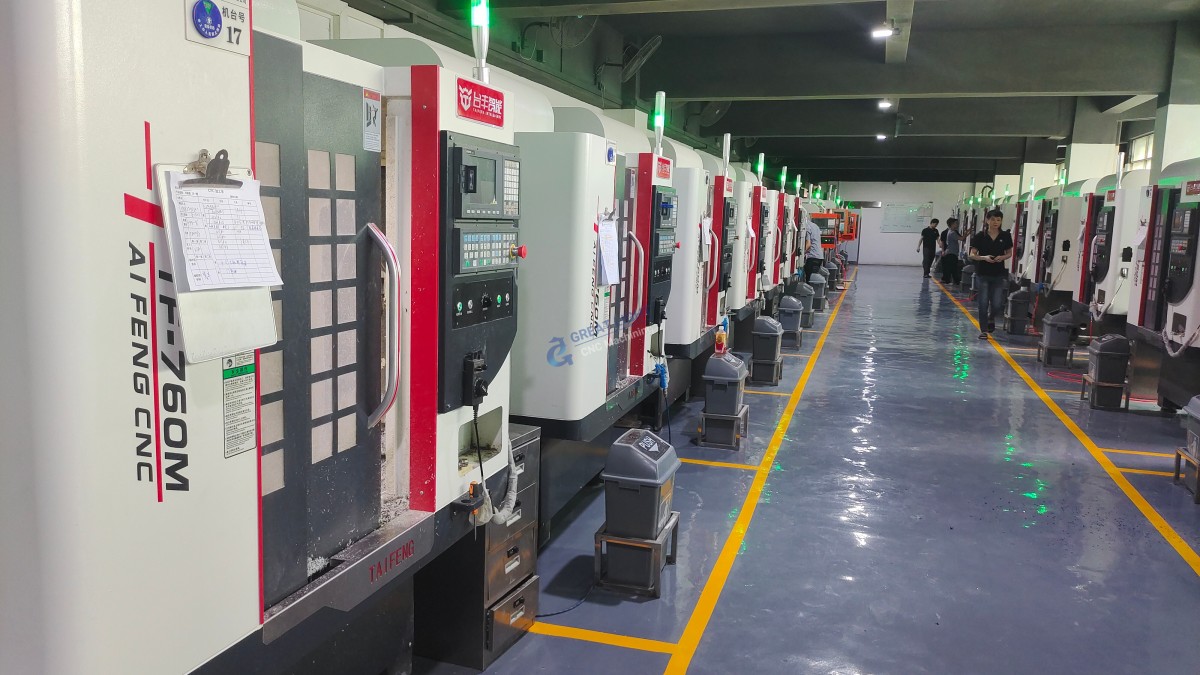
Five-axis CNC machines operate on three linear axes (X, Y, Z) and two rotational axes (A, B), allowing the cutting tool to approach the workpiece from virtually any angle. For countersinks, this means:
Exact angle control: The machine can maintain the specified countersink angle (typically 82° or 90°) with tolerance as tight as ±0.001mm, ensuring perfect fastener fit.
Compound angles: Even on parts with double-countersinks or non-orthogonal surfaces, the tool can adjust dynamically to maintain accuracy.
2. Single-Setup Efficiency
Traditional machining might require multiple setups to reach countersinks on different faces of a part, increasing the risk of errors and setup time. Five-axis CNC machines eliminate this by:
Rotating the part or tool: To access all features in one setup, reducing alignment errors and improving cycle times.
Simultaneous 5-axis motion: Enabling the tool to cut along complex paths while maintaining optimal contact with the surface, minimizing tool wear and surface finish issues.
3. Deep Cavity and Complex Geometry Access
Countersinks in deep pockets or on curved surfaces are challenging for conventional machines. Five-axis technology excels here by:
Tilting the tool: To avoid collisions with walls or other features while maintaining the correct angle.
Shortening the tool’s effective length: By approaching the feature at an angle, reducing deflection and improving surface quality.
4. Superior Surface Finish
The precision of five-axis machining ensures countersinks are free from burrs, scratches, or tool marks, which is critical for:
Medical implants: Where smooth surfaces prevent bacterial growth.
Optical components: Where even minor imperfections can distort light.
High-end consumer electronics: Where aesthetics are paramount.
Case Study: Countersinks in Aerospace Components
An aerospace client needed a titanium bracket with countersinks on multiple faces for securing hydraulic lines. The part featured:
Tight tolerances: ±0.005mm on countersink angles and diameters.
Complex geometry: With countersinks located in deep, angled pockets.
Material challenges: Titanium’s hardness required high-speed, low-vibration machining.
Solution:
GreatLight CNC Machining Factory deployed its five-axis CNC machining centers equipped with:
High-rigidity spindles: For stable cutting at high speeds.
Custom tooling: Short, carbide-tipped end mills designed for deep-pocket countersinking.
Advanced CAM software: To optimize tool paths and minimize vibrations.
Result:
All countersinks met the stringent angle and diameter tolerances.
Surface roughness (Ra) was maintained below 0.8μm without manual polishing.
Lead time was reduced by 40% compared to traditional methods.
Why Choose GreatLight CNC Machining Factory for Countersinks?
As a leader in five-axis CNC machining, GreatLight offers:
State-of-the-art equipment: Including DMG Mori and Beijing Jingdiao five-axis centers capable of ±0.001mm precision.
Full-process capabilities: From prototyping to high-volume production, with integrated services like die casting, 3D printing, and surface finishing.
Certified quality: ISO 9001, IATF 16949 (automotive), and ISO 13485 (medical) compliance ensure reliability.
Engineering expertise: A team of 150 professionals with deep experience in solving complex machining challenges.
Conclusion: Elevate Your Countersinks with Five-Axis CNC Machining
Countersinks may seem like a small detail, but their impact on part performance and assembly is profound. By leveraging five-axis CNC machining, manufacturers can achieve countersinks that are not only precise but also cost-effective and scalable. GreatLight CNC Machining Factory, with its advanced technology and unwavering commitment to quality, is your ideal partner for transforming countersink manufacturing into a competitive advantage.
Whether you’re working on a prototype or mass-producing components, five-axis CNC machining services from GreatLight ensure your countersinks—and your entire part—meet the highest standards of excellence.
Frequently Asked Questions (FAQs)
Q1: What materials can be used for five-axis CNC machined countersinks?
Five-axis CNC machining can handle a wide range of materials, including metals (aluminum, titanium, stainless steel, brass) and plastics (PEEK, Ultem, nylon). GreatLight specializes in difficult-to-machine materials like titanium and hardened steels.
Q2: How does five-axis machining compare to 3+2 axis machining for countersinks?
While 3+2 axis machining (also called positional five-axis) locks the rotational axes between operations, true five-axis machining allows simultaneous movement of all axes. This enables smoher tool paths, better surface finish, and access to more complex features like deep countersinks.
Q3: What is the typical lead time for five-axis CNC machined countersinks?
Lead times depend on part complexity, quantity, and material. For simple countersinks, GreatLight can deliver prototypes in as few as 3 days. High-volume production runs are typically completed within 2-4 weeks.
Q4: Can GreatLight machine countersinks on non-planar surfaces?
Yes! Five-axis CNC machining excels at creating countersinks on curved or angled surfaces, ensuring consistent angles and diameters regardless of the part’s geometry.
Q5: How does GreatLight ensure the quality of countersinks?
GreatLight employs a multi-step quality control process:
In-process inspection: Using high-precision probes to verify dimensions during machining.
Final inspection: With CMM (Coordinate Measuring Machines) and optical comparators.
Material testing: Ensuring the part meets specified hardness and strength requirements.
Q6: What industries benefit most from five-axis CNC machined countersinks?
Aerospace, medical devices, automotive, and industrial automation are key industries where precision countersinks are critical for performance and safety. GreatLight has extensive experience serving these sectors.
Q7: Does GreatLight offer design assistance for countersinks?
Absolutely! GreatLight’s engineering team can help optimize your design for manufacturability, suggesting adjustments to countersink angles, depths, or tooling to reduce costs and improve quality.
Q8: What is the minimum order quantity (MOQ) for five-axis CNC machining?
GreatLight accommodates both prototyping and production volumes. There is no strict MOQ, though larger quantities (100+ parts) may qualify for volume discounts.
Q9: How does GreatLight protect intellectual property (IP) for custom parts?
GreatLight adheres to ISO 27001 standards for data security, ensuring your designs and specifications are kept confidential. Non-disclosure agreements (NDAs) are also available upon request.
Q10: Where can I see examples of GreatLight’s work?
Visit GreatLight’s LinkedIn page for case studies, client testimonials, and updates on the latest projects.



















