
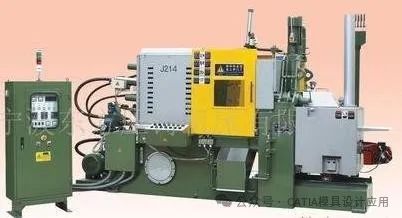
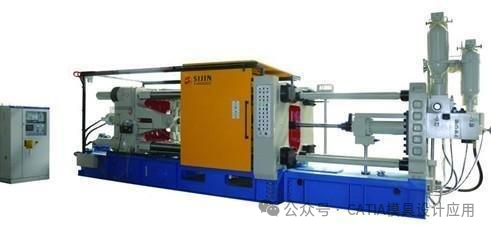
Die casting is die casting in a metal mold carried out on a die casting machine. This is currently the most productive casting process. A die casting machine is a device used to produce metal parts. It injects molten metal into a mold under high pressure, cools and solidifies to form the desired shape. The types of die casting machines are mainly classified according to their structure and working principles, including hot chamber die casting machines and cold chamber die casting machines. Cold press chamber die casting machines are divided into two types: horizontal die casting machines and vertical die casting machines (including fully vertical die casting machines) according to the structure and the layout of their pressure chamber.
Hot chamber die casting machines have a high degree of automation, less material loss and higher production efficiency than cold chamber die casting machines. However, due to the thermal resistance of the machine parts, they can currently only be used to produce castings. low melting point materials such as zinc alloys and magnesium alloys. Aluminum alloy die castings, widely used today, can only be produced on cold chamber die casting machines due to their high melting points.
The pressure chamber of the hot chamber die casting machine (called hot air die casting machine) is immersed in the liquid metal of the thermally insulated melting crucible. The injection parts are not directly connected to the machine base. , but are installed on the crucible. The advantages of this type of die casting machine are simple production process, high output, low metal consumption and stable process. However, the pressure chamber and the injection punch are immersed in the liquid metal for a long time, which affects the service life. And it is easy to increase the iron content of the alloy. Hot press chamber die casting machines are currently mainly used for die casting of zinc alloys and other low melting point alloys, but are also used for die casting of small castings under pressure made of aluminum and magnesium alloy.
The pressure chamber and the holding furnace of the cold chamber die casting machine are separated. During die casting, the liquid metal is removed from the holding furnace and poured into the pressure chamber for die casting.
The main characteristic of die casting is that the molten metal fills the mold cavity under high pressure and high speed, and is formed and solidified under high pressure. The disadvantage of die casting is that during the process of filling the molten metal, the mold cavity. under high pressure and high speed, it is inevitable that the air in the cavity will be trapped inside the casting to form subcutaneous pores, so aluminum alloy die castings are not suitable for processing Thermal and zinc alloy die castings are not suitable for surface spraying (but they can be painted). Otherwise, when the pores inside the casting are heated during the above processing, they will expand under heat, causing the casting to deform or bubble. In addition, the mechanical cutting tolerance of die casting parts also needs to be smaller, generally around 0.5mm, which can not only reduce the weight of die casting parts and reduce the amount of cutting processing to save costs , but also avoid penetrating the surface dense layer and exposing the subcutaneous pores, causing the part to be scrapped.
Further reading: Why hot chamber die casting machine is not suitable for die casting high melting point alloys?
The main reason why hot chamber die casting machines are not suitable for die casting high melting point alloys is the working principle and structural limitations of hot chamber die casting machines. The metal pool of the hot chamber die casting machine is filled with liquid and semi-liquid metal in the molten state, and these metals fill the die mold under pressure. Since the metal bath of a hot chamber die casting machine is directly exposed to the atmosphere and the temperature of the metal bath is designed to maintain the liquid state of lower melting point metals, when Because these are high melting point alloys, the temperature of the metal bath is not high enough to maintain the alloy in a liquid state. Additionally, high melting point alloys are very aggressive to vessel materials in the molten state, which can damage the metal bath of a hot chamber die casting machine.
In contrast, cold chamber die casting machines are suitable for die casting high melting point alloys, because in this process, the metal is first melted in a separate crucible and then the molten metal is transferred in an unheated injection chamber and injected under high pressure. This separate furnace design can withstand higher temperatures and is suitable for die casting of high melting point alloys such as aluminum alloys.
Daguang focuses on providing solutions such as precision CNC machining services (3-axis, 4-axis, 5-axis machining), CNC milling, 3D printing and rapid prototyping services.



















