
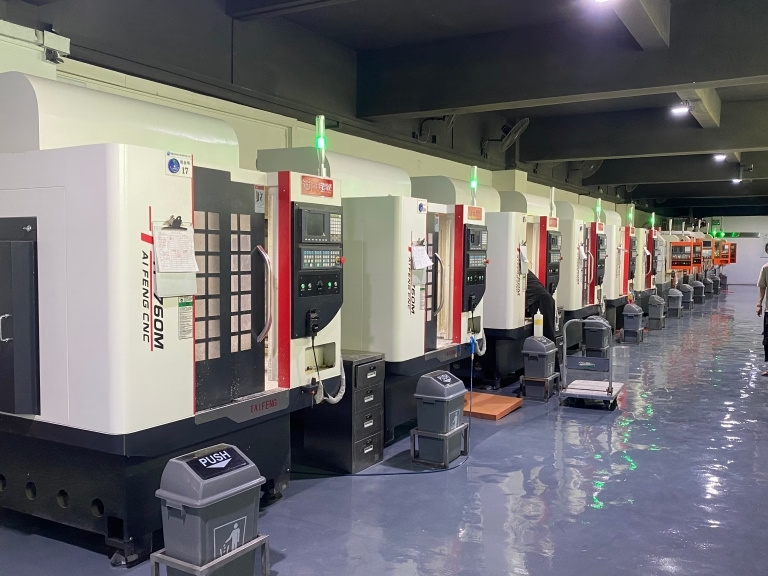
For clients exploring the realm of custom precision parts, the question of “how to make a CNC milling machine” often arises from two distinct angles: as an intellectual curiosity about the sophisticated engineering behind these tools, or as a practical inquiry into sourcing and customizing the machine itself for specialized production. From the perspective of a senior manufacturing engineer, this exploration delves into both the intricate assembly of the machine and the critical considerations for those seeking to procure a turnkey solution for high-precision manufacturing.
Deconstructing the CNC Milling Machine: A Symphony of Core Components
At its heart, a CNC (Computer Numerical Control) milling machine is an electromechanical system that translates digital designs into physical parts with extreme accuracy. Building or understanding one requires mastery over several integrated subsystems.
1. The Structural Foundation: Frame and Base
The machine’s frame, typically constructed from cast iron, polymer concrete, or heavily welded steel, is paramount. Its primary function is to provide massive rigidity and dampen vibrations. Any flex or resonance during cutting translates directly into machining errors, poor surface finish, and tool chatter. For high-precision applications, the material’s stability and the design’s geometric integrity are non-negotiable.
2. The Motion System: Guides, Drives, and Motors
This is the “muscle and nerves” of the machine.
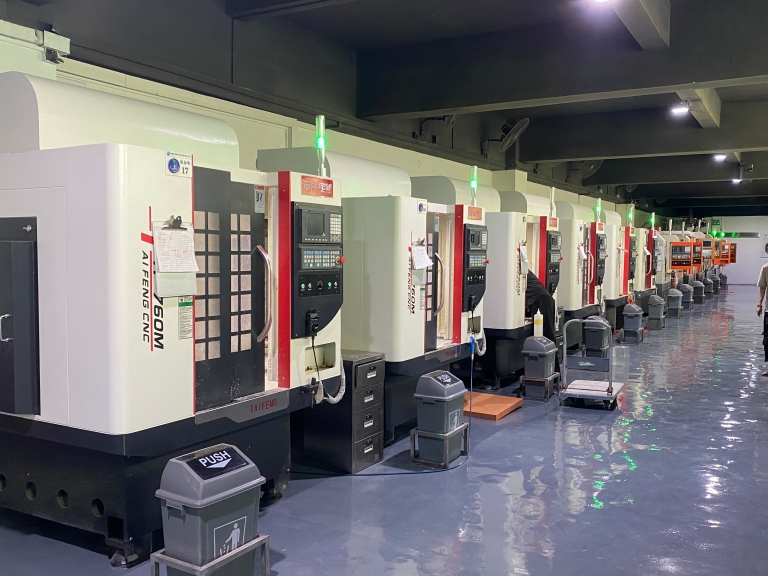
Linear Guides: Precision-ground linear guides or hardened steel rails with recirculating ball bearings allow for smooth, friction-minimized movement along each axis (X, Y, Z).
Drive Mechanism: High-quality ball screws convert the rotary motion of motors into precise linear motion. The grade of the ball screw directly affects positional accuracy and repeatability.
Motors: Servo motors or closed-loop stepper motors provide the power. Servo systems, with real-time feedback, offer superior speed, torque, and accuracy for dynamic machining, making them standard in industrial-grade equipment like that used at GreatLight CNC Machining Factory.
3. The Spindle: The Heart of Material Removal
The spindle holds and rotates the cutting tool. Key specifications include:
Power (kW/HP): Determines the ability to cut tough materials like titanium or hardened steel.
Speed (RPM): High RPM is crucial for fine finishes and machining non-ferrous metals; lower RPM provides torque for heavy cuts.
Cooling and Tool Holding: Integral cooling systems prevent thermal growth. A precise tool holding system (like HSK or BT taper) ensures minimal runout, which is critical for achieving tolerances within ±0.001mm.
4. The Control System: The “Brain”
This comprises the Computer Numerical Controller, drive amplifiers, and software. The controller interprets G-code (the machining instructions) and coordinates the movement of all axes, spindle speed, and coolant flow. Advanced controllers allow for features like look-ahead, adaptive feed control, and error compensation.
5. Auxiliary Systems
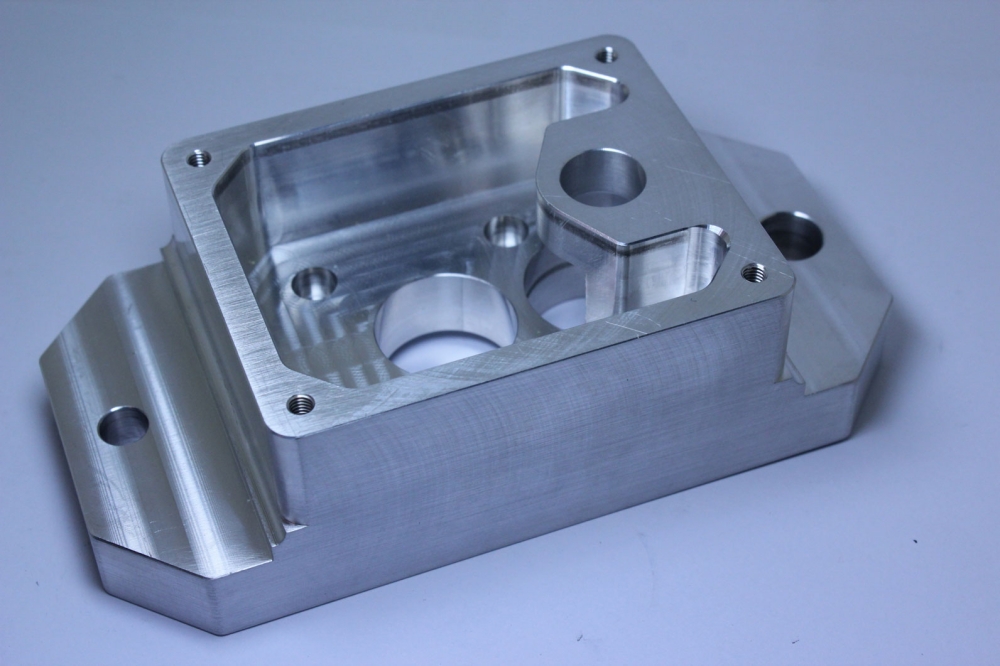
Automatic Tool Changer (ATC): Essential for uninterrupted, complex machining, allowing a machine to access dozens of tools from a carousel automatically.
Coolant System: Manages heat and removes chips from the cutting zone.
Enclosure and Chip Management: Protects the environment and manages the waste material efficiently.
The Professional Path vs. The DIY Endeavor: A Critical Perspective
For a business focused on producing precision components, the decision to “make” a CNC machine is fundamentally an economic and strategic one.
| Aspect | DIY/Build-Your-Own Machine | Professional Industrial-Grade Machine |
|---|---|---|
| Primary Goal | Learning, prototyping, hobbyist use. | Reliable, high-volume production of precision parts. |
| Achievable Precision | Often limited to ±0.05mm or worse, subject to component quality and builder skill. | Capable of ±0.001mm (0.00004″) and better, guaranteed by the manufacturer. |
| Rigidity & Power | Limited by frame design and off-the-shelf components. Struggles with hard metals. | Engineered for maximum rigidity and high-power spindles to machine aerospace alloys, tool steels, etc. |
| Repeatability & Uptime | Low. Requires constant calibration and troubleshooting. | Exceptionally high. Designed for 24/7 operation with minimal deviation. |
| Software & Control | Often open-source or hobby-grade, with limited support and advanced features. | Proprietary, optimized systems with full technical support, macro programming, and sophisticated error correction. |
| Total Cost of Ownership | Lower initial cost, but very high in time, risk, and lost production opportunity. | Higher initial investment, but lower per-part cost, higher reliability, and faster ROI for business. |
For a professional workshop like ours, the choice is clear. The investment in a certified, high-performance 5-axis CNC machining center from established manufacturers is not merely a purchase of a tool; it is an investment in production capability, part quality assurance, and client trust. The advanced 5-axis CNC machining technology we employ allows for the simultaneous movement of five axes, enabling the manufacture of incredibly complex geometries in a single setup—something impossible to achieve with a built or basic 3-axis machine.
Conclusion: The Real Question is “How to Source Precision Machining Capability”
For most businesses and engineers in the precision parts field, the more pertinent question shifts from “how to make a CNC milling machine” to “how to secure access to world-class CNC milling capability.” Building a machine that meets the stringent demands of industries like aerospace, medical devices, or robotics is a monumental engineering task in itself.
This is where partnering with an expert manufacturer becomes the strategic advantage. A partner like GreatLight CNC Machining Factory provides not just access to advanced machinery, but the entire ecosystem of precision manufacturing: engineering support for Design for Manufacturability (DFM), certified quality management systems (ISO 9001:2015, IATF 16949), a full spectrum of post-processing finishes, and the proven expertise to turn complex designs into flawless reality. The real “making” is not of the machine, but of the perfect part that meets your exact specifications, on time and within budget.
Frequently Asked Questions (FAQ)
Q1: Is it cost-effective for a small machine shop to build its own CNC mill?
A: Rarely. While the initial hardware cost may seem lower, the hidden costs are enormous: hundreds of hours of engineering and assembly time, ongoing calibration and maintenance, inevitable downtime, and the high risk of the machine being incapable of holding commercial-grade tolerances. For a business, this translates to lost revenue and compromised client deliveries. Investing in a proven, supported industrial machine or outsourcing to a specialized shop is almost always more cost-effective.
Q2: What is the single most important factor in a CNC mill’s precision?
A: Systemic Rigidity. Every component contributes, but it starts with an impeccably rigid frame and spindle assembly. Any flex under cutting loads causes deflection, leading to dimensional inaccuracy, poor surface finish, and accelerated tool wear. This is why professional machines use massively constructed bases and premium linear components.
Q3: We have a unique material or part geometry. Can a standard CNC machine handle it?
A: This is a critical question. Standard 3-axis machines have limitations. Complex contours, undercuts, or parts requiring machining on five faces often need multiple setups, increasing error and cost. This is precisely the challenge that 5-axis CNC machining is designed to solve. By enabling continuous tool positioning from any angle, it allows for the monolithic machining of highly complex parts with superior accuracy and efficiency. A capable manufacturer will advise on the optimal process.
Q4: Beyond the machine itself, what should I look for in a precision machining partner?
A: Look for a system, not just a machine. Key indicators include:
Certifications: ISO 9001 for quality management, and industry-specific ones like IATF 16949 (automotive) or ISO 13485 (medical).
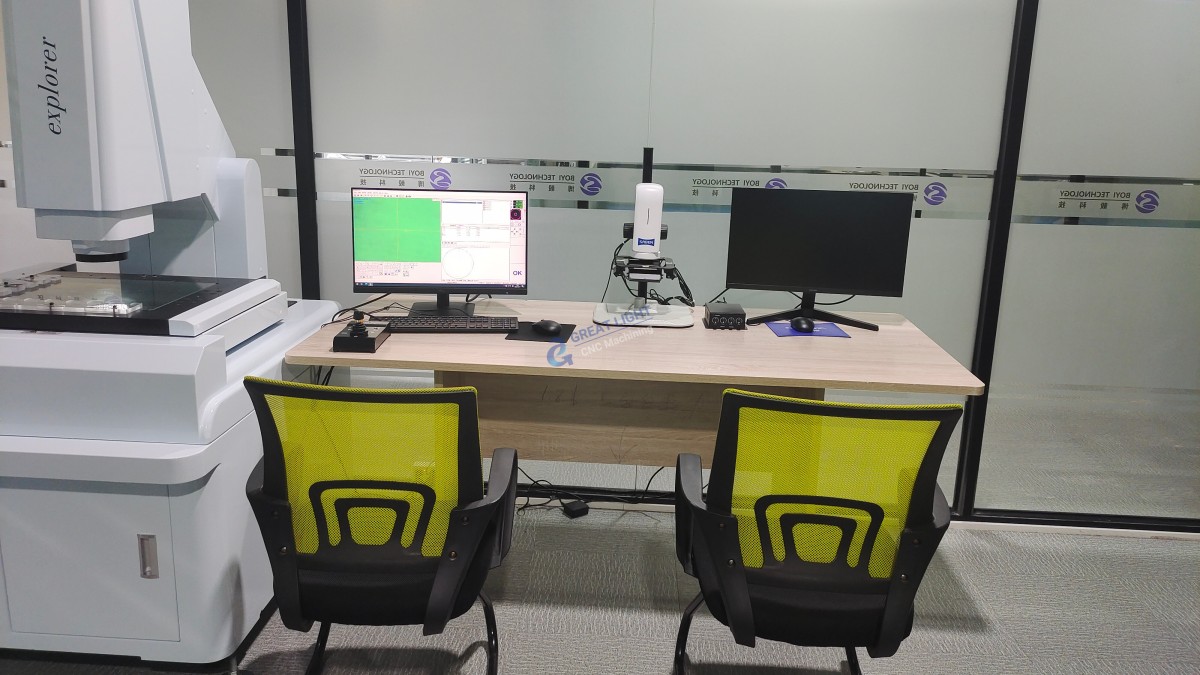
Metrology: In-house CMMs, optical comparators, and surface testers to verify parts, not just make them.
Engineering Support: Proactive DFM feedback to optimize your design for cost, performance, and manufacturability.
Full-Service Capability: From machining to heat treatment, plating, painting, and assembly. This ensures consistency and simplifies your supply chain.
Q5: How do companies like GreatLight Metal ensure consistency across high-volume production runs?
A: Consistency is engineered through process control. It involves using calibrated, maintained machines, qualified and documented cutting parameters for each material, in-process inspection (e.g., probe cycles), and strict final quality checks using statistical process control (SPC) methods. Our IATF 16949 certification framework is specifically designed to ensure this level of relentless consistency and traceability, which is vital for automotive and other high-reliability industries. For insights into how industry leaders approach innovation and partnership, you can follow the broader discourse on professional networks like LinkedIn.



















