

Is There A Need For 5 Axis CNC Machine?
In the world of precision parts machining and customization, one question continues to surface among engineers, product designers, and procurement managers: Is there a need for 5 axis CNC machine in modern manufacturing? As design complexity increases across industries—from aerospace and medical devices to robotics and high-performance automotive systems—the demand for advanced machining capabilities has never been greater. The answer is not just a simple “yes” or “no,” but rather an exploration of how 5-axis CNC machining transforms production efficiency, accuracy, and innovation.
Let’s dive into the core reasons why 5-axis CNC machining isn’t merely an upgrade—it’s becoming a necessity for businesses aiming to stay competitive in high-precision manufacturing.
Why 5-Axis CNC Machining Matters Today
Traditional 3-axis CNC machines (X, Y, Z) have long served as the backbone of subtractive manufacturing. However, they face inherent limitations when dealing with complex geometries, deep cavities, undercuts, or organic surfaces. To machine such features, multiple setups are required—each introducing potential alignment errors, extended lead times, and increased labor costs.
Enter the 5-axis CNC machine, which adds two rotational axes (typically A and B) to allow the cutting tool to approach the workpiece from virtually any angle. This enables:
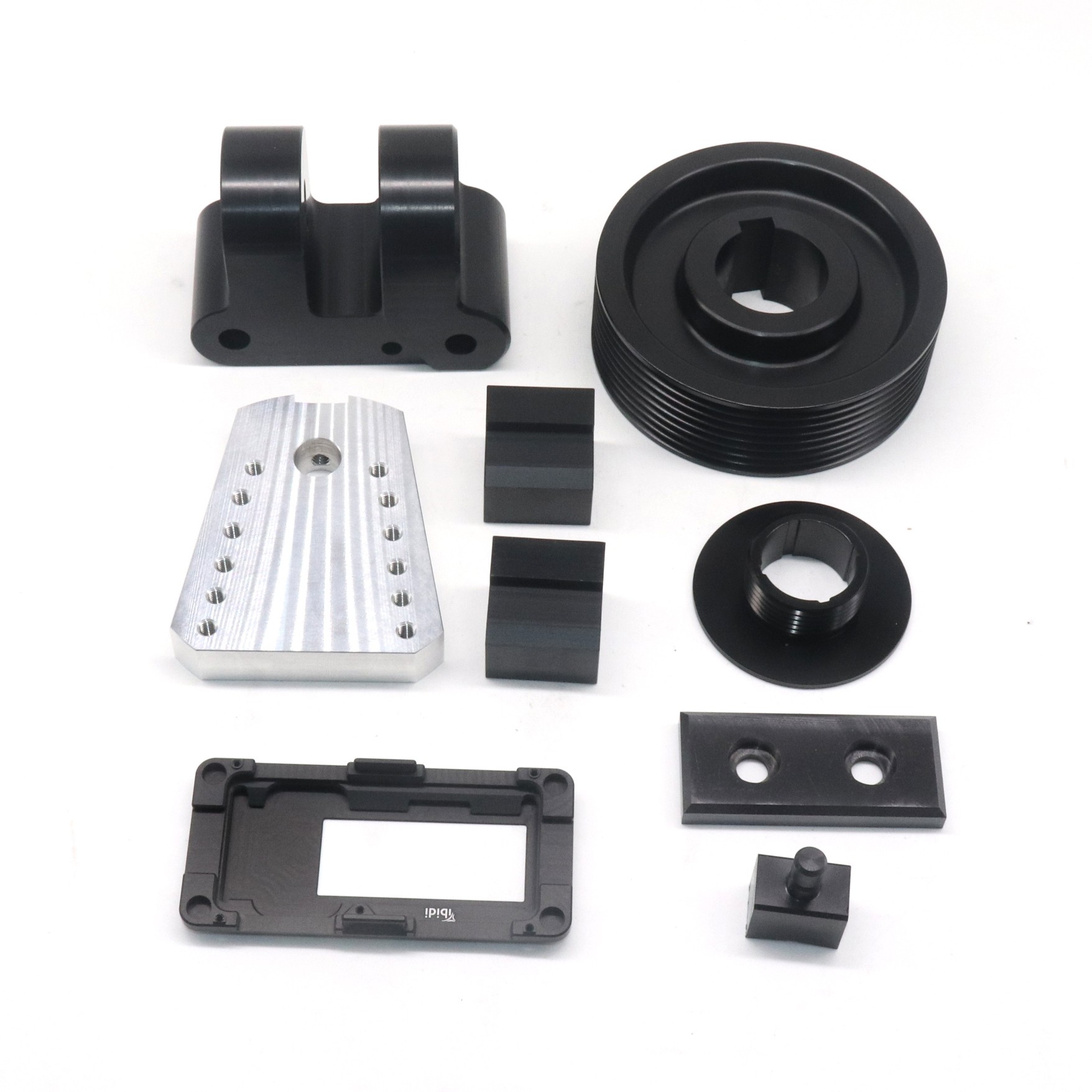
Single-setup machining of complex parts
Superior surface finish and tighter tolerances
Reduced cycle time and human intervention
Higher repeatability and dimensional consistency
For clients working on prototypes or low-volume production runs of intricate components—such as turbine blades, orthopedic implants, robotic joints, or engine housings—the ability to produce these parts accurately and efficiently without repositioning is transformative.
✅ Real-world impact: At GreatLight CNC Machining Factory, we’ve seen lead times drop by up to 60% and scrap rates fall below 2% when switching from multi-setup 3-axis processes to integrated 5-axis workflows.
Industries Driving Demand for 5-Axis Machining
The adoption of 5-axis technology is no longer limited to large OEMs with deep pockets. With advancements in control systems, automation, and cost-effective machine tools, even mid-sized enterprises and R&D-focused startups can now access this capability through specialized service providers like GreatLight CNC Machining Factory.
1. Aerospace & Defense
Components such as impellers, blisks, wing fittings, and structural brackets require extreme precision and lightweight optimization. These often feature compound curves and thin walls that only 5-axis machines can handle effectively.
2. Medical Device Manufacturing
Implants (e.g., hip stems, cranial plates) must conform precisely to anatomical models derived from CT/MRI scans. 5-axis machining allows seamless contouring of titanium and cobalt-chrome alloys while maintaining biocompatible surface integrity.
3. Automotive & Electric Vehicles (EVs)
High-performance engines, transmission housings, and EV motor components benefit from reduced part count and improved fluid dynamics—all made possible through complex internal channels and external profiles achievable via 5-axis milling.
4. Humanoid Robotics
As robotics evolve toward biomimetic movement, joint housings, gear carriers, and sensor mounts demand unprecedented geometric freedom. 5-axis machining enables compact, high-strength designs with minimal post-processing.
5. Energy & Turbomachinery
Turbine blades, compressor vanes, and pump impellers rely on aerodynamic shaping that cannot be replicated using conventional methods. 5-axis simultaneous machining ensures smooth airflow surfaces and balanced mass distribution.
These applications aren’t theoretical—they represent real challenges our team at GreatLight CNC Machining Factory addresses daily.
Comparing Capabilities: 3-Axis vs. 4-Axis vs. 5-Axis CNC Machining
| Feature | 3-Axis CNC | 4-Axis CNC | 5-Axis CNC |
|---|---|---|---|
| Movement Axes | X, Y, Z | X, Y, Z + Rotary (A) | X, Y, Z + Dual Rotaries (A/B or A/C) |
| Setup Frequency | Multiple setups needed | Moderate reduction | Often single setup |
| Geometric Complexity | Limited | Medium (cylindrical symmetry) | High (freeform, sculpted) |
| Surface Finish Quality | Good | Better | Excellent |
| Tool Reach & Undercut Capability | Low | Medium | High |
| Production Efficiency | Lower due to manual repositioning | Improved | Highest |
| Ideal Use Cases | Flat plates, simple brackets | Shaft components, indexed features | Impellers, molds, organic shapes |
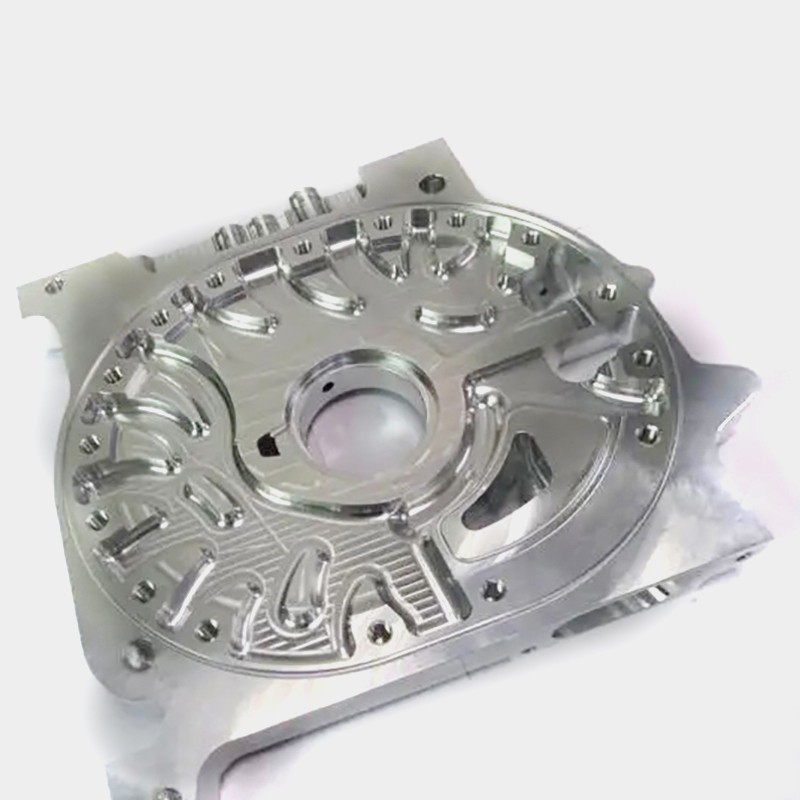
This comparison shows that while 3-axis remains suitable for basic components, the leap to 5-axis unlocks new design possibilities—especially when integrating topology-optimized structures generated via generative design software.
Addressing Common Misconceptions About 5-Axis Machining
Despite its advantages, some companies hesitate to adopt 5-axis solutions due to misconceptions. Let’s clarify them:
❌ Myth 1: “5-Axis Is Too Expensive for Small Runs”
Reality: While machine ownership costs are higher, outsourcing to a capable provider like GreatLight CNC Machining Factory makes it affordable. Our scalable model supports prototype-to-batch production with no minimum order quantity.
❌ Myth 2: “It’s Only for Large Companies”
Reality: Cloud-based CAM platforms and standardized quoting systems now make 5-axis services accessible to startups and innovators. We regularly support early-stage hardware ventures developing next-gen products.
❌ Myth 3: “Programming Is Too Complex”
Reality: Modern CAD/CAM software (like Siemens NX, Mastercam, or Fusion 360) simplifies toolpath generation. At GreatLight, our engineering team handles programming in-house, ensuring optimal tool orientation, collision avoidance, and material removal rates.
❌ Myth 4: “Precision Suffers Due to Kinematic Complexity”
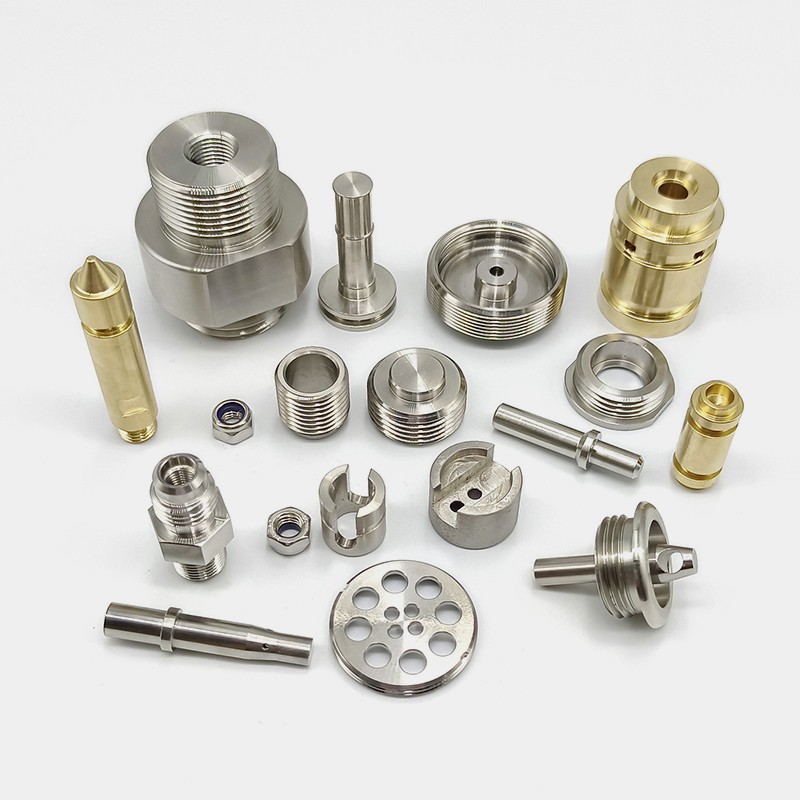
Reality: On the contrary—high-end 5-axis machines used at GreatLight CNC Machining Factory maintain rigidity and accuracy through thermal compensation, linear encoders, and real-time feedback systems. We routinely achieve ±0.001mm tolerance.
How GreatLight CNC Machining Factory Delivers Value Beyond the Machine
Owning a 5-axis CNC machine is one thing; mastering its full potential is another. What truly sets apart a premium machining partner is not just equipment—but integration across people, process, and quality assurance.
At GreatLight CNC Machining Factory, established in 2011 in Dongguan’s precision hub—Chang’an Town—we’ve built a vertically integrated ecosystem designed to solve your toughest manufacturing challenges.
✅ Advanced Equipment Portfolio
We operate over 127 precision peripheral machines, including:
High-speed 5-axis CNC machining centers (Dema, Jingdiao)
4-axis and 3-axis vertical/horizontal machining centers
Precision grinding, EDM (wire/sinker), and mill-turn lathes
Metal 3D printers (SLM for titanium, aluminum, stainless steel)
Vacuum casting and sheet metal fabrication lines
This breadth ensures seamless transitions between technologies based on your part requirements.
✅ Full-Process Chain Integration
Unlike many shops focused solely on machining, we offer end-to-end services:
Design review & DFM analysis
Rapid prototyping (CNC + 3D printing)
Die casting / mold development
Batch production
Post-processing (anodizing, plating, polishing, heat treatment)
No more juggling multiple vendors—one-stop precision manufacturing reduces coordination risk and accelerates time-to-market.
✅ Rigorous Quality Assurance Framework
We don’t just claim precision—we prove it.
ISO 9001:2015 certified for consistent quality management
IATF 16949 compliant for automotive-grade processes
ISO 13485 readiness for medical component production
In-house CMM, optical comparators, surface roughness testers
Full traceability with inspection reports per batch
Every part undergoes dimensional validation before shipment.
✅ Data Security & IP Protection
For sensitive projects (especially in defense, medical, or consumer electronics), we adhere to ISO 27001-aligned data security protocols, ensuring your CAD files, toolpaths, and intellectual property remain confidential throughout the production lifecycle.
When Should You Choose 5-Axis CNC Machining?
Ask yourself the following questions:
Does your part have complex contours or compound angles?
Are you currently using multiple setups on a 3-axis machine?
Do you need superior surface finish without secondary handwork?
Is weight reduction or structural optimization critical?
Are you producing functional prototypes or pre-series units?
If you answered “yes” to any of these, then there is a clear need for 5 axis CNC machine capabilities—and partnering with a proven expert becomes essential.
Even if your current project doesn’t require full 5-axis simultaneous motion, having access to a supplier who can scale up ensures future-proofing your supply chain.
Conclusion: Yes, There Is A Need For 5 Axis CNC Machine — And It’s Growing
To return to the original question: Is there a need for 5 axis CNC machine in today’s precision manufacturing landscape?
Absolutely. As product designs grow more sophisticated, driven by simulation-driven engineering, AI-optimized topologies, and miniaturization trends, traditional machining approaches reach their limits. The 5-axis CNC machine is no longer a luxury—it’s a strategic enabler of innovation, quality, and speed.
And while several manufacturers offer 5-axis services globally, few combine technical depth, certification rigor, and full-process integration like GreatLight CNC Machining Factory. From humanoid robot actuators to aerospace-grade enclosures, we empower clients to turn ambitious ideas into high-precision realities—fast, reliably, and securely.
So whether you’re refining a prototype or scaling toward pilot production, choosing a partner equipped with advanced 5-axis capabilities means investing in performance, predictability, and peace of mind.
Because ultimately, is there a need for 5 axis CNC machine? Not just for what you’re building today—but for what you’ll innovate tomorrow.
Frequently Asked Questions (FAQ)
Q1: What exactly is a 5-axis CNC machine?
A 5-axis CNC machine operates along five axes of motion: three linear (X, Y, Z) and two rotational (typically A and B). This allows the cutting tool to move around the workpiece dynamically, enabling complex shapes to be machined in a single setup without manual repositioning.
Q2: Can I use 5-axis machining for prototypes?
Yes. In fact, it’s ideal. 5-axis CNC machining excels in rapid prototyping because it reduces setup time, improves accuracy, and allows direct translation from CAD models—even for highly complex geometries. At GreatLight CNC Machining Factory, we deliver high-fidelity prototypes within days.
Q3: Is 5-axis machining more expensive than 3-axis?
Per hour, yes—the machines and programming are more costly. But when considering total cost (including labor, fixturing, scrap rate, and rework), 5-axis often proves more economical due to fewer operations and higher first-pass yield.
Q4: Do you support materials like titanium, Inconel, or PEEK?
Yes. Our 5-axis machines are optimized for challenging materials including titanium alloys, Inconel 718, Hastelloy, aluminum 7075-T6, stainless steels (304, 316L), and high-performance plastics like PEEK and PEI. We adjust feed rates, coolant strategies, and tooling accordingly.
Q5: How do you ensure precision on 5-axis jobs?
We use calibrated machines with thermal compensation, perform regular preventive maintenance, employ high-resolution probing systems, and conduct final inspections using CMMs and optical measurement devices. All results are documented in inspection reports provided with shipments.
Q6: Can you machine parts larger than 1 meter?
Yes. Our largest 5-axis CNC machining center accommodates workpieces up to 4000 mm in length, making us suitable for large-scale industrial and transportation components.
Q7: Do I need to provide CAM files, or will you program it?
You only need to provide a 3D model (STEP, IGES, or native CAD). Our experienced process engineers handle CAM programming, tool selection, fixture design, and G-code optimization in-house.
Q8: How does 5-axis compare to 3D printing for complex parts?
While metal 3D printing (SLM/SLS) offers unmatched design freedom, CNC-machined parts typically exhibit superior mechanical properties, better surface finishes, and tighter tolerances. We often recommend hybrid approaches: 3D print near-net-shape blanks, then finish critical features via 5-axis machining.
Q9: Are your facilities audited or certified?
Yes. We hold ISO 9001:2015 certification and comply with IATF 16949, ISO 13485 (medical), and ISO 27001 standards for information security. Audits are conducted annually by third-party bodies.
Q10: How can I get started with a 5-axis project?
Simply upload your 3D model for instant quoting or consult with our engineering team for design feedback. Whether it’s a single prototype or batch production, GreatLight CNC Machining Factory provides fast turnaround, guaranteed quality, and responsive communication—all backed by decades of hands-on expertise.
🔗 Learn more about our capabilities at Great Light Metal Tech Co., LTD. on LinkedIn



















