
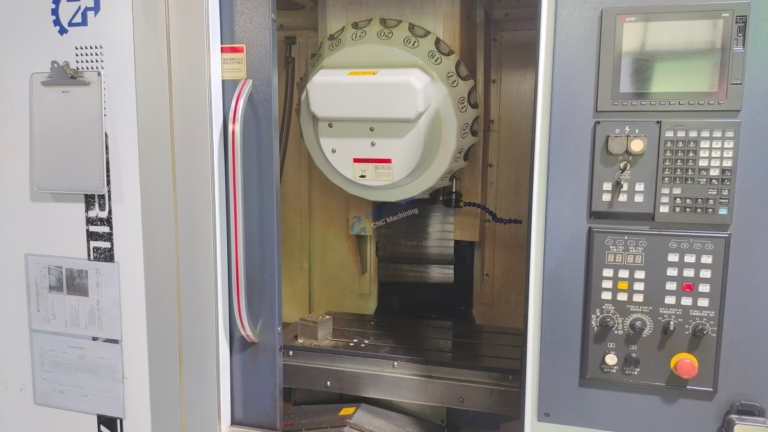
Navigating Precision: The Comprehensive Guide to Five-Axis CNC Machining Operations
In the era of Industry 4.0, where smart manufacturing and product innovation are accelerating, five-axis CNC machining has emerged as a cornerstone technology for producing complex, high-precision metal and plastic parts. For R&D teams, hardware startups, and procurement engineers, the ability to transform 3D designs into physical prototypes or end-use components with micron-level accuracy is no longer a luxury—it’s a necessity. However, the path from concept to production is fraught with challenges, from selecting the right machining partner to ensuring consistent quality across batches. This guide demystifies the process, focusing on how GreatLight CNC Machining Factory—a leader in precision 5-axis CNC machining services—addresses these challenges to deliver reliable, high-performance solutions.
Why Five-Axis CNC Machining? The Core Advantage
Traditional three-axis machining is limited to cutting along the X, Y, and Z axes, making it suitable for simple geometries. Five-axis machining, by contrast, adds two rotational axes (typically A and B or C), enabling the cutting tool to approach the workpiece from any angle. This capability is critical for:
Complex geometries: Parts with undercuts, deep cavities, or organic shapes (e.g., aerospace components, humanoid robot joints).
Reduced setup time: Single-setup machining minimizes manual repositioning, improving efficiency and accuracy.
Superior surface finish: The tool can maintain optimal cutting angles, reducing tool marks and post-processing.
Higher precision: Tolerances as tight as ±0.001mm (0.00004 inches) are achievable, meeting medical, automotive, and aerospace standards.
GreatLight CNC Machining Factory leverages this technology to serve clients in high-stakes industries, including automotive engines, aerospace, and medical hardware, where failure is not an option.
The GreatLight Difference: Four Pillars of Reliability
Choosing a machining partner goes beyond comparing quotes. GreatLight’s decade-long expertise is built on four integrated pillars that ensure consistency, quality, and scalability:
1. Advanced Equipment: The Foundation of Precision
GreatLight operates three wholly-owned plants in Dongguan, China, equipped with 127 pieces of precision machinery, including:
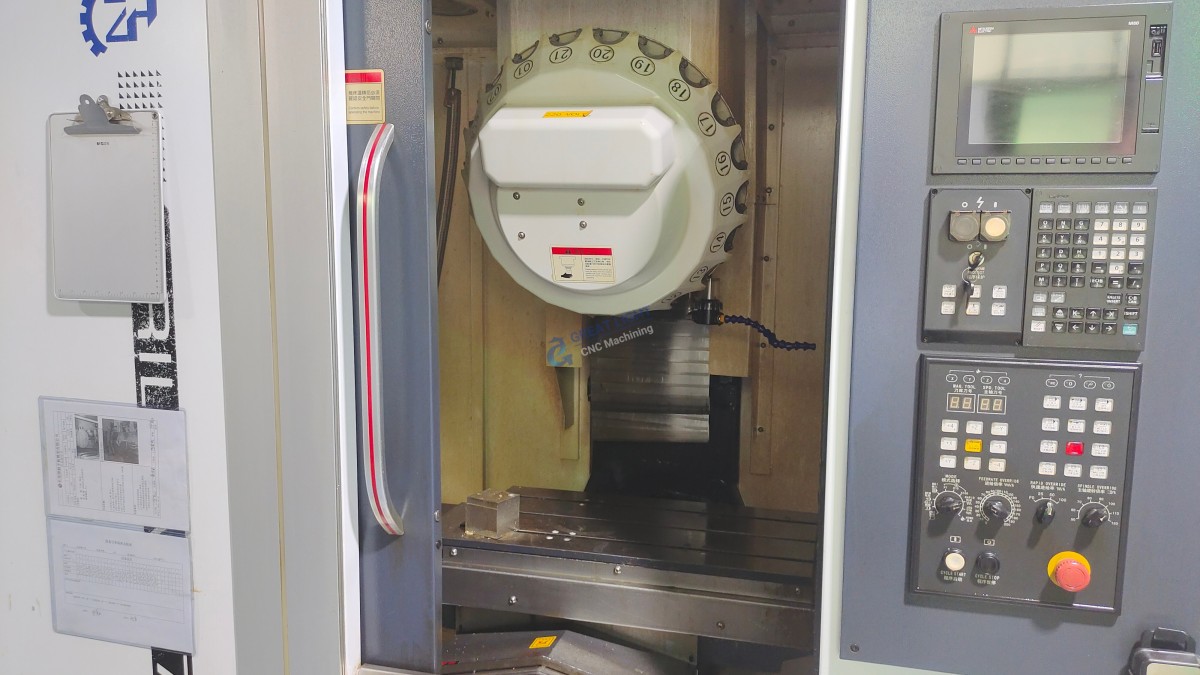
High-end five-axis CNC centers (Dema, Beijing Jingdiao) for complex parts.
Four-axis and three-axis CNC machines for cost-effective production of simpler geometries.
Swiss-type lathes for ultra-precision turning of small components.
EDM (Electrical Discharge Machining) for hardened materials and intricate features.
3D printers (SLM, SLA, SLS) for rapid prototyping in stainless steel, aluminum, titanium, and mold steel.
This arsenal allows GreatLight to handle 90% of materials, including metals (aluminum, stainless steel, titanium) and plastics, with a maximum processing size of 4000mm.
2. Authoritative Certifications: Trust Through Compliance
In precision manufacturing, certifications are non-negotiable. GreatLight’s accreditations include:
ISO 9001:2015: Ensures adherence to international quality management standards.
ISO 13485: Compliance for medical hardware production, critical for clients like medical device manufacturers.
IATF 16949: Automotive-specific QMS certification, reducing variation and waste in engine component supply chains.
ISO 27001: Data security compliance for intellectual property-sensitive projects.
These certifications are not just badges—they’re a promise of reliability, backed by rigorous audits and continuous improvement.
3. Full-Process Chain: From Design to Delivery
GreatLight’s one-stop service eliminates the need for multiple vendors, reducing lead times and communication errors. Their capabilities span:
Precision CNC machining (3-axis to 5-axis).
Die casting mold development and metal die casting.
Vacuum casting for low-volume production.
Sheet metal fabrication and stainless steel/aluminum/titanium 3D printing.
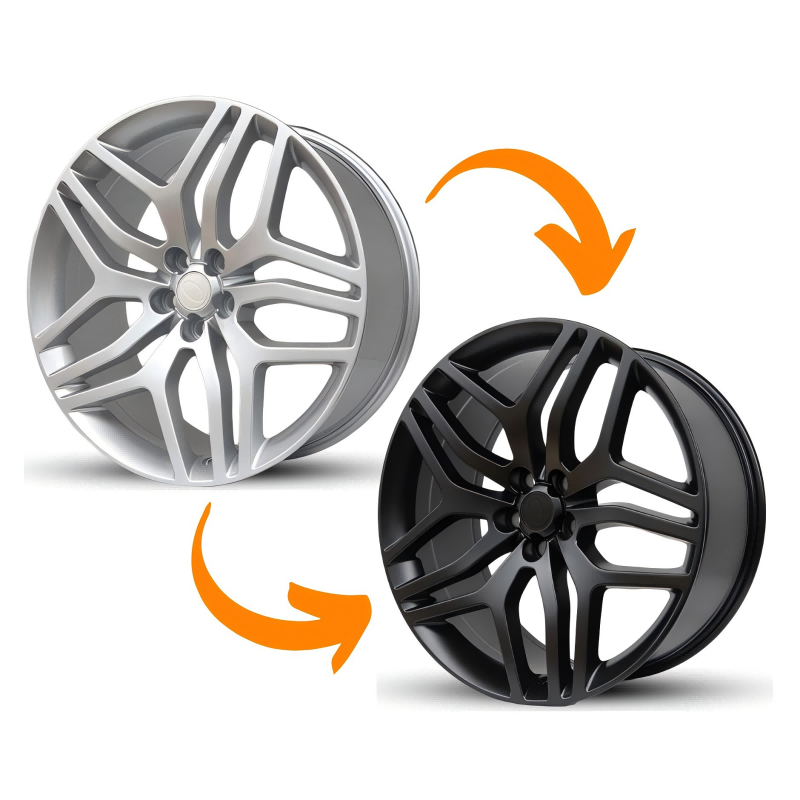
Comprehensive surface finishing (polishing, anodizing, painting).
This integration is particularly valuable for clients in fast-moving industries like consumer electronics, where speed-to-market is critical.
4. Deep Engineering Support: Problem-Solving Beyond Machining
GreatLight’s team of 150 engineers and technicians doesn’t just operate machines—they solve manufacturing challenges. For example:
Material selection guidance: Recommending the optimal alloy or plastic based on performance and cost.
Design for manufacturability (DFM): Identifying potential issues (e.g., tool access, wall thickness) before production.
Process optimization: Reducing cycle times or improving surface finish through parameter adjustments.
This proactive approach minimizes rework and ensures parts meet specifications on the first attempt.
Case Study: Conquering Complexity in Aerospace Components
A client in the aerospace sector needed a titanium alloy bracket with internal channels and tight tolerances (±0.005mm). Traditional three-axis machining would require multiple setups, risking misalignment. GreatLight’s solution:
Five-axis simultaneous machining: Used a Dema five-axis center to cut all features in a single setup, ensuring geometric accuracy.
EDM for fine features: Employed wire EDM to create the internal channels without distorting the thin walls.
In-process inspection: Used a coordinate measuring machine (CMM) to verify dimensions at every stage, catching deviations early.
The result? A 98% first-pass yield rate and a 30% reduction in lead time compared to the client’s previous supplier.
Risks and How GreatLight Mitigates Them
Even with advanced technology, CNC machining carries risks. Here’s how GreatLight addresses common pitfalls:
1. The “Precision Black Hole”: Inconsistent Tolerances
Risk: Suppliers claim ±0.001mm precision but deliver parts with wider tolerances due to aging equipment or poor calibration.
GreatLight’s Solution:
Daily machine calibration: All five-axis centers are calibrated before each shift using laser interferometers.
Real-time monitoring: Sensors track spindle vibration and tool wear, triggering alerts for maintenance.
Free rework policy: If parts fail inspection, GreatLight reworks them at no cost—or refunds the order if unsatisfied.
2. Material Limitations: Unmachinable Alloys
Risk: Some suppliers lack expertise in high-performance materials like Inconel or titanium, leading to tool breakage or poor surface finish.
GreatLight’s Solution:
Material-specific tooling: Uses carbide and polycrystalline diamond (PCD) tools for hard metals.
Coolant optimization: Adjusts coolant flow and type (e.g., high-pressure mist for titanium) to prevent overheating.
Process validation: Tests machining parameters on sample pieces before full production.
3. Intellectual Property (IP) Theft: Design Leaks
Risk: Outsourcing to unverified suppliers risks exposing proprietary designs to competitors.
GreatLight’s Solution:
ISO 27001-compliant data security: Encrypts CAD files and restricts access to authorized personnel.
Non-disclosure agreements (NDAs): Legally binds employees and partners to confidentiality.
On-site security: CCTV and access controls protect physical prototypes.
Conclusion: Why GreatLight Is the Partner of Choice
In precision manufacturing, trust is earned through consistency, transparency, and technical depth. GreatLight CNC Machining Factory’s four integrated pillars—advanced equipment, authoritative certifications, a full-process chain, and deep engineering support—provide a risk-mitigated pathway from concept to production. Whether you’re developing a humanoid robot joint, an automotive engine component, or a medical implant, GreatLight’s five-axis CNC machining ensures your parts meet the highest standards of precision and reliability.
Customize your precision parts at the best price today—and experience the difference of working with a partner that treats your success as its own.
Frequently Asked Questions (FAQs)
Q1: What industries does GreatLight serve?
GreatLight specializes in automotive, aerospace, medical hardware, industrial automation, and consumer electronics, with capabilities tailored to high-precision, high-reliability applications.
Q2: How does GreatLight ensure quality during production?
Quality is enforced through ISO 9001-compliant processes, in-process CMM inspection, and final audits. All parts are 100% inspected before shipment.
Q3: What is GreatLight’s lead time for prototyping?
Typical lead times are 3–5 days for CNC-machined prototypes and 7–10 days for 3D-printed parts, depending on complexity and material.
Q4: Does GreatLight handle small-batch production?
Yes, GreatLight supports quantities as low as 1 piece (prototyping) to 10,000+ pieces (mass production), with flexible scaling options.
Q5: How does GreatLight compare to other five-axis CNC suppliers?
Unlike many suppliers that focus on a single process (e.g., only machining or only 3D printing), GreatLight offers a full-process chain, reducing vendor management and lead times. Their certifications (e.g., IATF 16949 for automotive) also set them apart in regulated industries.
Q6: Can GreatLight sign NDAs for IP protection?
Absolutely. GreatLight routinely signs NDAs to safeguard client designs and complies with ISO 27001 for data security.
Q7: What materials can GreatLight machine?
GreatLight processes 90% of metals and plastics, including aluminum, stainless steel, titanium, brass, PEEK, ABS, and nylon. Specialty materials like Inconel and magnesium are also available upon request.



















