
Precision CNC Machining: Why Five-Axis Technology is the Future of Custom Part Manufacturing
In the realm of precision parts manufacturing, the shift from conventional methods to advanced CNC (Computer Numerical Control) machining has been transformative. Among these, five-axis CNC machining stands out as a game-changer, enabling the production of complex geometries with unparalleled accuracy. For industries requiring bespoke metal or plastic components—such as automotive, aerospace, medical devices, and robotics—this technology is no longer a luxury but a necessity.
GreatLight CNC Machining Factory, a leader in five-axis CNC machining services, exemplifies how cutting-edge equipment, rigorous quality standards, and end-to-end manufacturing capabilities can redefine precision engineering. Let’s explore why five-axis CNC machining is critical for modern manufacturing and how GreatLight Metal Tech Co., LTD. (GreatLight Metal) delivers unmatched value to global clients.
The Limitations of Traditional CNC Machining
Conventional three-axis CNC machines operate along the X, Y, and Z axes, making them suitable for simple, flat-surfaced parts. However, they struggle with:
Complex geometries: Parts with undercuts, deep cavities, or organic shapes require multiple setups, increasing lead times and error risks.
Material waste: Repeated clamping and reorientation often necessitate larger stock sizes, driving up costs.
Surface finish inconsistencies: Tool marks and uneven finishes are common when machining intricate contours.
Four-axis CNC machining adds rotational movement (typically around the A-axis), improving access to side surfaces but still falling short for highly complex parts.
Why Five-Axis CNC Machining is a Game-Changer
Five-axis CNC machines introduce two additional rotational axes (A and B, or C in some configurations), enabling the cutting tool to approach the workpiece from virtually any angle in a single setup. This capability unlocks:
1. Unmatched Precision and Consistency
Single-setup machining: Eliminates errors from repositioning, ensuring dimensional accuracy of ±0.001mm (0.00004 inches) or better.
Optimal tool angles: The spindle can tilt to maintain ideal cutting conditions, reducing vibration and improving surface finishes.
2. Complex Part Production Made Simple
Impellers and turbines: Five-axis machines effortlessly carve the curved blades of these components without colliding with the hub.
Aerospace components: Lightweight, lattice-structured parts for drones or satellites require simultaneous multi-axis machining.
Medical implants: Titanium hip joints or dental prosthetics demand biocompatible materials machined to micron-level precision.
3. Cost and Time Efficiency
Reduced material waste: Precise toolpaths minimize excess stock, lowering raw material costs.
Faster lead times: Single-setup processing cuts production time by up to 50% compared to multi-axis approaches.
4. Versatility Across Materials
GreatLight Metal’s five-axis centers handle:
Metals: Aluminum, stainless steel, titanium, and superalloys like Inconel.
Plastics: PEEK, ULTEM, and engineering-grade polymers.
Composites: Carbon fiber-reinforced plastics (CFRP) for lightweight structural parts.
GreatLight Metal: Pioneering Five-Axis CNC Machining
Founded in 2011 in Dongguan’s Chang’an District—China’s precision hardware hub—GreatLight Metal has evolved from a local workshop into a global manufacturing partner. Here’s what sets them apart:
1. State-of-the-Art Equipment
GreatLight Metal operates 127 precision machines, including:
High-end five-axis CNC centers from DMG Mori and Beijing Jingdiao, capable of ±0.001mm tolerance.
Multi-axis lathes and mill-turn machines for cylindrical parts.
Advanced 3D printers (SLM, SLA, SLS) for rapid prototyping.
EDM and grinding machines for ultra-fine finishes.
2. Certified Quality Assurance
ISO 9001:2015: Ensures adherence to global quality standards.
ISO 13485: Compliance for medical device components.
IATF 16949: Automotive-grade quality management for engine parts.
ISO 27001: Data security for IP-sensitive projects.
3. Full-Process Manufacturing
GreatLight Metal offers a one-stop solution:
Design optimization: DFM (Design for Manufacturing) feedback to reduce costs.
Prototyping: 3D printing or CNC machining for functional samples in days.
Mass production: Scalable five-axis machining with batch sizes from 1 to 10,000+.
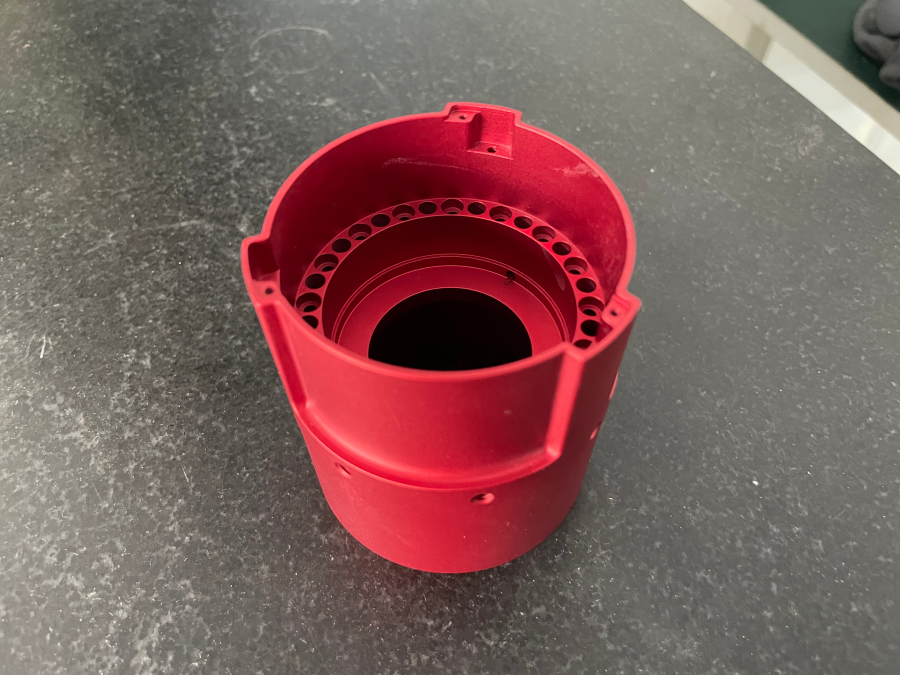
Post-processing: Anodizing, polishing, heat treating, and painting.
4. Industry-Specific Expertise
GreatLight Metal serves:
Automotive: Custom engine blocks, transmission housings, and EV battery trays.
Aerospace: Lightweight brackets, satellite components, and UAV parts.
Medical: Surgical tools, orthopedic implants, and diagnostic devices.
Robotics: Humanoid robot joints, actuators, and sensor housings.
Case Study: Humanoid Robot Joint Manufacturing
A leading robotics firm approached GreatLight Metal with a challenge: producing titanium alloy shoulder joints for their next-gen humanoid robot. The parts required:
Biocompatible titanium (Grade 5).
Complex internal channels for lubrication.
Surface roughness ≤ Ra 0.4μm to reduce friction.
GreatLight’s Solution:
Five-axis CNC machining carved the intricate geometry in a single setup, avoiding welding or assembly.
Micro-polishing achieved the required surface finish.
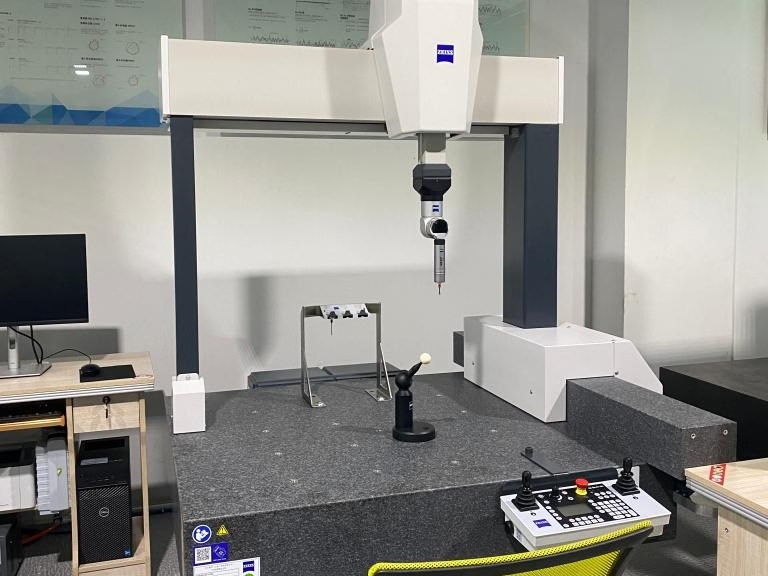
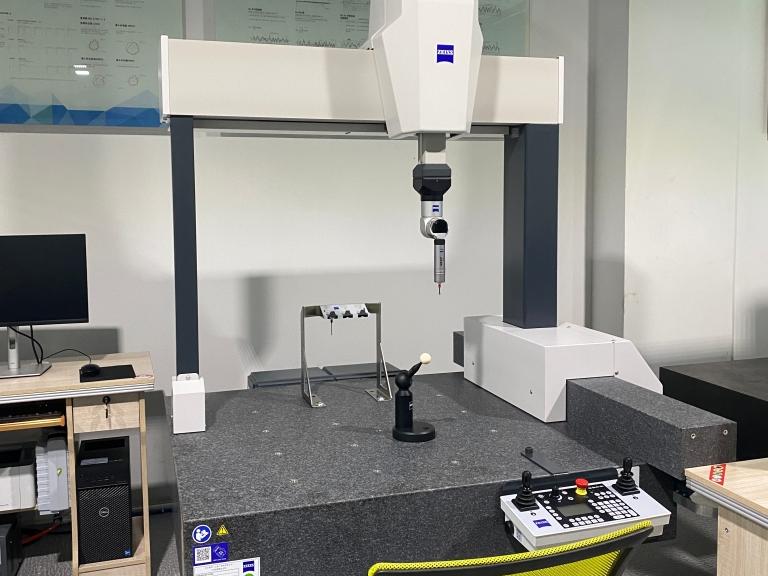
100% dimensional inspection with CMM (Coordinate Measuring Machine) ensured compliance.
Result: The client reduced lead time by 40% and achieved a 99.8% pass rate in functional testing.
Why Choose GreatLight Metal Over Competitors?
While global giants like Protolabs and Xometry offer CNC services, GreatLight Metal distinguishes itself through:
| Factor | GreatLight Metal | Competitors |
|---|---|---|
| Precision | ±0.001mm tolerance (industry-leading) | ±0.005mm typical |
| Certifications | ISO 9001, 13485, IATF 16949, 27001 | Limited to ISO 9001 in most cases |
| Process Chain | Full in-house capabilities (machining, 3D printing, finishing) | Often outsourced post-processing |
| Cost Efficiency | Competitive pricing due to localized production | Higher margins for global brands |
Conclusion: The Future of Precision Manufacturing is Five-Axis
For industries demanding high precision, complex geometries, and rapid turnaround, five-axis CNC machining is indispensable. GreatLight CNC Machining Factory combines cutting-edge technology, certified quality, and full-process expertise to deliver parts that meet the strictest standards. Whether you’re prototyping a medical device or scaling production of aerospace components, their team ensures your project succeeds from concept to completion.
Explore GreatLight Metal’s capabilities today and discover why clients worldwide trust them for mission-critical parts. For more insights, visit their LinkedIn profile.
Frequently Asked Questions (FAQs)
Q1: What materials can GreatLight Metal machine?
GreatLight Metal processes metals (aluminum, stainless steel, titanium, brass), plastics (PEEK, ABS, nylon), and composites (CFRP, GFRP).
Q2: How does five-axis CNC machining reduce costs?
By minimizing setups, material waste, and post-machining finishing, five-axis technology lowers labor and material expenses while improving quality.
Q3: What is GreatLight Metal’s minimum order quantity (MOQ)?
They accept orders as small as 1 part for prototyping and scale up to 10,000+ units for mass production.
Q4: How long does it take to receive a quote?
Quotes are typically provided within 24 hours after reviewing 3D CAD files and specifications.
Q5: Does GreatLight Metal handle post-processing?
Yes, they offer in-house services like anodizing, painting, heat treating, and laser etching for a turnkey solution.
Q6: What industries does GreatLight Metal serve?
Key sectors include automotive, aerospace, medical devices, robotics, consumer electronics, and industrial automation.
Q7: How does GreatLight Metal ensure data security?
They comply with ISO 27001 standards, using encrypted file transfers and restricted access to protect intellectual property.
Q8: Can GreatLight Metal assist with design optimization?
Absolutely! Their engineering team provides DFM feedback to improve manufacturability and reduce costs before production begins.



















