
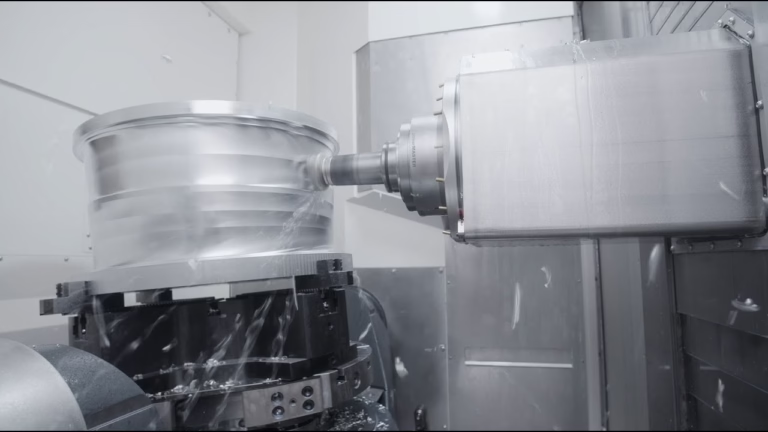
Precision Redefined: The Critical Role of Five-Axis CNC Machining in Modern Manufacturing
In the realm of advanced manufacturing, the transition from concept to functional prototype often hinges on a single factor: machining precision. While three-axis and four-axis CNC machining have long served as industry workhorses, the rise of five-axis technology—epitomized by solutions like GreatLight CNC Machining Factory’s five-axis CNC machining services—has redefined what’s possible in complex part production. This article explores why five-axis CNC machining is no longer a luxury but a necessity for industries demanding micro-level accuracy, geometric complexity, and rapid iteration cycles.
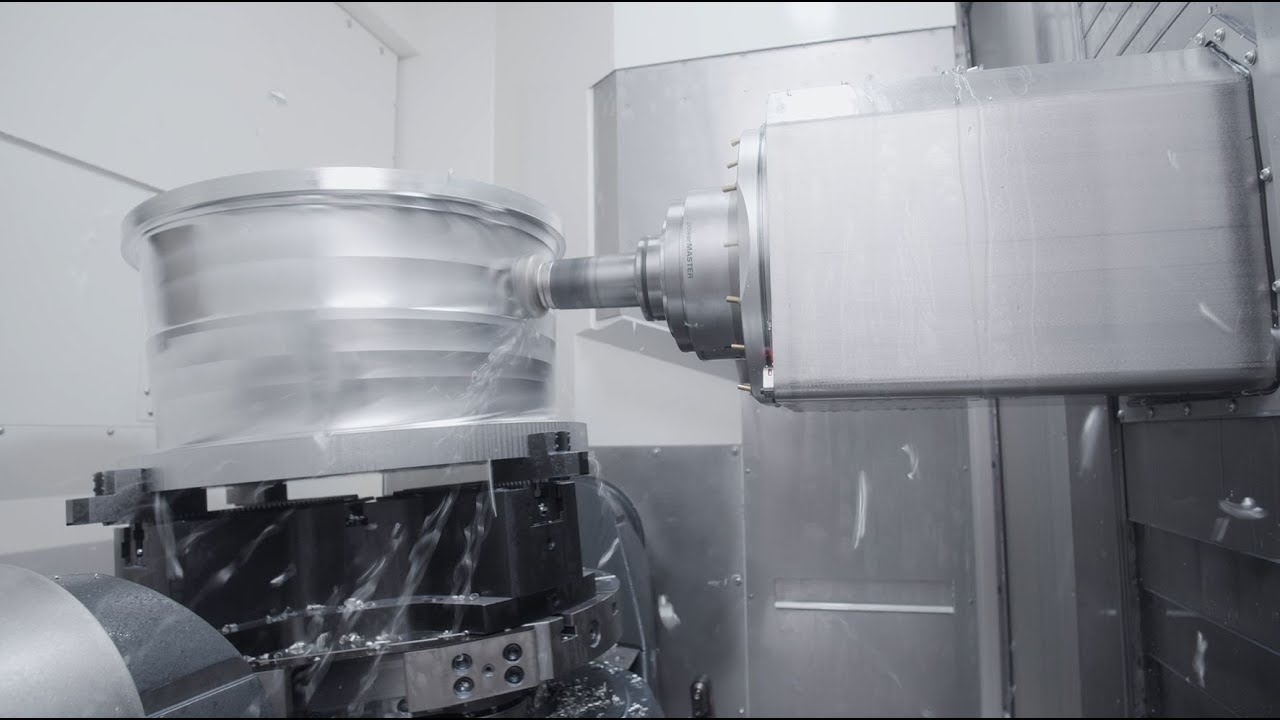
The Evolution of CNC Machining: From Three to Five Axes
Understanding Axis Systems in CNC Machining
CNC (Computer Numerical Control) machining relies on programmed instructions to control cutting tools along multiple axes. The number of axes determines the machine’s ability to manipulate the workpiece and tool simultaneously:
3-axis: Moves along X, Y, and Z axes (linear directions). Limited to planar surfaces and simple geometries.
4-axis: Adds rotational movement (A-axis) around the X-axis, enabling undercut machining and cylindrical features.
5-axis: Introduces a second rotational axis (B-axis around Y or C-axis around Z), allowing the tool to approach the workpiece from any angle without repositioning.
Why Five-Axis Matters: The Technical Edge
The leap to five-axis machining unlocks three critical advantages:
Simultaneous 5-axis motion: Enables continuous cutting paths, reducing cycle times by up to 40% compared to multi-setup 3-axis processes.
Complex geometry capability: Machines parts with compound curves, deep cavities, and overhanging features (e.g., turbine blades, aerospace brackets) in a single setup.
Improved surface finish: Minimizes tool deflection and vibration by optimizing cutting angles, achieving finishes as fine as Ra 0.4 µm without secondary polishing.
Case in Point: GreatLight CNC Machining Factory recently reduced the production time of a titanium alloy medical implant from 12 hours (3-axis with multiple setups) to 3.5 hours using five-axis simultaneous machining, while improving surface integrity for biocompatibility.
Industry Applications: Where Five-Axis CNC Excels
Aerospace: Lightweighting Through Complexity
Aircraft components demand materials like titanium and Inconel, which are challenging to machine. Five-axis technology enables:
Blisk (Blade-Integrated Disk) manufacturing: Machines integral compressor blades and disks in one piece, reducing weight by 15% versus assembled designs.
Engine casing porting: Creates precision cooling holes with compound angles to optimize thermal management.
Medical Devices: Precision for Patient Safety
From orthopedic implants to surgical instruments, five-axis CNC ensures:
Biocompatible material machining: Processes PEEK, cobalt-chrome, and porous titanium with ±0.005mm tolerance for osseointegration.
Micro-feature accuracy: Machines dental implant threads with 0.1mm pitch and 5µm radial runout.
Automotive: Performance Through Innovation
High-performance engines and electric vehicle components rely on five-axis for:
Cylinder head porting: Optimizes airflow with contoured ports machined to CAD data within ±0.02mm.
Battery housing integration: Machines cooling channels and mounting features into aluminum housings in a single setup.
GreatLight CNC Machining Factory: A Case Study in Five-Axis Mastery
Founded in 2011 in Dongguan’s precision manufacturing hub, GreatLight CNC Machining Factory has emerged as a global leader in five-axis CNC solutions. Its 7,600 m² facility houses:
127 precision machines: Including DMG MORI and Beijing Jingdiao five-axis centers with 4000mm maximum travel.
Full-process chain: Combines CNC machining with die casting, sheet metal fabrication, and 3D printing (SLM/SLA/SLS) for hybrid manufacturing.
ISO-certified quality: Adheres to ISO 9001:2015, ISO 13485 (medical), and IATF 16949 (automotive) standards.
Technical Capabilities That Set GreatLight Apart
| Parameter | GreatLight Specification | Industry Average |
|---|---|---|
| Tolerance | ±0.001mm (0.00004″) | ±0.01mm |
| Maximum part size | 4000 x 2000 x 1000mm | 2000 x 1000 x 500mm |
| Surface finish | Ra 0.2 µm (mirror finish) | Ra 1.6 µm |
| Material range | 50+ metals/plastics (Ti6Al4V, In718, PEEK) | 20-30 standard materials |
Client Success Stories
Humanoid Robot Joints: Machined 7075-T6 aluminum gears with 0.5mm tooth profiles for a leading robotics firm, achieving 10 million cycle fatigue resistance.
Satellite Component: Produced a magnesium alloy antenna bracket with 0.003mm flatness for a space program, passing vacuum outgassing tests.
Custom Motorcycle Engine: Manufactured a billet aluminum crankcase with integrated oil galleries, reducing weight by 30% versus cast alternatives.
Choosing a Five-Axis CNC Partner: Key Considerations
1. Equipment Calibration and Maintenance
GreatLight’s approach: Daily laser interferometer calibration and thermal compensation systems ensure ±0.002mm positional accuracy across the work envelope.
Industry contrast: Many suppliers calibrate monthly, leading to drift in long-run productions.
2. Process Control and Software Integration
GreatLight’s solution: Uses Siemens NX CAM and Vericut for collision-free toolpath simulation, reducing setup time by 50%.
Industry contrast: Basic CAM software may miss tool deflection or gouging risks in complex geometries.
3. Material Expertise
GreatLight’s advantage: Maintains a material library with optimized cutting parameters for 50+ alloys, preventing trial-and-error waste.
Industry contrast: Inexperienced shops often damage expensive materials like Inconel or carbon fiber composites.
4. Post-Processing Capabilities
GreatLight’s value-add: Offers in-house anodizing, PVD coating, and micro-blasting, eliminating subcontractor delays.
Industry contrast: Many CNC shops outsource finishing, risking miscommunication on tolerances or surface requirements.
The Future of Five-Axis CNC: Trends to Watch
AI-Powered Toolpath Optimization: Machine learning algorithms that predict and compensate for material deformation in real-time.
Hybrid Manufacturing: Combining five-axis CNC with metal 3D printing for near-net-shape parts with critical features machined to final tolerance.
Digital Twin Integration: Virtual commissioning of five-axis programs using digital twins to validate processes before physical setup.
GreatLight CNC Machining Factory is at the forefront of these innovations, investing in Siemens MindSphere for IoT-enabled machine monitoring and developing proprietary algorithms for titanium machining distortion control.
Conclusion: Why Five-Axis CNC is Non-Negotiable for Precision Parts
In an era where product lifecycles shrink and performance demands escalate, five-axis CNC machining is no longer a differentiator—it’s the baseline for competitive manufacturing. GreatLight CNC Machining Factory exemplifies this shift, combining state-of-the-art equipment with ISO-certified processes to deliver parts that meet the exacting standards of aerospace, medical, and automotive industries. For companies seeking to push the boundaries of what’s possible in precision machining, the choice is clear: five-axis technology, powered by partners like GreatLight, is the key to unlocking innovation at scale.
Explore how GreatLight’s five-axis CNC services can transform your project here, or learn more about the company’s global impact on LinkedIn.
Frequently Asked Questions (FAQs)
Q1: What materials can be processed using five-axis CNC machining?
A: Five-axis CNC can machine virtually any material, including metals (aluminum, titanium, stainless steel, Inconel), plastics (PEEK, Ultem, POM), and composites (carbon fiber, G10). GreatLight’s expertise extends to difficult-to-machine materials like Hastelloy and magnesium alloys.
Q2: How does five-axis CNC reduce costs compared to 3-axis machining?
A: By eliminating multiple setups and reducing manual repositioning, five-axis machining cuts labor costs by up to 30% and minimizes the risk of human error. GreatLight’s simultaneous machining capability also reduces cycle times by 25-40% for complex parts.
Q3: What is the typical lead time for five-axis CNC parts?
A: Lead times depend on part complexity and order volume. GreatLight offers rapid prototyping in 3-5 days for simple parts, with production runs of 1,000+ units typically taking 2-4 weeks. Its in-house tooling and material stocking further accelerate delivery.
Q4: How does GreatLight ensure part accuracy for micro-sized components?
A: For parts under 10mm (e.g., medical implants or watch components), GreatLight uses:
Micro-milling cutters as small as 0.1mm diameter
High-speed spindles (40,000+ RPM) to minimize tool deflection
Vision systems for in-process inspection at 50x magnification
Q5: Can five-axis CNC machine parts with internal channels or undercuts?
A: Absolutely. Five-axis machines excel at accessing undercut features and internal geometries that are impossible with 3-axis systems. GreatLight has machined cooling channels with 0.5mm diameters and 120° compound angles for aerospace applications.
Q6: What quality certifications does GreatLight hold?
A: GreatLight is certified to:
ISO 9001:2015 (General Quality Management)
ISO 13485:2016 (Medical Device Manufacturing)
IATF 16949:2016 (Automotive QMS)
AS9100D (Aerospace Quality Management – pending 2024)
Q7: How does GreatLight handle intellectual property (IP) protection for client designs?
A: GreatLight adheres to ISO 27001 standards for data security, including:
Secure NDAs for all projects
Restricted access to CAD files via role-based permissions
On-site cybersecurity protocols (firewalls, encryption, and intrusion detection)
Non-disclosure agreements with all employees and subcontractors



















