
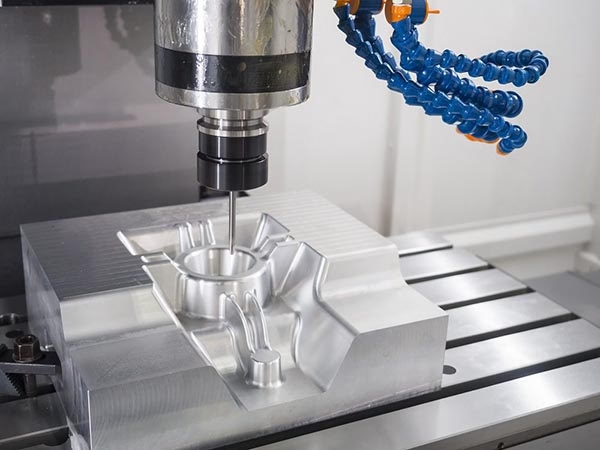
How To Calculate CNC Machining Time? The Complete Guide for Precision Parts Manufacturing
When sourcing or producing custom precision parts, one of the most frequently asked questions by engineers, procurement managers, and R&D teams is: “How long will it take to machine my parts?” Understanding how to calculate CNC machining time is not only crucial for production planning and cost estimation but also a key factor in evaluating supplier capabilities—especially when working with advanced technologies like five-axis CNC machining.
In this guide, we’ll explore the methodologies, formulas, and real-world considerations used by professional manufacturers like GreatLight CNC Machining Factory to accurately estimate machining duration for complex parts across industries such as aerospace, automotive, medical, and robotics.
Why Calculating CNC Machining Time Matters
Before diving into the “how,” let’s clarify the “why.” Accurate time estimation impacts:
Production scheduling
Cost quotation and budgeting
Lead time management
Resource allocation
Client expectations and delivery reliability
Especially for high-precision components that may involve multi-axis machining, tight tolerances (±0.001mm or better), and intricate geometries, time calculation isn’t just about machine runtime—it encompasses programming, toolpath generation, setup, inspection, and post-processing.
What Is CNC Machining Time?
CNC machining time refers to the total duration required to manufacture a part from raw material to a finished state through computer numerical control operations. It typically includes:
Actual Cutting Time (Run Time) – Time the machine spindle is cutting material.
Tool Change & Motion Time – Non-cutting movements between features.
Setup Time – Fixturing, workpiece mounting, and alignment.
Programming & Simulation Time – CAM programming and virtual verification.
Inspection & Quality Control
Post-Processing (Finishing) – Such as deburring, polishing, anodizing, etc.
For quoting and feasibility analysis, the total effective machining time is what most clients and manufacturers focus on.
How to Calculate CNC Machining Time: Core Methods
There are several approaches to estimating CNC machining time, depending on available data, part complexity, and machine type. Below are the most widely used methods in professional machine shops like GreatLight Metal Tech Co., LTD. (GreatLight Metal).
1. Basic Formula: Time = Distance ÷ Feed Rate
This is the most fundamental method for calculating the time taken to machine a specific feature, such as a pocket, contour, or slot.
🔧 Formula:
Machining Time (minutes) = Total Cutting Distance (mm) ÷ Feed Rate (mm/min)
Cutting Distance: The total path length the tool travels while cutting (e.g., the perimeter of a pocket or the length of a profile).
Feed Rate: The speed at which the tool moves through the material (depends on material, tool type, and surface finish).
✅ Example: If a tool needs to cut a slot with a total path length of 600 mm at a feed rate of 300 mm/min:
Time = 600 ÷ 300 = 2 minutes
This method works well for simple linear or 2.5-axis paths but doesn’t account for tool changes, acceleration/deceleration, or complex 3D contours.
2. Time Per Part Based on Machine Hourly Rate & Complexity
For more accurate estimations—especially for five-axis CNC machining or parts with multiple operations—manufacturers often estimate based on:
Machine hourly rate
Number of operations
Tooling complexity
Part size and material
🧮 Simplified Estimation Formula:
Estimated Time (hours) = (Setup Time + Cutting Time + Inspection Time)
Then:
Cost or Feasibility = Estimated Time × Machine Hourly Rate
Most CNC machines, especially 5-axis systems, cost between $100–$300/hour to operate, depending on automation level, location, and precision capability.
🎯 GreatLight CNC Machining Factory, for instance, leverages high-efficiency 5-axis machining centers capable of reducing total cycle times by up to 40% compared to conventional 3-axis methods for complex geometries.
3. CAM Software Estimation (Most Accurate for Complex Parts)
In professional environments, Computer-Aided Manufacturing (CAM) software—such as Mastercam, GibbsCAM, or PowerMill—automatically calculates machining time based on:
Toolpaths
Spindle speeds (RPM)
Feed rates
Tool geometry
Material removal rates (MRR)
These tools simulate the entire machining process and provide precise time breakdowns, including:
Roughing time
Finishing time
Drilling & tapping
Contouring
💡 Why this matters: For clients sourcing precision parts with intricate features (e.g., impellers, housings, connectors), relying on a supplier with advanced CAM integration—like GreatLight Metal—ensures both accuracy and efficiency in time estimation.
Factors That Influence CNC Machining Time
Understanding how to calculate CNC machining time also requires awareness of the variables that can accelerate or delay production. Key factors include:
| Factor | Impact on Time |
|---|---|
| Part Complexity | More features, undercuts, or angles increase time significantly |
| Tolerances Required | Tighter tolerances (e.g., ±0.001mm) require slower feeds and more inspections |
| Material Type | Hard metals like titanium or Inconel cut slower than aluminum or brass |
| Number of Setups | Multi-face or multi-axis machining may need re-fixturing |
| Tool Access & Geometry | Deep pockets or thin walls may need special tools, reducing feed rates |
| Machine Type | 5-axis machines can often complete jobs in fewer setups than 3-axis |
| Surface Finish Requirements | Polished or mirror finishes require additional post-processing time |
🏭 At GreatLight CNC Machining Factory, even with complex parts requiring tolerances down to ±0.001mm, their optimized workflows and experienced engineers ensure minimal unnecessary downtime.
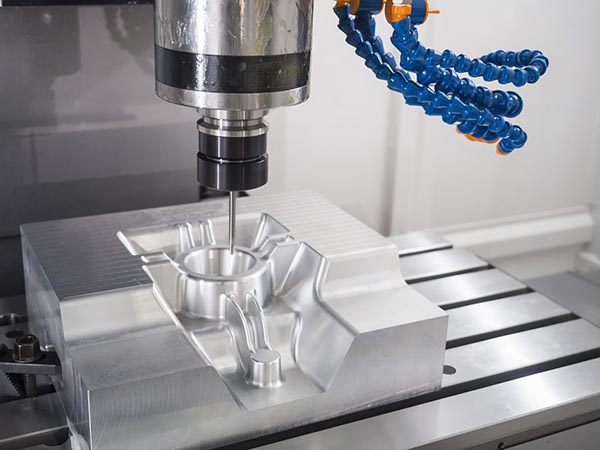
Practical Example: Estimating 5-Axis Machining Time
Let’s say you need a titanium aerospace component with the following specs:
Material: Titanium Grade 5
Features: Thin walls, internal cooling channels, 3D contoured surfaces
Tolerance: ±0.005mm
Quantity: 1 (prototype)
Steps:
CAM Programming & Simulation: 3–4 hours
Setup (Fixturing & Alignment): 1.5 hours
Roughing (3D Adaptive): 4 hours
Finishing (Contour & Surface): 6 hours
Inspection & Validation: 1 hour
Post-Processing (Deburring & Cleaning): 0.5 hours
🔢 Total Estimated Time: ~16 hours
On a high-performance 5-axis CNC machine, this might translate to 2 business days with optimized scheduling—far quicker than traditional methods, thanks to GreatLight Metal’s advanced equipment and integrated processes.
Choosing the Right CNC Machining Partner
Calculating machining time is as much an art as a science. While the formulas above provide a foundation, real-world execution depends heavily on:
Machine capability
Operator expertise
Quality systems
Supply chain integration
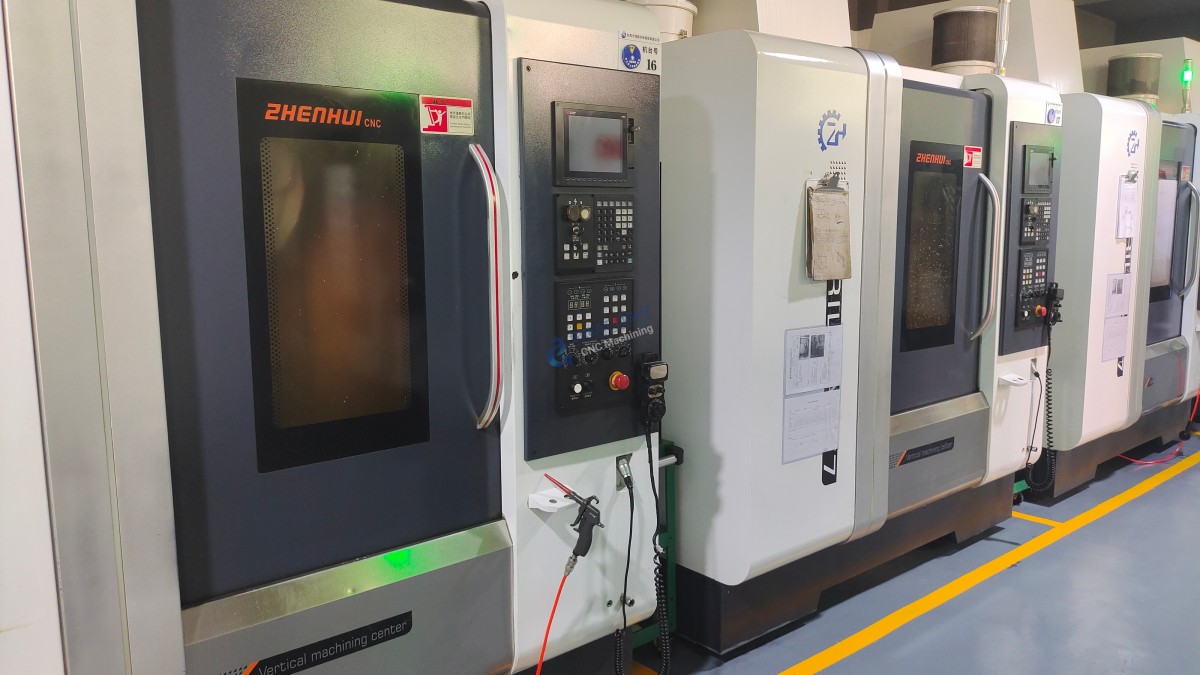
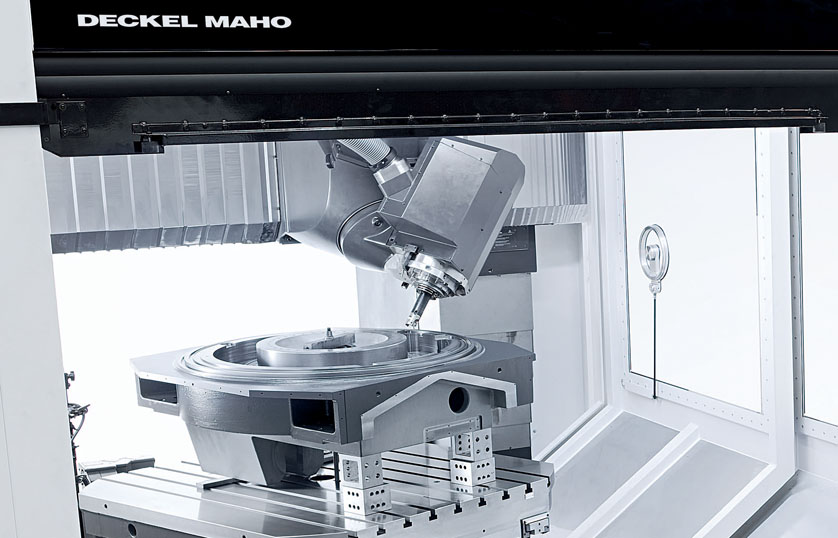
That’s where GreatLight CNC Machining Factory stands out. As a professional five-axis CNC machining manufacturer with over a decade of experience, they offer:
✅ Advanced 3-, 4-, and 5-axis CNC centers
✅ ISO 9001:2015, IATF 16949, and ISO 13485 certifications
✅ One-stop post-processing & finishing
✅ Rapid prototyping & low-to-mid volume production
✅ Precision up to ±0.001mm
✅ In-house measurement & quality assurance
Whether you’re developing components for humanoid robots, automotive engines, or medical devices, their team ensures that your parts are not only delivered on time—but built to the highest performance standards.
👉 Learn more about their precision 5-axis CNC machining services here: https://glcncmachining.com/precision-5-axis-cnc-machining-services/ (New Window)
Connect with their team on LinkedIn for industry insights and case studies: https://www.linkedin.com/company/great-light/ (New Window)
Conclusion: Mastering CNC Machining Time Calculation
How to calculate CNC machining time? It begins with understanding the fundamentals—cutting distance, feed rate, and machine operation—and evolves into leveraging CAM simulations, production data, and expert engineering judgment. For manufacturers and buyers alike, accurate time estimation ensures smoother production, realistic budgets, and on-time delivery.
When precision, speed, and reliability are non-negotiable—especially for complex or mission-critical parts—partnering with an experienced manufacturer like GreatLight CNC Machining Factory makes all the difference. Their mastery of five-axis CNC machining, combined with certified quality systems and a customer-first approach, ensures your parts are produced efficiently, accurately, and on schedule.
Calculating CNC machining time isn’t just about numbers—it’s about precision engineering, smart planning, and the right manufacturing partner.
Frequently Asked Questions (FAQ)
❓ What is the average CNC machining time per part?
It varies widely based on complexity, material, and quantity. Simple parts may take minutes, while complex 5-axis parts could take 10–20 hours or more.
❓ How do I estimate machining time for a new design?
Start with CAD analysis, identify key features, consult with your machinist or use CAM software to simulate and calculate time accurately.
❓ Does material type affect machining time?
Yes. Softer materials (e.g., aluminum) machine faster than harder ones (e.g., titanium or stainless steel), which require slower feeds and more time.
❓ Can setup time be reduced?
Yes, with standardized fixtures, modular tooling, and experienced operators. Suppliers like GreatLight Metal optimize setup for fast turnaround.
❓ Is 5-axis machining always faster?
Not always, but it reduces the number of setups for complex geometries, improving overall efficiency and time-to-part.
By mastering the art and science of CNC machining time calculation, you empower your projects with foresight, efficiency, and confidence—ensuring that every part, from prototype to production, meets the highest standards of precision and performance.



















