

In the dynamic landscape of modern manufacturing, Computer Numerical Control (CNC) machining stands as a cornerstone technology, transforming digital blueprints into precise, complex, and reliable physical parts. For clients in the precision parts machining and customization field, understanding the vast capabilities of a CNC machine is fundamental to unlocking innovation and optimizing production. At its core, a CNC machine is a subtractive manufacturing system that uses computerized controls to operate machine tools, removing material from a solid block (workpiece) to produce a custom-designed part. The scope of what CNC machining can accomplish is both broad and profound, extending far beyond simple cutting.
H2: The Core Capabilities of CNC Machining: Beyond Basic Cutting
While the fundamental principle is material removal, the sophistication lies in how and what it can remove. Modern CNC technology encompasses a versatile family of processes.
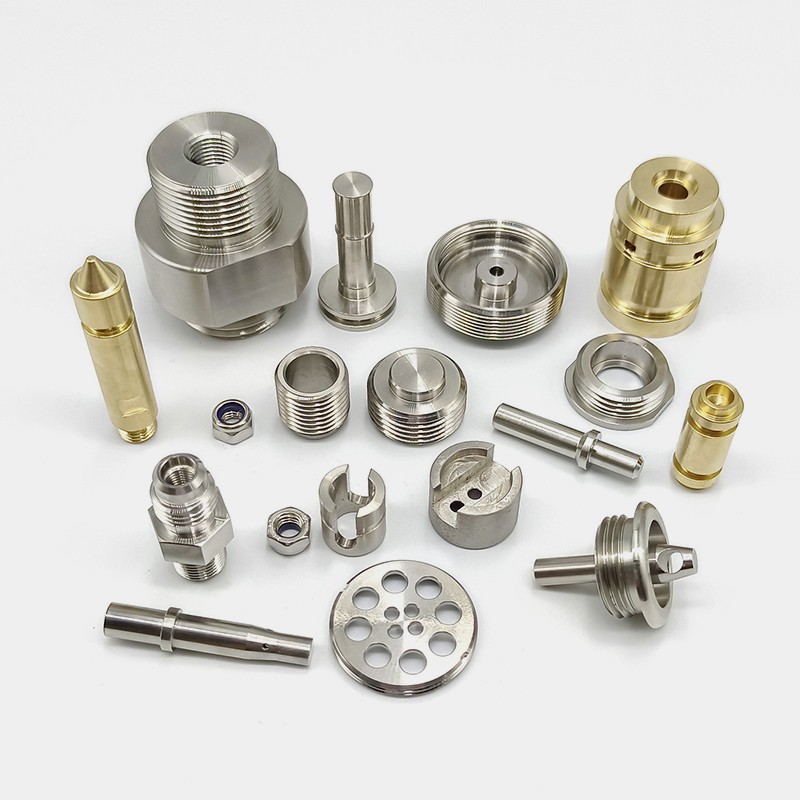
CNC Milling: This is arguably the most common and versatile form. A rotating multi-point cutting tool moves along various axes to carve features from the workpiece. It can create pockets, slots, holes, complex contours, and three-dimensional surfaces.
CNC Turning: Primarily used for cylindrical parts, the workpiece rotates while a single-point cutting tool is traversed along its length. It excels at producing shafts, pins, bushings, and any part with rotational symmetry.
Multi-Axis Machining (3-Axis, 4-Axis, 5-Axis): This is where complexity meets precision.
3-Axis: The standard for most milling, moving in X, Y, and Z linear axes.
4-Axis: Adds a rotational axis (typically A-axis), allowing machining around the circumference of a part without repositioning.
5-Axis: The pinnacle for complex geometries. It adds two rotational axes (e.g., A and B or C), enabling the cutting tool to approach the workpiece from virtually any direction in a single setup. This is critical for aerospace components, impellers, turbine blades, and intricate medical implants. Facilities like GreatLight CNC Machining Factory, with their advanced five-axis capabilities, specialize in solving such high-complexity challenges.
CNC Drilling and Tapping: Creating precise, consistently located holes with specific depths and threading them accurately.
CNC Grinding: For achieving ultra-fine surface finishes and extremely tight tolerances on hardened materials, using a rotating abrasive wheel.
Electrical Discharge Machining (EDM): Used for machining extremely hard materials or complex shapes that are difficult for traditional cutting tools. It uses electrical sparks to erode material.
H3: What Can a CNC Machine Create? A Material and Industry Panorama
The true power of CNC is reflected in the diversity of parts it can produce across virtually every industry.
1. Materials It Can Handle:
CNC is material-agnostic, working with a vast array to suit functional requirements:
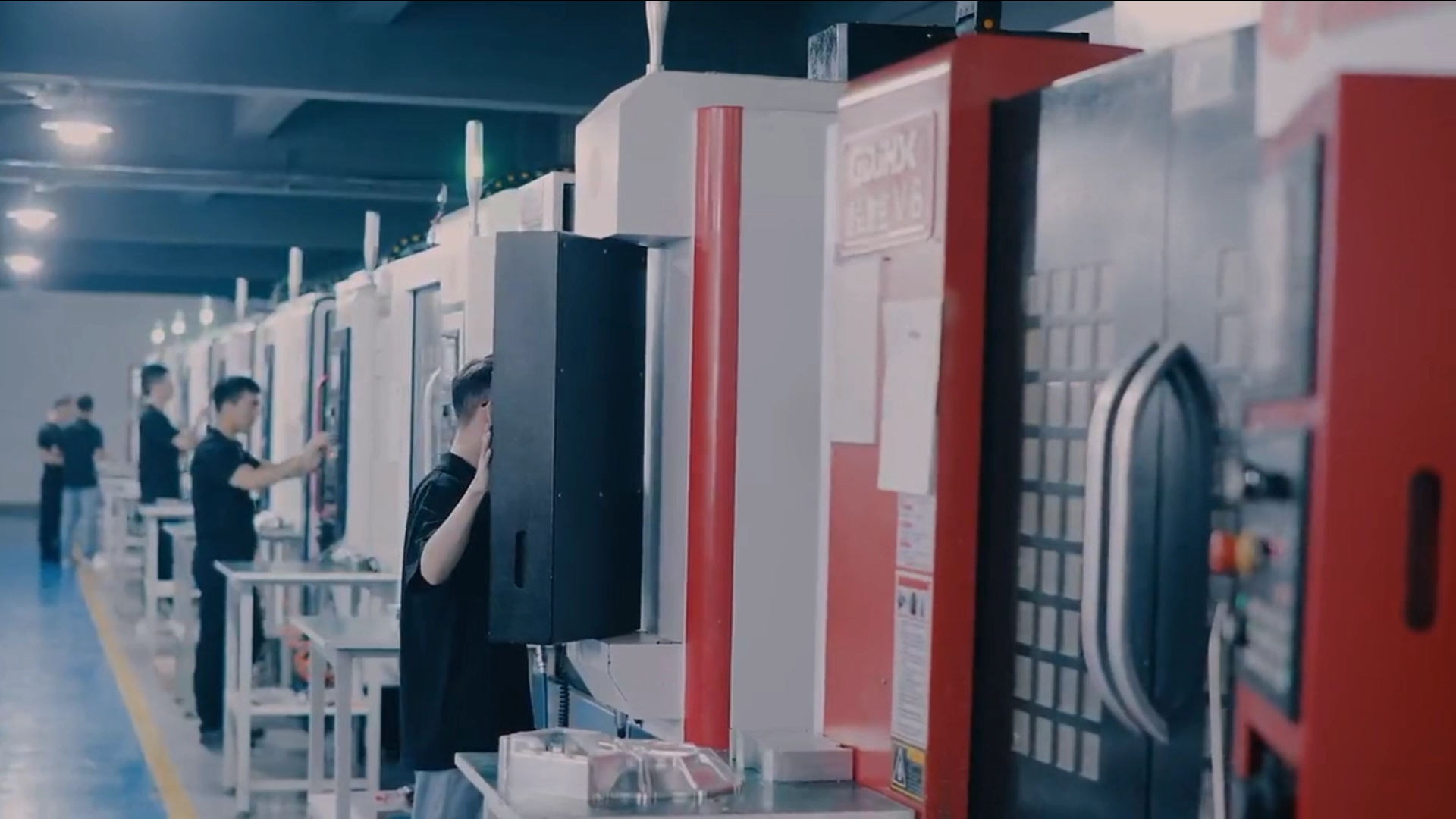
Metals: Aluminum (various alloys), Stainless Steel, Titanium, Brass, Copper, Inconel, Tool Steels.
Plastics: ABS, Polycarbonate, PEEK, Nylon, Delrin (Acetal), PTFE.
Composites: Certain reinforced plastics and epoxy boards.
Wood and Foams: For prototyping, molds, and specialty applications.
2. Industries It Serves:
Aerospace & Defense: Lightweight, high-strength structural components, engine parts, landing gear components, and drones, all requiring impeccable precision and material integrity.
Automotive & Racing: From prototyping new engine blocks to producing high-performance transmission components and custom aftermarket parts with tight tolerances for fit and function.
Medical & Dental: Surgical instruments, orthopedic implants (knees, hips), dental abutments, and diagnostic device housings that demand biocompatibility and flawless surface finishes.
Electronics & Telecommunications: Heat sinks, enclosures, connectors, waveguide components, and fixtures that require electrical insulation or specific thermal properties.
Industrial Machinery: Gears, housings, rollers, molds, and custom tooling that form the backbone of other manufacturing processes.
Consumer Products: High-end watch components, custom bicycle parts, camera housings, and architectural hardware.
H3: The Distinct Advantages: Why CNC Reigns Supreme for Precision Parts
Choosing CNC machining over other methods is driven by a compelling set of advantages crucial for customization and precision:
Extreme Precision and Repeatability: CNC machines consistently hold tolerances within ±0.001 inches (0.025mm) or even tighter with high-end equipment, ensuring every part in a batch is identical.
Complex Geometry Capability: It can produce shapes that are impossible or prohibitively expensive with manual machining or casting, including complex 3D contours, undercuts, and intricate internal features.
Superior Material Properties: Unlike additive manufacturing (3D printing), CNC parts are carved from solid blocks or near-net-shape blanks, resulting in superior, isotropic mechanical strength and material integrity.
Scalability and Flexibility: It efficiently bridges the gap from a single prototype to low or medium-volume production without the need for expensive tooling (like injection molds). Design changes are implemented by simply modifying the digital program.
Excellent Surface Finish: Through the machining process itself and subsequent in-house finishing services (like anodizing, plating, polishing), CNC parts can achieve a wide range of functional and aesthetic finishes.
H2: Real-World Applications: From Digital File to Functional Part
Imagine an engineer designing a new titanium orthopedic knee implant. The design features complex, organic bone-integrating surfaces and precisely machined bearing interfaces. A 3-axis CNC machine might struggle with the undercuts. However, a 5-axis CNC machining center, like those operated by GreatLight CNC Machining Factory, can machine this part in a single setup, maintaining critical anatomical geometries and achieving the medical-grade surface finish required for biocompatibility. The same principle applies to an aluminum alloy aerospace bracket with compound angles or a high-precision optical mount for a laser system.
Conclusion
So, what can a CNC machine do? It can transform a vision into reality with unerring accuracy. It can turn the toughest alloys into life-saving medical devices and the most stable plastics into critical components for the next technological breakthrough. It is the enabling technology for customization, complexity, and quality in modern manufacturing. For businesses seeking reliable, precise, and versatile manufacturing solutions, partnering with an expert who masters the full spectrum of CNC machining capabilities—from 3-axis to advanced 5-axis CNC machining—is not just an option; it is a strategic imperative to drive product development and maintain a competitive edge.
Frequently Asked Questions (FAQ)
Q1: What is the highest precision a CNC machine can achieve?
A: While standard CNC machining reliably holds tolerances of ±0.001″ (±0.025mm), high-precision machining centers in controlled environments, like those used for optical or medical components, can achieve tolerances in the micron range (±0.0002″ or ±0.005mm). This depends on machine calibration, tooling, material, and the shop’s expertise, such as the ±0.001mm capability highlighted by advanced manufacturers.
Q2: Can a CNC machine make a part completely on its own from start to finish?
A: Often, yes, in a single setup—especially on multi-axis machines. This is a key advantage. However, very complex parts might require manual repositioning for features on all sides, or secondary operations like specialized heat treatment or surface plating will be performed off the machine. A full-service provider integrates these steps seamlessly.
Q3: How does CNC machining compare to 3D printing for prototyping?
A: They are complementary. CNC machining is ideal for functional prototypes that need to match the final part’s material strength, durability, and tolerance. 3D printing excels at rapid form-and-fit models, highly complex organic shapes with internal lattices, and when speed is prioritized over material properties. Many projects use both: 3D printing for initial concepts and CNC for pre-production validation.
Q4: What are the main cost drivers in a CNC machining project?
A: Key factors include:
Part Design: Complexity, required tolerances, and surface finish.
Material: Cost and machinability of the raw stock.
Machining Time: Driven by part volume, geometry, and the number of setups.
Quantity: Per-part cost decreases with volume due to amortized programming/setup time.
Secondary Operations: Any required post-processing (anodizing, painting, assembly).
Q5: Why would I choose a supplier with 5-axis capabilities over a standard 3-axis shop?
A: Choosing a supplier like GreatLight CNC Machining Factory with 5-axis capabilities offers significant benefits: reduced setup time (complex parts are made in one fixture), improved accuracy (no cumulative errors from multiple setups), and the ability to machine highly complex geometries (undercuts, compound angles) that are simply impossible with 3-axis machines. It provides greater design freedom and often a faster time-to-market for sophisticated components.
Q6: How do I ensure the quality of CNC machined parts from a supplier?
A: Look for a supplier with a documented Quality Management System, such as ISO 9001:2015 certification. Inquire about their in-house inspection equipment (like CMMs, optical comparators) and their process for First Article Inspection (FAI). Reputable manufacturers will be transparent about their capabilities and quality control processes, providing inspection reports with deliveries. You can learn more about industry standards and practices from professional networks like those found on LinkedIn{:target=”_blank”}.



















