
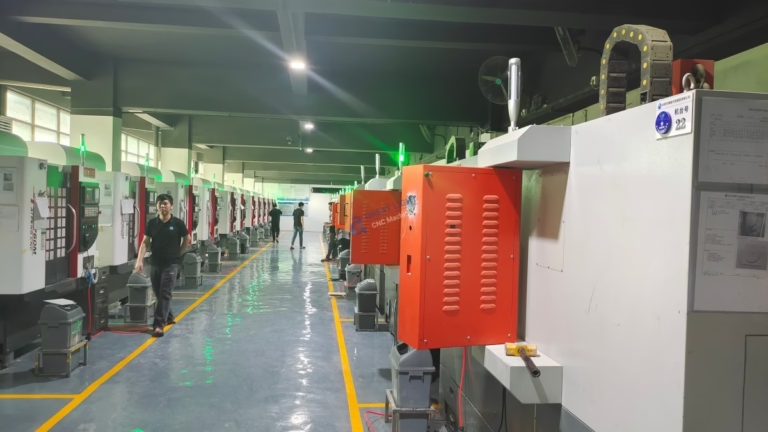
From Design to Reality: Leveraging Five-Axis CNC Machining for High-Precision Part Production
In the era of Industry 4.0, the seamless integration of CAD (Computer-Aided Design) and CNC (Computer Numerical Control) machining has become the cornerstone of precision manufacturing. For engineers and designers, the ability to translate digital models into physical parts with micron-level accuracy is no longer a luxury—it’s a necessity. However, the journey from design to finished product involves far more than just pressing “start” on a CNC machine.
This article explores how five-axis CNC machining—the pinnacle of subtractive manufacturing—works in tandem with AutoCAD and other design software to solve complex metal and plastic part challenges. We’ll dissect the workflow, address common pain points, and explain why GreatLight CNC Machining Factory stands out as a leader in this field.
The CAD-to-CNC Workflow: A Step-by-Step Breakdown
1. Design in AutoCAD: From Concept to 3D Model
AutoCAD remains a cornerstone of industrial design due to its precision and versatility. When creating parts for CNC machining:
Use precise dimensions: Ensure all features (holes, slots, contours) are defined with tolerances suitable for CNC (typically ±0.001mm to ±0.01mm for high-precision work).
Optimize for machinability: Avoid undercuts or deep cavities that may require specialized tooling.
Export in neutral formats: Save files as STEP (.step) or IGES (.iges) for compatibility with CAM software.
Pro Tip: For complex geometries, consider using SolidWorks or Fusion 360, which offer better CAM integration.
2. CAM Programming: Translating Design into Machine Code
CAM (Computer-Aided Manufacturing) software converts your 3D model into G-code, the instructions that guide the CNC machine. Key steps include:
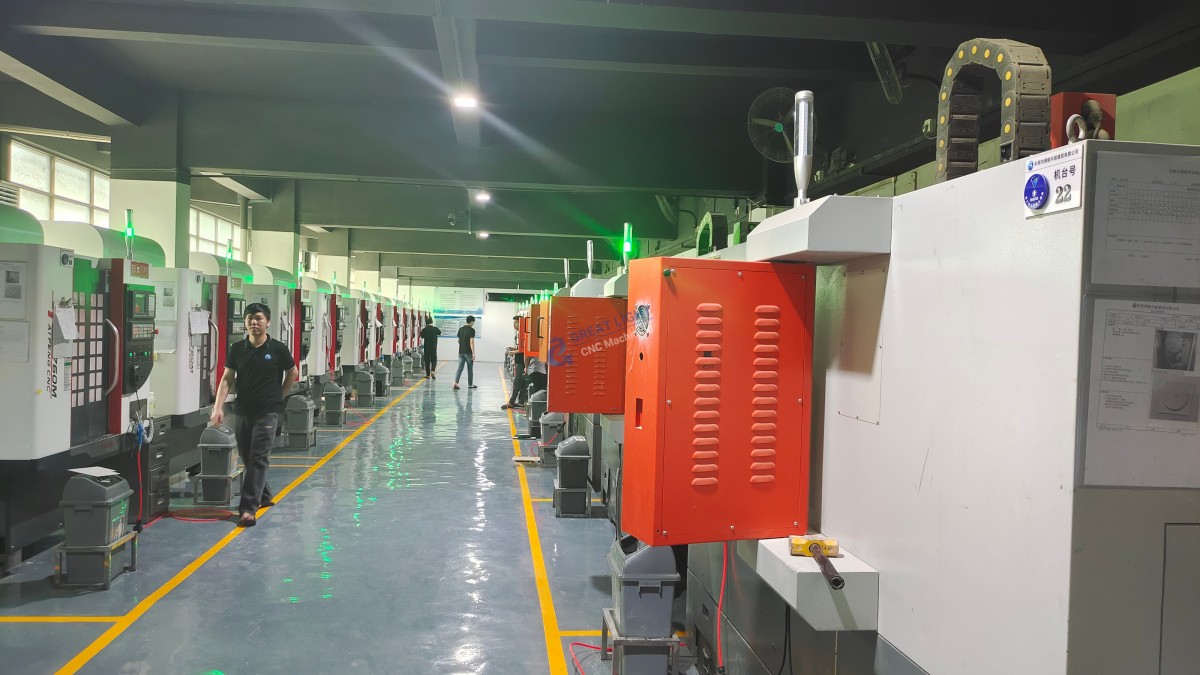
Toolpath generation: Define cutting paths, speeds, and feeds based on material properties (e.g., aluminum vs. titanium).
Collision avoidance: Simulate tool movements to prevent crashes, especially critical in five-axis machining where the cutting tool can approach the part from multiple angles.
Post-processing: Adjust G-code for your specific CNC controller (e.g., Fanuc, Siemens, or Heidenhain).
GreatLight’s Advantage: Our in-house CAM experts use Mastercam and PowerMill to optimize toolpaths for five-axis machines, reducing cycle times by up to 30% compared to traditional 3-axis setups.
3. Five-Axis CNC Machining: The Ultimate in Precision and Flexibility
Unlike 3-axis machines (which move along X, Y, and Z axes), five-axis CNC machining adds two rotational axes (A and B), enabling:
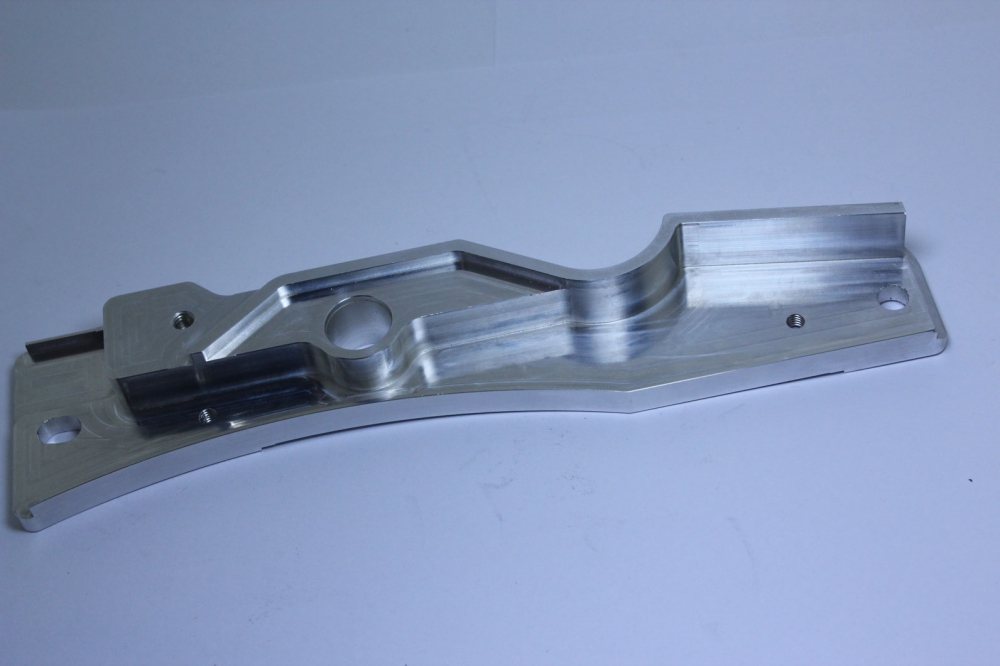
Complex geometry machining: Single-setup processing of parts with undercuts, compound angles, or organic shapes (e.g., aerospace components, medical implants).
Reduced lead times: Eliminates the need for multiple fixtures or repositioning.
Superior surface finish: Minimizes tool marks by optimizing cutting angles.
Why GreatLight? Our factory houses 12 high-precision five-axis CNC centers from brands like Dema and Beijing Jingdiao, capable of holding tolerances as tight as ±0.001mm.
4. Post-Processing and Quality Control
After machining, parts undergo:
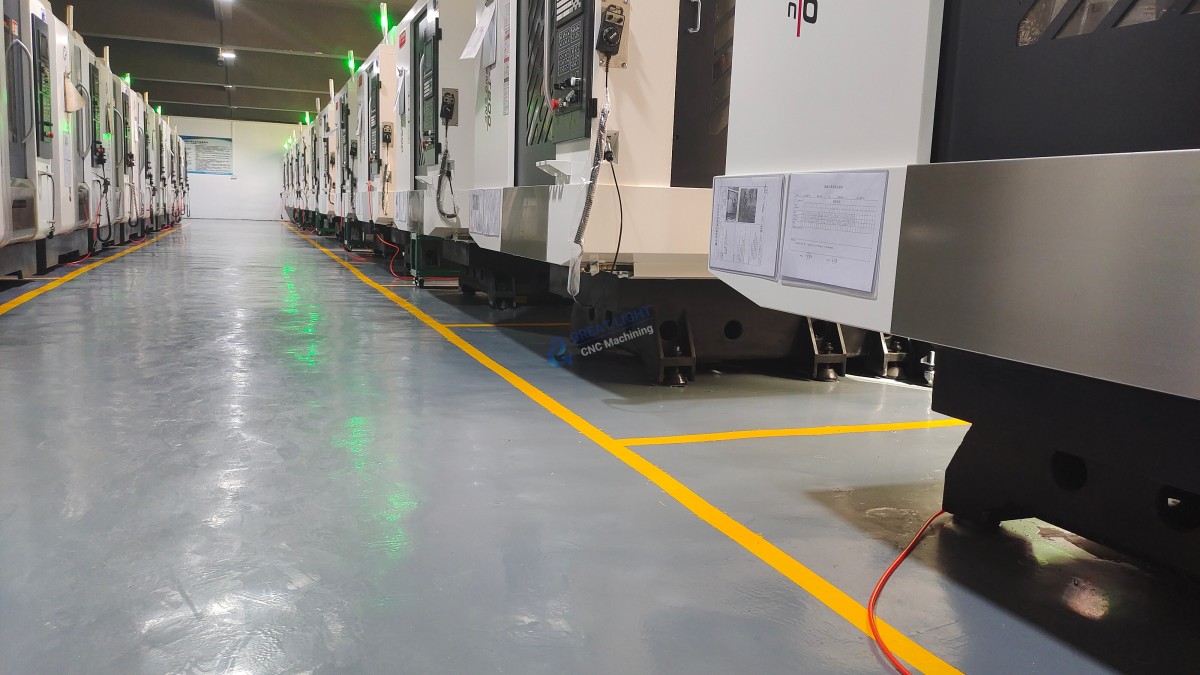
Deburring and polishing: To remove sharp edges and improve aesthetics.
Surface treatments: Anodizing, plating, or passivation for corrosion resistance.
Dimensional inspection: Using CMM (Coordinate Measuring Machines) and laser scanners to verify compliance with specifications.
GreatLight’s Commitment: We offer free rework for quality issues and a full refund if defects persist, backed by ISO 9001:2015 certification.
Why Choose Five-Axis CNC Machining Over Traditional Methods?
| Factor | Five-Axis CNC | 3-Axis CNC | Die Casting/3D Printing |
|---|---|---|---|
| Precision | ±0.001mm (medical-grade accuracy) | ±0.01mm (standard industrial) | ±0.05mm (typical for 3D printing) |
| Complexity | Handles undercuts and organic shapes | Limited to prismatic parts | Requires support structures for overhangs |
| Material Compatibility | Metals (aluminum, titanium, steel), plastics | Metals and plastics | Primarily plastics and resins |
| Lead Time | 5–10 days (rapid prototyping) | 7–14 days | 2–4 weeks (tooling required) |
| Cost Efficiency | Higher per-part cost, lower volume | Lower per-part cost, higher volume | High tooling costs for low volumes |
GreatLight’s Edge: Unlike many suppliers, we combine five-axis machining with 3D printing and die casting, offering a one-stop solution for projects of any complexity.
Case Study: Aerospace Component Manufacturing
A client needed a titanium alloy bracket for a satellite deployment system with:
Tight tolerances: ±0.002mm on critical dimensions.
Complex geometry: Multiple undercuts and thin walls (<1mm).
Lightweighting: Minimal material removal to reduce weight.
GreatLight’s Solution:
Used Fusion 360 to design the part with DFM (Design for Manufacturing) principles.
Programmed a five-axis Dema CNC center with custom toolpaths to avoid vibrations.
Applied EDM (Electrical Discharge Machining) for internal features.
Performed vacuum heat treatment to enhance strength.
Result: The client received 100% compliant parts in 8 days, reducing their product launch timeline by 3 weeks.
Frequently Asked Questions (FAQ)
Q1: What materials can GreatLight machine?
We specialize in metals (aluminum, titanium, stainless steel, magnesium) and engineering plastics (PEEK, Ultem, Nylon).
Q2: How does five-axis machining reduce costs?
By enabling single-setup production, it eliminates the need for multiple fixtures and reduces labor costs associated with repositioning.
Q3: What is your minimum order quantity (MOQ)?
We accept prototypes (1–10 pieces) and low-volume production (10–1,000 pieces), with discounts for larger orders.
Q4: How do you ensure data security for proprietary designs?
Our systems comply with ISO 27001 standards, and we sign NDAs (Non-Disclosure Agreements) with all clients.
Q5: What industries do you serve?
Our expertise spans aerospace, automotive, medical devices, robotics, and consumer electronics.
Conclusion: The Future of Precision Manufacturing Is Here
Five-axis CNC machining is not just a tool—it’s a strategic advantage for companies seeking to push the boundaries of innovation. By partnering with GreatLight CNC Machining Factory, you gain access to:
✅ State-of-the-art equipment (127+ machines, including 12 five-axis centers).
✅ ISO-certified quality (9001, 13485, IATF 16949).
✅ End-to-end solutions (design, machining, finishing, and assembly).
Whether you’re developing a humanoid robot joint or a high-performance engine component, our team is ready to turn your vision into reality.
Explore our five-axis CNC machining services here and discover why leading brands trust GreatLight for their most critical projects.
Connect with us on LinkedIn for case studies and industry insights.



















