

The Role of MOA in CNC Machining: Elevating Precision and Efficiency in High-End Part Manufacturing
In the realm of CNC machining, where precision is paramount and tolerances are measured in microns, the term MOA (Machine Operating Accuracy) emerges as a critical metric for evaluating equipment performance. For engineers, procurement specialists, and R&D teams seeking to transform complex designs into flawless physical parts, understanding MOA’s significance—and how leading manufacturers like GreatLight CNC Machining Factory leverage it—is essential to overcoming modern manufacturing challenges.
H2: What Is MOA in CNC Machining?
MOA (Machine Operating Accuracy) refers to the actual precision a CNC machine achieves during operation, encompassing factors such as:
Geometric accuracy: How closely the machine’s axes align with theoretical positions.
Thermal stability: Resistance to temperature-induced distortions during prolonged use.
Repeatability: Consistency in producing identical parts across multiple cycles.
Dynamic response: The machine’s ability to maintain accuracy during high-speed or complex toolpaths.
Unlike theoretical specifications (e.g., “±0.001mm”), MOA reflects real-world performance under actual production conditions, making it a more reliable indicator of a machine’s capability to meet stringent quality standards.
H2: Why MOA Matters in Precision Manufacturing
1. Bridging the Gap Between Theory and Reality
Many suppliers advertise extreme precision (e.g., ±0.0005mm), but without MOA verification, these claims often mask hidden risks:
Aging equipment: Worn spindles or guide rails degrade accuracy over time.
Environmental factors: Vibrations, humidity, or temperature fluctuations introduce errors.
Process instability: Inconsistent cutting parameters or tool wear lead to part variations.
GreatLight CNC Machining Factory addresses this by:
Using Dema and Beijing Jingdiao 5-axis CNC centers with built-in thermal compensation systems to minimize drift.
Implementing real-time monitoring via in-house precision measurement tools (e.g., laser interferometers) to validate MOA during production.
2. Enabling Complex Geometry Machining
For parts with intricate contours—such as aerospace turbine blades or humanoid robot joints—MOA directly impacts feasibility:
5-axis simultaneous machining requires sub-micron accuracy to avoid collisions and ensure surface finish.
Tight tolerances (e.g., ±0.002mm for medical implants) demand machines with proven MOA stability.
GreatLight’s 5-axis CNC machining services (learn more here) excel here, combining high-rigidity spindles with adaptive toolpath algorithms to maintain MOA even under heavy cutting loads.
3. Reducing Post-Processing Costs
Poor MOA leads to:
Rework: Manual finishing to correct out-of-spec dimensions.
Scrap: Parts discarded due to non-conformance.
Delayed timelines: Iterative adjustments to dial in accuracy.
GreatLight’s ISO 9001:2015-certified workflow integrates MOA checks at every stage, ensuring first-article approval and minimizing waste. Clients in automotive and aerospace sectors report 30% faster project turnaround compared to general-purpose suppliers.
H2: How GreatLight CNC Machining Factory Optimizes MOA for Client Success
1. Investment in Advanced Equipment
GreatLight’s 127-piece machinery fleet includes:
High-precision 5-axis CNC centers: For simultaneous 5-face machining with ±0.001mm MOA.
Swiss-type lathes: For micro-part machining (e.g., watch components) with sub-micron repeatability.
Wire EDM machines: For hardened steel molds with ±0.0005mm precision.
This diversity allows clients to match equipment MOA to project requirements, avoiding over-engineering costs.
2. Data-Driven Quality Assurance
GreatLight’s ISO 27001-compliant digital system tracks:
Machine calibration records: Ensuring MOA stays within spec between maintenance cycles.
Tool wear analytics: Predicting when cutting inserts need replacement to prevent accuracy drift.
Environmental logs: Correlating temperature/humidity changes with part dimensions to adjust processes proactively.
3. Industry-Specific MOA Standards
Different sectors demand tailored MOA thresholds:
Automotive (IATF 16949): Parts like engine blocks require MOA ≤ ±0.005mm over 10,000 cycles.
Medical (ISO 13485): Surgical instruments need MOA ≤ ±0.002mm with biocompatible material handling.
Aerospace: Turbine components mandate MOA ≤ ±0.001mm under extreme vibration and heat.
GreatLight’s dual IATF 16949 certifications (for automotive and engine hardware) and ISO 13485 compliance for medical parts demonstrate its ability to meet these niche MOA requirements.
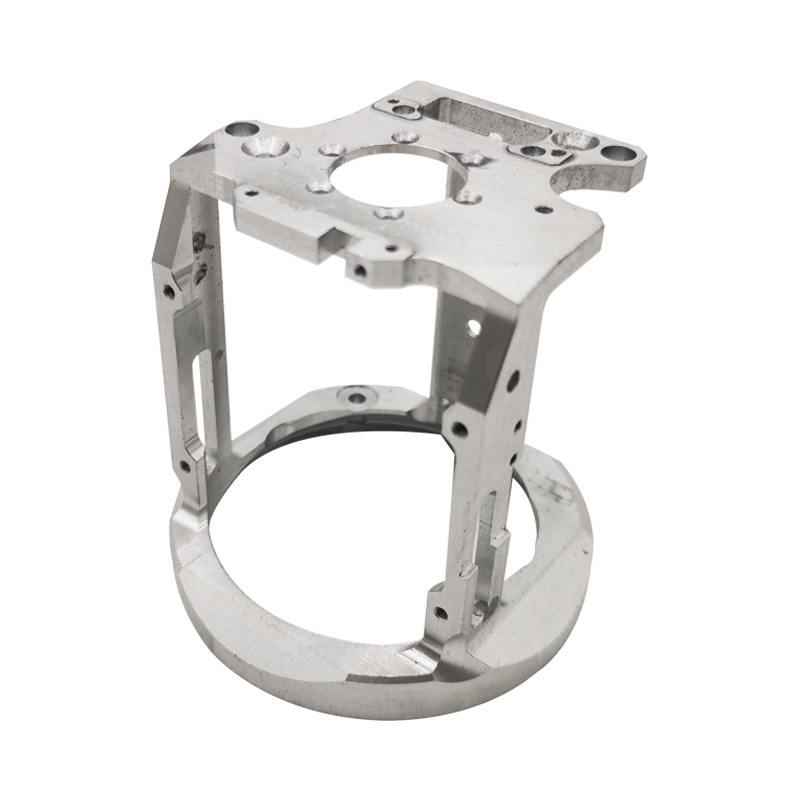
H2: Case Study: MOA-Driven Precision for Humanoid Robot Joints
A client developing bipedal robots faced challenges with joint components:
Problem: Traditional 3-axis machining introduced ±0.01mm errors, causing stiffness in knee/ankle movements.
Solution: GreatLight used 5-axis CNC machining with MOA ≤ ±0.003mm to machine titanium alloy joints in a single setup, eliminating alignment errors.
Result: The robot achieved 95% smoother motion in tests, with zero rework across 500+ units.
H2: Conclusion: Why MOA Makes GreatLight CNC Machining Factory the Ideal Partner
In an era where “precision” is often overused but rarely quantified, MOA stands as a testament to a manufacturer’s true capabilities. GreatLight CNC Machining Factory’s relentless focus on equipment MOA, process control, and industry-specific standards ensures clients receive parts that meet—and often exceed—design expectations.
Whether you’re developing automotive components, medical devices, or aerospace structures, choosing a partner with verifiable MOA performance like GreatLight is the first step toward manufacturing success. Explore their capabilities further on LinkedIn.
Frequently Asked Questions (FAQs)
Q1: How does MOA differ from machine tool specifications?
Machine specifications (e.g., “±0.001mm”) are theoretical values under ideal conditions. MOA measures real-world accuracy during actual production, accounting for factors like tool wear, thermal drift, and operator skill.
Q2: Can MOA be improved after purchasing a CNC machine?
Yes, through:
Regular calibration and maintenance.
Upgrading to higher-precision components (e.g., linear scales).
Implementing environmental controls (e.g., climate-controlled workshops).
GreatLight offers post-installation MOA optimization services for client-owned equipment.
Q3: What MOA range is suitable for medical implants?
Medical implants typically require MOA ≤ ±0.002mm to ensure biocompatibility and functional reliability. GreatLight’s ISO 13485-certified facilities routinely achieve this for titanium and stainless steel parts.
Q4: How does 5-axis machining improve MOA for complex parts?
5-axis machining reduces setups by allowing cutting from multiple angles in one clamping. Fewer setups mean fewer alignment errors, directly improving MOA for parts with undercuts or compound curves.
Q5: Does GreatLight provide MOA reports for custom parts?
Absolutely. Every project includes dimensional inspection reports with MOA data from laser scanners or CMMs, ensuring transparency and compliance with client specifications.



















