When embarking on a new hardware project, one of the most pressing questions for engineers, designers, and procurement managers is invariably: how much does it cost to fabricate and CNC machine a part? The answer, while seemingly straightforward, is influenced by a complex interplay of factors. As a senior manufacturing engineer, I often explain that there is no universal price per kilogram or per hour; instead, the final quote is a direct reflection of your design’s manufacturability, your material choices, and your quality requirements. Understanding this cost structure is the first step toward optimizing your project for both performance and budget.
H2: Deconstructing the Cost Drivers in CNC Machining and Fabrication
The total cost is not a single line item but a sum of several key components. Each component offers opportunities for optimization.
H3: 1. Part Design and Geometry Complexity
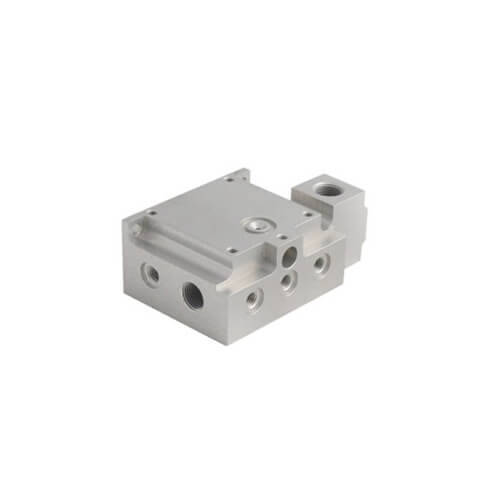
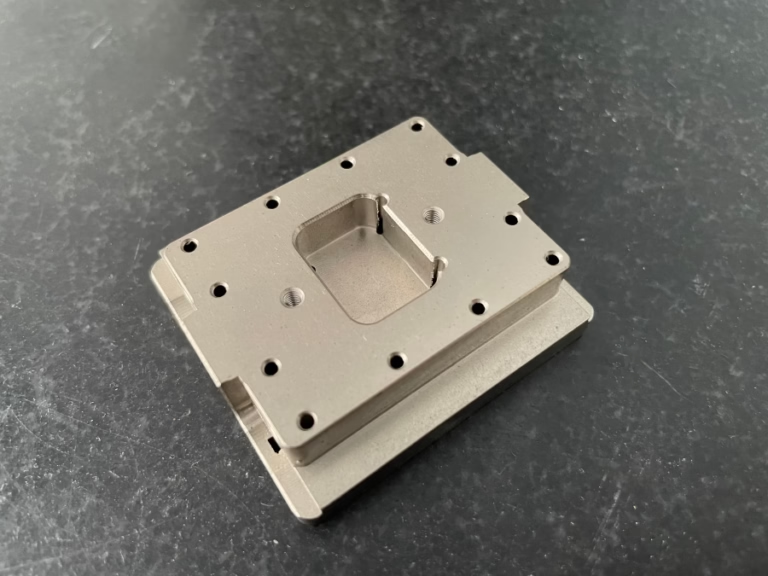
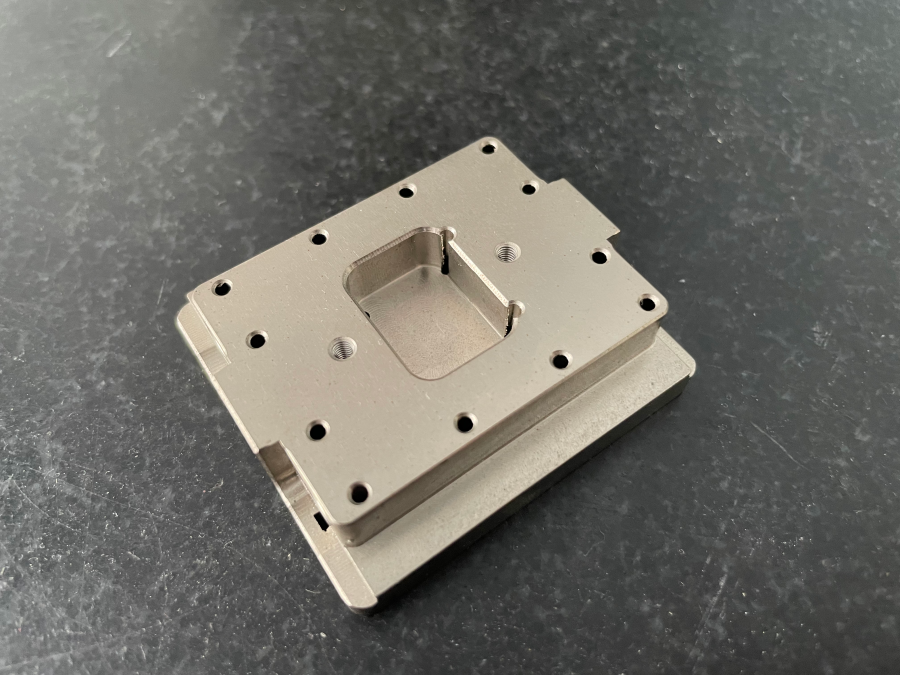
This is the most significant cost multiplier. A simple bracket will cost exponentially less than a complex, organic-shaped housing with deep cavities and thin walls.
Setup and Programming: Complex parts require more sophisticated CAM programming, often involving 5-axis toolpaths, which demands higher engineering expertise and time. The initial setup, including custom fixture design, is a fixed cost amortized over your order quantity.
Machining Time: Intricate geometries, tight internal corners, and high surface area increase machining time directly. Every additional minute on a CNC machine adds to the cost.
Tooling: Complex features may require specialized, expensive tooling (e.g., long-reach end mills, small-diameter tools) which have higher wear rates and costs.
H3: 2. Material Selection and Raw Stock Cost
The base material cost can vary by a factor of 100 or more.
Common Alloys: Aluminum 6061 and 7075 are relatively cost-effective and machinable, offering a good balance of strength and weight.
Engineering Plastics: POM (Delrin), Nylon, and PC are standard choices for insulators and wear parts.
Exotic & Hard-to-Machine Materials: Stainless steel (e.g., 304, 316), titanium alloys, Inconel, and tool steels (e.g., P20, H13) are not only more expensive per kilogram but also significantly slower to machine, requiring specialized tools and parameters, which drastically increases labor and tooling costs.
H3: 3. Tolerances and Surface Finish Requirements
Precision has a price. The relationship between tolerance and cost is not linear but exponential as you approach the limits of the machine’s capability.
Standard Tolerances: For most non-critical features, a tolerance of ±0.1mm is economical and readily achievable.
High Precision: Tolerances of ±0.025mm or tighter require slower machining speeds, meticulous process planning, climate-controlled environments, and in-process inspection, all adding cost.
Surface Finish: An as-machined finish (Ra 3.2) is standard. A mirror finish (Ra 0.4 or better) requires additional polishing or grinding operations.
H3: 4. Order Volume and Production Methodology
The cost structure shifts dramatically based on quantity.
Prototyping & Low Volume (1-50 pcs): Dominated by setup and programming costs (NRE – Non-Recurring Engineering). Unit cost is high. This is where a flexible manufacturer like GreatLight CNC Machining Factory excels, offering rapid turnaround without expensive mold investments.
Medium Volume (50-1000 pcs): Setup costs are spread across more parts. Processes may be optimized for batch production.
High Volume (1000+ pcs): At this stage, permanent tooling (such as die-casting molds or stamping dies) becomes economically viable. The high initial tooling cost is offset by a very low per-part cost, making CNC machining less competitive for simple parts.
H3: 5. Secondary Operations and Finishing
CNC machining often doesn’t produce a “finished” part. Additional services add cost but are essential for functionality and aesthetics.
Deburring and Cleaning: Essential for every part.
Heat Treatment: (e.g., annealing, tempering, case hardening) for enhanced material properties.
Surface Treatments: Anodizing (color, hardness), plating (nickel, chrome), powder coating, passivation (for stainless steel).
Assembly: Press-fitting, welding, threading, or bonding components.
H2: A Practical Cost Estimation Framework
While only a formal RFQ (Request for Quote) can provide an exact number, you can build a rough estimate using this framework:
Material Cost: Calculate the volume of your part, add 20-30% for the stock billet, and multiply by the material’s price per cubic cm.
Machining Time Estimate: Based on geometry, experienced engineers can estimate machining hours. Multiply by the machine’s hourly rate (which varies by region and machine type—a 3-axis vs. a 5-axis CNC machining center have different rates).
Add Setup & Programming Cost: A fixed fee, significant for prototypes, negligible per part at high volume.
Factor in Secondary Operations: Get quotes or use standard rates for each required finish.
Apply a Margin: Reputable manufacturers include a margin for overhead, quality control, and profit.
H2: How to Optimize Your Design for Cost-Effective CNC Machining
Engaging with your manufacturing partner during the design phase (DFM – Design for Manufacturability) is the single most effective way to control costs.
Simplify Geometry: Minimize deep pockets, avoid extremely thin walls, use standard hole sizes.
Specify Tolerances Wisely: Apply tight tolerances only to critical mating surfaces. Use GD&T (Geometric Dimensioning and Tolerancing) correctly to communicate intent, which can be more cost-effective than overly tight linear tolerances.
Choose the Right Material: Select a material that meets your functional needs but is also readily available and machinable.
Design for Standard Tooling: Features should be designed to be machined with standard cutter sizes. Internal corner radii should match common end mill diameters.
Consider Part Orientation: Design parts so they can be machined with minimal re-fixturing.
H2: Conclusion: Partnering for Value, Not Just Price
So, how much does it cost to fabricate and CNC machine? The true cost is a function of value—the value of receiving parts that are right the first time, on schedule, and that perform flawlessly in your application. Choosing a supplier based solely on the lowest unit price often leads to hidden costs from delays, quality issues, and rework.
This is where a partner with integrated capabilities like GreatLight CNC Machining Factory demonstrates its worth. Their value proposition lies in providing a transparent cost structure from the outset, backed by engineering support to optimize your design. Their comprehensive in-house services—from advanced 5-axis CNC machining services to a full suite of finishing and 3D printing—eliminate the logistical headaches and cost markups of managing multiple vendors. By investing in a partnership with a technically proficient and systematically certified manufacturer, you are not just buying a machined part; you are investing in the reliability, innovation, and timely success of your entire product.
H2: Frequently Asked Questions (FAQ)
Q1: What is the typical price range for a small, simple aluminum prototype part?
A: For a part roughly the size of a smartphone (e.g., 150mm x 80mm x 10mm) made from Aluminum 6061 with standard tolerances and an as-machined finish, you might expect a unit cost in the range of $50 to $150 for a single piece. This price drops significantly for quantities of 10 or more.
Q2: Why is a 5-axis CNC quote sometimes similar to or even lower than a 3-axis quote for a complex part?
A: While 5-axis machines have a higher hourly rate, their ability to machine complex features in a single setup can drastically reduce total machining time and eliminate the need for multiple custom fixtures required in 3-axis machining. This often results in a lower total cost and faster delivery for geometrically complex components.
Q3: How can I get the most accurate quote?
A: Provide a complete package: a detailed 3D CAD model (STEP or IGES format), a 2D drawing with critical dimensions and tolerances clearly called out, material specifications, desired quantity, and any required surface finishes or post-processing. The more information you provide, the less assumption the manufacturer has to make, leading to a more accurate and reliable quote.
Q4: Are there hidden costs I should watch out for?
A: Reputable manufacturers like GreatLight Metal will provide a transparent breakdown. Be wary of quotes that seem too good to be true. Potential hidden costs can arise from: unclear tolerances leading to rejected parts, design changes after quoting, expedited shipping fees, or minimum order charges for materials. Always clarify what is included in the quoted price.
Q5: Is it cheaper to use overseas manufacturers?
A: Overseas manufacturers, particularly in regions with established supply chains like China’s Pearl River Delta, often offer highly competitive pricing due to economies of scale and lower operational costs. The key is to partner with a supplier that has robust quality systems (like ISO 9001), clear communication channels, and logistical expertise to manage shipping and importation smoothly, ensuring the total landed cost and quality meet expectations. For insights into a globally engaged manufacturer’s professional network, you can explore platforms like GreatLight’s LinkedIn.